What A Wonderful World Piano: Easy Beginner Guide
What a Wonderful World piano arrangements let beginners play a beloved song with simple chords and gentle rhythm.
Few songs feel as warm and hopeful as Louis Armstrong’s “What a Wonderful World.” Its calm melody, slow pace, and clear message make it a popular choice for new pianists, singers, wedding performers, and anyone learning piano at home. With the right arrangement, you do not need advanced technique to make the song sound beautiful.
This guide explains how to approach What a Wonderful World piano music, including the melody, chords, rhythm, difficulty level, practice method, and common mistakes. Whether you want an easy piano version or a fuller solo arrangement, you will find practical advice that helps the song feel natural instead of mechanical.
What Makes What a Wonderful World Piano Music Special?
“What a Wonderful World” was written by Bob Thiele and George David Weiss. Louis Armstrong recorded the best-known version in 1967, using his warm voice and gentle trumpet sound to turn a simple song into a lasting standard.
The piano part works well because the melody moves in a smooth and singing way. It does not need fast runs or strong accents. Instead, the player must focus on:
• A soft touch
• Even timing
• Clear melody notes
• Gentle chord changes
• Careful use of the sustain pedal
What a Wonderful World piano arrangements often sound best when they leave space. The music should feel like a quiet conversation, not a race. Think of the left hand as a calm support and the right hand as a singer telling the story.
The song also has a strong emotional pull. The lyrics mention trees, roses, skies, and people greeting one another. A good piano performance should reflect that sense of wonder through a relaxed tempo and a warm tone.
What a Wonderful World Piano Difficulty Level
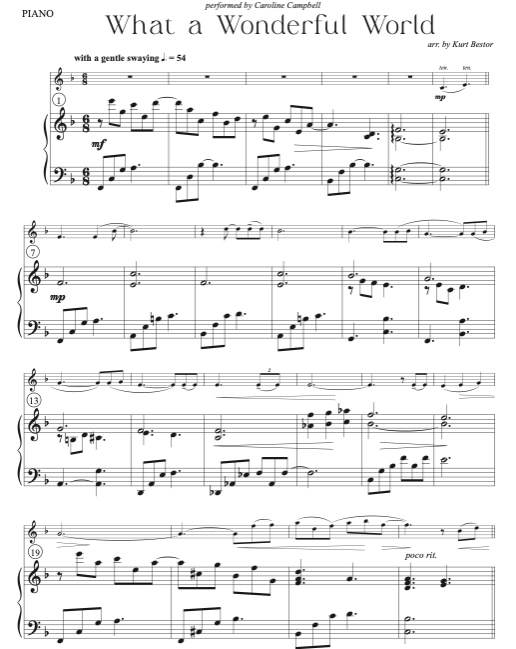
Most beginner and early-intermediate players can learn an easy What a Wonderful World piano arrangement. The main challenge is not speed. It is control.
A basic version may use:
• Simple right-hand melody
• Block chords in the left hand
• A steady four-beat pulse
• Few accidentals
• Slow chord changes
An intermediate arrangement may add broken chords, passing notes, chord extensions, and richer harmony. These features create a fuller sound, but they also require better hand coordination.
Easy arrangement
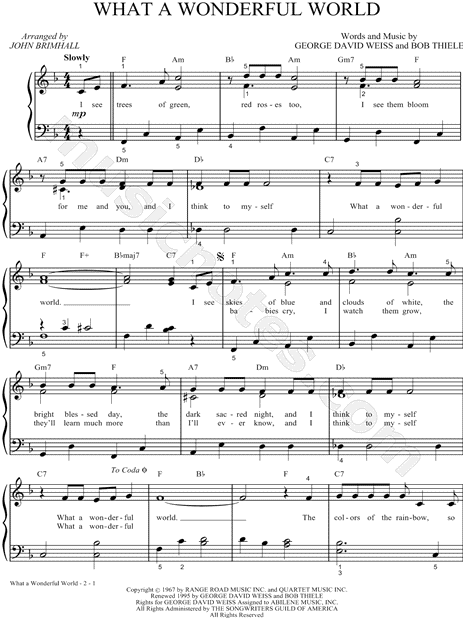
An easy arrangement usually keeps the melody in the right hand and places one chord or bass note in the left hand. This format helps beginners connect the notes with the lyrics.
It is a good choice if you are still learning:
• Basic major and minor chords
• Reading notes on the staff
• Matching both hands
• Using the sustain pedal
Intermediate arrangement
An intermediate What a Wonderful World piano version may use arpeggios or flowing chord patterns. The left hand may play a bass note followed by the rest of the chord. The right hand may include harmony notes below the melody.
This style sounds more expressive, but the melody must remain easy to hear. A common mistake is to play every note with the same strength. Let the melody speak louder than the accompaniment.
Advanced arrangement
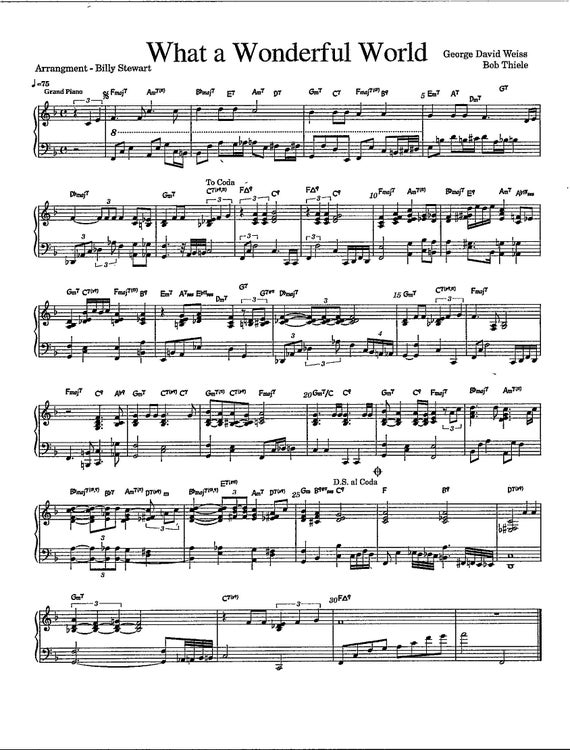
An advanced solo piano version may include jazz voicings, altered chords, walking bass lines, and improvised fills. These features can sound beautiful, but they are not required to honor the song.
A simple, well-shaped performance often feels more convincing than a complex version played without feeling.
What Key Is What a Wonderful World Usually Played In?
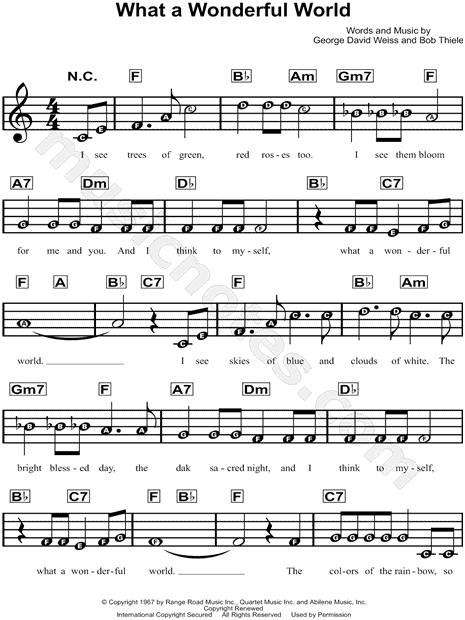
Many beginner What a Wonderful World piano arrangements appear in C major. C major uses only the white keys, which makes it friendly for new players. However, published arrangements may use a different key to match a singer’s range or a specific recording.
The most common chord colors in a simple arrangement may include:
• C major
• A minor
• F major
• G or G7
• E minor
• D minor
These chords create a gentle harmonic path. The song may also use secondary chords or passing harmonies, depending on the arrangement.
Why C major helps beginners
C major is useful because it has no sharps or flats in its basic scale. You can focus on rhythm, hand position, and musical expression without worrying about a complex key signature.
Still, playing only white keys does not automatically make the song easy. You must keep the hands relaxed and change chords at the right time.
Transposing for singers
If you plan to sing while playing, the original key may not suit your voice. A high melody can cause strain, while a low melody may lose energy.
You can transpose the song by:
-
Finding the melody’s highest and lowest notes.
-
Testing the song in C, B-flat, or G major.
-
Choosing the key that feels comfortable for your voice.
-
Using a transposition feature on a digital keyboard if needed.
A piano teacher or experienced accompanist can also help select a practical key. The best key is the one that supports the singer without making the piano part awkward.
How to Read a What a Wonderful World Piano Arrangement
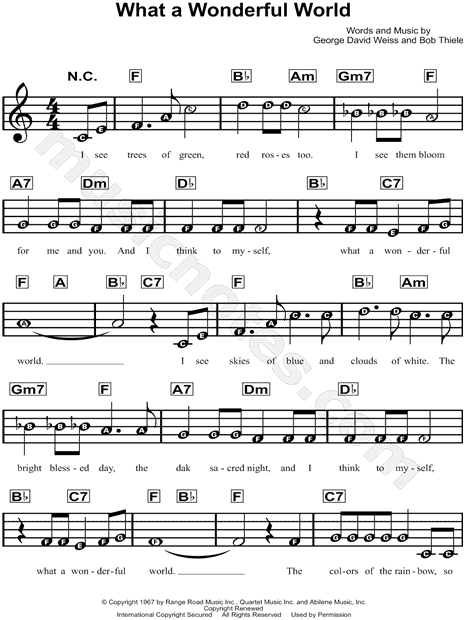
Before you play the whole piece, study the arrangement in small sections. Most versions divide the song into short phrases that match the lyrics.
Start by looking for:
• The key signature
• The time signature
• The tempo marking
• The melody line
• Chord symbols
• Pedal markings
The song is commonly played with a steady four-beat feel. Count slowly as “one, two, three, four.” This keeps the rhythm stable and prevents the performance from becoming too fast.
Learn the melody first
Play the right-hand melody alone. Try to sing the words while you play. If you cannot sing, hum the tune or say the lyric rhythm.
This step teaches you where the melody rises, falls, pauses, and repeats. It also helps you notice which notes need a little more weight.
Add the left hand slowly
Once the melody feels comfortable, add the left hand one chord at a time. Do not begin with a complicated pattern. Use whole-note chords or simple bass notes first.
After both hands feel secure, try a gentle broken-chord pattern. For example, you might play the bass note on beat one and the rest of the chord on beats two, three, and four.
Use chord symbols as a map
Chord symbols show the harmony beneath the melody. They are useful even if you read standard notation.
For example, a C chord tells you that C, E, and G will usually support the phrase. An F chord uses F, A, and C. Learning these shapes helps you understand the music instead of memorizing each note without context.
How to Practice What a Wonderful World Piano
A thoughtful practice plan can make this song feel easy within a short time. The goal is not to play the entire piece repeatedly. The goal is to solve one small problem at a time.
Use this practice method:
-
Listen to a trusted recording to understand the mood and tempo.
-
Mark the sections in your sheet music.
-
Practice the right-hand melody alone.
-
Practice the left-hand chords alone.
-
Combine both hands at half speed.
-
Repeat difficult measures in short loops.
-
Add the sustain pedal only after the notes are secure.
-
Record yourself and listen for balance.
Practice with a slow tempo
Many players begin too quickly because they know the song well. This creates uneven chord changes and missed notes.
Start at a slow tempo. You should have enough time to think before each chord. Increase the speed only when you can play the section three times in a row without stopping.
Shape each phrase
A phrase should have a direction. Let it rise toward an important word or note, then relax at the end. This small change makes the performance sound human.
Imagine that your right hand is a singer. The melody should breathe. Do not hold every note with the same force.
Use the pedal with care
The sustain pedal can make What a Wonderful World piano sound rich and smooth. It can also blur the harmony if you hold it too long.
Change the pedal when the chord changes. In many arrangements, lifting the pedal just before the next chord keeps the sound clean.
A useful beginner rule is:
• Play the chord.
• Press the pedal.
• Change the chord.
• Lift and press the pedal again.
You may later use half-pedaling or delayed pedal changes, but clear sound matters more than advanced technique.
Common Mistakes to Avoid
Even a simple What a Wonderful World piano arrangement can lose its charm when basic details are overlooked. The most common problems involve timing, balance, and pedal use.
Playing too fast
The song needs room to breathe. A fast tempo removes the calm feeling and can make the lyrics sound rushed.
Choose a tempo that allows each phrase to sound complete. The exact speed may vary between performances, but the mood should remain relaxed.
Hiding the melody
The melody must stand above the chords. If the left hand is louder than the right hand, listeners may hear a wall of sound instead of the tune.
Practice the melody alone with a warm tone. Then play the accompaniment much more softly when you combine the parts.
Using too much pedal
Long pedal holds can mix several chords into a muddy sound. This problem is especially clear on acoustic pianos with strong bass notes.
Listen for clean chord changes. If the harmony sounds cloudy, lift the pedal more often.
Ignoring rests
Short pauses are part of the music. They give the listener time to absorb the words and help the next phrase feel meaningful.
Do not fill every gap with extra notes. Silence can be as expressive as sound.
Copying Louis Armstrong exactly
Armstrong’s recording is an important reference, but a piano performance does not need to imitate his voice or trumpet. Use the recording to study phrasing and emotion, then develop your own natural style.
A solo pianist can make the song intimate, bright, reflective, or gently jazzy. Keep the central melody recognizable while allowing your musical personality to show.
Choosing the Right Sheet Music
The best What a Wonderful World piano sheet music depends on your skill level and purpose. A beginner needs clear notation and manageable hand positions. A performer may want a more detailed arrangement with richer harmony.
Before buying or downloading sheet music, check:
• The stated difficulty level
• The key
• The range of the melody
• Whether chord symbols are included
• Whether lyrics are printed
• The page layout
• The legal status of the arrangement
Copyright rules vary by country and by edition. Use authorized sheet music when possible. This supports composers, arrangers, publishers, and the wider music community.
Digital sheet music can be useful because it may offer transposition, playback, and adjustable page size. Printed music can be easier to mark with finger numbers, pedal signs, and practice notes.
Choosing an arrangement for a performance
For a wedding, memorial service, church event, or family gathering, choose an arrangement you can play with confidence. A simpler version with strong expression is often better than a difficult version with frequent pauses.
Test the arrangement from beginning to end. Some versions look easy but include large jumps, awkward page turns, or sudden key changes.
Ways to Make a Simple Arrangement Sound Better
You do not need complex chords to create a professional sound. Small choices can add warmth and depth.
Try these ideas:
• Play the melody with a slightly brighter tone.
• Keep the left hand soft and steady.
• Add a low bass note before a chord when it feels natural.
• Use gentle dynamic changes between phrases.
• Delay the final note slightly without breaking the pulse.
• Leave space between musical ideas.
You can also add simple chord extensions. A C major seventh chord, for example, adds a soft color to a basic C chord. Use these sounds with care, especially when singing, because too many changes may distract from the melody.
A practical performance lesson
When pianists prepare What a Wonderful World piano for an audience, they often focus too much on playing every note correctly. Accuracy matters, but listeners also respond to calm timing, tone, and confidence.
A useful test is to perform the song for one person before playing it publicly. Ask whether the melody was easy to follow and whether the mood felt peaceful. This feedback can reveal problems that are hard to notice while playing.
Frequently Asked Questions About What a Wonderful World Piano
Is What a Wonderful World easy to play on piano?
Yes, an easy arrangement is suitable for many beginners. The melody is slow and clear, while the basic chords are common in popular music.
What key is best for a beginner?
C major is often a practical starting key because it uses only the white keys. However, another key may work better if you plan to sing the song.
Do I need to read music to play What a Wonderful World?
No. You can learn from chord charts, tutorials, or lead sheets. Reading music will give you more arrangement choices, but it is not the only way to learn.
How can I make the piano arrangement sound more emotional?
Keep the melody louder than the accompaniment, shape each phrase, and use the sustain pedal carefully. A slow, relaxed tempo usually creates more feeling than adding many extra notes.
Can children learn What a Wonderful World piano?
Many children can learn a simplified version with support from a teacher or adult. A short melody-and-chord arrangement can build reading, rhythm, coordination, and listening skills.
Should I play the song with a metronome?
A metronome can help you keep a steady beat during practice. Turn it off during some practice sessions so you can work on natural phrasing and musical expression.
Conclusion
What a Wonderful World piano music is approachable, expressive, and rewarding to learn. Beginners can start with a melody and simple chords, while more advanced players can explore richer harmony, arpeggios, and personal interpretation.
Focus on a slow tempo, clean chord changes, gentle dynamics, and a melody that feels like a human voice. Choose sheet music that matches your level, practice in small sections, and use the pedal to support the sound rather than cover it.
Sit at the piano, play the first phrase softly, and let the song grow from there. Explore more piano tutorials, share your progress with other players, or leave a comment about your favorite arrangement.

Senior Music Reviewer
Alex Carter is a seasoned music reviewer with over a decade of experience in the world of sound and instruments. Passionate about helping musicians and enthusiasts make informed choices, he brings sharp insights and in-depth knowledge to every review. From classical instruments to modern gear, Alex combines technical expertise with a love for music to deliver content that resonates with readers.
As a Senior Music Reviewer and expert author on Tuneluma.com, Alex is dedicated to sharing honest evaluations, practical advice, and thoughtful commentary to guide readers in their musical journey.