How To Play The Bodhran Drum: Easy Beginner Guide
To play the bodhran drum, hold it steady, strike its skin, and shape rhythm with your hand.
Learning how to play the bodhran drum is less about hitting hard and more about controlling pulse, tone, and movement. This Irish frame drum looks simple, but skilled players use subtle wrist motion, finger pressure, and muted strokes to create rich rhythm. With the right grip and steady practice, a beginner can build useful patterns in a short time.
What Is a Bodhran Drum?
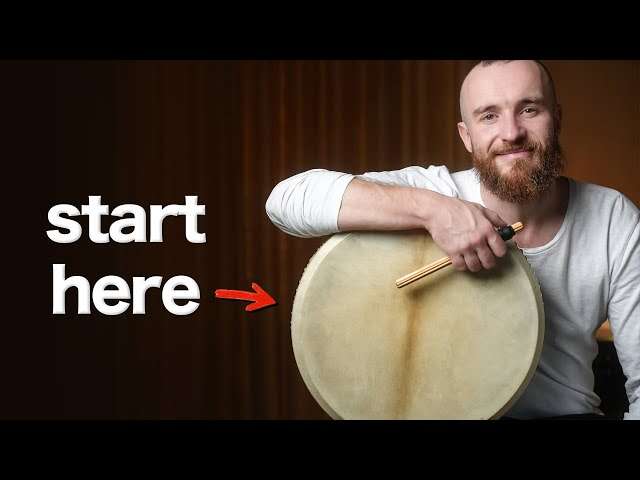
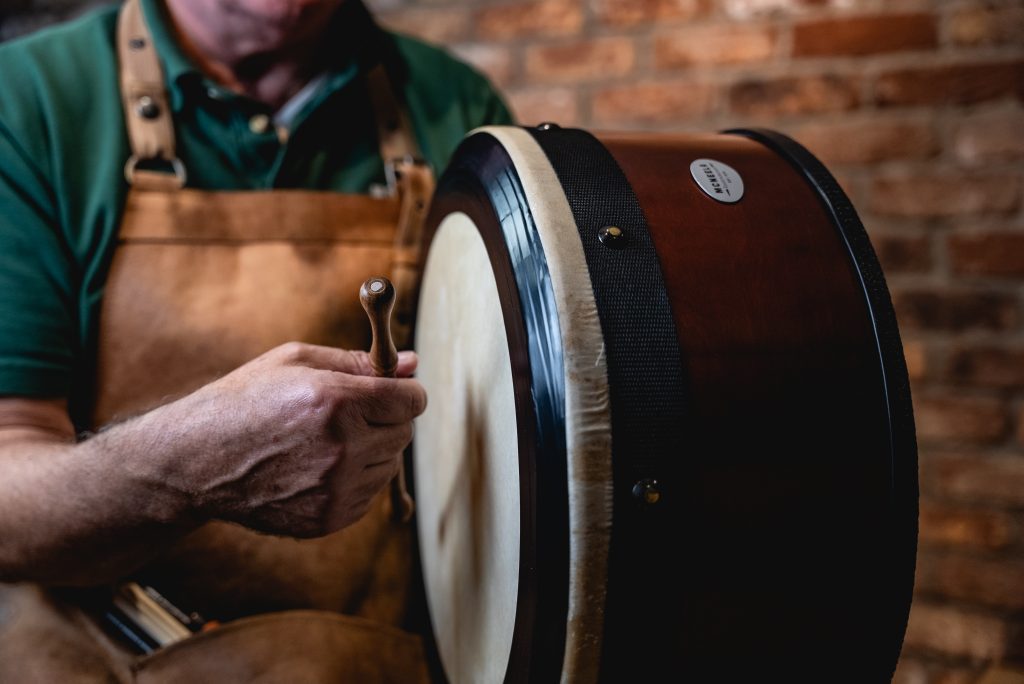
A bodhran is a traditional Irish frame drum. It has a round wooden frame, a goatskin or synthetic head, and often a crossbar or handle inside the frame. The drum is played with a short stick called a tipper, beater, or cipín.
The bodhran drum usually measures between 16 and 18 inches across. Smaller drums can feel quick and bright, while larger drums often produce a deeper tone. Many modern drums include a tuning system that lets you adjust the skin for different rooms and musical styles.
The drum has two main playing surfaces:
• The outer skin creates the main sound.
• The inside of the skin allows your supporting hand to change pitch and mute notes.
The bodhran became strongly linked with Irish traditional music, especially dance music and sessions. Today, players also use it in folk, Celtic, acoustic, world, and modern roots music.
A useful way to understand the instrument is to think of it as both a drum and a flexible piece of musical skin. Your striking hand creates the rhythm. Your other hand acts like a sound engineer by opening, closing, and shaping the tone.

What You Need Before You Start
You do not need a large setup to learn how to play the bodhran drum. A few basic tools will make practice easier and more comfortable.
• A bodhran drum with a clear, even head
• A comfortable wooden tipper
• A chair with a straight back
• A quiet space where you can hear soft sounds
• A metronome or simple rhythm app
Choose a drum that feels comfortable against your body. A drum that is too large may strain your shoulder. A very small drum may have a sharp tone that makes it harder to hear mistakes.
A medium-sized drum with adjustable tuning is a useful choice for most beginners. Synthetic heads resist changes in humidity, while natural skin heads often offer a warmer and more complex sound. Neither option is automatically better. The best choice depends on your budget, climate, and musical goals.
Check the tipper before you begin. It should feel balanced in your hand. Some tippers have two different ends, such as a rounded end and a flatter end. Try both, but begin with the end that gives you the clearest sound.
Avoid practicing with excessive volume. A bodhran can become loud in a small room, and hard strikes can tire your wrist. Good technique should feel relaxed, not forceful.
How to Hold the Bodhran Drum
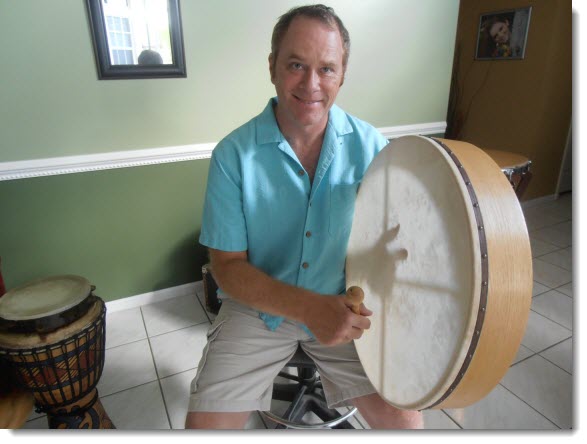
Your posture affects your sound. Sit near the front of a chair and keep both feet flat on the floor. Relax your shoulders and hold the drum against your upper thigh or hip.
Most right-handed players place the drum against the left side of the body. The playing hand holds the tipper in the right hand, while the left hand reaches behind the drum. Left-handed players can reverse this position.
Follow these steps:
-
Place the lower edge of the drum near your thigh.
-
Tilt the drum slightly away from your body.
-
Support the frame with your forearm or elbow.
-
Keep the playing arm loose.
-
Reach behind the drum with your other hand.
-
Let your fingers touch the inside of the skin.
The drum should feel secure, but it should not be squeezed tightly. If you grip the frame too hard, the sound may become dull. If the drum moves too much, your strokes will become uneven.
Your support hand is very important. It does more than hold the drum. Move your fingers toward the center of the skin for a lower sound. Move them closer to the edge for a higher sound. Press gently to dampen the note, and release pressure to let the skin ring.
When learning how to play the bodhran drum, spend time finding a stable position before worrying about speed. A steady instrument gives you a steady rhythm.

How to Hold the Tipper
Hold the tipper between your thumb and first two fingers. Use a loose grip, much like holding a small pen. Your fingers should guide the stick without locking it in place.
The movement should come mainly from your wrist. Avoid swinging from your elbow. Large arm movements waste energy and make fast playing difficult.
Keep the tipper close to the drumhead. A short stroke gives you more control than a large swing. Let the stick rebound after it touches the skin. Do not press it into the drum unless you want a muted sound.
Try this simple test:
• Tap the drum slowly with the tipper.
• Notice whether the stick rebounds.
• Relax your thumb if your hand feels tight.
• Keep the tipper path short and even.
• Stop if you feel pain or tingling.
Many new players hold the tipper too tightly. I often see this mistake during beginner practice because a tight grip feels safe at first. In reality, it blocks the natural rebound and makes the rhythm stiff.
Think of the tipper as a small pendulum. Your wrist starts the motion, and the drumhead returns the stick. You guide the sound rather than forcing it.

The Basic Strokes
The basic strokes are the building blocks of how to play the bodhran drum. Learn them slowly and aim for a clear, even tone.
The Downstroke
A downstroke moves the tipper from the top toward the bottom of the drum. It often creates a strong beat.
Strike the skin with the lower end of the tipper. Use a relaxed wrist and let the stick bounce. Start with one stroke every two seconds, then gradually use a steady count.
The Upstroke
An upstroke moves the tipper from the bottom toward the top. It can create a lighter answer to the downstroke.
Do not lift the entire arm. Turn the wrist and let the tipper travel a short distance. The upstroke may sound softer at first, but it should still have a clear pulse.
The Alternating Stroke
Alternate downstrokes and upstrokes:
-
Down
-
Up
-
Down
-
Up
Count “one and two and” as you play. Keep the spacing even. This exercise trains your hand to move continuously.
The Tap
A tap is a soft stroke. It adds detail without overpowering the main beat. Use less force and a smaller movement.
The Mute
To mute a note, place light pressure on the inside of the skin with your support hand. A muted stroke sounds shorter and less open.
Practice each stroke alone before combining them. Clear basic sounds are more useful than fast patterns that lack control.

How to Create a Basic Bodhran Rhythm
A simple rhythm gives you a practical way to learn how to play the bodhran drum. Start with a four-beat pattern.
Count:
“One, two, three, four.”
Play a downstroke on each number. Keep the tempo slow. Around 60 beats per minute is a comfortable starting point.
Next, add an upstroke between each beat:
“one and two and three and four and”
Play downstrokes on the numbers and light upstrokes on “and.” The pattern may look like this:
• One: downstroke
• And: upstroke
• Two: downstroke
• And: upstroke
• Three: downstroke
• And: upstroke
• Four: downstroke
• And: upstroke
Do not make every stroke equally loud. In many musical patterns, the main beats carry more weight while the in-between strokes stay light.
Once this feels easy, try a common slow pulse:
• Strong downstroke
• Soft tap
• Medium downstroke
• Soft tap
This pattern can support a song without filling every space. A good bodhran player knows when to leave room for the fiddle, flute, guitar, or singer.
One important lesson is that rhythm is not only sound. Silence is part of the pattern. If every stroke has the same force, the music can feel flat.
How to Use Your Support Hand
Your support hand controls pitch, tone, and sustain. This skill is one of the main differences between simply striking a bodhran and truly learning how to play the bodhran drum.
Place your fingers on the inside of the skin. Do not push hard at first. Explore how small changes affect the sound.
Try these positions:
• Near the center: lower and deeper tone
• Near the edge: higher and sharper tone
• Light pressure: shorter note
• No pressure: open and ringing note
• Moving pressure: rising or falling pitch
Some players use the heel of the hand, the fingertips, or the whole palm. Each method creates a different effect. Begin with your fingertips because they allow precise control.
Practice a slow stroke while moving your hand from the center toward the edge. Listen to the pitch rise. Then reverse the movement. This exercise teaches you to shape a note instead of producing only one fixed sound.
Your hand does not need to move constantly. In fact, too much movement can make the rhythm unstable. Use small changes that serve the music.

Bodhran Rhythm in Irish Traditional Music
Irish traditional music often uses dance rhythms such as reels, jigs, and hornpipes. Each type has its own pulse and feel.
A reel usually has a flowing four-beat feel. A beginner can count it as:
“One, two, three, four.”
A jig often uses groups of three:
“One, two, three, one, two, three.”
A hornpipe has a more measured and dotted feel. It often sounds heavier and more deliberate than a reel.
Do not rush to copy complex ornamentation. First, listen to the melody. The bodhran should support the tune, not compete with it.
When playing with others, watch the lead musician. Listen for changes in speed, pauses, and repeated sections. Traditional sessions often have no written conductor, so good players communicate through listening and body language.
A useful practice method is to play along with recordings at a slow speed. Choose one tune and repeat it several times. Focus on staying with the melody instead of adding many fills.
It is also important to respect the style of the session. A bodhran can easily dominate a small group. Play with restraint, keep your volume balanced, and leave space for the melody instruments.

Common Bodhran Playing Mistakes
Beginners often make the same few mistakes. Fixing them early will make how to play the bodhran drum much easier.
Holding the Tipper Too Tightly
A tight grip limits rebound and causes wrist fatigue. Hold the tipper loosely enough that it can move freely.
Striking Too Hard
Power does not equal good rhythm. Strong hits may sound impressive alone but can overwhelm other musicians. Work on tone and timing before volume.
Moving From the Elbow
Elbow movement uses too much energy. Keep the motion close to the wrist and let the tipper travel a short path.
Ignoring the Support Hand
Some beginners treat the second hand as a simple brace. This removes much of the bodhran’s expressive range. Practice pitch and muting as soon as your basic strokes feel stable.
Practicing Too Fast
Speed can hide uneven timing. Use a metronome and increase the tempo only when each stroke remains relaxed.
Filling Every Gap
A constant stream of notes can make a rhythm sound crowded. Learn to pause and let other instruments speak.
Using Poor Posture
A raised shoulder or bent wrist can cause discomfort. Stop and reset your position when your body becomes tense.
In regular practice, the most useful lesson is simple: play fewer notes, but make each note intentional.

A Simple Practice Plan
A short daily routine works better than one long session each week. Aim for 15 to 20 minutes at first.
Minutes 1 to 3: Posture
Hold the drum and check your shoulders, wrists, and feet. Take slow breaths and relax your grip.
Minutes 4 to 7: Single Strokes
Play slow downstrokes. Then play slow upstrokes. Listen for equal spacing and a clean tone.
Minutes 8 to 11: Alternating Strokes
Use down and up movements while counting “one and two and.” Keep the upstrokes soft.
Minutes 12 to 15: Support Hand
Change the pitch with light finger pressure. Practice open, muted, high, and low sounds.
Minutes 16 to 20: Musical Practice
Play along with a slow recording or metronome. Try to support the pulse without rushing.
Record yourself once or twice each week. You may notice timing problems that are hard to hear while playing. This simple habit offers honest feedback without requiring expensive equipment.
Increase your practice time only when your hands and shoulders feel comfortable. If you develop pain, stop playing and allow your body to recover. Persistent pain deserves advice from a qualified medical professional.
How to Improve Timing and Groove
Timing is the heart of how to play the bodhran drum. A player with simple strokes and strong timing will usually sound better than a player with complex strokes and weak timing.
Use a metronome in several ways:
• Play one stroke per click.
• Play two strokes per click.
• Play only on beats two and four.
• Stop for one bar, then rejoin on the next beat.
The last exercise is valuable because it tests your internal pulse. If you lose the beat when the metronome stops, slow down and practice again.
Tap your foot softly while you play. This can help you feel the pulse, but do not let the foot become a second source of tension.
Listen to strong bodhran players and focus on their space, tone, and dynamics. Notice how they respond to the tune. Many advanced players use fewer strokes than beginners expect.
A common mistake I have noticed in practice sessions is chasing speed too soon. The player may know the pattern, but the groove disappears. Slow playing gives your hands time to learn clean movement.
Choosing and Tuning a Bodhran Drum
A well-made drum is easier to learn on because it responds in a predictable way. Look for a smooth frame, a secure head, and a comfortable inner handle.
Natural skin heads can change with temperature and humidity. Damp air may loosen the head, while dry conditions may tighten it. Adjustable tuning systems help manage these changes.
Before playing, check the drum in the room where you will perform. A drum that sounds balanced at home may seem too bright or too deep in a different space.
Tune in small steps. Large adjustments can place unnecessary stress on the head or frame. If you are unsure, ask an experienced player or instrument maker for help.
The drum should produce a clear tone across much of the head. A dull, buzzing, or uneven sound may come from tuning, skin tension, or damage.
Do not judge a drum only by its price. A costly instrument cannot replace good technique. A modest but responsive drum can support years of learning.
How Long Does It Take to Learn the Bodhran Drum?
Many beginners can play a simple steady beat within a few practice sessions. Developing control over tone, pitch, timing, and traditional ornamentation takes much longer.
Your progress depends on several factors:
• Practice time
• Quality of listening
• Comfort with rhythm
• Guidance from a skilled teacher
• Experience playing with other musicians
A realistic goal is to master one basic rhythm before collecting many patterns. After that, add one new skill at a time, such as muted notes, triplets, rolls, or pitch changes.
Do not compare your first month with a professional player’s tenth year. The bodhran rewards patience. Each small improvement makes the next movement easier.
A teacher can correct posture and grip problems before they become habits. Online lessons can also help, especially when they include clear demonstrations and slow practice tracks.
Frequently Asked Questions About How to Play the Bodhran Drum
Is the bodhran drum hard to learn?
The basic beat is fairly easy to learn, but advanced control takes practice. Most beginners can create a simple pulse quickly when they use a relaxed grip and a slow tempo.
Which hand plays the bodhran drum?
The dominant hand usually holds the tipper and strikes the skin. The other hand supports the drum and changes pitch by touching the inside of the head.
Do I need to read music to play the bodhran drum?
No. Many people learn through listening, counting, and watching demonstrations. Reading rhythm can help later, but it is not required for starting.
What is the best tipper for a beginner?
A light, balanced tipper with comfortable ends is a good starting choice. Avoid a stick that feels heavy or forces you to grip tightly.
How often should I practice the bodhran drum?
Practice for 15 to 20 minutes most days if possible. Short, focused sessions usually build better control than rare and exhausting practice sessions.
Why does my bodhran sound flat?
A flat sound may result from low head tension, heavy hand pressure, or a strike near the center. Check the tuning and relax your support hand before changing the drum.
Can I play the bodhran drum in any style of music?
Yes. The bodhran works well in Irish traditional music, folk, acoustic, world, and some modern styles. The key is to match your volume, rhythm, and tone to the music.
Conclusion
Learning how to play the bodhran drum starts with a stable posture, a loose tipper grip, and slow, even strokes. Your striking hand builds the pulse, while your support hand shapes pitch and tone. As your control improves, add muted notes, alternating strokes, traditional rhythms, and tasteful spaces.
Practice a little each day. Listen closely. Keep your playing relaxed, and let the music guide your choices rather than chasing speed. Pick up your drum today, play one steady beat, and share your progress or questions in the comments.

Senior Music Reviewer
Alex Carter is a seasoned music reviewer with over a decade of experience in the world of sound and instruments. Passionate about helping musicians and enthusiasts make informed choices, he brings sharp insights and in-depth knowledge to every review. From classical instruments to modern gear, Alex combines technical expertise with a love for music to deliver content that resonates with readers.
As a Senior Music Reviewer and expert author on Tuneluma.com, Alex is dedicated to sharing honest evaluations, practical advice, and thoughtful commentary to guide readers in their musical journey.