How To Play The Bodhran Drum: Easy Beginner Guide
To play the bodhran drum, hold it steady, strike its skin, and shape rhythm with your hand.
Learning how to play the bodhran drum is less about hitting hard and more about controlling pulse, tone, and movement. This Irish frame drum looks simple, but skilled players use subtle wrist motion, finger pressure, and muted strokes to create rich rhythm. With the right grip and steady practice, a beginner can build useful patterns in a short time.
What Is a Bodhran Drum?
A bodhran is a traditional Irish frame drum. It has a round wooden frame, a goatskin or synthetic head, and often a crossbar or handle inside the frame. The drum is played with a short stick called a tipper, beater, or cipín.
The bodhran drum usually measures between 16 and 18 inches across. Smaller drums can feel quick and bright, while larger drums often produce a deeper tone. Many modern drums include a tuning system that lets you adjust the skin for different rooms and musical styles.
The drum has two main playing surfaces:
• The outer skin creates the main sound.
• The inside of the skin allows your supporting hand to change pitch and mute notes.
The bodhran became strongly linked with Irish traditional music, especially dance music and sessions. Today, players also use it in folk, Celtic, acoustic, world, and modern roots music.
A useful way to understand the instrument is to think of it as both a drum and a flexible piece of musical skin. Your striking hand creates the rhythm. Your other hand acts like a sound engineer by opening, closing, and shaping the tone.

What You Need Before You Start
You do not need a large setup to learn how to play the bodhran drum. A few basic tools will make practice easier and more comfortable.
• A bodhran drum with a clear, even head
• A comfortable wooden tipper
• A chair with a straight back
• A quiet space where you can hear soft sounds
• A metronome or simple rhythm app
Choose a drum that feels comfortable against your body. A drum that is too large may strain your shoulder. A very small drum may have a sharp tone that makes it harder to hear mistakes.
A medium-sized drum with adjustable tuning is a useful choice for most beginners. Synthetic heads resist changes in humidity, while natural skin heads often offer a warmer and more complex sound. Neither option is automatically better. The best choice depends on your budget, climate, and musical goals.
Check the tipper before you begin. It should feel balanced in your hand. Some tippers have two different ends, such as a rounded end and a flatter end. Try both, but begin with the end that gives you the clearest sound.
Avoid practicing with excessive volume. A bodhran can become loud in a small room, and hard strikes can tire your wrist. Good technique should feel relaxed, not forceful.
How to Hold the Bodhran Drum
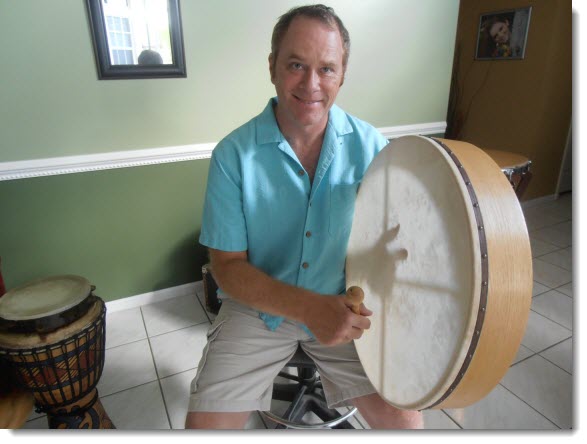
Your posture affects your sound. Sit near the front of a chair and keep both feet flat on the floor. Relax your shoulders and hold the drum against your upper thigh or hip.
Most right-handed players place the drum against the left side of the body. The playing hand holds the tipper in the right hand, while the left hand reaches behind the drum. Left-handed players can reverse this position.
Follow these steps:
-
Place the lower edge of the drum near your thigh.
-
Tilt the drum slightly away from your body.
-
Support the frame with your forearm or elbow.
-
Keep the playing arm loose.
-
Reach behind the drum with your other hand.
-
Let your fingers touch the inside of the skin.
The drum should feel secure, but it should not be squeezed tightly. If you grip the frame too hard, the sound may become dull. If the drum moves too much, your strokes will become uneven.
Your support hand is very important. It does more than hold the drum. Move your fingers toward the center of the skin for a lower sound. Move them closer to the edge for a higher sound. Press gently to dampen the note, and release pressure to let the skin ring.
When learning how to play the bodhran drum, spend time finding a stable position before worrying about speed. A steady instrument gives you a steady rhythm.

How to Hold the Tipper
Hold the tipper between your thumb and first two fingers. Use a loose grip, much like holding a small pen. Your fingers should guide the stick without locking it in place.
The movement should come mainly from your wrist. Avoid swinging from your elbow. Large arm movements waste energy and make fast playing difficult.
Keep the tipper close to the drumhead. A short stroke gives you more control than a large swing. Let the stick rebound after it touches the skin. Do not press it into the drum unless you want a muted sound.
Try this simple test:
• Tap the drum slowly with the tipper.
• Notice whether the stick rebounds.
• Relax your thumb if your hand feels tight.
• Keep the tipper path short and even.
• Stop if you feel pain or tingling.
Many new players hold the tipper too tightly. I often see this mistake during beginner practice because a tight grip feels safe at first. In reality, it blocks the natural rebound and makes the rhythm stiff.
Think of the tipper as a small pendulum. Your wrist starts the motion, and the drumhead returns the stick. You guide the sound rather than forcing it.

The Basic Strokes
The basic strokes are the building blocks of how to play the bodhran drum. Learn them slowly and aim for a clear, even tone.
The Downstroke
A downstroke moves the tipper from the top toward the bottom of the drum. It often creates a strong beat.
Strike the skin with the lower end of the tipper. Use a relaxed wrist and let the stick bounce. Start with one stroke every two seconds, then gradually use a steady count.
The Upstroke
An upstroke moves the tipper from the bottom toward the top. It can create a lighter answer to the downstroke.
Do not lift the entire arm. Turn the wrist and let the tipper travel a short distance. The upstroke may sound softer at first, but it should still have a clear pulse.
The Alternating Stroke
Alternate downstrokes and upstrokes:
-
Down
-
Up
-
Down
-
Up
Count “one and two and” as you play. Keep the spacing even. This exercise trains your hand to move continuously.
The Tap
A tap is a soft stroke. It adds detail without overpowering the main beat. Use less force and a smaller movement.
The Mute
To mute a note, place light pressure on the inside of the skin with your support hand. A muted stroke sounds shorter and less open.
Practice each stroke alone before combining them. Clear basic sounds are more useful than fast patterns that lack control.