What Is A Bongo Drum: History, Sound And Uses
A bongo drum is a small pair of tuned hand drums played together with the fingers.
If you have ever heard bright, rapid rhythms in Cuban son, salsa, or Latin jazz, you have likely heard bongos. This guide explains what is a bongo drum, where it came from, how it works, how to play it, and how to choose one with confidence.
What Is a Bongo Drum?
A bongo drum is a pair of small, open-bottomed drums joined by a narrow wooden or metal bridge. One drum is larger and has a lower pitch. The smaller drum has a higher pitch. Players usually place the bongos between their knees and strike the heads with their fingers and palms.
The larger drum is called the hembra, which means “female” in Spanish. The smaller drum is called the macho, or “male.” This naming system describes the relative size and pitch of each drum.
When people ask what is a bongo drum, they often expect a simple answer. However, a bongo is more than a small percussion instrument. It is a tuned drum pair that adds sharp accents, rolling patterns, and lively movement to music.
Bongo drums are common in Cuban music, salsa, son, cha-cha-cha, Latin jazz, pop, and world music. They also work well in classrooms, drum circles, acoustic sessions, and home practice.

The History and Cultural Roots of Bongo Drums
Bongo drums developed in eastern Cuba during the late 19th or early 20th century. Their exact origin is not tied to one single person or date. Instead, the instrument grew from several African and European musical traditions that met in Cuba.
The bongo became strongly linked with son cubano, a Cuban style that blends Spanish song forms with African rhythmic ideas. Son musicians used bongos to support the groove while leaving space for singers, guitars, bass, and other percussion instruments.
The instrument later spread beyond Cuba through recordings, touring bands, radio, and dance music. By the mid-20th century, bongos had become familiar in Latin jazz and popular music across the United States.
It is important not to describe the bongo as simply an “African drum.” African musical traditions influenced its development, but the modern bongo is a distinctly Cuban instrument with its own history and playing language.
Why the Bongo Matters
The bongo reflects cultural exchange. Its sound carries African rhythmic concepts, Spanish musical forms, Cuban performance practice, and modern global influence.
That history also explains why what is a bongo drum cannot be understood only by looking at its shape. The instrument is part of a living musical tradition, not just a decorative pair of drums.
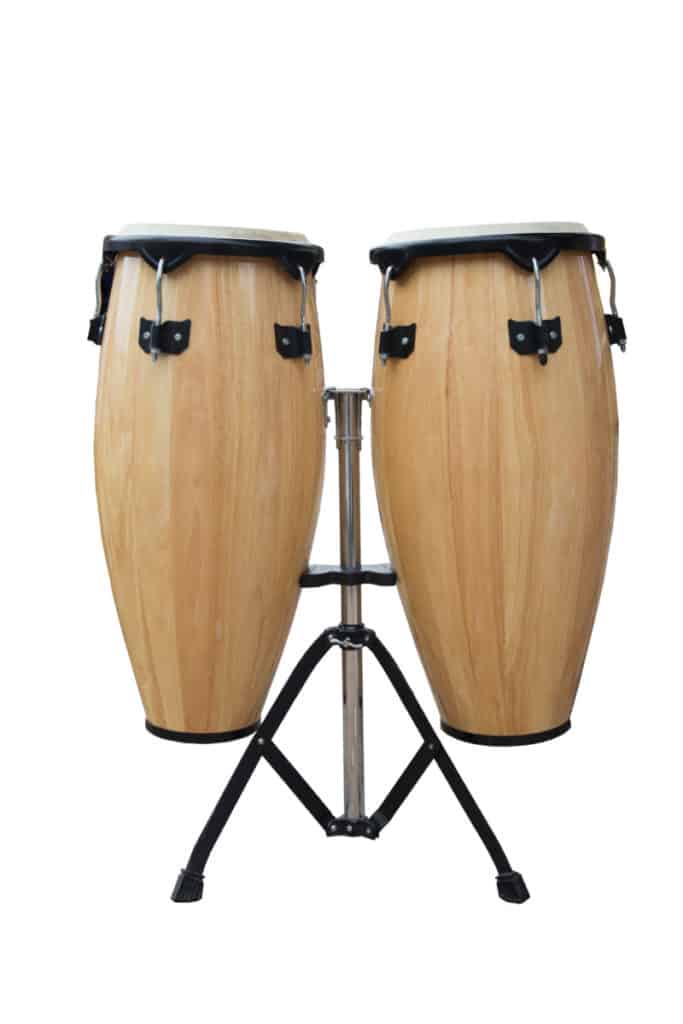
Bongo Drum Parts and Construction
Understanding the parts of a bongo drum makes it easier to choose, tune, and care for one. Most traditional bongos include the following components:
• Shells: The drum bodies are often made from wood, fiberglass, or another strong material.
• Drumheads: The heads are usually made from natural animal hide or synthetic material.
• Rims: The rims hold the heads in place and help transfer tension around the shell.
• Lugs and tension rods: These metal parts allow you to tighten or loosen each head.
• Center bridge: The bridge connects the two drums and keeps them together.
• Bearing edge: This is the smooth edge where the drumhead rests on the shell.
Traditional wooden bongos may use maple, oak, mahogany, or other hardwoods. The wood affects weight, appearance, attack, and resonance. Fiberglass models often resist changes in humidity and can be easier to maintain.
Natural hide heads offer a warm, complex tone. They can sound very expressive, but they may react to heat and humidity. Synthetic heads are more stable and may suit schools, outdoor performances, or players who want consistent tuning.
Common Bongo Sizes
Bongo sizes vary by maker, but the larger drum often measures about 8 to 10 inches across. The smaller drum often measures about 6 to 8 inches across.
Larger drums tend to produce a fuller and deeper sound. Smaller drums often create a sharper, brighter tone. Beginners do not need to obsess over exact measurements. A well-made, comfortable pair matters more than a small size difference.

How Bongo Drums Produce Their Sound
A bongo produces sound when the drumhead vibrates after you strike it. The shell helps project and shape that vibration. Tightening the head raises its pitch, while loosening it lowers the pitch.
The small drum usually carries the higher tone. The larger drum provides the lower tone. Together, they create a compact range that can sound both crisp and warm.
The player also changes the sound by striking different areas of the head. A hit near the center creates a deeper tone. A strike near the edge creates a brighter sound with more attack.
Hand position matters as much as force. A relaxed finger tap can sound clean and light, while a full palm stroke creates a stronger accent. This control is one reason the answer to what is a bongo drum includes both the instrument and its playing technique.
Basic Bongo Sounds
Many beginners start with these basic sounds:
• Open tone: Strike near the edge with the fingers while allowing the head to vibrate freely.
• Muffled tone: Strike the head while resting part of the hand on it to shorten the sound.
• Slap: Use a quick, controlled finger motion near the edge to create a sharp sound.
• Heel and toe: Alternate the heel and fingers of the hand for smooth, flowing patterns.
• Touch: Rest the fingers lightly on the head to create a soft, muted pulse.
Do not chase volume at first. Clear tone comes from timing, relaxed hands, and accurate placement.

How to Play Bongo Drums
You can play bongos while seated or standing. Many players sit with the drums between their knees, placing the smaller drum on the left and the larger drum on the right. Some players use the opposite setup, so comfort and musical control should guide your choice.
Start with a steady pulse. Tap quarter notes with one hand, then add alternating strokes with the other. Once the motion feels natural, practice short patterns that move between the high and low drums.
A simple practice routine can look like this:
-
Play four slow taps on the larger drum.
-
Play four slow taps on the smaller drum.
-
Alternate between both drums.
-
Add one stronger accent every four beats.
-
Repeat the pattern at a slightly faster speed.
Keep your wrists loose and your fingers curved. Avoid hitting with stiff hands. Tension can cause pain and often makes the tone harsh.
A common mistake is to copy fast salsa patterns before learning basic timing. In my experience with beginner percussion practice, slow and steady work builds better control than rushing through complex rhythms. Think of the rhythm as a conversation: one drum asks a question, and the other answers.
A Beginner Bongo Pattern
Try this four-beat pattern:
• Beat 1: Open tone on the larger drum
• Beat 2: Light finger tap on the smaller drum
• Beat 3: Open tone on the larger drum
• Beat 4: Two quick taps on the smaller drum
Use a metronome or a simple Latin backing track. Begin at a slow tempo, then increase the speed only when every note sounds clean.

What Are Bongo Drums Used For?
Bongo drums serve several musical purposes. In traditional Cuban music, they help shape the rhythm and interact with other percussion instruments. In modern music, they may add a short rhythmic phrase, a warm background pulse, or an energetic accent.
You may hear bongos in:
• Cuban son and salsa
• Latin jazz
• Cha-cha-cha and mambo