Best Cleaner For Piano Keys: Safe Cleaning Guide
The best cleaner for piano keys is a gentle, residue-free formula used with a soft microfiber cloth.
Finger oils, dust, and drink splashes can make clean piano keys feel dull and sticky. Many household sprays seem handy, but harsh chemicals and excess moisture can damage plastic, ivory, paint, or the spaces between keys. I compared piano-safe cleaners by formula, size, ease of use, surface range, and everyday value. The right product can make your piano look cared for without turning a simple wipe-down into a costly repair.
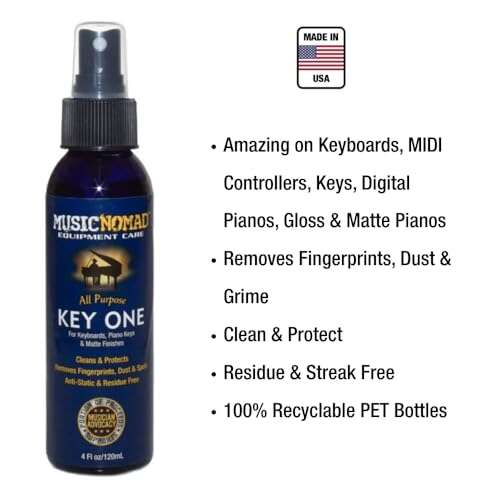
MusicNomad Key ONE Piano Cleaner

MusicNomad Key ONE is made for the part of the piano that gets touched most: the keys. The 4-ounce bottle is small, easy to store, and simple to control. Its focused purpose makes it a strong choice for players who want a dedicated key cleaner rather than a general furniture spray. I like that a key-specific product encourages a careful cleaning routine.
Use a small amount on a clean microfiber cloth, not directly on the keyboard. Work in small sections and follow with a dry part of the cloth. This method helps lift skin oil and light grime without flooding the key gaps. As a practical pick, it stands out for homes, teaching studios, and players who clean their instrument on a regular schedule.
Pros:
- Designed specifically for piano and keyboard keys
- Compact 4-ounce bottle stores easily
- Easy to apply with a soft cloth
- Useful for removing light fingerprints and body oil
- Good fit for routine home maintenance
- Comes from a well-known instrument-care brand
Cons:
- Small bottle may not suit busy music schools
- Does not replace a polish for the piano cabinet
- Requires a separate microfiber cloth for best results
My Recommendation
I recommend MusicNomad Key ONE for pianists who want a focused, low-fuss option for daily or weekly key care. It is especially useful when your main problem is fingerprints rather than deep stains. If you want the best cleaner for piano keys in a compact bottle, this is one of the safest places to start. Its value is strongest for careful owners who already keep a cloth nearby.
DINGSEN 200ml Piano Key Cleaner

DINGSEN offers a larger 200 ml bottle and is listed for piano keys and lacquer finishes. That wider use may appeal to owners who want one cleaner for light care around the instrument. The bottle size gives you more room for regular maintenance than a small travel-size product. Still, I would always test any cleaner on a hidden area before treating a visible finish.
The best way to use this type of cleaner is to spray the cloth lightly, then wipe the surface. Avoid spraying near the key bed, hinges, buttons, or seams. On glossy finishes, a dry buff with a second cloth can reduce streaks. This product may suit families and teachers who need a practical cleaner for more than one small keyboard.
Pros:
- Generous 200 ml size for repeated use
- Listed for piano keys and lacquer surfaces
- Useful for homes with more than one instrument
- Cloth-first application helps limit excess moisture
- Can support a simple whole-instrument care routine
- Good option for buyers seeking a larger bottle
Cons:
- Finish compatibility should be tested first
- May be more product than a casual player needs
- Not a substitute for professional finish repair
My Recommendation
DINGSEN is best for owners who want a larger bottle and a formula listed for both keys and lacquer finishes. It makes sense for a family piano, classroom, or home studio with frequent use. I would choose it as the best cleaner for piano keys when surface coverage and bottle size matter most. Use a small amount and keep the liquid away from gaps.
Key-Brite Cory Piano Key Cleaner, 4 oz

Key-Brite by Cory is a dedicated 4-ounce piano key cleaner from a brand associated with instrument care. Its compact size makes it easy to keep in a piano bench or cleaning drawer. The product is aimed at the keys, where sweat, dust, and small marks build up over time. That narrow purpose is helpful because piano keys need a different approach from wood furniture.
I favor a controlled wipe for older instruments, especially when the key material is unknown. Put the cleaner on a cloth, use light pressure, and dry the keys soon after. Never let liquid sit along the front edge or between neighboring keys. Key-Brite is a sensible choice for traditional piano owners who want a classic, dedicated key-care product.
Pros:
- Made for piano keys rather than general household use
- Convenient 4-ounce size
- Easy to keep near an acoustic piano
- Supports a low-moisture cleaning method
- Useful for regular fingerprint removal
- Sold through an authorized Cory product dealer
Cons:
- Small size may run out quickly in a studio
- Does not provide cabinet polish or wax
- Users must supply a suitable soft cloth
My Recommendation
I would point traditional piano owners toward Key-Brite when they want a simple, specialized key cleaner from an established care line. It is best for light soil and routine upkeep, not for yellowed keys, cracks, or old adhesive. If your search for the best cleaner for piano keys centers on a focused formula and easy storage, this 4-ounce bottle deserves consideration. It also makes a useful add-on for a piano care kit.
IMPRESA Piano Key Cleaner Spray

IMPRESA gives buyers an 8-fluid-ounce bottle and presents itself as a non-toxic, low-odor cleaner for piano keys. The larger size is helpful when several people play the instrument or when you clean more than one keyboard. A spray format can feel quick, but it also demands care. I strongly suggest spraying the cloth instead of spraying the piano itself.
Its low-odor design may be welcome in a small room, lesson space, or apartment. Start with one or two light passes rather than soaking a cloth. Wipe the key tops, then use a dry section to remove any remaining moisture. This cleaner is a good match for buyers who want more volume and prefer a modern spray bottle.
Pros:
- Large 8-fluid-ounce size
- Listed as non-toxic and low odor
- Convenient spray-bottle format
- Suitable for routine key cleaning when used carefully
- Practical for homes with frequent piano use
- May be comfortable in shared indoor spaces
Cons:
- Spraying directly on keys can create excess moisture
- Not designed as a complete piano cabinet polish
- Finish and material testing remains important
My Recommendation
IMPRESA is best for active households, teachers, and players who want an 8-ounce bottle with low odor. I would choose it when a small key-cleaner bottle feels limiting. It can be the best cleaner for piano keys for buyers who value volume and easy dispensing, as long as they control the spray. Keep a clean microfiber cloth beside the bottle for the best result.
MusicNomad Gloss Piano Care Kit

This three-piece MusicNomad kit is made for owners who want more than a key cleaner. The set includes a cleaner, polish, and cloth for gloss pianos. That combination can simplify care because the right product and cloth stay together. It is especially appealing for a polished grand, baby grand, or glossy digital piano that shows every fingerprint.
Use the key cleaner only where appropriate, then reserve the polish for the compatible exterior finish. Do not treat a matte or satin surface as if it were high gloss. The included cloth can also help reduce the temptation to use paper towels, which may leave lint or fine marks. As a full-care package, this kit offers strong convenience.
Pros:
- Includes cleaner, polish, and microfiber cloth
- Designed for gloss piano care
- Creates a simple, organized cleaning routine
- Useful for keys and compatible cabinet surfaces
- Good gift choice for a piano owner
- Reduces the need to buy separate care items
Cons:
- Not the best match for matte or satin finishes
- Costs more than a single key-cleaner bottle
- Polish should not be used on every piano surface
My Recommendation
I recommend this kit to owners of glossy pianos who want a complete care set. It is more useful than a single bottle if you also need to clean the cabinet and want an included cloth. For a gloss instrument, it may be the best cleaner for piano keys and exterior care in one package. Confirm your finish type before using the polish, since gloss and satin surfaces need different treatment.
MusicNomad Piano ONE Gloss Cleaner
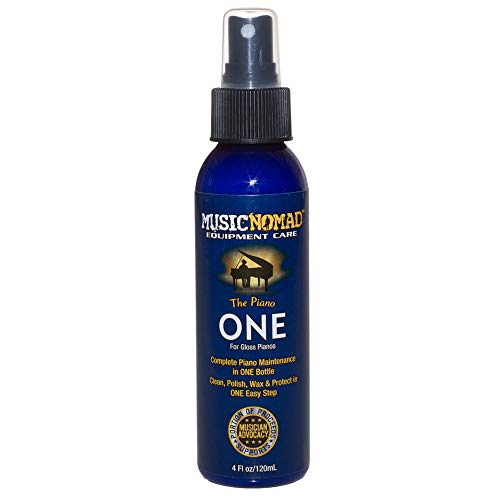
MusicNomad Piano ONE combines cleaning, polishing, and waxing for gloss piano surfaces. The 4-ounce bottle is compact, yet it aims to handle more than loose dust. This type of product is useful when a glossy cabinet has dull fingerprints and needs a light cosmetic refresh. It is not a repair compound, so it cannot correct deep scratches or finish damage.
Apply it sparingly to a cloth and work on a small area at a time. A second dry cloth helps create an even shine without smears. I would keep it away from keys unless the label clearly supports that use. For owners who care about the piano’s cabinet as much as its keyboard, Piano ONE is a convenient specialist product.
Pros:
- Combines cleaner, polish, and wax
- Made for gloss piano surfaces
- Helps refresh the look of light fingerprints
- Compact 4-ounce bottle is easy to store
- Can reduce the need for several cabinet-care products
- Useful for glossy grand and digital piano exteriors
Cons:
- Not intended for every finish type
- Wax and polish are not needed for simple key cleaning
- Does not repair scratches or cloudy finish damage
My Recommendation
Piano ONE is best for the player who wants to maintain a glossy cabinet and not just wipe the keys. I would select it for a high-shine instrument that needs light cleaning and cosmetic care. It may be the best cleaner for piano keys only when your purchase also includes gloss-surface care; otherwise, a dedicated key formula is more focused. Use it with restraint and check the finish first.
Key-Brite Cory Piano Key Cleaner, 8 oz

The 8-ounce Key-Brite bottle gives the same focused product category as the smaller version but offers more for regular use. That difference matters in a school, church, rehearsal room, or busy home. Piano keys collect marks quickly when many hands use them. A larger bottle helps keep a cleaning routine from ending just when it becomes useful.
I would still use a measured amount on a microfiber cloth. More product does not mean better cleaning, and excess liquid can move into seams. Wipe in straight, gentle passes and dry the keys before closing the fallboard. This bottle makes sense for buyers who already like a dedicated key cleaner and want better long-term value.
Pros:
- Generous 8-ounce size
- Dedicated formula for piano keys
- Well suited to frequent cleaning
- Practical for schools, churches, and studios
- Less likely to run out as quickly as a 4-ounce bottle
- Simple product choice for focused key care
Cons:
- Larger bottle takes more storage space
- Still needs a separate soft cloth
- Does not clean or polish the piano cabinet
My Recommendation
The 8-ounce Key-Brite is my choice for high-use instruments and shared spaces. It offers the same focused approach as a small bottle while reducing replacement trips. If you need the best cleaner for piano keys for a classroom or active studio, its larger size gives it a clear advantage. For occasional home use, the 4-ounce version may be easier to justify.
WANJAO Piano Cleaner and Polish

WANJAO is listed as a cleaner, polish, wax, and protectant in one 250 ml bottle. The all-in-one design may appeal to owners who dislike managing several products. It provides a larger amount for repeated home care and can be useful when the piano needs both cleaning and a light shine. As with every combined polish, surface compatibility matters more than the promise of convenience.
I would use this product on a cloth and test it on a hidden area first. Keep the application thin, especially on glossy finishes where heavy residue can show. It is better to make two light passes than one wet pass. WANJAO may suit buyers who want a broad care product, but dedicated key cleaner remains the safer choice when keys are the only concern.
Pros:
- Large 250 ml bottle
- Combines cleaning, polishing, waxing, and protection
- Useful for owners who prefer one care product
- Suitable for repeated light maintenance when compatible
- May help reduce visible smudges on glossy surfaces
- Good value for buyers needing more product
Cons:
- All-in-one formulas need careful surface testing
- May be excessive for simple key cleaning
- Too much product can leave unwanted residue
My Recommendation
WANJAO is best for a buyer who wants a broad cleaner and polish in a large bottle. I would consider it for a glossy piano with both key and exterior-care needs, provided the finish is compatible. It is not my first pick for delicate or unknown surfaces. For the best cleaner for piano keys, choose WANJAO when versatility matters more than a narrow key-only formula.
Samorillo Piano Shine Polish and Cleaner

Samorillo Piano Shine is an 8-ounce cleaner and polish made in the USA, according to its listing. It includes wax and an added UV protectant, plus an anti-static positioning that may help limit dust attraction. Those features make it more of a finish-care product than a plain key wipe. It is a thoughtful option for glossy piano owners who want a clean, bright appearance.
Use a light amount and buff with a soft, dry cloth. A product that includes wax should not be spread heavily over textured, matte, or unfinished areas. I would treat the keys with care and use the product mainly on compatible exterior surfaces unless the label states otherwise. Its 8-ounce size is a useful middle ground for home players.
Pros:
- 8-ounce bottle provides useful household capacity
- Includes cleaner, polish, and wax
- Listed with UV protectant
- Anti-static positioning may help reduce dust buildup
- Made in the USA according to the product listing
- Good fit for glossy cabinet maintenance
Cons:
- More focused on shine than deep key cleaning
- Wax may not suit matte or satin finishes
- Requires careful buffing to avoid streaks
My Recommendation
Samorillo is best for owners who care about a glossy piano’s appearance and want added finish-care features. I would choose it for cabinet cleaning, light polishing, and dust control rather than as my only key product. It can support the best cleaner for piano keys routine when paired with a dedicated key formula. The 8-ounce size offers a good balance for regular home use.
Calvana Two-Pack Piano Cleaner Kit

Calvana includes two 4-ounce bottles and a 12-by-12-inch microfiber cloth. The two-pack is convenient for keeping one bottle at home and one in a studio or lesson bag. The listing presents the kit for several piano types, including grand, baby grand, and digital pianos, as well as some other instruments. The included cloth adds value because the cloth is a key part of safe cleaning.
I like kits that remove guesswork for first-time piano owners. Apply the solution to the cloth, use a light touch, and wash or replace the cloth when it becomes dirty. Do not assume a product made for several surfaces is safe for every finish without testing. Calvana is a practical starter set for players who want a little extra supply.
Pros:
- Includes two 4-ounce bottles
- Comes with a 12-by-12-inch microfiber cloth
- Convenient for home and studio use
- Listed for several piano types and surfaces
- Good starter kit for new piano owners
- Provides backup product for future cleaning
Cons:
- Two bottles may be unnecessary for occasional use
- Surface testing remains important
- Included cloth may need washing before repeated use
My Recommendation
Calvana is best for new owners, teachers, and players who want a ready-to-use kit with a cloth and backup bottle. It offers practical value when you clean more than one instrument or want supplies in two locations. I would call it the best cleaner for piano keys for convenience-focused buyers. Keep the cloth clean and avoid using the same dirty side across the entire keyboard.
How to Choose the Best Cleaner for Piano Keys
The right cleaner depends on the key material, the type of dirt, and how often the piano is played. Most modern digital piano keys use plastic or synthetic surfaces. Acoustic pianos may have plastic, acrylic, wood, or older ivory key coverings. Because materials vary, no single cleaner deserves blind use on every instrument.
For normal fingerprints, choose a product made for piano or keyboard keys. A dedicated formula is usually a better fit than glass cleaner, disinfectant, furniture spray, or dish soap. Household products may contain ammonia, alcohol, bleach, strong solvents, oils, or waxes that can cloud or weaken a finish. Even if a cleaner works on one surface, it may harm another.
Check the Finish Before You Clean
Gloss, satin, matte, and textured finishes reflect light in different ways. A polish made for a glossy cabinet may leave an uneven look on a matte surface. If you do not know the finish, check the piano manual or ask a qualified piano technician. For valuable vintage instruments, professional advice is worth more than a quick shine.
Old ivory keys need extra care. Ivory is porous and can crack when exposed to moisture or heat. Do not soak or scrub it. If keys are loose, chipped, yellowed, or stained deep inside, contact a piano technician instead of trying a strong cleaner.
Use Less Liquid Than You Think
Moisture is the main risk during piano cleaning. Liquid can slip between keys and reach felt, wood, contacts, springs, or other internal parts. Spray the cloth, never the keyboard. The cloth should feel slightly damp, not wet.
I use three simple steps: remove loose dust with a dry cloth, wipe with a lightly damp cloth, and dry with a second cloth. This approach is slow but gentle. Think of the cloth as a soft broom, not a scrub pad.
Pick the Right Cloth
A clean microfiber cloth works well because it is soft and traps fine dust. Use a cloth with no grit, loose threads, buttons, or rough seams. Keep separate cloths for keys and the cabinet. A cloth that picked up polish from the exterior should not return to the key bed.
Wash reusable cloths without fabric softener if the care instructions allow it. Softener can leave a film. Store the cloth in a clean bag so it does not collect grit between uses.
How Often Should You Clean Piano Keys?
Light weekly dusting is enough for many home players. Wipe the keys more often if several people play, if the room is dusty, or if someone plays after applying hand lotion. Clean hands help more than any bottle. Wash and dry your hands before playing, and avoid snacks or drinks near the instrument.
Do not clean just because a product promises a brilliant shine. Too much polishing can create buildup. The best cleaner for piano keys is the one that removes soil with the least amount of product and rubbing.
Best Features at a Glance
| Best for | Why |
|---|---|
| Dedicated key cleaning | MusicNomad Key ONE and Key-Brite focus on fingerprints, dust, and light body oil. |
| Gloss piano care | MusicNomad Gloss Care Kit and Piano ONE add products for compatible cabinet finishes. |
| Large supply and convenience | IMPRESA, DINGSEN, Key-Brite 8 oz, and Calvana offer more product or useful extras. |
Common Piano-Key Cleaning Mistakes
The first mistake is spraying the piano. A spray can travel farther than expected and settle in key gaps. The second is using a rough paper towel or old shirt with dust trapped in its fibers. The third is scrubbing marks with force. Piano keys are not kitchen counters, and pressure can create more harm than the original stain.
Another mistake is using one product on every surface. Key cleaner, cabinet polish, and wax do different jobs. A product for a glossy finish may not suit a satin case. Follow the product label, then test a hidden spot. If the surface changes color, shine, or texture, stop at once.
Do not try to whiten old keys with bleach, peroxide, abrasive paste, or strong solvent. These methods can weaken the surface and may cause permanent discoloration. A technician can identify whether a mark comes from dirt, age, sun exposure, adhesive, or damaged material.
FAQs Of best cleaner for piano keys
What is the best cleaner for piano keys?
A dedicated piano-key cleaner used with a soft microfiber cloth is the safest general choice. MusicNomad Key ONE and Key-Brite are focused options. Always check the label and test an unseen area first.
Can I use glass cleaner on piano keys?
I do not recommend it unless the piano maker clearly approves it. Glass cleaners may contain ammonia, alcohol, or other ingredients that can harm some plastics and finishes. Use a product made for piano or keyboard keys instead.
Should I spray cleaner directly on the keys?
No. Spray a small amount onto a clean cloth. Direct spray can run between the keys and damage internal parts.
Can piano cleaner remove yellowing?
Cleaner can remove surface dirt, but it usually cannot reverse aging, sun damage, or chemical changes. Do not use bleach or abrasive products. Ask a piano technician about old ivory or badly discolored keys.
How do I clean piano keys without damaging them?
Dust first, use a lightly damp microfiber cloth, wipe gently, and dry at once. Work in small sections. Keep liquid away from gaps, seams, controls, and the key bed.
Final Verdict: Which Should You Buy?
MusicNomad Key ONE is my top focused pick for the best cleaner for piano keys. Choose Key-Brite 8 oz for heavy use, or the MusicNomad gloss kit for full cabinet care.
Use any piano cleaner lightly and with a clean microfiber cloth. Careful habits protect your keys better than harsh chemicals or excess shine.

Senior Music Reviewer
Alex Carter is a seasoned music reviewer with over a decade of experience in the world of sound and instruments. Passionate about helping musicians and enthusiasts make informed choices, he brings sharp insights and in-depth knowledge to every review. From classical instruments to modern gear, Alex combines technical expertise with a love for music to deliver content that resonates with readers.
As a Senior Music Reviewer and expert author on Tuneluma.com, Alex is dedicated to sharing honest evaluations, practical advice, and thoughtful commentary to guide readers in their musical journey.