How Do Drums Create Sound: The Science Behind Every Beat
Drums create sound when a struck drumhead vibrates and moves air, producing waves our ears hear.
To understand how do drums create sound, you need to look at the drumhead, shell, air, and the way each part works together. From a quiet practice pad to a powerful concert bass drum, the same basic physics turns a hit into a musical pulse. This guide explains the process in simple terms, while covering tuning, materials, resonance, playing technique, and common sound problems.
How Do Drums Create Sound?
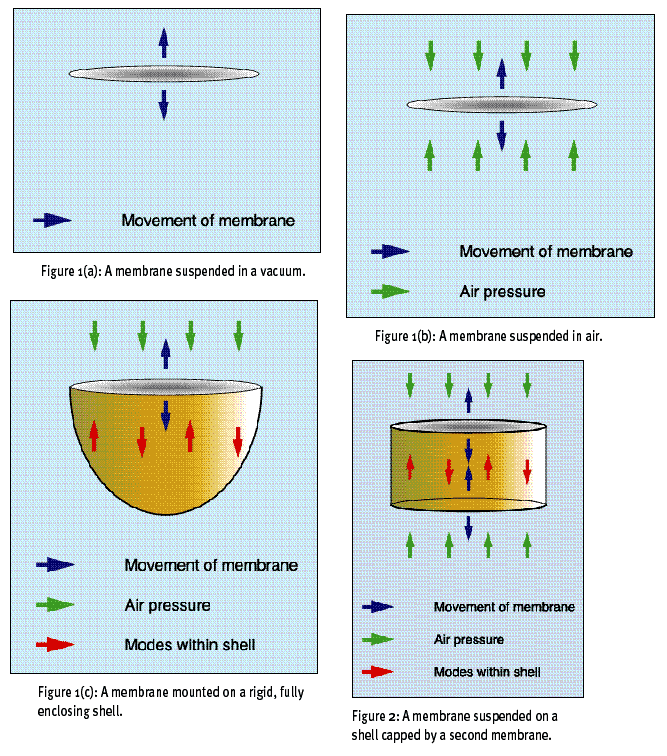
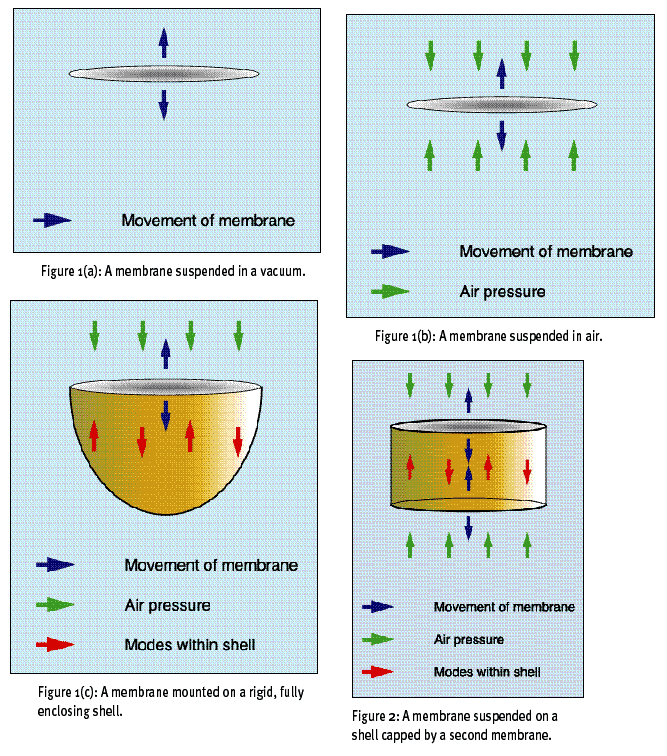
When a drumstick, hand, or mallet hits a drumhead, the head bends and begins to vibrate. That vibration pushes against the air around it. The moving air travels outward as sound waves, which reach your ears and create the sound you recognize as a drumbeat.
The drumhead is the first part of this process. It acts much like a stretched sheet or a thin trampoline. When struck, it moves up and down in complex patterns. Each pattern has a different speed and shape, which helps create the drum’s pitch and tone.
The drum shell also plays an important role. It supports the drumhead and reflects some of the sound energy back into the drum. The shell’s size, shape, thickness, and material affect the drum’s volume, warmth, brightness, and sustain.
A simple way to picture the process is:
- A player strikes the drumhead.
- The drumhead vibrates.
- The vibration moves nearby air.
- The shell and air inside the drum respond.
- Sound waves travel to the listener’s ears.
So, how do drums create sound in practical terms? They convert physical energy from a strike into vibration, and then convert that vibration into moving air.
The Main Parts That Produce a Drum’s Sound
A drum may look simple, but several parts work together to shape its voice. Small changes in one part can make a clear difference in the final sound.
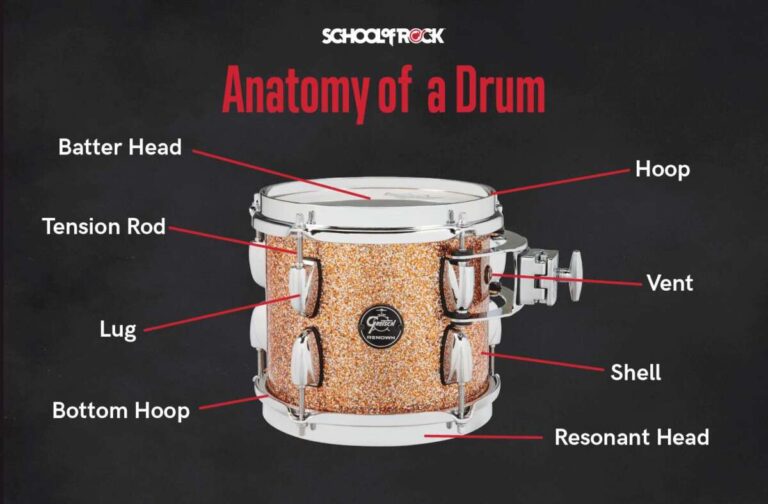
The batter head
The batter head is the surface that the player strikes. It may be made from plastic film or, in some traditional drums, animal skin. Modern synthetic heads are popular because they stay more stable in changes of heat and humidity.
A thin head often gives a bright, open sound. A thicker head can produce more attack and durability. Coated heads usually add a softer feel and a warmer tone.
The resonant head
Many acoustic drums have a second head on the bottom. This is called the resonant head. It vibrates in response to the batter head and helps extend the sound.
The resonant head is especially important on snare drums and toms. If it is too loose, the drum may sound flat or slow. If it is too tight, the sound may become sharp and short.
The drum shell
The shell forms the body of the drum. Common shell materials include:
• Maple, which often gives a warm and balanced tone
• Birch, which often produces clear attack and strong high frequencies
• Poplar, which can create a soft and affordable sound
• Mahogany, which is often linked with deep, full tones
• Steel or brass, which can make snare drums bright and cutting
The material matters, but it is not the only factor. Shell thickness, bearing edges, depth, and construction also shape the sound.
The air cavity
Air inside the drum acts like a small resonating chamber. As the drumhead moves, the air inside responds and pushes back. This interaction can strengthen certain frequencies and help create a fuller tone.
This is one reason a larger drum often sounds deeper than a smaller drum. A larger cavity supports slower vibrations, which we hear as lower frequencies.
The hardware
Hoops, tension rods, lugs, snares, and mounts also affect the result. These parts may not create the main vibration, but they control how freely the drumhead moves.
A damaged hoop or uneven tension can prevent the head from vibrating evenly. In my experience with drum setup, many “bad drum” problems are really tension or head problems rather than shell problems.
The Role of Vibration and Sound Waves
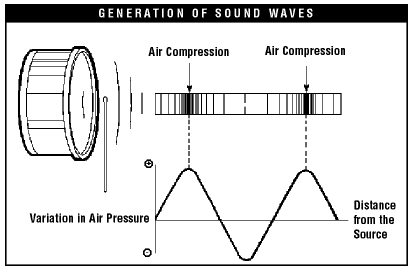
Sound is a form of energy that travels through a medium. In the case of an acoustic drum, that medium is usually air. The vibrating drumhead creates changes in air pressure, and those changes move outward as sound waves.
When the drumhead moves toward you, it compresses the air in front of it. When it moves away, the air pressure drops slightly. These repeated pressure changes form a wave.
Your ear detects these pressure changes. The eardrum then vibrates in response, and your brain interprets the movement as sound.
Frequency and perceived pitch
Frequency means the number of vibrations that happen each second. It is measured in hertz, or Hz.
Low-frequency vibrations create a deeper sound. High-frequency vibrations create a sharper or brighter sound. A bass drum produces strong low-frequency energy, while a snare drum produces more high-frequency energy from its head, shell, and snare wires.
Drums do not usually create one pure frequency. Instead, they create many frequencies at once. This mixture is why a drum often has a clear attack, a body or note, and a fading tail.
Amplitude and volume
Amplitude describes the strength of a vibration. A harder hit usually creates a larger movement in the drumhead. This moves more air and produces a louder sound.
However, hitting harder does not always create a better sound. If the drumhead is poorly tuned, extra force may only produce a harsh slap. Good technique uses the right contact point, stick angle, and rebound.
Timbre and tone color
Timbre is the quality that makes one drum sound different from another, even when both play the same general pitch. It comes from the mix of frequencies and the length of the sound.
Timbre depends on:
• Drum size
• Shell material
• Head type
• Tuning
• Room acoustics
• Stick or mallet choice
• Striking location
This explains why two snare drums can play the same rhythm but sound completely different.
How Drum Size and Shape Change the Sound
Drum size strongly affects how drums create sound. Diameter mainly influences the pitch range, while shell depth often affects fullness, projection, and sustain.
A large bass drum moves a greater amount of air. Its sound is usually low, broad, and powerful. A small tom moves less air and tends to produce a higher, shorter sound.
The depth of a drum also matters. A deeper shell can support a longer and fuller tone, although tuning and head choice remain important. A shallow drum may respond quickly and produce a sharp attack.
The shape of the shell influences how sound reflects inside the drum. A round shell helps create a regular air cavity, while the bearing edge controls how the head touches the shell.
The bearing edge is the point where the drumhead rests on the shell. A clean, even edge allows the head to vibrate with fewer unwanted problems. A damaged edge can cause weak resonance, uneven pitch, or air leaks.
A useful comparison is to think of a drum as a room. A large room supports a deep, broad sound. A small room creates a tighter and more focused response. The drum’s shell is not exactly a room, but the comparison helps explain how size affects resonance.

How Tuning Controls a Drum’s Sound
Tuning controls the tension of the drumhead. More tension generally raises the head’s pitch, while less tension lowers it. Tuning also affects attack, resonance, response, and sustain.
To tune a drum evenly:
- Place the drum on a stable surface.
- Tighten each tension rod by hand.
- Use a drum key to make small turns.
- Move across the drum in a star pattern.
- Tap near each tension rod.
- Listen for similar pitches around the head.
- Make small corrections instead of large turns.
Even tension is more important than simply making the drum tight. If one area is loose and another is tight, the head may vibrate unevenly.
The batter and resonant heads do not always need the same tension. A slightly tighter resonant head can create a quicker response and longer sustain. A looser batter head may create a deeper and softer sound.
There is no single perfect tuning. Jazz, rock, marching, worship, orchestral, and studio drumming may all use different tuning choices. The best setting depends on the music, room, microphone setup, and player.
One common mistake is tuning only by the note in the center of the head. The center can sound fine while the edges remain uneven. Always check several points around the head.

How Different Drums Create Different Sounds
The question “how do drums create sound” has a different answer for each type of drum because each design emphasizes different vibrations.
Bass drum
A bass drum has a large diameter and usually a deep shell. It creates a low, powerful sound by moving a large amount of air.