What Is A Bongo Drum: History, Sound And Uses
A bongo drum is a small pair of tuned hand drums played together with the fingers.
If you have ever heard bright, rapid rhythms in Cuban son, salsa, or Latin jazz, you have likely heard bongos. This guide explains what is a bongo drum, where it came from, how it works, how to play it, and how to choose one with confidence.
What Is a Bongo Drum?
A bongo drum is a pair of small, open-bottomed drums joined by a narrow wooden or metal bridge. One drum is larger and has a lower pitch. The smaller drum has a higher pitch. Players usually place the bongos between their knees and strike the heads with their fingers and palms.
The larger drum is called the hembra, which means “female” in Spanish. The smaller drum is called the macho, or “male.” This naming system describes the relative size and pitch of each drum.
When people ask what is a bongo drum, they often expect a simple answer. However, a bongo is more than a small percussion instrument. It is a tuned drum pair that adds sharp accents, rolling patterns, and lively movement to music.
Bongo drums are common in Cuban music, salsa, son, cha-cha-cha, Latin jazz, pop, and world music. They also work well in classrooms, drum circles, acoustic sessions, and home practice.

The History and Cultural Roots of Bongo Drums
Bongo drums developed in eastern Cuba during the late 19th or early 20th century. Their exact origin is not tied to one single person or date. Instead, the instrument grew from several African and European musical traditions that met in Cuba.
The bongo became strongly linked with son cubano, a Cuban style that blends Spanish song forms with African rhythmic ideas. Son musicians used bongos to support the groove while leaving space for singers, guitars, bass, and other percussion instruments.
The instrument later spread beyond Cuba through recordings, touring bands, radio, and dance music. By the mid-20th century, bongos had become familiar in Latin jazz and popular music across the United States.
It is important not to describe the bongo as simply an “African drum.” African musical traditions influenced its development, but the modern bongo is a distinctly Cuban instrument with its own history and playing language.
Why the Bongo Matters
The bongo reflects cultural exchange. Its sound carries African rhythmic concepts, Spanish musical forms, Cuban performance practice, and modern global influence.
That history also explains why what is a bongo drum cannot be understood only by looking at its shape. The instrument is part of a living musical tradition, not just a decorative pair of drums.
Bongo Drum Parts and Construction
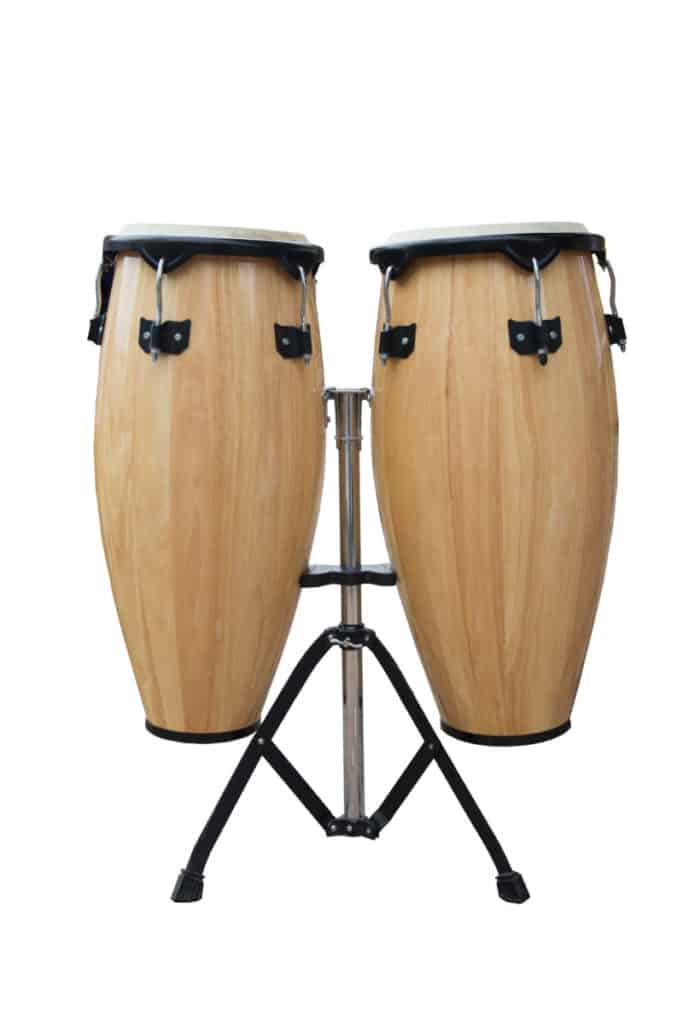
Understanding the parts of a bongo drum makes it easier to choose, tune, and care for one. Most traditional bongos include the following components:
• Shells: The drum bodies are often made from wood, fiberglass, or another strong material.
• Drumheads: The heads are usually made from natural animal hide or synthetic material.
• Rims: The rims hold the heads in place and help transfer tension around the shell.
• Lugs and tension rods: These metal parts allow you to tighten or loosen each head.
• Center bridge: The bridge connects the two drums and keeps them together.
• Bearing edge: This is the smooth edge where the drumhead rests on the shell.
Traditional wooden bongos may use maple, oak, mahogany, or other hardwoods. The wood affects weight, appearance, attack, and resonance. Fiberglass models often resist changes in humidity and can be easier to maintain.
Natural hide heads offer a warm, complex tone. They can sound very expressive, but they may react to heat and humidity. Synthetic heads are more stable and may suit schools, outdoor performances, or players who want consistent tuning.
Common Bongo Sizes
Bongo sizes vary by maker, but the larger drum often measures about 8 to 10 inches across. The smaller drum often measures about 6 to 8 inches across.
Larger drums tend to produce a fuller and deeper sound. Smaller drums often create a sharper, brighter tone. Beginners do not need to obsess over exact measurements. A well-made, comfortable pair matters more than a small size difference.

How Bongo Drums Produce Their Sound
A bongo produces sound when the drumhead vibrates after you strike it. The shell helps project and shape that vibration. Tightening the head raises its pitch, while loosening it lowers the pitch.
The small drum usually carries the higher tone. The larger drum provides the lower tone. Together, they create a compact range that can sound both crisp and warm.
The player also changes the sound by striking different areas of the head. A hit near the center creates a deeper tone. A strike near the edge creates a brighter sound with more attack.
Hand position matters as much as force. A relaxed finger tap can sound clean and light, while a full palm stroke creates a stronger accent. This control is one reason the answer to what is a bongo drum includes both the instrument and its playing technique.
Basic Bongo Sounds
Many beginners start with these basic sounds:
• Open tone: Strike near the edge with the fingers while allowing the head to vibrate freely.
• Muffled tone: Strike the head while resting part of the hand on it to shorten the sound.
• Slap: Use a quick, controlled finger motion near the edge to create a sharp sound.
• Heel and toe: Alternate the heel and fingers of the hand for smooth, flowing patterns.
• Touch: Rest the fingers lightly on the head to create a soft, muted pulse.
Do not chase volume at first. Clear tone comes from timing, relaxed hands, and accurate placement.

How to Play Bongo Drums
You can play bongos while seated or standing. Many players sit with the drums between their knees, placing the smaller drum on the left and the larger drum on the right. Some players use the opposite setup, so comfort and musical control should guide your choice.
Start with a steady pulse. Tap quarter notes with one hand, then add alternating strokes with the other. Once the motion feels natural, practice short patterns that move between the high and low drums.
A simple practice routine can look like this:
-
Play four slow taps on the larger drum.
-
Play four slow taps on the smaller drum.
-
Alternate between both drums.
-
Add one stronger accent every four beats.
-
Repeat the pattern at a slightly faster speed.
Keep your wrists loose and your fingers curved. Avoid hitting with stiff hands. Tension can cause pain and often makes the tone harsh.
A common mistake is to copy fast salsa patterns before learning basic timing. In my experience with beginner percussion practice, slow and steady work builds better control than rushing through complex rhythms. Think of the rhythm as a conversation: one drum asks a question, and the other answers.
A Beginner Bongo Pattern
Try this four-beat pattern:
• Beat 1: Open tone on the larger drum
• Beat 2: Light finger tap on the smaller drum
• Beat 3: Open tone on the larger drum
• Beat 4: Two quick taps on the smaller drum
Use a metronome or a simple Latin backing track. Begin at a slow tempo, then increase the speed only when every note sounds clean.

What Are Bongo Drums Used For?
Bongo drums serve several musical purposes. In traditional Cuban music, they help shape the rhythm and interact with other percussion instruments. In modern music, they may add a short rhythmic phrase, a warm background pulse, or an energetic accent.
You may hear bongos in:
• Cuban son and salsa
• Latin jazz
• Cha-cha-cha and mambo
• Reggae and world music
• Pop and rock recordings
• Acoustic performances
• School music programs
• Drum circles and community music
Bongos are also useful for teaching rhythm. Their two different pitches make it easy for students to hear contrast. They are small enough for many young players to handle, yet expressive enough for advanced musicians.
The instrument can support a band, but it should not overpower the music. Good bongo playing leaves room for the singer and other instruments. This is an important lesson for new players: rhythm is not just about playing more notes. It is about placing the right notes at the right time.

Bongo Drums Compared With Congas and Bongos
People often confuse bongos with congas because both instruments come from Cuban percussion traditions. They are different in size, shape, and role.
Bongos are a small paired set of drums. Congas are taller, single-headed drums played upright or on stands. Congas usually produce deeper tones and support broader rhythmic patterns.
Here is a simple comparison:
• Bongos: Small, paired drums with high and low voices
• Congas: Tall, larger drums with a deep and resonant sound
• Djembes: Goblet-shaped drums with a wide tonal range
• Timbales: Metal-shell drums with a bright, cutting tone
When learning what is a bongo drum, this comparison helps prevent confusion. A bongo is not simply a smaller conga. It has its own construction, sound, history, and technique.

How to Choose a Bongo Drum
A good first bongo should feel solid, sound clear, and stay comfortable between your knees. You do not need the most expensive model, but extremely cheap drums may have weak hardware, uneven heads, or poor tuning.
Look for these features:
• Strong shells without cracks or loose joints
• Smooth bearing edges
• Evenly spaced tension hardware
• Drumheads without deep cuts or dry splits
• A stable center bridge
• A comfortable weight
• A clean difference in pitch between the two drums
Wooden bongos often appeal to players who want a classic look and warm tone. Fiberglass bongos can be practical for travel and changing weather. Natural heads provide traditional character, while synthetic heads offer easier consistency.
If possible, test the drums in person. Tap near the center and edge of each head. Listen for buzzing, rattling, or dead spots. A healthy drum should respond quickly and produce a clear tone.
For online purchases, read the shell material, head type, drum diameter, hardware quality, and return policy. Product photos alone cannot tell you how evenly a bongo tunes.
Tuning and Caring for Bongo Drums
Bongo drums do not always need exact musical notes, especially during casual practice. They do need a clear pitch relationship. The smaller drum should sound higher than the larger one.
Tune each tension rod in small steps. Move around the drum rather than tightening one rod all at once. This spreads pressure evenly and helps prevent wrinkles or uneven tension.
Use these care habits:
• Keep bongos away from extreme heat and direct sunlight.
• Store them in a dry place with stable temperature.
• Wipe dust and sweat from the shells and hardware.
• Do not soak natural heads.
• Loosen tension slightly for long-term storage if the manufacturer recommends it.
• Check the bridge and tension rods from time to time.
• Use a padded bag when carrying them.
Humidity can change the pitch of natural hide heads. A dry room may tighten the head, while damp air may soften it. This is normal, but sudden changes can stress the material.
One mistake beginners often make is overtightening the heads to get a brighter sound. That can shorten head life and damage hardware. Tune in small steps and stop when the drum gives a clean, lively response.
Benefits and Limitations of Bongo Drums
Bongos offer several benefits for new and experienced musicians. They are portable, expressive, and useful in many musical settings.
Benefits
• They are compact and easy to carry.
• They teach timing and hand coordination.
• They offer two clear pitches.
• They work in solo practice and group music.
• They can support many Latin and world music styles.
• They do not require electricity or complex equipment.
• They provide quick feedback because every hand motion changes the sound.
Limitations
• Natural heads can react to weather.
• Small bongos cannot produce the deep bass of larger drums.
• Poor technique may lead to hand or wrist strain.
• Low-quality hardware can make tuning difficult.
• Loud playing may disturb others in small spaces.
Bongos are excellent for rhythm training, but they are not a complete replacement for a full percussion setup. If you want deep low tones, you may later add a conga, bass drum, or other larger instrument.
Frequently Asked Questions About What Is a Bongo Drum
What is a bongo drum made of?
A bongo drum usually has two shells made from wood or fiberglass, with natural hide or synthetic heads. Metal rims, tension rods, and a center bridge hold the parts together.
Is a bongo drum easy to learn?
Basic bongo patterns are fairly easy to start, but advanced control takes practice. Relaxed hands, steady timing, and slow repetition help beginners progress safely.
Which bongo drum is bigger?
The larger drum is called the hembra, or female drum. The smaller drum is called the macho, or male drum, and it usually has the higher pitch.
Do bongo drums need tuning?
Yes, bongo drums need tuning for a clear and balanced sound. You do not always need exact notes, but the two drums should have a pleasing pitch relationship.
Are bongos and congas the same?
No. Bongos are a small pair of connected drums, while congas are larger, taller drums. Congas usually produce deeper tones and use different playing techniques.
Can children play bongo drums?
Many children can learn bongo drums with adult guidance and a properly sized instrument. Teach relaxed playing, short practice sessions, and safe volume levels.
What music uses bongo drums?
Bongos are strongly associated with Cuban son, salsa, Latin jazz, mambo, and cha-cha-cha. They also appear in pop, rock, reggae, acoustic music, and educational settings.
Conclusion
A bongo drum is a compact pair of tuned hand drums with deep Cuban roots and a bright, flexible voice. Its two shells create contrasting pitches, while finger, palm, and edge techniques produce a wide range of sounds.
The best way to understand what is a bongo drum is to hear and play one. Start slowly, focus on clean timing, care for the heads, and choose a drum that feels comfortable. Explore traditional Cuban rhythms, listen closely to skilled players, and share your progress with other musicians.

Senior Music Reviewer
Alex Carter is a seasoned music reviewer with over a decade of experience in the world of sound and instruments. Passionate about helping musicians and enthusiasts make informed choices, he brings sharp insights and in-depth knowledge to every review. From classical instruments to modern gear, Alex combines technical expertise with a love for music to deliver content that resonates with readers.
As a Senior Music Reviewer and expert author on Tuneluma.com, Alex is dedicated to sharing honest evaluations, practical advice, and thoughtful commentary to guide readers in their musical journey.