What Does H Mean In Guitar Tabs: Hammer-On Guide
In guitar tabs, “h” means hammer-on, a smooth note change played without picking the second note.
If you are learning to read guitar tabs, understanding what does h mean in guitar tabs is a key step. This small letter shows a useful technique that adds speed, feeling, and flow to a guitar line. Once you learn how to play it, many riffs and solos become much easier to understand.
What does h mean in guitar tabs?
In guitar tabs, “h” means hammer-on. It tells you to pick the first note, then sound the next note by pressing another finger onto the same string without picking again.
For example:
e|---5h7---
You pick the note at the fifth fret. Then, while the string is still ringing, quickly place a finger on the seventh fret. The second note should sound from the force of your fretting finger.
This is why it is called a hammer-on. Your finger acts like a small hammer striking the string against the fretboard. The result is a smooth rise in pitch.
Understanding what does h mean in guitar tabs also means understanding the difference between picking and fretting. The picking hand starts the sound, while the fretting hand creates the second note.
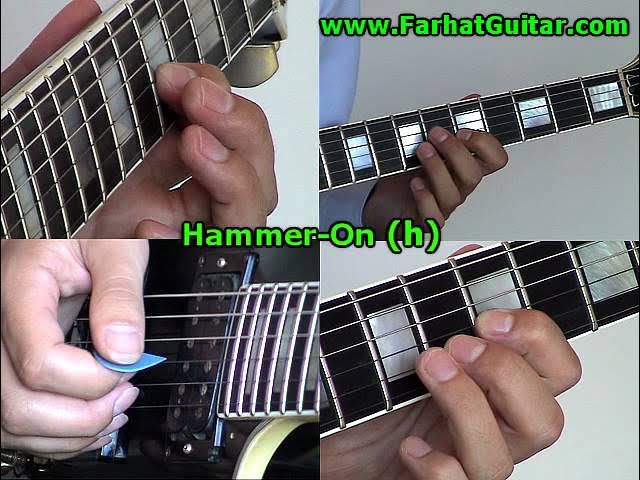
How to play a hammer-on correctly
A clean hammer-on needs timing, finger strength, and control. It should sound like two clear notes, even though you pick only once.
Follow these steps:
- Place your first finger on the starting fret.
- Pick the string once.
- Keep the first finger down.
- Quickly place another finger on the higher fret.
- Press with enough force to make the second note ring.
- Keep both notes steady and relaxed.
Try this simple exercise:
e|---5h7---5h7---5h7---
B|----------------------
G|----------------------
D|----------------------
A|----------------------
E|----------------------
Pick each note at the fifth fret. Do not pick the seventh fret. Your second finger should land close to the fret wire, not in the middle of the fret space.
Many beginners press too hard. That can slow the hand and create tension. A short, firm motion usually works better than a large movement.
When explaining what does h mean in guitar tabs to new players, I often compare it to walking up stairs. The first pick starts the movement, and the hammer-on steps up to the next note without stopping.

Hammer-on tab examples
The most common hammer-on pattern uses two notes on one string.
e|---3h5---
This means:
• Pick the third fret.
• Hammer onto the fifth fret.
• Do not pick the fifth fret.
You may also see a longer series of hammer-ons:
e|---5h7h8---
Here, you pick the fifth fret once. Then hammer onto the seventh fret and hammer onto the eighth fret. This is sometimes called a legato phrase.
Hammer-ons can also appear across several strings:
e|----------------5h7---
B|------------5h7-------
G|--------4h6-----------
D|----4h6---------------
A|----------------------
E|----------------------
Each “h” connects two notes on the same string. You still pick the first note of each pair unless the tab gives another instruction.
A tab may use parentheses to show a note that is heard but not picked:
e|---5h7(7)---
Tab writers do not always use the same style. Some use curved lines instead of the letter “h,” while others write the word “hammer.” This is one reason it helps to read the tab legend when one is provided.
Knowing what does h mean in guitar tabs helps you recognize the musical goal, even when the writer uses a different layout.

Hammer-ons versus pull-offs
A hammer-on moves from a lower note to a higher note. A pull-off moves from a higher note to a lower note.
Hammer-on example:
e|---5h7---
Pull-off example:
e|---7p5---
For the pull-off, you pick the seventh fret and then pull your finger away to sound the fifth fret. The letter “p” means pull-off.
These techniques often work together:
e|---5h7p5---
You pick the fifth fret, hammer onto the seventh fret, and pull off back to the fifth fret. This creates a quick, smooth ornament.
The main difference is direction:
• Hammer-on: lower note to higher note.
• Pull-off: higher note to lower note.
• Legato: smooth notes played with limited picking.
If you know what does h mean in guitar tabs, you already understand one half of basic legato playing. The next step is learning how the two techniques connect in real guitar phrases.
Hammer-ons versus slides
A hammer-on uses a new finger to sound the second note. A slide keeps one finger on the string while moving it to another fret.
Hammer-on:
e|---5h7---
Slide:
e|---5/7---
The slash usually means slide up. A backslash may mean slide down:
e|---7\5---
A hammer-on creates a clear jump between notes. A slide creates a continuous change in pitch between them. Both techniques can sound smooth, but they produce different musical effects.
This difference matters when you study blues, rock, country, or metal guitar tabs. A hammer-on often sounds tight and quick, while a slide can sound vocal and expressive.

Common mistakes when playing hammer-ons
A hammer-on may look simple, but small errors can make it sound weak or unclear.
Picking both notes
The most common mistake is picking the second note. In this tab:
e|---5h7---
you should pick only the fifth fret. Picking both notes turns the phrase into two picked notes instead of a hammer-on.
Using too little force
If the second note is quiet or does not sound, your finger may not be landing firmly enough. Try moving closer to the fret wire and using a quick downward motion.
Using too much force
Excess pressure can cause pain and slow movement. The goal is not to hit the fretboard as hard as possible. Use only enough force to make the note ring clearly.
Lifting the first finger
Keep the first finger down after picking the first note. If you lift it too soon, the first note may stop before the second note sounds.
Rushing the rhythm
A hammer-on does not remove the beat. Practice with a metronome and make sure the pair fits the correct rhythm.
The best practical lesson is to record yourself. A hammer-on can feel strong in your hand but sound weak through an amplifier. Listening back reveals problems that are easy to miss while playing.

How hammer-ons improve guitar playing
Hammer-ons offer several musical benefits:
• They make phrases sound smooth and connected.
• They help you play fast passages with less picking.
• They add emotion to blues, rock, folk, and country lines.