How Do Drums Create Sound: The Science Behind Every Beat
Drums create sound when a struck drumhead vibrates and moves air, producing waves our ears hear.
To understand how do drums create sound, you need to look at the drumhead, shell, air, and the way each part works together. From a quiet practice pad to a powerful concert bass drum, the same basic physics turns a hit into a musical pulse. This guide explains the process in simple terms, while covering tuning, materials, resonance, playing technique, and common sound problems.
How Do Drums Create Sound?
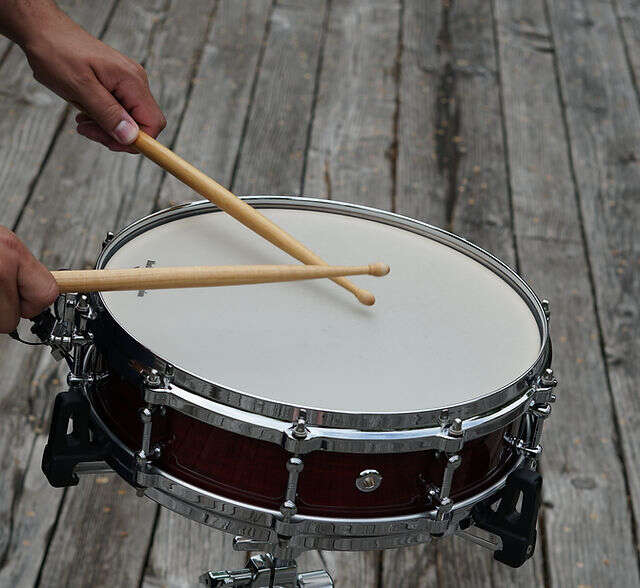
When a drumstick, hand, or mallet hits a drumhead, the head bends and begins to vibrate. That vibration pushes against the air around it. The moving air travels outward as sound waves, which reach your ears and create the sound you recognize as a drumbeat.
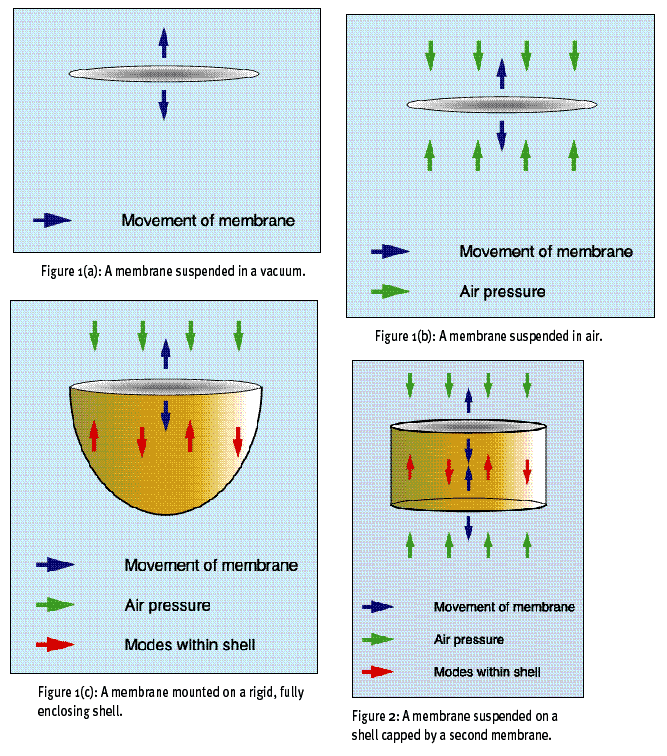
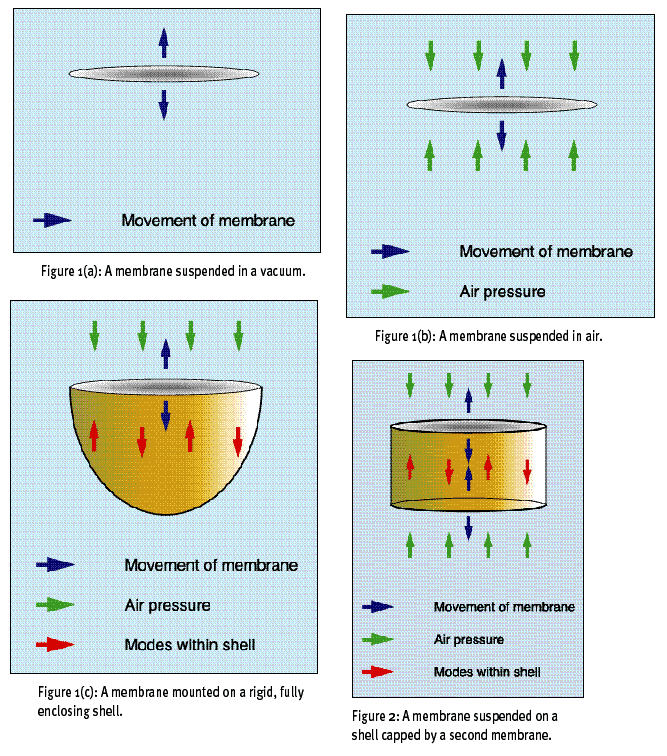
The drumhead is the first part of this process. It acts much like a stretched sheet or a thin trampoline. When struck, it moves up and down in complex patterns. Each pattern has a different speed and shape, which helps create the drum’s pitch and tone.
The drum shell also plays an important role. It supports the drumhead and reflects some of the sound energy back into the drum. The shell’s size, shape, thickness, and material affect the drum’s volume, warmth, brightness, and sustain.
A simple way to picture the process is:
- A player strikes the drumhead.
- The drumhead vibrates.
- The vibration moves nearby air.
- The shell and air inside the drum respond.
- Sound waves travel to the listener’s ears.
So, how do drums create sound in practical terms? They convert physical energy from a strike into vibration, and then convert that vibration into moving air.
The Main Parts That Produce a Drum’s Sound
A drum may look simple, but several parts work together to shape its voice. Small changes in one part can make a clear difference in the final sound.
The batter head
The batter head is the surface that the player strikes. It may be made from plastic film or, in some traditional drums, animal skin. Modern synthetic heads are popular because they stay more stable in changes of heat and humidity.
A thin head often gives a bright, open sound. A thicker head can produce more attack and durability. Coated heads usually add a softer feel and a warmer tone.
The resonant head
Many acoustic drums have a second head on the bottom. This is called the resonant head. It vibrates in response to the batter head and helps extend the sound.
The resonant head is especially important on snare drums and toms. If it is too loose, the drum may sound flat or slow. If it is too tight, the sound may become sharp and short.
The drum shell
The shell forms the body of the drum. Common shell materials include:
• Maple, which often gives a warm and balanced tone
• Birch, which often produces clear attack and strong high frequencies
• Poplar, which can create a soft and affordable sound
• Mahogany, which is often linked with deep, full tones
• Steel or brass, which can make snare drums bright and cutting
The material matters, but it is not the only factor. Shell thickness, bearing edges, depth, and construction also shape the sound.
The air cavity
Air inside the drum acts like a small resonating chamber. As the drumhead moves, the air inside responds and pushes back. This interaction can strengthen certain frequencies and help create a fuller tone.
This is one reason a larger drum often sounds deeper than a smaller drum. A larger cavity supports slower vibrations, which we hear as lower frequencies.
The hardware
Hoops, tension rods, lugs, snares, and mounts also affect the result. These parts may not create the main vibration, but they control how freely the drumhead moves.
A damaged hoop or uneven tension can prevent the head from vibrating evenly. In my experience with drum setup, many “bad drum” problems are really tension or head problems rather than shell problems.
The Role of Vibration and Sound Waves
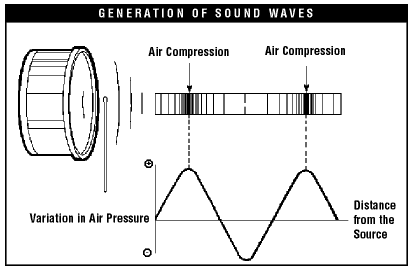
Sound is a form of energy that travels through a medium. In the case of an acoustic drum, that medium is usually air. The vibrating drumhead creates changes in air pressure, and those changes move outward as sound waves.
When the drumhead moves toward you, it compresses the air in front of it. When it moves away, the air pressure drops slightly. These repeated pressure changes form a wave.
Your ear detects these pressure changes. The eardrum then vibrates in response, and your brain interprets the movement as sound.
Frequency and perceived pitch
Frequency means the number of vibrations that happen each second. It is measured in hertz, or Hz.
Low-frequency vibrations create a deeper sound. High-frequency vibrations create a sharper or brighter sound. A bass drum produces strong low-frequency energy, while a snare drum produces more high-frequency energy from its head, shell, and snare wires.
Drums do not usually create one pure frequency. Instead, they create many frequencies at once. This mixture is why a drum often has a clear attack, a body or note, and a fading tail.
Amplitude and volume
Amplitude describes the strength of a vibration. A harder hit usually creates a larger movement in the drumhead. This moves more air and produces a louder sound.
However, hitting harder does not always create a better sound. If the drumhead is poorly tuned, extra force may only produce a harsh slap. Good technique uses the right contact point, stick angle, and rebound.
Timbre and tone color
Timbre is the quality that makes one drum sound different from another, even when both play the same general pitch. It comes from the mix of frequencies and the length of the sound.
Timbre depends on:
• Drum size
• Shell material
• Head type
• Tuning
• Room acoustics
• Stick or mallet choice
• Striking location
This explains why two snare drums can play the same rhythm but sound completely different.
How Drum Size and Shape Change the Sound
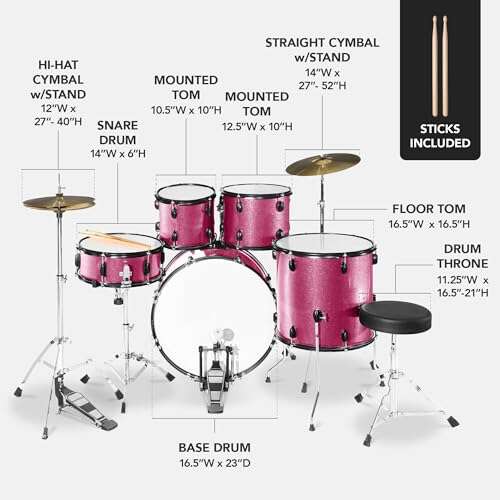
Drum size strongly affects how drums create sound. Diameter mainly influences the pitch range, while shell depth often affects fullness, projection, and sustain.
A large bass drum moves a greater amount of air. Its sound is usually low, broad, and powerful. A small tom moves less air and tends to produce a higher, shorter sound.
The depth of a drum also matters. A deeper shell can support a longer and fuller tone, although tuning and head choice remain important. A shallow drum may respond quickly and produce a sharp attack.
The shape of the shell influences how sound reflects inside the drum. A round shell helps create a regular air cavity, while the bearing edge controls how the head touches the shell.
The bearing edge is the point where the drumhead rests on the shell. A clean, even edge allows the head to vibrate with fewer unwanted problems. A damaged edge can cause weak resonance, uneven pitch, or air leaks.
A useful comparison is to think of a drum as a room. A large room supports a deep, broad sound. A small room creates a tighter and more focused response. The drum’s shell is not exactly a room, but the comparison helps explain how size affects resonance.

How Tuning Controls a Drum’s Sound
Tuning controls the tension of the drumhead. More tension generally raises the head’s pitch, while less tension lowers it. Tuning also affects attack, resonance, response, and sustain.
To tune a drum evenly:
- Place the drum on a stable surface.
- Tighten each tension rod by hand.
- Use a drum key to make small turns.
- Move across the drum in a star pattern.
- Tap near each tension rod.
- Listen for similar pitches around the head.
- Make small corrections instead of large turns.
Even tension is more important than simply making the drum tight. If one area is loose and another is tight, the head may vibrate unevenly.
The batter and resonant heads do not always need the same tension. A slightly tighter resonant head can create a quicker response and longer sustain. A looser batter head may create a deeper and softer sound.
There is no single perfect tuning. Jazz, rock, marching, worship, orchestral, and studio drumming may all use different tuning choices. The best setting depends on the music, room, microphone setup, and player.
One common mistake is tuning only by the note in the center of the head. The center can sound fine while the edges remain uneven. Always check several points around the head.

How Different Drums Create Different Sounds
The question “how do drums create sound” has a different answer for each type of drum because each design emphasizes different vibrations.
Bass drum
A bass drum has a large diameter and usually a deep shell. It creates a low, powerful sound by moving a large amount of air.
A felt beater often produces a round and soft attack. A plastic or wood beater creates more click and definition. The front head, port hole, damping, and beater position also change the result.
Snare drum
A snare drum has metal wires stretched across the bottom head. When the bottom head vibrates, the wires respond with a crisp buzzing sound.
The snare mechanism can turn the wires on or off. Tight wires usually create a sharper response, while loose wires may sound relaxed or noisy. Too much tension can choke the drum and reduce its natural resonance.
Tom-toms
Toms usually have no snare wires. They create clear, rounded notes that help connect drum fills and patterns.
Rack toms are often smaller and higher in pitch. Floor toms are larger and lower. Their sound depends heavily on head choice, tuning, shell depth, and how close the player strikes to the center.
Cymbals
Cymbals are not drums, but they use a related idea. A strike makes the metal vibrate across a wide surface. The shape and thickness of the cymbal control its pitch, sustain, volume, and complexity.
A cymbal produces many frequencies at once. That is why its sound is rich, shimmering, and less focused than a tom or bass drum.
Hand drums
Instruments such as congas, bongos, djembes, and frame drums use a stretched head that the player strikes with the hands. The fingers and palms create different contact points and pressure levels.
Hand position can change the sound from deep and open to sharp and muted. The player becomes part of the instrument’s damping system.

How Playing Technique Changes Drum Sound
The same drum can produce many sounds because the player controls the energy, location, and timing of each strike.
A center hit usually creates a strong, full tone. A hit closer to the edge often produces more high-frequency attack and less body. On a snare drum, a rimshot strikes the head and rim together, creating a louder and more forceful sound.
The angle of the stick also matters. A flat strike may create a broad contact sound. A more controlled angle can produce a focused attack and better rebound.
Hand drummers use several basic sound areas:
• Center strokes create deeper tones
• Edge strokes create brighter tones
• Slaps create sharp, high sounds
• Touch strokes create soft, muted sounds
• Open tones allow more resonance
• Pressed strokes reduce vibration
Dynamic control is one of the most useful skills a drummer can develop. A quiet stroke still contains musical information. It may sit behind a singer, create movement in a groove, or add feeling to a simple pattern.
A practical lesson I have learned from drum practice is that speed should not come before control. Slow, even strokes reveal problems in grip and rebound. Once the hands produce a clean sound, faster playing becomes much easier.

Resonance, Damping, and the Drum’s Natural Decay
Resonance is the continued vibration that remains after the initial strike. A resonant drum has a longer, more open sound. A damped drum stops vibrating sooner and sounds shorter and tighter.
Damping can come from:
• Gel pads
• Muffle rings
• Tape
• Foam
• Internal pillows
• Towels
• The player’s hand
Damping is not automatically good or bad. A live jazz or acoustic setting may benefit from open resonance. A close-miked rock bass drum may need damping to control long, unwanted vibrations.
The room also affects resonance. Hard walls reflect sound and may make the drum seem louder or brighter. Soft surfaces absorb sound and can make the drum seem quieter or darker.
This is why a drum can sound excellent in one room and disappointing in another. Before changing the drum itself, listen from different places in the room. The player hears the drum from behind it, while the audience hears it from several feet away.
Microphones add another layer. A microphone does not capture the sound exactly as your ears do. Its position, distance, polar pattern, and frequency response all influence the recording.

Why Drums Sound Different in a Room and on a Recording
Acoustic drums create sound through physical vibration, but listeners hear the result through the room or an audio system. Each environment changes the balance of frequencies.
In a small room, low frequencies may build up in corners. This can make a bass drum sound too large or muddy. In a room with many hard surfaces, cymbals may become bright and harsh.
Recording engineers often use several microphones to capture different parts of the drum sound. A close microphone captures attack and detail. Overhead microphones capture cymbals and the overall kit. Room microphones capture natural space and depth.
Equalization can then adjust the recorded sound. Compression can control volume changes and add punch. These tools shape the final sound, but they do not replace a well-tuned and well-played drum.
A common mistake is trying to fix every issue with software. If the drumhead is old, the tuning is uneven, or the room is poor, recording tools can only help so much. Start with the instrument and the performance.

Common Problems That Affect Drum Sound
If a drum sounds weak, harsh, dull, or unstable, check the basic causes first.
The drum sounds flat
Possible causes include:
• Loose or uneven head tension
• A worn-out drumhead
• Too much damping
• A damaged bearing edge
• A room that absorbs too much sound
The drum sounds harsh
Possible causes include:
• Excessive head tension
• A hard stick or beater
• A strong edge hit
• Bright cymbals reflecting off hard walls
• Too little damping for the room
The drum has unwanted buzzing
Buzzing may come from loose snare wires, a damaged head, loose hardware, or sympathetic vibration from another drum. Test each part separately instead of tightening everything at once.
The drum has little sustain
Too much muffling is a common cause. Very tight tuning, a heavy head, or an uneven bearing edge can also shorten the sound.
The drum is hard to control
A drum that rings too much may need small changes rather than complete muffling. Try a small gel pad, a different tuning balance, or a lighter touch before covering the head with heavy material.
How to Get a Better Drum Sound
You can improve most drum sounds with a few careful habits.
- Replace worn heads. Old heads lose response and may develop dents.
- Tune in small steps. Large adjustments make it hard to hear what changed.
- Check the edges. The head should sit evenly around the shell.
- Test the drum from the audience position. Do not judge it only from the throne.
- Use less damping first. Add control gradually.
- Match the stick to the sound you want. Tip shape and material matter.
- Practice soft strokes. Control at low volume improves control at every volume.
- Record short tests. A phone recording can reveal problems that are hard to notice while playing.
- Consider the room. Move the kit or add soft furnishings when reflections cause trouble.
- Change one thing at a time. This makes the result easier to understand.
The goal is not to remove every unusual sound. Small variations give drums character. The goal is to control the sound so it serves the music.
Frequently Asked Questions About How Do Drums Create Sound
How do drums create sound without strings?
Drums create sound through the vibration of a stretched membrane called a drumhead. The vibrating head moves air and produces sound waves, while the shell and air cavity shape the tone.
How does hitting a drum make it louder?
A harder strike usually moves the drumhead farther and creates stronger pressure changes in the air. This increases amplitude, which we hear as greater volume.
Do drums have a definite pitch?
Drums produce many frequencies at once, so their pitch is often less definite than the pitch of a piano or guitar. Tuning, size, head tension, and shell design can still create a clear low or high tonal center.
Why does a snare drum sound different from a tom?
A snare drum has wires against its bottom head, which create a buzzing and crisp response. A tom has no snare wires, so it produces a smoother and more sustained note.
Does the drum shell create most of the sound?
The drumhead creates the main vibration, but the shell strongly affects resonance, projection, and tone color. The final sound comes from the interaction of the head, shell, air cavity, hardware, and room.
Why do drums sound different when played near the edge?
The edge of the head vibrates in a different way from the center. Edge hits often produce more attack and fewer deep frequencies, while center hits usually create a fuller tone.
Can a drum sound good without expensive materials?
Yes. Good tuning, fresh heads, controlled technique, and suitable room placement often matter more than a high price. Expensive materials may offer certain tonal qualities, but they cannot replace setup and skill.
Conclusion
Drums create sound by turning a physical strike into vibration, moving air, and sound waves. The drumhead starts the process, while the shell, resonant head, air cavity, hardware, tuning, technique, and room shape the final result.
Understanding this process makes drum care and practice much easier. Start with even tuning, fresh heads, controlled strokes, and careful listening from the audience’s position. Try these steps on your own kit, explore how small changes affect the tone, and share your discoveries or questions in the comments.

Senior Music Reviewer
Alex Carter is a seasoned music reviewer with over a decade of experience in the world of sound and instruments. Passionate about helping musicians and enthusiasts make informed choices, he brings sharp insights and in-depth knowledge to every review. From classical instruments to modern gear, Alex combines technical expertise with a love for music to deliver content that resonates with readers.
As a Senior Music Reviewer and expert author on Tuneluma.com, Alex is dedicated to sharing honest evaluations, practical advice, and thoughtful commentary to guide readers in their musical journey.