Which Violin Should I Buy: Find Your Perfect Match
For most beginners, buy a full-size acoustic violin from a trusted shop, with a good setup and teacher-approved fit.
Choosing which violin should I buy depends on more than price or appearance. Your age, playing level, body size, musical goals, budget, and access to a teacher all matter. After comparing student violins, outfits, setups, and common buying mistakes, this guide will help you choose an instrument that feels comfortable, sounds clear, and supports steady progress.
Start With Your Playing Level
The best violin for you depends first on where you are in your musical journey. A beginner needs comfort, stable tuning, and easy response. An advanced player may care more about tone color, projection, wood quality, and individual character.
If you are asking which violin should I buy as a new player, avoid jumping straight to a high-priced professional instrument. A well-set-up student violin can help you learn just as effectively as an expensive violin that is difficult to play.
Beginner violins
A beginner violin should:
• Stay in tune reasonably well
• Have strings that respond without too much pressure
• Feel comfortable under the chin
• Include a usable bow and case
• Come from a reliable seller
• Be inspected and adjusted before delivery
A cheap violin with poor pegs, a badly placed bridge, or an uneven fingerboard can make learning frustrating. You may blame yourself for squeaks and weak notes when the real problem is the instrument.
Intermediate violins
Intermediate players often need more warmth, volume, and control. At this stage, you may notice that your current violin sounds thin during louder passages or does not respond well to advanced bow techniques.
This is the point where trying several violins becomes important. Two violins with the same price can sound very different because of their wood, varnish, setup, and construction.
Advanced and professional violins
Advanced players should usually work with a respected violin shop or experienced teacher. Tone preferences become personal, and small differences in response can affect vibrato, shifting, articulation, and high-position playing.
A professional violin is not automatically better for every player. Some have a bright, focused tone, while others sound dark, rich, or powerful. The right choice should match your playing style and musical setting.

Choose the Correct Violin Size
Size is one of the most important answers to which violin should I buy. A violin that is too large can cause tension, poor posture, and slow progress. A violin that is too small may limit comfort and sound quality.
Adults and most teens usually use a 4/4 full-size violin. Children often need smaller sizes, such as 1/16, 1/10, 1/8, 1/4, 1/2, or 3/4.
Common violin sizes
• 1/16 and 1/10: Usually for very young children
• 1/8 and 1/4: Often suited to small children
• 1/2: Common for growing children
• 3/4: Often used by older children or smaller players
• 4/4: Standard full size for most adults and larger teens
Age can offer a rough guide, but arm length is more useful. A teacher or violin specialist should check the player’s reach, hand position, and comfort.
Signs the violin is too large
• The player cannot reach the scroll comfortably
• The left shoulder rises to hold the instrument
• The wrist bends sharply
• The player struggles to place fingers accurately
• The neck, shoulder, or back becomes sore
Do not buy a larger violin simply because the child may grow into it. A correct fit supports healthy technique now. Many music shops also offer rental programs, which can be a smart choice for children who may need several sizes.

Decide Between Acoustic and Electric Violin
Most new players should begin with an acoustic violin. It teaches natural bow control, tone production, posture, and listening skills. An acoustic violin also works well with teachers, orchestras, chamber groups, and classical music.
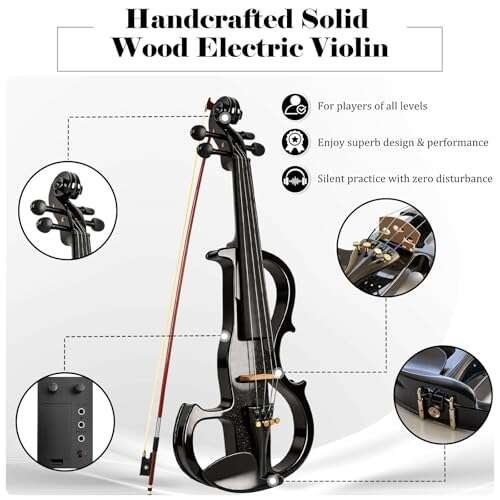
An electric violin can be useful for specific needs. It may suit players who want silent practice with headphones, amplified performance, effects, or modern music styles.
Acoustic violin benefits
• Natural tone and resonance
• Better fit for traditional lessons
• No amplifier required
• Useful for orchestras and classical ensembles
• Strong feedback for learning bow technique
Electric violin benefits
• Quiet practice with headphones
• Easy connection to an amplifier or audio system
• Useful for rock, pop, folk, and experimental music
• Less concern about disturbing others
Electric violins still produce some acoustic sound from the strings and bow. They are not completely silent. Some models also feel different because of their body shape, weight, balance, and electronic response.
If you are unsure which violin should I buy, choose acoustic unless you have a clear reason to need electric features. An electric violin is often better as a second instrument rather than a replacement for a first acoustic violin.

Set a Realistic Budget
Price matters, but setup often matters more than beginners expect. A modest violin with a well-fitted bridge, properly cut nut, good strings, and smooth pegs can feel far better than a costly instrument that has never been adjusted.
Typical violin price ranges
Prices vary by country, brand, materials, and setup. These ranges are general rather than fixed rules.
• Under $200: Often risky for a serious beginner unless inspected and adjusted
• $200 to $500: Possible entry-level option, especially from a reputable shop
• $500 to $1,500: Strong student and advancing-player range
• $1,500 to $5,000: Better materials, craftsmanship, and tonal variety
• Above $5,000: Advanced, professional, or specialty instruments
You should also budget for accessories and maintenance. A complete first-year cost may include:
• Bow
• Case
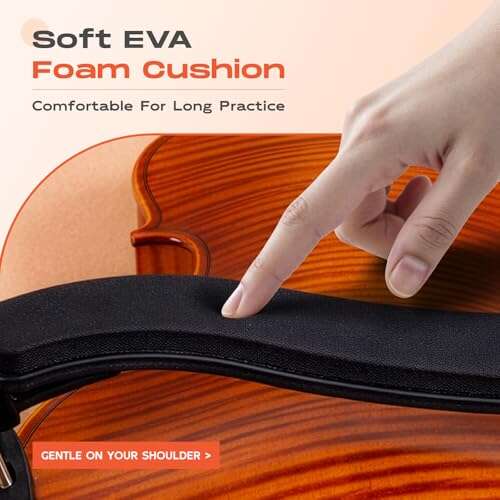
• Shoulder rest
• Rosin
• Extra strings
• Music stand
• Tuner
• Lessons
• Bridge and string adjustments
A rental can reduce the risk of buying the wrong size or style. Some shops apply rental payments toward a future purchase, so ask about their upgrade policy.
Avoid the cheapest online listing
Many very cheap violins are sold as complete outfits but arrive with poor bridges, weak bows, rough fingerboards, and low-quality strings. This can create a false economy because professional setup may cost almost as much as the instrument.
When deciding which violin should I buy, compare the total cost of ownership. A reliable setup and return policy can save more money than a low sticker price.

Understand the Importance of Setup
Setup is the adjustment work that makes a violin playable. It includes fitting the bridge, shaping the nut, checking the soundpost, adjusting the pegs, inspecting the fingerboard, and choosing suitable strings.
A good setup helps the violin:
• Stay in tune
• Respond quickly to the bow
• Produce a clean tone
• Feel comfortable under the fingers
• Reduce buzzing and unwanted noise
• Support healthy technique
The bridge should stand straight and fit the violin’s top correctly. The strings should not feel painfully high above the fingerboard. The pegs should turn smoothly but hold their position.
This is one of the biggest lessons in choosing which violin should I buy: the instrument is only part of the purchase. The work done after construction can change the playing experience dramatically.
A reputable violin shop should explain what setup is included. If a seller cannot answer basic questions about the bridge, strings, and return policy, consider that a warning sign.

Compare Violin Materials and Construction
Most acoustic violins use spruce for the top and maple for the back, ribs, and neck. Ebony is commonly used for the fingerboard, pegs, and chin rest. These materials are traditional because they balance strength, weight, and resonance.
A solid-wood violin usually offers more natural tonal complexity than a low-cost laminated instrument. However, solid wood alone does not guarantee a good sound. Craftsmanship, graduation, varnish, setup, and the individual instrument all matter.
Look for these construction details
• Clean seams with no open gaps
• A straight neck
• A centered fingerboard
• A bridge that fits the top
• Even varnish without thick drips
• No major cracks or poorly repaired damage
• Pegs that turn smoothly
• A tailpiece that sits correctly
Decorative features do not improve sound by themselves. A glossy finish, carved pattern, or antique-looking label may attract attention, but these details should not replace careful inspection.
Labels can also mislead buyers. A label inside a violin may identify a model, workshop, or copy rather than the actual maker. Never assume a famous name is genuine without expert evaluation.

Choose the Right Strings and Bow
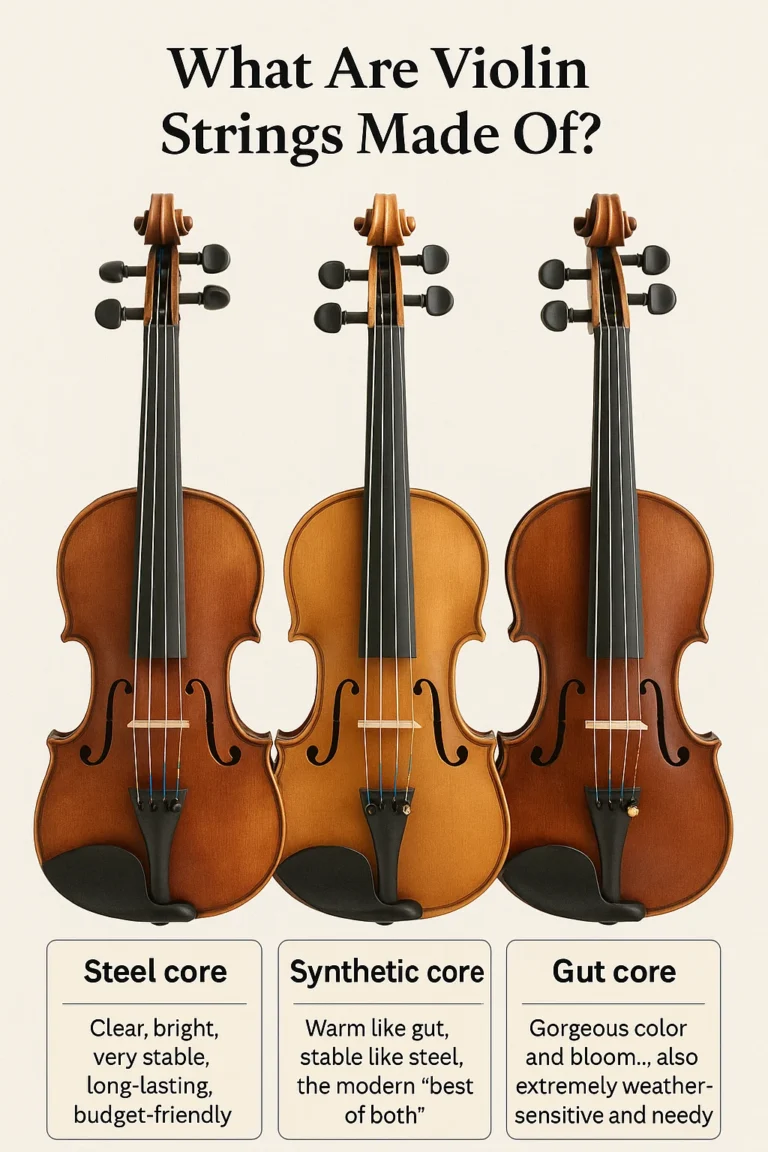
Strings strongly affect tone, response, and comfort. Common string types include steel core, synthetic core, and gut core. Synthetic-core strings are popular with many student and intermediate players because they offer a balanced sound and stable response.
Steel strings often feel direct and bright. Gut strings can offer complex tone but may need more care and may respond differently to changes in temperature and humidity.
Your bow matters too. A weak or poorly balanced bow can make a good violin feel difficult. Beginners often focus only on the violin body, but tone comes from the relationship between the bow, strings, bridge, and player.
When testing a bow, check whether it:
• Feels balanced in your hand
• Bounces in a controlled way
• Produces a steady sound
• Has a straight stick
• Holds hair evenly across the length
• Feels comfortable during slow bows
A carbon-fiber bow can be a practical choice for students. It is often stable and durable. A good pernambuco bow may offer a more refined response, but quality varies widely in both materials.

Consider Reliable Violin Brands and Sellers
Brand names can help you narrow your search, but they should not be your only guide. A reputable brand may produce several levels of instruments, and one model may suit you better than another.
For beginner and student instruments, buyers often explore brands such as Yamaha, Eastman, Knilling, Gliga, Scott Cao, and Stentor. Availability differs by region, and model quality can change over time. Treat these names as starting points, not guarantees.
The seller may matter more than the label. A specialist violin shop usually provides better inspection, setup, advice, and after-sale service than a general marketplace seller.
Look for:
• Clear product specifications
• Real photos of the instrument
• A written return period
• Setup by a qualified technician
• Repair and adjustment support
• Helpful answers before purchase
• Insurance or shipping information
If you are asking which violin should I buy online, choose a seller that allows returns. Online sound samples can help, but microphones, rooms, and recording equipment can change the tone you hear.

Test a Violin Before You Buy
Testing is the best way to discover which violin should I buy. If you are a beginner, ask your teacher to test it for you. A new player may not yet have the technique to judge tone, projection, or response.
A useful test includes:
- Check the violin from several angles.
- Inspect the bridge, pegs, seams, and fingerboard.
- Play open strings with slow bows.
- Play simple scales across all four strings.
- Test soft, medium, and loud bow pressure.
- Listen for buzzing, wolf tones, or delayed response.
- Ask another player to perform while you listen from across the room.
- Compare it with at least one or two other violins.
Do not judge a violin only from close range. Some instruments sound pleasant under your ear but do not project well. Others may sound bright nearby but carry beautifully in a room.
Try the violin for more than a few minutes if the shop allows it. Comfort often becomes clearer after your shoulder, hand, and bow arm have had time to settle.

Know the Difference Between Tone and Projection
Tone is the color of the sound. It may be warm, dark, bright, clear, focused, nasal, or rich. Projection is how well that sound travels through a room.
A violin can have a beautiful tone under your ear but lack projection. Another may sound less impressive close up yet fill a concert space with clarity.
Your choice should match your main use:
• Home practice: Comfort and a pleasant tone may matter most
• Orchestra: Blend and clear projection are important
• Solo performance: Power and tonal range may matter more
• Folk music: Fast response and a bright sound may help
• Contemporary music: Amplification and effects may be useful
The ideal sound is not the loudest sound. A violin that feels responsive and gives you control will usually help you grow more than one that simply produces a powerful note.
Buy From a Shop, Rental Program, or Marketplace
Each buying route has strengths and limits. The right choice depends on your budget, experience, and need for support.
Specialist violin shop
A specialist shop is often the safest option for a first serious purchase. You can usually try several instruments, receive setup work, and ask about future adjustments.
Rental program
Renting is practical for children, uncertain beginners, and players who want to test the hobby before committing. A quality rental can also provide size exchanges as the player grows.
General music store
A general music store may offer convenient service and affordable packages. However, the staff may not have the same depth of violin-specific knowledge as a luthier or string specialist.
Online marketplace
Online marketplaces offer variety and low prices, but quality can be inconsistent. Only buy when the listing includes a clear return policy and the seller can explain setup details.
A local teacher can often recommend trustworthy shops. That advice may be more valuable than hours of reading anonymous reviews.
Inspect a Used Violin Carefully
A used violin can offer excellent value, especially when it comes from a respected shop. It can also hide expensive repairs, so inspection is essential.
Check for:
• Open seams
• Cracks near the bridge and soundpost
• A warped or twisted neck
• Excessive wear on the fingerboard
• Loose purfling
• Pegs that slip
• A soundpost that has fallen
• Signs of insect damage
• Poorly repaired breaks
Small open seams may be repairable. A serious crack, neck problem, or soundpost-area repair may cost much more.
Ask the seller for the instrument’s repair history and whether a qualified technician has inspected it. If the violin has a valuable label or claimed history, request documentation. Without proof, treat those claims with caution.
One practical rule is simple: never buy an expensive used violin based only on a story. Buy it because a trusted expert confirms its condition and value.
Avoid Common Violin Buying Mistakes
Many poor purchases happen because buyers rush. The violin may look attractive, but appearance does not tell you how it will play.
Avoid these mistakes:
• Buying only because the violin has a famous-looking label
• Choosing the cheapest complete outfit
• Ignoring the bow and setup
• Buying the wrong size for a child
• Trusting edited online sound clips
• Skipping the return policy
• Assuming a high price means high quality
• Failing to include maintenance costs
• Buying without asking a teacher or specialist
• Choosing a bright or loud tone when you prefer warmth
A common beginner mistake is buying for future skill instead of current comfort. You do not need a concert violin to begin learning. You need an instrument that makes correct practice easier.
Another mistake is assuming every problem comes from the player. If the violin is hard to tune, painful to press, or slow to respond, have it checked before changing your technique.
Protect and Maintain Your Violin
A good violin can last for generations when cared for properly. Wood responds to changes in temperature and humidity, so storage matters.
Follow these habits:
• Keep the violin in a sturdy case
• Loosen the bow after playing
• Wipe rosin dust from the strings and top
• Do not leave the violin in a hot car
• Keep it away from heaters and direct sunlight
• Avoid touching the hair of the bow
• Replace worn strings when they lose response
• Have the instrument inspected when problems appear
Do not use household cleaners or furniture polish on the violin. Some products can damage varnish. Ask a qualified repair shop about safe cleaning.
Humidity control can help in very dry climates. Extreme dryness may contribute to open seams or cracks, while excess moisture can affect response and stability. Your local violin shop can suggest a suitable case humidifier if needed.
A Practical Buying Checklist
Use this checklist before paying for a violin:
• Is the size correct for the player?
• Has a qualified person checked the instrument?
• Is the bridge fitted correctly?
• Do the pegs turn and hold?
• Does the fingerboard look straight and smooth?
• Are there cracks or open seams?
• Does the violin respond well on all four strings?
• Is the tone suitable for your goals?
• Is the bow straight and usable?
• Are decent strings included?
• Does the case protect the violin?
• Is there a written return policy?
• Can the shop provide future setup and repairs?
• Does the total price fit your budget?
If you are still unsure which violin should I buy, choose the instrument that feels comfortable, responds easily, and comes with the strongest support. A reliable relationship with a shop can matter for years.
Frequently Asked Questions About Which Violin Should I Buy
Which violin should I buy as a beginner?
Buy a full-size or correctly fitted student acoustic violin from a specialist shop or reputable rental program. Prioritize proper setup, comfortable response, a usable bow, and a fair return policy over a famous label.
Is a cheap violin good for learning?
Some affordable violins are suitable, but very cheap instruments often need major setup work. A low-cost violin is only a good deal when it stays in tune, responds well, and has been checked by a qualified technician.
Should I buy a 4/4 violin?
Most adults should use a 4/4 violin, but size depends on arm length and comfort. Children and smaller players may need a fractional size, so ask a teacher or violin specialist to measure the fit.
Is an acoustic or electric violin better for beginners?
An acoustic violin is usually better for learning basic tone, bow control, and posture. Choose an electric violin when silent practice, amplification, or modern performance is a central need.
Are expensive violins easier to play?
Price does not guarantee easy playing. A well-set-up student violin may feel easier than an expensive instrument with poor adjustments, unsuitable strings, or a difficult response.
Should I rent or buy a violin?
Renting is often best for children, first-time players, and anyone unsure about continuing. Buying may make sense when you know the correct size, have tested several instruments, and plan to play for years.
How much should I spend on my first violin?
Many beginners can find a useful instrument in the roughly $200 to $1,500 range, depending on local prices and setup. Include the bow, case, strings, lessons, and maintenance in your total budget.
Conclusion
The answer to which violin should I buy is not one brand or one price. Choose the correct size, decide between acoustic and electric, set a realistic budget, and focus on setup, comfort, tone, and seller support.
Test the violin with a teacher whenever possible. If you buy online, use a trusted seller with a clear return policy. Start with an instrument that makes practice feel natural, then upgrade when your technique and musical goals show you what you truly need.
Take your time, compare several options, and ask questions before paying. Your next step can be visiting a violin shop, arranging a rental trial, or asking your teacher to help you test an instrument.

Senior Music Reviewer
Alex Carter is a seasoned music reviewer with over a decade of experience in the world of sound and instruments. Passionate about helping musicians and enthusiasts make informed choices, he brings sharp insights and in-depth knowledge to every review. From classical instruments to modern gear, Alex combines technical expertise with a love for music to deliver content that resonates with readers.
As a Senior Music Reviewer and expert author on Tuneluma.com, Alex is dedicated to sharing honest evaluations, practical advice, and thoughtful commentary to guide readers in their musical journey.