Where To Buy Guitar Picks: Best Stores And Deals
You can buy guitar picks at music stores, online retailers, guitar shops, and many general stores.
Knowing where to buy guitar picks helps you find the right size, shape, material, and grip for your playing style. After testing picks for acoustic strumming, electric lead work, and bass, I’ve learned that the cheapest pack is not always the best choice. This guide explains the best places to shop, what to look for, and how to avoid buying picks that feel wrong in your hand.
The best places to buy guitar picks
The best place to buy guitar picks depends on your needs. A local music store lets you touch and compare picks, while an online shop offers more brands, shapes, and bulk options.
Here are the most useful buying choices:
• Local music stores offer expert advice and let you compare picks in person.
• Online music retailers usually have the widest range of sizes, materials, and designs.
• Large online marketplaces are convenient and often offer low prices on multipacks.
• Guitar brand websites are useful when you want a specific model or signature pick.
• General stores may carry basic picks, but the selection is often limited.
• Guitar teachers and rehearsal studios may sell small packs for beginners.
If you are unsure where to buy guitar picks, start with a local music shop or a trusted music retailer online. These sources usually provide clear product details and better quality control than random sellers.

Where to buy guitar picks locally
Local music stores are one of the best answers to the question, “Where can I buy guitar picks?” Most stores keep picks near the guitar counter, often in small bins or display racks.
The main advantage is that you can compare picks before buying. You can hold a thin celluloid pick, a thick nylon pick, and a textured pick to feel the difference. Some stores also allow you to buy single picks, which is helpful when you are still discovering your preferred style.
Ask a store employee for help if you are new to guitar. Explain whether you mostly strum chords, play single-note lines, or use a thumb pick. A knowledgeable employee can often suggest two or three useful options without pushing you toward expensive gear.
Local stores may cost a little more than online shops. However, the advice and hands-on experience can save you from buying a large pack of picks that you never use.
When deciding where to buy guitar picks locally, check these places:
• Independent music stores
• Guitar Center-style chain stores
• School music shops
• Instrument repair stores
• Local guitar teachers
• Rehearsal spaces and recording studios
I once bought a large pack of very thin picks because they were on sale. They worked for light acoustic strumming but folded during stronger electric playing. A local store would have helped me choose a better medium pick for both uses.

Where to buy guitar picks online
Online music retailers are often the best choice for variety. You can search by thickness, material, shape, brand, color, and playing style.
When you shop online, read the product description closely. A photo can make a thin pick look thick, and colors may vary between screens. Look for exact measurements, such as 0.46 millimeters, 0.73 millimeters, or 1.14 millimeters.
Reliable online music stores often list:
• Pick thickness
• Pick material
• Tip shape
• Grip texture
• Number of picks in the package
• Manufacturer and model
• Customer reviews
Online marketplaces can also be useful, especially when buying common picks in bulk. Yet you should check the seller’s rating and return policy. Counterfeit or poorly labeled products can appear in large marketplaces, particularly when the price seems unusually low.
If you are researching where to buy guitar picks online, compare the final cost rather than the listed price. Shipping can make a small pack more expensive than one bought from a local store.
Online buying works well when you already know the pick you like. It is less useful when you have never tested different shapes or thicknesses.
Where to buy guitar picks by playing style
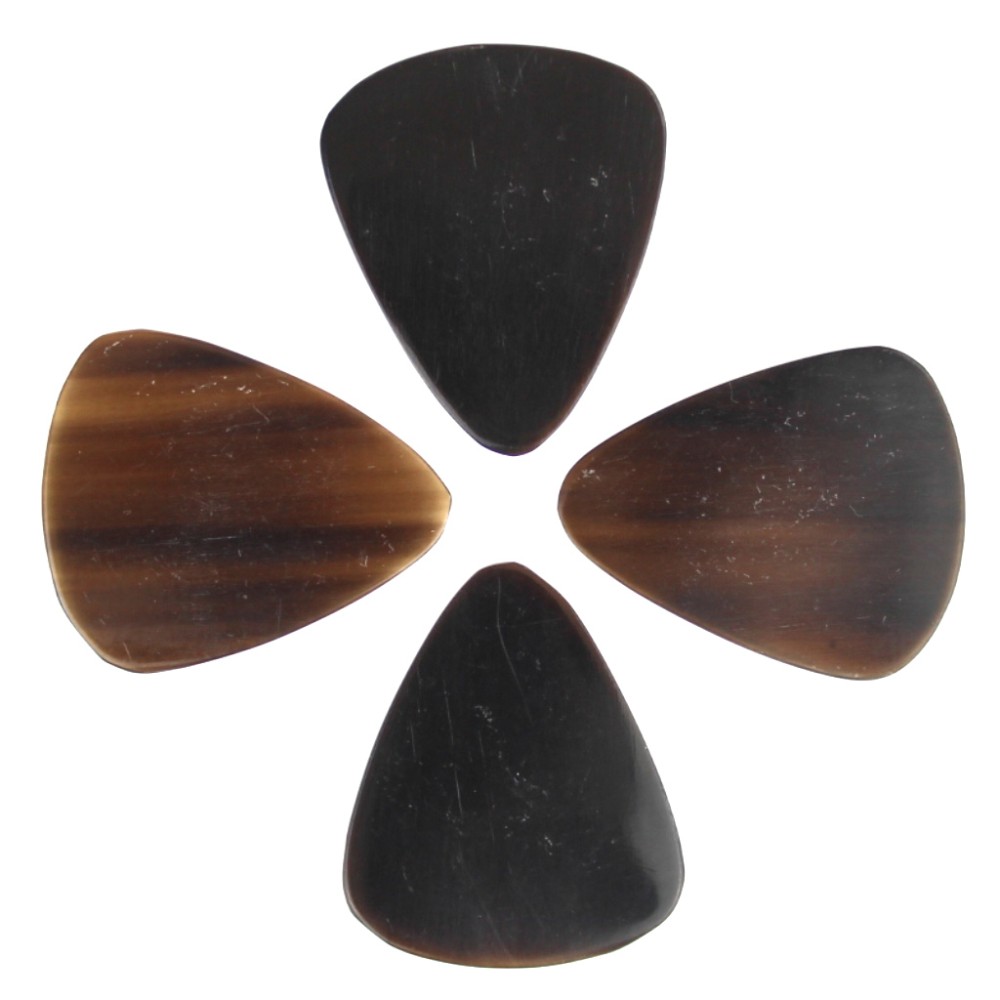
Your playing style should guide where to buy guitar picks and which products to choose. A beginner who strums simple chords may need a different pick from a metal guitarist who plays fast riffs.
Acoustic strumming
For acoustic guitar, many players enjoy thin or medium picks. Thin picks bend more easily and create a softer sound. Medium picks offer more control and can produce a stronger attack.
Good choices include:
• Thin picks from about 0.38 to 0.60 millimeters
• Medium picks from about 0.60 to 0.88 millimeters
• Rounded or standard shapes for comfortable chord work
A flexible pick can help beginners avoid harsh string noise. However, very thin picks may feel weak on heavy strings.
Electric guitar
Electric guitar players often prefer medium or heavy picks. A thicker pick gives the hand more control during alternate picking, palm muting, and lead playing.
Consider:
• Medium picks for general playing
• Heavy picks for riffs and lead work
• Sharp tips for precise notes
• Textured surfaces for a more secure grip
If you play both rhythm and lead guitar, a medium pick is a practical starting point. You can then move thinner or thicker based on comfort.
Bass guitar
Bass players often use medium or heavy picks. A sturdy pick can handle thicker strings and create a clear attack. Some bassists prefer rounded picks for a smoother sound, while others choose pointed picks for extra definition.
Do not assume that a guitar pick will feel the same on bass. The string tension and spacing can change how the pick responds.
Fingerstyle and hybrid picking
Players who combine a pick with their fingers may prefer a smaller pick or a thumb pick. These options leave more fingers free for plucking.
Thumb picks can take time to adjust to. Buy one or two first instead of ordering a large set.

How to choose the right guitar pick
Knowing where to buy guitar picks is only half the task. You also need to choose a pick that matches your hand, strings, technique, and preferred tone.
Pick thickness
Thickness affects flexibility, control, and tone.