Best 61 Key Piano For Beginners: Top Beginner Picks
The best 61 key piano for beginners combines simple controls, useful lessons, good sound, and room to grow.
Picture a new player sitting down after school, eager to learn but unsure where to begin. An 88-key piano may feel large, while a tiny keyboard can feel limiting. A 61-key model offers a useful middle ground. It gives beginners enough range for lessons, chords, and simple songs without taking over the room. I looked at beginner-friendly features, included accessories, learning tools, sound options, and everyday value to help you choose with confidence. The goal is simple: find a keyboard that makes practice feel easy, clear, and fun.
RockJam RJ5061 61-Key Keyboard Kit

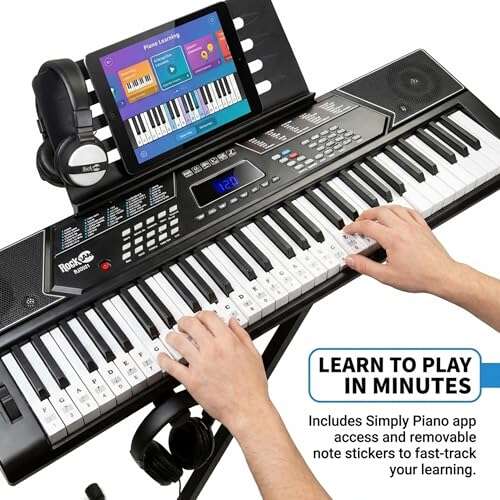
The RockJam RJ5061 is a complete starter kit for a child, teen, or adult who wants more than a bare keyboard. It includes a 61-key keyboard, a stand, a bench, headphones, and learning support. That bundle saves a beginner from buying several basic items one at a time. For many homes, this makes it a practical choice for a first setup.
The keyboard offers a broad selection of tones and rhythms for casual practice and creative play. Headphones help a learner practice without disturbing family members or neighbors. The bench and stand also create a more piano-like practice space than a keyboard placed on a kitchen table. I see the RJ5061 as a strong value pick when the buyer wants an all-in-one package at a modest price.
Pros:
- Complete kit with stand, bench, and headphones
- 61 keys provide useful space for beginner songs
- Headphones support quiet practice
- Good fit for children, teens, and casual adult learners
- Starter accessories reduce extra shopping
- Portable design works well in bedrooms and small rooms
Cons:
- Keys are not weighted like those on an acoustic piano
- The included bench may feel basic for larger adults
- Many built-in sounds can distract learners who need a simple layout
My Recommendation
I recommend the RockJam RJ5061 for families who want the best 61 key piano for beginners as a ready-to-use gift. It is especially useful when the learner needs a stand, seat, and headphones right away. The kit supports both quiet lessons and relaxed music play. It also offers a friendly path for a beginner who has not yet decided whether to pursue piano for years.
| Best for | Why |
|---|---|
| Families | The kit includes the main accessories in one purchase. |
| Children and teens | The bench and stand create a dedicated practice area. |
| Quiet practice | Included headphones help reduce household noise. |
Its main trade-off is the non-weighted key action. Still, the RJ5061 delivers strong everyday value for a first keyboard, and package availability can vary by seller and season.
Alesis Melody 61 MK4 Keyboard
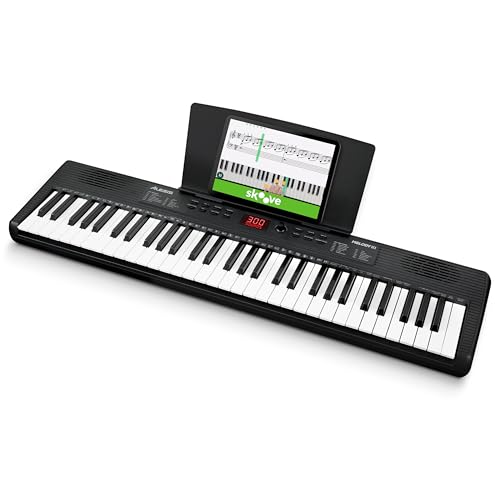
The Alesis Melody 61 MK4 aims to make the first step into keyboard playing less intimidating. Its 61-key layout gives beginners enough room to learn melodies, scales, and basic left-hand chords. Alesis also includes a range of voices and rhythms, so the instrument can grow with a learner’s curiosity. It feels like a sensible bridge between a toy keyboard and a more serious home instrument.
I like this model for students who enjoy exploring different sounds. A piano voice can support lessons, while organ, strings, and other tones add variety during free play. The keyboard format is easy to move and store, which matters when a learner shares a room or practice space. Buyers should remember that a portable keyboard does not copy the heavier touch of a full acoustic or digital piano.
Pros:
- 61-key layout suits early lessons and simple songs
- Wide sound selection encourages musical exploration
- Portable size is easier to store than an 88-key piano
- Simple format works for children and adult beginners
- Useful for chords, melodies, and basic music theory
- Often costs less than a full digital piano
Cons:
- Non-weighted keys may not build a true piano touch
- Beginners may need separate accessories depending on the package
- Sound quality is designed for practice, not professional recording
My Recommendation
The Alesis Melody 61 MK4 is best for a new player who wants a simple keyboard with room to experiment. It can be the best 61 key piano for beginners who enjoy pop, film music, or trying many instrument voices. I would choose it for a learner who already has a table, stand, or headphones. It offers a useful balance of price, portability, and creative features.
| Best for | Why |
|---|---|
| Sound exploration | Multiple instrument voices make practice more engaging. |
| Small homes | The compact keyboard is easier to move and store. |
| Budget shoppers | The core keyboard may cost less than a full piano setup. |
This is a good value choice when the keyboard itself matters most. Check the exact package contents before ordering because bundle options may differ.
RockJam RJ361 Compact 61-Key Keyboard
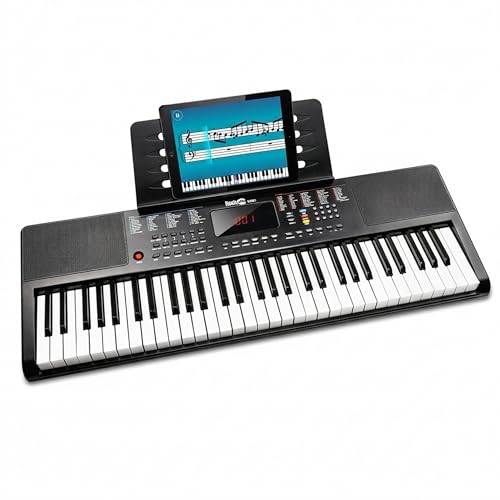
The RockJam RJ361 focuses on the basics in a compact body. It gives a beginner 61 keys without the bulk of a full-size digital piano cabinet. That makes it a useful choice for apartments, dorm rooms, bedrooms, and shared spaces. A learner can start with scales and songs, then put the keyboard away when practice ends.
This model works best for casual study and early music lessons. It can help a beginner learn note names, hand positions, melodies, and simple chords. The lighter keyboard design is also easier for a child to move. I would pair it with a stable stand and a proper seat if the learner plans to practice often.
Pros:
- Compact design suits small living spaces
- 61 keys offer more range than many mini keyboards
- Easy for children to move with adult supervision
- Useful for first songs, chords, and scales
- Accessible option for casual learners
- Simple design can reduce setup stress
Cons:
- May not include a complete stand and bench setup
- Light key action differs from an acoustic piano
- Advanced students may outgrow its basic controls
My Recommendation
I recommend the RJ361 to buyers who value space and simplicity. It can serve as the best 61 key piano for beginners in a small apartment or a child’s room. It is also a good first instrument for someone who wants to test the waters before spending more. Add a stable stand, bench, and headphones for a better long-term practice setup.
| Best for | Why |
|---|---|
| Small rooms | The compact body is easy to place and store. |
| First-time learners | The layout supports basic skills without a steep learning curve. |
| Children | The lighter design is easier to handle than a heavy piano. |
The RJ361 offers practical value, but buyers should review the listing for included accessories. Its low-profile design is its biggest strength, not advanced piano realism.
RockJam RJ561 61-Key Keyboard Kit
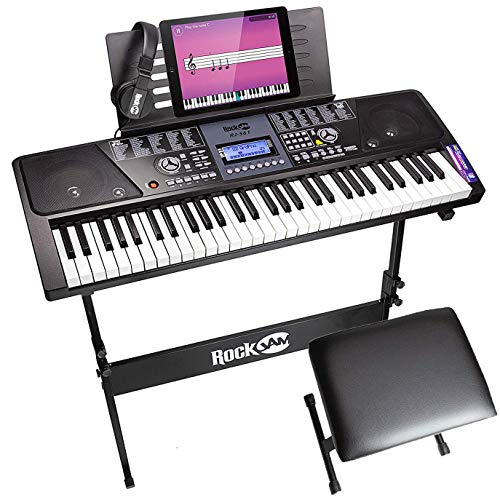
The RockJam RJ561 is another full starter package, with a keyboard, stand, stool, and headphones. That combination helps a beginner create a proper place to practice from day one. A stand keeps the keys at a more useful height than a low table. The stool also encourages a seated playing position, which can make practice more comfortable.
The RJ561 is a natural fit for parents buying a first keyboard as a birthday or holiday gift. Headphones make it easier to practice in the evening or near other family activities. The 61-key range supports beginner books, simple pop songs, and basic chord work. Like most keyboards in this class, it prioritizes convenience and variety over weighted piano action.
Pros:
- Includes a stand, stool, and headphones
- Creates a complete practice station
- 61 keys work well for beginner music books
- Headphones support private practice
- Good choice for a child’s first instrument
- Easy setup for families with limited music gear
Cons:
- Included stool may not suit every adult’s height
- Keys do not provide weighted hammer action
- Large bundles need more storage space than the keyboard alone
My Recommendation
The RJ561 is best for families that want a ready-made learning corner. It may be the best 61 key piano for beginners who need the stand and seat included, not just the keyboard. I especially like it for young students who benefit from a consistent practice spot. Its value is strongest when the complete kit costs less than buying each accessory separately.
| Best for | Why |
|---|---|
| Gift buyers | The package feels complete and useful right away. |
| Home practice | The stand and stool support a dedicated setup. |
| Quiet lessons | Headphones let students practice with less noise. |
Consider the available floor space before buying. For a beginner who wants convenience, this remains a dependable and approachable package.
Piano Keyboard Stickers for Beginners
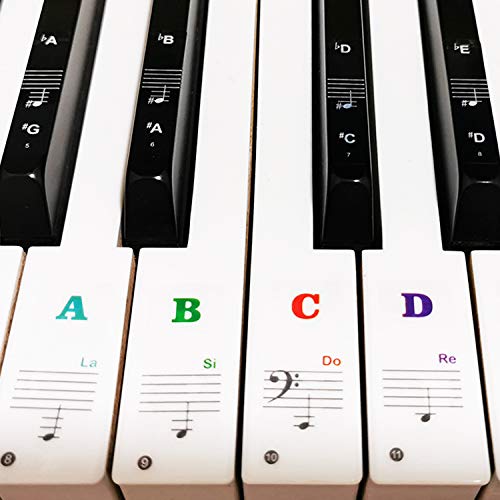
These removable keyboard stickers are not a piano, but they can make a first keyboard much easier to understand. The labels show note names across compatible keyboards, including 61-key layouts. A new player can quickly connect a printed lesson note with the correct key. That small visual cue often removes the blank, confusing feeling beginners face during their first sessions.
The stickers can help children learn the musical alphabet and find repeated notes. They may also support adults who have never read music. I suggest using them as a short-term learning aid rather than a permanent crutch. Once the player knows the notes, remove the labels and practice finding keys by pattern and memory.
Pros:
- Clear labels make note finding easier
- Removable design supports temporary learning
- Color can help children connect notes with lessons
- Works with several common keyboard sizes
- Low-cost way to support early practice
- Useful for home lessons and self-study
Cons:
- Stickers do not replace a teacher or lesson method
- Labels may affect the clean look of the keyboard
- Fit and adhesion can vary by key shape and surface
My Recommendation
I recommend these labels as an inexpensive add-on for a child or adult who feels lost on the keys. They can help turn a 61-key keyboard into a friendlier learning map. For shoppers building the best 61 key piano for beginners setup, this accessory may offer more value than another collection of sounds. Use them with note practice, then remove them as confidence grows.
| Best for | Why |
|---|---|
| Young children | Bright labels make note patterns easier to spot. |
| Self-taught adults | Names provide quick support during early lessons. |
| Short-term learning | Removable labels can come off as skills improve. |
This is a low-risk purchase for a new learner. Check the product photos and measurements so the labels match the keyboard’s key size.
Colorful 61-Key Piano Note Labels

These colorful note labels provide another simple way to help a beginner understand a 61-key keyboard. The full-size format is made to identify notes without forcing the player to guess. A beginner can use the labels while learning scales, finger numbers, and easy tunes. They can also help a parent guide a child during short practice sessions.
Visual learning tools work best when they support, rather than replace, good habits. I would use the labels at the start of a lesson, then ask the student to locate notes from the black-key groups. That method builds both recognition and musical thinking. The colorful design may appeal to children, while the direct note names remain useful for adults.
Pros:
- Designed for full-size keyboard note recognition
- Colorful layout can hold a child’s attention
- Supports scales, songs, and note-name practice
- Simple aid for parents and home teachers
- Affordable addition to a beginner keyboard
- Can reduce early frustration during lessons
Cons:
- Some learners may rely on labels for too long
- Adhesive performance depends on a clean key surface
- Buyers should confirm the labels fit their keyboard
My Recommendation
Choose these labels when note recognition is the main hurdle. They pair well with the best 61 key piano for beginners because they make the keyboard feel less like a row of unknown keys. I would choose them for a young learner, a homeschool lesson, or an adult starting without a teacher. Remove them gradually once the player can find notes from the key pattern.
| Best for | Why |
|---|---|
| Note recognition | Printed note names give instant visual help. |
| Home teaching | Parents can explain lessons with clear key references. |
| Kids’ practice | Color adds interest to short learning sessions. |
These labels offer modest but useful value. They cannot improve sound or touch, yet they can make the first week of practice much less confusing.
Yamaha YPT-280 61-Key Portable Keyboard

The Yamaha YPT-280 is one of the most appealing choices for a beginner who wants a trusted keyboard with built-in learning support. Yamaha lists features such as built-in songs, lesson functions, and a quiz mode designed to make practice more interactive. Its 61 keys offer a useful range for early piano work. The included power adapter also makes home setup straightforward.
I value the YPT-280 because it gives a beginner a clearer learning path than a keyboard with only sound buttons. Built-in songs can encourage listening and repetition, while quiz features can make note practice feel like a game. The music rest keeps sheet music or a tablet at a readable angle. It remains a portable keyboard, so its keys are not the same as weighted digital-piano keys.
Pros:
- Yamaha brand offers strong recognition in beginner instruments
- Built-in songs give learners material to practice
- Quiz mode adds an interactive learning option
- Music rest supports books and digital lesson screens
- 61 keys provide room for two-hand beginner work
- Included power adapter simplifies home use
Cons:
- Keys are not weighted or hammer action
- Advanced players may want stronger recording features
- Headphones, stand, and bench may require separate purchases
My Recommendation
The Yamaha YPT-280 is my strongest choice for a learner who wants built-in guidance and a familiar brand. It could be the best 61 key piano for beginners who need songs and quiz tools to stay motivated. I would select it for a child taking lessons or an adult who prefers structured practice. Its combination of portability, learning aids, and dependable basic design gives it excellent overall value.
| Best for | Why |
|---|---|
| Structured learners | Built-in songs and quiz functions add direction. |
| Families | The controls and layout are approachable for beginners. |
| Longer-term use | Yamaha’s broad feature set can support steady progress. |
It often costs more than a very basic starter keyboard, but the learning tools help justify the difference. Confirm the current bundle and power details before ordering.
Yamaha PSR-E283 61-Key Portable Keyboard

The Yamaha PSR-E283 is built for beginners who want learning tools with a portable keyboard format. It includes a 61-key layout, a music rest, and a power adapter for easy home practice. Yamaha’s beginner-focused features can make the first lessons feel more active and less like drills. It is a practical instrument for a student who wants to learn while also enjoying a wide range of sounds.
The PSR-E283 makes sense for a household that wants one keyboard for practice and play. A beginner can use the piano sound for lessons, then explore other tones during free time. The music rest helps keep lesson books visible, which supports better posture and fewer interruptions. As with other lightweight models, students who later need authentic piano touch may move to a weighted instrument.
Pros:
- Beginner-focused learning features
- 61 keys support basic two-hand playing
- Music rest helps keep lesson material visible
- Portable design suits flexible practice areas
- Power adapter is useful for home sessions
- Good balance between lessons and creative play
Cons:
- Non-weighted action is less like an acoustic piano
- Some accessories may not come with the base package
- Feature-rich menus may take time for very young users
My Recommendation
I recommend the PSR-E283 to learners who want the best 61 key piano for beginners with useful learning support but do not need a furniture-style digital piano. It suits children, teens, and adults who want a keyboard for both lessons and fun. The music rest and adapter make the basic setup easy. It is a particularly good choice when reliable practice features matter more than a low entry price.
| Best for | Why |
|---|---|
| Mixed use | It supports both focused lessons and creative play. |
| Portable practice | The keyboard can move between rooms with less effort. |
| Growing beginners | Learning tools remain useful beyond the first few songs. |
This Yamaha offers strong long-term beginner value. Compare it with the YPT-280 by checking the exact learning functions and accessories in each current listing.
Alesis Melody 61 MK4 Keyboard Bundle
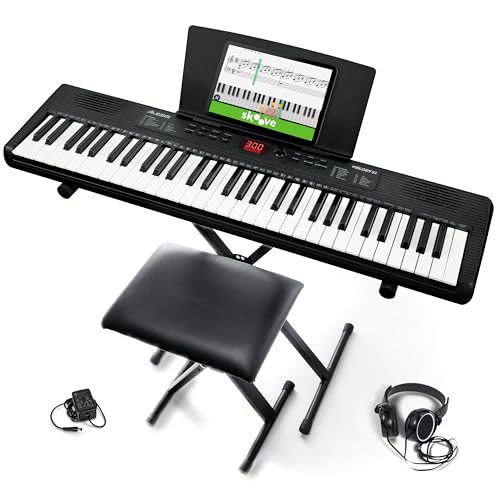
The Alesis Melody 61 MK4 bundle builds on the standard keyboard with useful extras for a beginner. A bundle can reduce the common problem of ordering a keyboard and then realizing that a stand, seat, or headphones are still missing. Its 61 keys give a new player space to learn notes, chords, and melodies. The package is aimed at accessible home music making rather than concert-level piano performance.
I see this bundle as a good option for someone who wants to begin at once. The added accessories can make the first practice session feel more organized. A student can sit at a steady height and use headphones when others are nearby. Buyers should inspect the current listing carefully, since bundle contents can change between versions or sellers.
Pros:
- Bundle format makes setup easier
- 61 keys provide a useful beginner range
- Multiple voices support creative learning
- Accessories may reduce total startup cost
- Suitable for children and casual adult players
- Portable form works well in flexible spaces
Cons:
- Key response is not weighted like a digital piano
- Included accessories may be basic in quality
- Some learners may prefer Yamaha’s built-in lesson tools
My Recommendation
Choose the Alesis Melody 61 MK4 bundle if convenience is your top concern. It can be the best 61 key piano for beginners who want a practical package without researching every accessory separately. It is a sensible gift for a student who needs a complete starting point. For serious classical study, I would spend more on a weighted model later.
| Best for | Why |
|---|---|
| Complete setups | The bundle can cover several basic practice needs. |
| Gift giving | It feels more ready to use than a keyboard alone. |
| Casual music play | Extra voices encourage fun after formal practice. |
The bundle’s value depends on the current price and included items. It is worth considering when those extras cost less than buying them separately.
Donner DEK-610S 61-Key Keyboard Kit

The Donner DEK-610S stands out with a large collection of voices and rhythms. The package includes a piano keyboard, stand, stool, and microphone, giving beginners several ways to play. Its 61-key range fits early songs and basic two-hand practice. This is the kind of keyboard that can serve as both a lesson tool and a small home entertainment center.
The many rhythms may help a learner develop timing and enjoy simple accompaniment. A microphone adds another layer of fun for children and families. I would use the piano tone for focused study, then introduce the other voices and rhythms after the basic routine is established. The main caution is that a long feature list can feel busy to a beginner who wants only a few clear controls.
Pros:
- 249 voices offer broad sound variety
- 249 rhythms support timing and accompaniment practice
- Includes stand and stool for a complete setup
- Microphone adds fun for singing and family use
- 61 keys suit beginner melodies and chords
- Good choice for creative play and casual performance
Cons:
- Many features may overwhelm a new student
- Keys are not weighted for traditional piano technique
- Microphone and basic accessories may not match premium gear
My Recommendation
The Donner DEK-610S is best for a social learner who wants to play, sing, and experiment. It may be the best 61 key piano for beginners who enjoy rhythm tracks more than strict classical study. The stand and stool help create a complete station, while the microphone makes it appealing as a family gift. I would choose it when fun and variety are key parts of the buying decision.
| Best for | Why |
|---|---|
| Creative play | Many voices and rhythms invite experimentation. |
| Family entertainment | The microphone adds singing and performance options. |
| Complete value | The stand and stool reduce the need for extra purchases. |
This keyboard offers a lot for its category. It is best for a learner who enjoys choice, while a student focused on formal piano may prefer a quieter, simpler instrument.
How to Choose the Best 61 Key Piano for Beginners
Choosing a first keyboard can feel like picking a trail through a forest. Many models look similar, yet their features serve different learners. I start with the student’s goals, space, age, and budget rather than chasing the longest feature list. A clear match usually matters more than a large number of buttons.
Why 61 Keys Work Well for Beginners
A 61-key keyboard gives more range than a compact 37- or 49-key model. That extra space helps beginners play melodies with both hands and learn common chord patterns. It is also lighter and easier to store than a full 88-key piano. For many first-year students, this balance feels just right.
However, 61 keys are not the same as a full piano range. Students focused on classical pieces may eventually need 88 keys. A 61-key keyboard remains useful for early lessons, songwriting, pop music, church music, and general keyboard skills. I consider it a starting bridge, not a dead end.
Weighted Versus Non-Weighted Keys
Most affordable beginner keyboards in this guide use light, non-weighted keys. They are easy for small hands to press and keep the keyboard portable. They also allow quick playing for pop songs and simple melodies. This design helps keep the purchase price lower.
Weighted keys feel more like an acoustic piano. They give stronger resistance in the lower register and lighter resistance in the upper register on many digital pianos. That feel can support finger strength and classical technique. If a student plans formal piano exams or serious classical study, a weighted 88-key instrument may be the better long-term choice.
Still, I would not delay a child’s first lessons simply because a keyboard lacks weighted action. A student who practices often on a simple 61-key model can build rhythm, note reading, and musical confidence. The best beginner instrument is one the learner will actually use.
Learning Features That Matter
Built-in songs and quiz modes can make practice feel less like work. They give a beginner a clear task and quick feedback. Yamaha’s beginner models are especially interesting for buyers who want these tools inside the keyboard. Other models may offer many voices and rhythms instead.