What Is A Spinet Piano: History, Sound, And Value
A spinet piano is a compact upright piano with short strings, a low cabinet, and a space-saving drop action.
If you are asking what is a spinet piano, you are likely choosing between a small acoustic piano, a console, or a digital keyboard. This guide explains the spinet piano’s design, sound, history, strengths, limits, care needs, and buying risks so you can make a wise choice.
What Is a Spinet Piano?
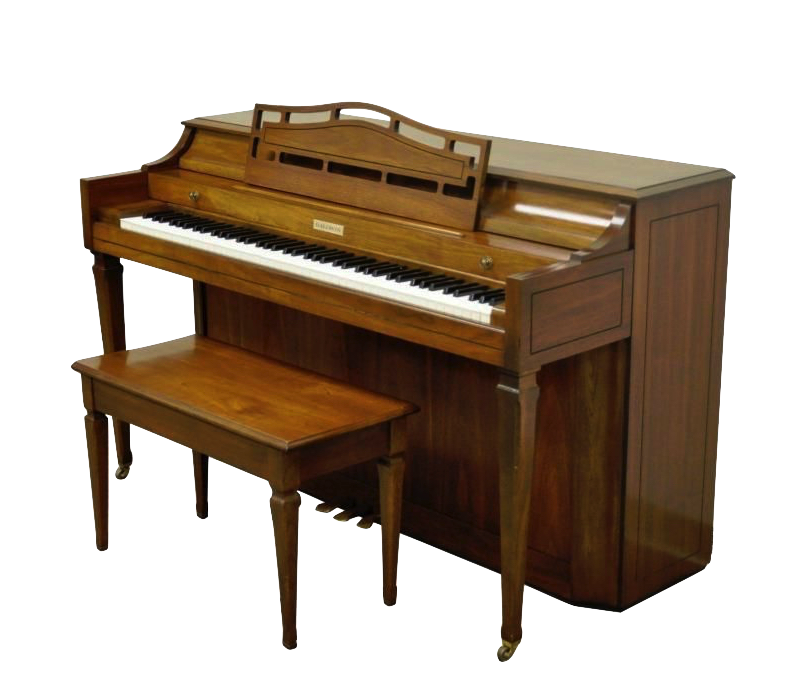
A spinet piano is the smallest type of traditional upright piano. Most spinets stand about 36 to 40 inches tall, although exact sizes vary by brand and model. They use real strings, hammers, dampers, and a wooden soundboard, so they produce sound through acoustic vibration rather than speakers.
The key feature of a spinet piano is its drop action. The action is the mechanical system that moves when you press a key. In a standard upright, the action sits above the keys. In a spinet, the action is placed below the keys and uses connecting parts called stickers to reach the hammers.
This design saves space, but it also adds mechanical complexity. Think of it like fitting a full-size machine into a smaller case. The parts still work, but they must take a less direct path.
A spinet piano is not the same as a small grand piano. It is an upright piano built for rooms where floor and wall space are limited. It is also different from a console piano, which is usually taller and has a more direct action.

How Does a Spinet Piano Work?
When you press a key on a spinet piano, the key moves a series of levers. These levers send motion upward to a hammer. The hammer then strikes one or more strings, causing them to vibrate.
The sound travels through the bridge and into the soundboard. The soundboard acts like the body of a violin. It spreads the vibration through the cabinet and helps create the piano’s volume and tone.
A typical spinet piano includes these main parts:
• Keyboard: The set of keys used to play notes.
• Action: The moving system that transfers key motion to the hammers.
• Drop action: The compact action design found in most spinets.
• Hammers: Felt-covered parts that strike the strings.
• Strings: Metal wires that create different pitches.
• Soundboard: A wooden panel that amplifies string vibration.
• Dampers: Parts that stop string vibration when you release a key.
• Cabinet: The outer case that protects the inner parts.
The drop action gives the spinet its low height. However, the action may feel less responsive than the action in a taller upright piano. This difference matters most to advanced players who need fast repetition, delicate control, and precise dynamic changes.
The History of the Spinet Piano
The modern spinet piano became popular in the United States during the middle of the 20th century. Many families wanted an acoustic piano but had limited space in smaller homes and apartments. Piano makers responded with short, affordable upright models.
Spinets became especially common from the 1930s through the 1980s. They were often marketed as an easy way for children to begin piano lessons. Their compact cabinets also appealed to families who wanted a piano in a living room, bedroom, or narrow hallway.
The design solved a real problem, but it involved trade-offs. Shorter strings cannot usually produce the same depth and power as longer strings. The drop action also requires more parts and can be harder to regulate.
In my experience reviewing used piano listings and inspecting compact acoustic instruments, the biggest mistake is judging a spinet piano by its cabinet alone. A clean cabinet can hide worn hammers, loose tuning pins, or damaged action parts. The inside tells the real story.
Spinet Piano vs. Console Piano
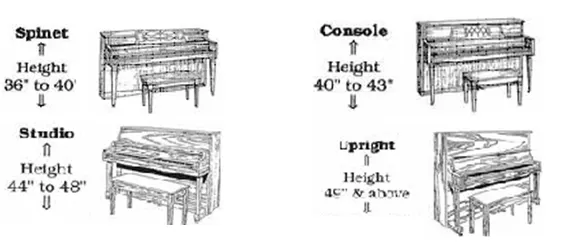
The main difference between a spinet piano and a console piano is height and action design. A console piano is usually taller, often around 40 to 44 inches, and normally uses a more direct action above the keys.
A spinet piano may fit better under a low shelf or against a tight wall. A console piano usually offers a fuller sound, stronger bass, and a more natural key response.
Here is a simple comparison:
| Feature | Spinet piano | Console piano |
|---|---|---|
| Typical height | About 36 to 40 inches | About 40 to 44 inches |
| Action | Drop action | More direct upright action |
| Tone | Light to moderate | Fuller and stronger |
| Space needed | Very little | Slightly more |
| Advanced control | Limited in many models | Usually better |
| Used price | Often low | Varies by condition and brand |
A good spinet piano can still be enjoyable. Yet, if you have room for a console, the taller instrument is often the better acoustic choice.
Spinet Piano vs. Upright Piano
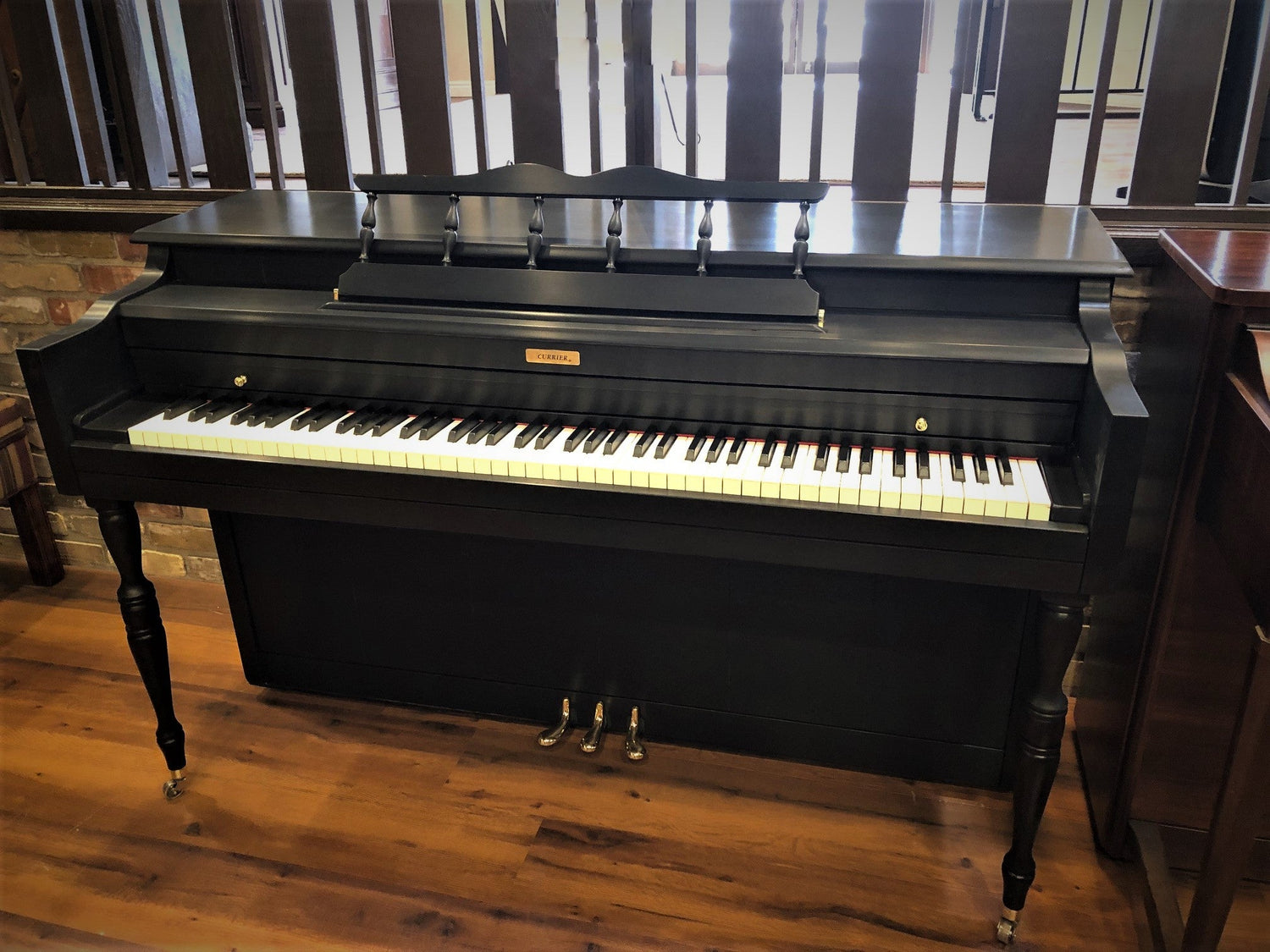
“Upright piano” is a broad term. A spinet piano is one kind of upright piano. Other upright types include console, studio, and full-size upright pianos.
A studio piano often stands about 45 to 47 inches tall. A full-size upright may be 48 inches or taller. These larger designs allow longer strings and a larger soundboard, which can create more volume, bass depth, and tonal color.
The trade-off is simple:
• Spinet piano: Best for tight spaces and light home use.
• Console piano: A strong middle ground for homes and learners.
• Studio piano: Better for serious practice and stronger projection.
• Full-size upright: Offers the most power and depth among upright designs.
The term “upright” tells you the general shape. The term “spinet” tells you that the piano is an especially short upright with a compact action.

What Does a Spinet Piano Sound Like?
A spinet piano often has a softer and thinner sound than a taller upright. Its shorter bass strings produce less low-end power. Its smaller soundboard also limits the amount of air it can move.
Some spinets sound warm and pleasant. Others sound bright, nasal, or weak, especially when they have old hammers or poor regulation. Brand, age, maintenance, room size, and player technique all affect the final tone.
A spinet piano may work well for:
• Basic lessons
• Simple home playing
• Chord practice
• Casual songwriting
• Quiet family use
It may disappoint players who want a concert-like sound. A small piano cannot create the same bass response as a larger instrument, just as a small speaker cannot produce the same depth as a large sound system.
Before buying, play every key from the lowest note to the highest. Listen for buzzing, rattling, uneven volume, and notes that sound dull or harsh.
Benefits of a Spinet Piano
A spinet piano has several practical advantages. Its value depends on your room, playing goals, and budget.
Compact Size
The small cabinet makes a spinet piano easier to place in an apartment, bedroom, classroom, or small living room. It does not dominate the room as much as a tall upright.
Lower Purchase Cost
Used spinets are often inexpensive because they are common and less desirable to advanced players. This can help a beginner gain access to a real acoustic piano without paying for a newer console.
Real Acoustic Touch
A spinet piano gives you physical strings, hammers, and mechanical key movement. This can feel more natural than a low-cost keyboard with light plastic keys.
Traditional Appearance
Many people like the look of a wooden piano. A spinet can add warmth and character to a room while serving as a working instrument.
Useful for Beginners
A well-maintained spinet piano can support basic scales, chords, reading practice, and early lessons. For a new student, regular practice matters more than owning an expensive piano.
Limitations of a Spinet Piano
The main weakness of a spinet piano is its compact design. Saving space often means giving up some sound quality and mechanical simplicity.
Common limitations include:
• Shorter strings and weaker bass
• Smaller soundboard and lower volume
• More complicated drop action
• Harder access for some repairs
• Limited repetition speed
• Uneven touch in neglected instruments
• Low resale value for many older models
A spinet piano is also not automatically easy to move. It may weigh between 200 and 300 pounds, depending on its design and materials. Moving one down stairs can cause injury or property damage, so professional movers are usually the safest choice.
Another concern is age. Many used spinets are several decades old. Age alone does not make a piano bad, but neglected parts can make repairs cost more than the instrument is worth.
Is a Spinet Piano Good for Beginners?
A spinet piano can be good for a beginner if it is in sound mechanical condition. The student needs working keys, stable tuning, even touch, and a tone that encourages practice.
However, an extremely worn spinet may create poor habits. Sticky keys can interrupt rhythm. Weak action parts can make soft playing difficult. A piano that will not stay in tune can also make it harder for a student to develop a reliable ear.
If possible, ask a piano technician to inspect the instrument before purchase. A short inspection can reveal problems that are invisible from the outside.
For a beginner, check these points:
-
Press every key slowly and quickly.
-
Listen for buzzing and rattling.
-
Test the soft pedal and sustain pedal.
-
Check whether keys return at the same speed.
-
Look for cracks in the soundboard.
-
Ask when the piano was last tuned.
-
Ask whether the action has been repaired or regulated.
-
Confirm that the piano can be moved safely into your home.
A clean, stable spinet is better than a taller piano with serious structural damage.
How Much Is a Spinet Piano Worth?
The value of a spinet piano depends on its brand, condition, age, location, and maintenance history. Many older spinets have modest resale value because there are many available and moving them is expensive.
In some cases, the owner may pay more for transportation and tuning than for the piano itself. That does not mean every spinet is worthless. A well-maintained instrument from a respected maker can still serve a family for many years.
When estimating value, consider:
• The cost of professional moving
• Initial tuning and follow-up tuning
• Action repairs
• Broken strings or tuning pins
• Cabinet condition
• Local demand
• Availability of service technicians
Never assume that a free piano is free. Transportation, tuning, and repairs can quickly change the total cost.
How to Buy a Used Spinet Piano
Buying a used spinet piano requires more than checking the finish. Start with the instrument’s history, then test its sound and action.
Use this process:
-
Find the brand and serial number.
-
Ask how often the piano was tuned.
-
Play each key across the full keyboard.
-
Test repeated notes and soft playing.
-
Check all pedals.
-
Inspect the soundboard and bridges.
-
Look for rust, moth damage, cracks, and loose parts.
-
Ask a qualified piano technician for an inspection.
-
Get a moving estimate before agreeing to the purchase.
-
Compare the total cost with a digital piano or newer console.
Do not let a polished cabinet persuade you. In one common buying scenario, a piano may look beautiful but have badly worn hammer felt and action centers. The repair bill can exceed the instrument’s practical value.
If the seller refuses a reasonable inspection, treat that as a warning sign.
How to Maintain a Spinet Piano
Good care can help a spinet piano remain stable and playable. Keep it away from heat vents, fireplaces, direct sunlight, and damp exterior walls. Sudden changes in temperature and humidity can affect wood, glue, felt, and tuning stability.
Most acoustic pianos benefit from regular tuning. Many households schedule tuning once or twice each year, but the right schedule depends on climate, use, and the piano’s condition.
Follow these basic care tips:
• Keep drinks and plants away from the piano.
• Dust the cabinet with a soft, dry cloth.
• Do not spray cleaner onto the keys or finish.
• Keep the room at a moderate, stable humidity.
• Schedule regulation when the touch becomes uneven.
• Replace worn or damaged parts before they cause more problems.
• Use a qualified piano technician for internal work.
Do not attempt to tighten tuning pins or adjust the action without training. A piano has high string tension, and careless work can damage the instrument or cause injury.
Should You Choose a Spinet Piano or Digital Piano?
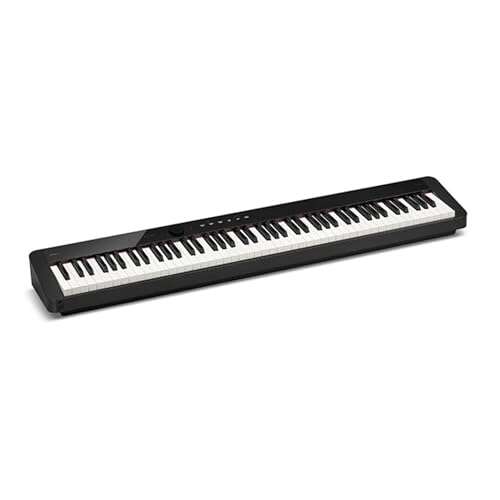
A spinet piano offers acoustic sound and mechanical movement. A digital piano offers convenience, volume control, headphones, recording features, and little routine maintenance.
Choose a spinet piano if you value:
• Real strings and hammers
• Traditional piano tone
• A purely acoustic playing experience
• A classic wooden cabinet
Choose a digital piano if you need:
• Headphone practice
• Easy volume control
• Simple moving
• Built-in sounds and recording
• Consistent tuning
The best choice depends on your home and habits. A student who practices late at night may progress more with a good digital piano than with an acoustic spinet that cannot be played quietly.
Frequently Asked Questions About What Is a Spinet Piano
What is a spinet piano?
A spinet piano is a small upright acoustic piano, usually about 36 to 40 inches tall. It uses a compact drop action to fit the action below the keyboard.
Is a spinet piano a real piano?
Yes. A spinet piano has real strings, hammers, dampers, and a soundboard. It creates sound through acoustic vibration, not electronic speakers.
Is a spinet piano good for beginners?
A well-maintained spinet piano can be suitable for beginners. A piano with sticky keys, unstable tuning, or major action damage may slow learning and cost more to repair.
What is the difference between a spinet and a console piano?
A spinet is shorter and usually uses a drop action. A console is taller, often has a more direct action, and generally offers stronger tone and better touch control.
How tall is a spinet piano?
Most spinet pianos are around 36 to 40 inches tall. Measurements vary, so check the exact model before planning its location.
Can a spinet piano be worth restoring?
Restoration may make sense when the piano has strong structural parts, a respected maker, sentimental value, or a low repair cost. A technician should inspect it before you approve major work.
How often should a spinet piano be tuned?
Many spinet owners tune once or twice a year. The best schedule depends on use, climate, tuning stability, and the piano’s overall condition.
Conclusion
A spinet piano is a compact acoustic upright made for homes that need a smaller instrument. Its drop action saves space, while its real strings and soundboard provide a traditional piano experience. The main trade-offs are lighter tone, shorter strings, more complex action parts, and possible repair concerns in older models.
If you are considering one, focus on condition rather than appearance. Play it, inspect it, ask about its history, and get a technician’s opinion before paying or arranging a move. With careful selection, a spinet piano can give a beginner or casual player years of musical enjoyment.
Take time to compare the piano with a console and a digital model, then choose the instrument that fits both your room and your practice needs. Share your experience or questions about buying a spinet piano in the comments.

Senior Music Reviewer
Alex Carter is a seasoned music reviewer with over a decade of experience in the world of sound and instruments. Passionate about helping musicians and enthusiasts make informed choices, he brings sharp insights and in-depth knowledge to every review. From classical instruments to modern gear, Alex combines technical expertise with a love for music to deliver content that resonates with readers.
As a Senior Music Reviewer and expert author on Tuneluma.com, Alex is dedicated to sharing honest evaluations, practical advice, and thoughtful commentary to guide readers in their musical journey.