Casio PX-770 Privia Digital Piano: Honest Review
A realistic, feature-rich 88-key digital piano that delivers great tone and value.
Imagine wanting a full, acoustic-like piano sound at home without the space or upkeep. You want weighted keys that feel right, a rich sound that fills a room, and simple tech to connect to lessons or your DAW. The Casio Privia PX-770 answers that need. It gives you a convincing touch, clear stereo tone, and a furniture-style cabinet that fits living rooms and small studios. If you’re upgrading from a basic keyboard or need a compact digital piano for practice, this model aims to bridge the gap between budget and pro gear.

Is Casio Privia PX-770 Good?
The short answer is: yes — for home players who want realistic touch and good sound without breaking the bank. I recommend the Casio Privia PX-770 to beginners who plan long-term, intermediate players who need a compact stage alternative, and homeowners who prefer a furniture-style finish. In my experience, the piano’s Tri-Sensor II scaled hammer action gives a natural resistance that helps technique. I used it for daily practice and a few small recitals at home. It handled soft classical pieces and louder pop arrangements with convincing dynamics. The PX-770 strikes a strong balance of tone, feel, and value.

My First Impression for Casio Privia PX-770
The PX-770 arrived well-packed in a sturdy box with foam inserts. Assembly was mostly the final cabinet hookup and attaching the pedal board. The finish felt solid and the wood-style cabinet raised the piano from being a simple keyboard to a true piece of furniture. Keys were firm and responsive on first touch. Sound out of the built-in 16W speakers was clear and balanced. I felt pleased and a bit surprised at how complete it felt for the price. Setup took under 20 minutes, including pedal installation and a quick tuning of my ear to the sampled piano voices.
What Makes It Stand Out / Key Features
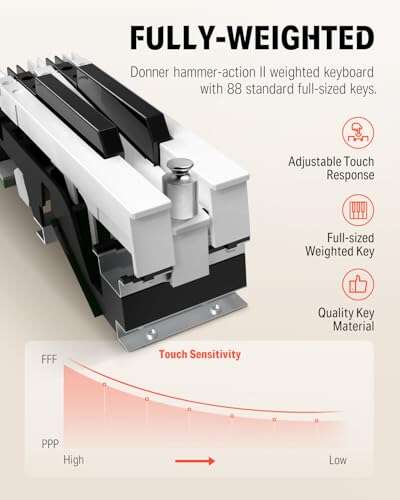
- Tri-Sensor II Scaled Hammer Action II keyboard — responsive, graded hammer feel.
- AiR (Acoustic and Intelligent Resonator) sound source — expressive piano tones.
- 19 built-in tones and Concert Play — play with orchestral backing tracks.
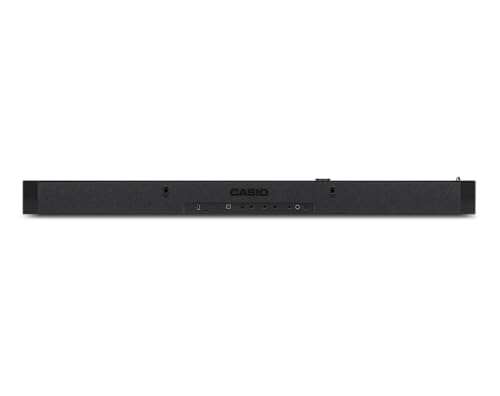
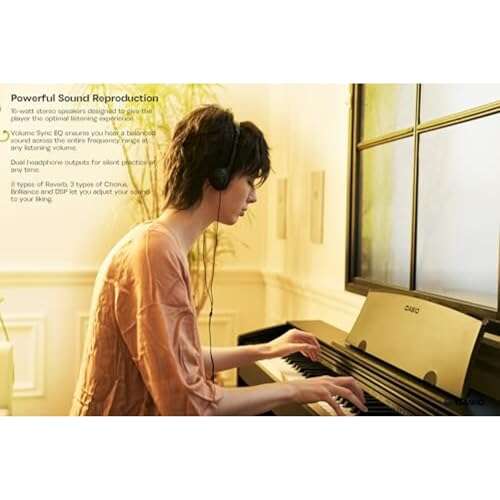
- 16W stereo speaker system with cabinet resonance — fuller room sound.
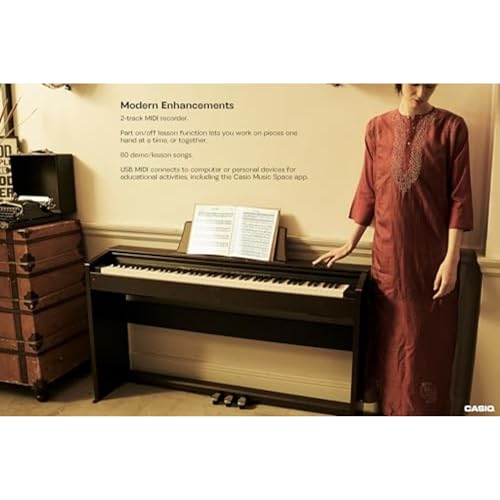
- USB-MIDI connectivity — easy link to apps and DAWs for lessons and recording.
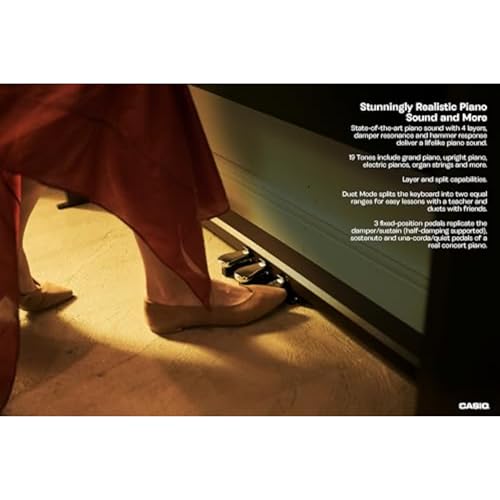
- Furniture-style cabinet with three-pedal board for damper, soft, and sostenuto functions.

What I Like
- Realistic weighted feel that helps build proper technique.
- Warm, natural grand piano tone thanks to AiR sampling.
- Elegant cabinet design looks at home in living rooms.
- USB-MIDI makes connecting to lessons and software painless.
- Multiple tones and Concert Play extend practice and performance options.
What Could Be Better
- Speakers are good but won’t replace a true upright piano’s room-filling projection.
- Limited onboard effects and editing compared to higher-end models.
- Only basic Bluetooth or wireless features (needs adapter for some wireless uses).
My Recommendation
The Casio Privia PX-770 is best for students, home players, and anyone who wants a real piano feel in a compact, elegant package. If you want a practice-ready instrument with a natural touch and easy computer connection, this model fits well. I recommend the PX-770 for its value, build, and sound. It’s easy to place in a living room or studio and gives reliable touch response for years.
| Best for | Why |
|---|---|
| Beginner students | Weighted keys help build correct technique. |
| Living room players | Furniture finish looks great at home. |
| Home recording | USB-MIDI and clean stereo outputs for DAWs. |
Alternative Products You Can Consider
Yamaha Arius YDP-144 — A reliable upright-style digital piano. Best for players who favor a slightly brighter Yamaha piano voice and a firm graded hammer action. It competes well on key feel and has a strong brand reputation for consistent tone.
Roland FP-30X — A popular compact stage piano. Best for gigging players who want solid onboard sounds and Bluetooth MIDI. Compared to the PX-770, the FP-30X has more modern connectivity and a different key action feel.
Kawai ES110 — Lightweight with excellent hammer action and expressive tone. Best for players who want a portable instrument with high-quality touch. It offers a somewhat different key feel and voicing than the Casio Privia PX-770.
| Product | Best For | Key Difference |
|---|---|---|
| Casio Privia PX-770 | Home players & students | Furniture cabinet + AiR sound at a strong value |
| Yamaha Arius YDP-144 | Traditional Yamaha tone lovers | Brighter Yamaha voicing; trusted brand tone |
| Roland FP-30X | Gigging keyboardists | Better stage features and modern connectivity |
Final Verdict: Which Should You Buy?
If you want a stylish home piano with realistic weighted keys and a warm grand-like tone, pick the Casio Privia PX-770. It’s a smart buy for students and home players. Choose the Yamaha Arius YDP-144 if you prefer Yamaha’s tonal character. Go with the Roland FP-30X if you need portable stage-ready features. Overall, the Casio Privia PX-770 gives the best blend of feel, sound, and cabinet styling for home performance and practice.
FAQs Of casio px-770 privia digital piano product info and reviews
Is the key action on the Casio Privia PX-770 weighted?
Yes. The PX-770 uses Tri-Sensor II Scaled Hammer Action. It mimics the graded resistance of an acoustic piano. You’ll feel heavier bass keys and lighter treble keys.
Can I connect the PX-770 to my computer or tablet?
Yes. It has USB-MIDI. You can connect to lesson apps, notation software, and DAWs. Some wireless use may need an adapter.
Does the PX-770 have a sustain pedal and full three-pedal board?
Yes. It includes a three-pedal board with damper, soft, and sostenuto. The pedal action is solid for practice and expressive playing.
Is the speaker system loud enough for small rooms?
Yes. The built-in 16W stereo speakers are clear and fill a small to medium room. For larger venues, you may want external amplification.
How does the Casio Privia PX-770 compare to uprights?
It won’t fully match a real upright’s acoustic projection and resonance. But it offers consistent tuning, headphone practice, and features that make it ideal for many home users.

Senior Music Reviewer
Alex Carter is a seasoned music reviewer with over a decade of experience in the world of sound and instruments. Passionate about helping musicians and enthusiasts make informed choices, he brings sharp insights and in-depth knowledge to every review. From classical instruments to modern gear, Alex combines technical expertise with a love for music to deliver content that resonates with readers.
As a Senior Music Reviewer and expert author on Tuneluma.com, Alex is dedicated to sharing honest evaluations, practical advice, and thoughtful commentary to guide readers in their musical journey.