How Heavy Is A Grand Piano: Average Weight And Moving Tips
A grand piano usually weighs between 500 and 1,200 pounds, depending on its size, design, and materials.
If you are moving, buying, or placing one, knowing how heavy is a grand piano is only the first step. Its weight is spread across a large, delicate frame, so the piano can damage floors, strain stairways, or suffer serious harm if handled poorly. This guide explains grand piano weights by size, what affects them, and how professionals move them safely.
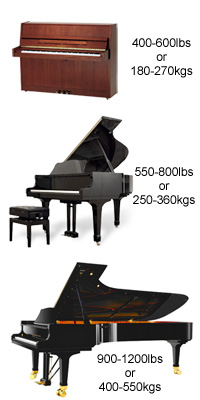
How Heavy Is a Grand Piano?
So, how heavy is a grand piano in typical terms? Most grand pianos weigh between 500 and 1,200 pounds. Smaller baby grands often weigh about 500 to 650 pounds, while full concert grands may weigh more than 1,000 pounds.
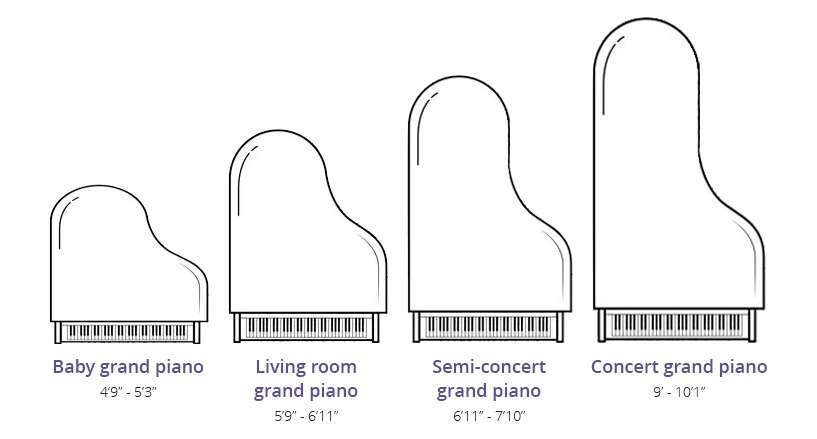
Here is a simple size guide:
• Baby grand piano, 4 feet 10 inches to 5 feet 6 inches: about 500 to 650 pounds
• Medium grand piano, 5 feet 7 inches to 6 feet 8 inches: about 600 to 850 pounds
• Parlor or salon grand, 6 feet 9 inches to 7 feet 6 inches: about 750 to 1,000 pounds
• Concert grand piano, 8 feet to 9 feet: about 900 to 1,300 pounds
These numbers are useful estimates, not exact rules. The final weight depends on the brand, cabinet design, soundboard, cast-iron plate, hardware, and the type of wood used.
A small grand can still feel extremely heavy because its weight is hard to balance. Unlike a square box, a grand piano has a long, curved body and three unevenly placed legs. That shape makes lifting and turning much harder than the number on the scale suggests.
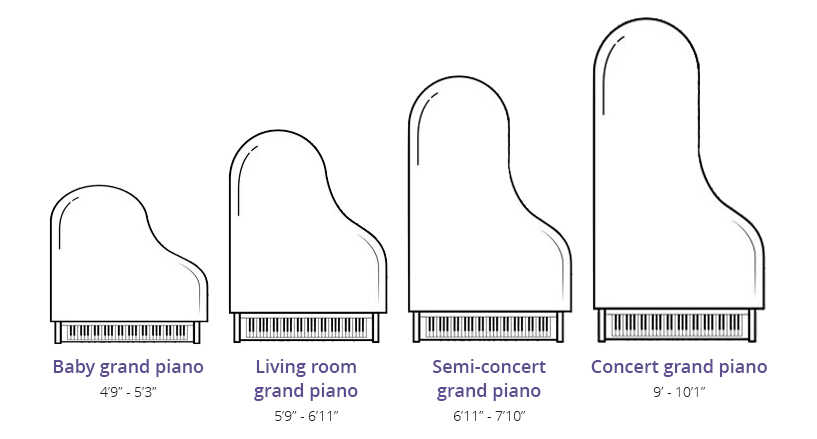
Grand Piano Weight by Size
The length of a grand piano is measured from the front of the keyboard to the farthest point of the curved case. In general, a longer piano has a larger soundboard, longer strings, and a stronger frame. Those features improve tone, but they also add weight.
Baby grand piano weight
A baby grand is usually the lightest type of grand piano. Most weigh between 500 and 650 pounds.
Some compact models may weigh slightly less. Others can approach 700 pounds if they use a thick plate, heavy hardware, or a dense hardwood cabinet. A baby grand still needs careful moving, even when it weighs less than larger models.
Medium grand piano weight
Medium grands often weigh between 600 and 850 pounds. They are common in homes, studios, churches, and small performance spaces.
Their longer strings and larger soundboards give them more volume than baby grands. The extra length also means the piano may be harder to rotate through a doorway or hallway.
Parlor grand piano weight
A parlor grand typically weighs between 750 and 1,000 pounds. These pianos offer a larger sound than most home models and often have a more substantial cabinet.
Their weight can vary widely. A modern piano with a slim cabinet may weigh less than an older piano of the same length. Antique instruments can have thick wood, heavy ornaments, and reinforced parts.
Concert grand piano weight
A concert grand may weigh from 900 to more than 1,200 pounds. Some large models can approach 1,400 pounds when the bench, special hardware, or transport skid is included.
Concert grands are built for powerful sound in large halls. Their long strings, wide soundboards, and large cast-iron plates make them the heaviest grand pianos.
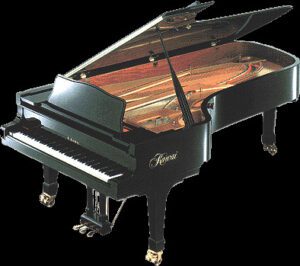
What Makes a Grand Piano So Heavy?
The answer to how heavy is a grand piano becomes clearer when you look inside the case. Several major parts contribute most of the weight.
Cast-iron plate
The cast-iron plate is one of the heaviest parts of a piano. It supports the tension of the strings, which can total many tons when combined.
This plate may weigh several hundred pounds by itself. It sits inside the wooden case and acts like the piano’s structural backbone.
Soundboard
The soundboard is usually made from spruce or another resonant wood. It is much lighter than the iron plate, but its broad surface adds meaningful weight.
The soundboard also has ribs and braces beneath it. These parts help the piano produce a strong, stable tone.
Strings and tuning hardware
A grand piano has hundreds of strings, pins, felt parts, dampers, and other small components. Each piece is light, but together they add a noticeable amount.
The tuning pins are set into a thick wooden pinblock. This block must be dense and strong, so it adds more weight near the keyboard end.
Wooden cabinet
The outer case may use maple, walnut, mahogany, oak, or other woods. A polished cabinet can also contain multiple layers of veneer and finish.
Older pianos often have thick wood panels. Some decorative models include carved legs, music desks, and heavy ornaments that increase the total load.
Legs, pedals, and hardware
The three legs, pedal lyre, hinges, lid, music desk, and hinges may look small compared with the case. However, these parts affect both total weight and balance.
The lid can be especially awkward to handle. It is large, fragile, and easy to bend or scratch if it is not removed or secured correctly.

How Grand Piano Weight Compares With Other Pianos
A grand piano is not always heavier than every upright piano, but it is usually harder to move. The shape matters as much as the weight.
Here is a general comparison:
• Spinet piano: about 300 to 400 pounds
• Console piano: about 350 to 500 pounds
• Studio upright piano: about 400 to 600 pounds
• Large upright piano: about 500 to 800 pounds
• Baby grand piano: about 500 to 650 pounds
• Concert grand piano: about 900 to 1,300 pounds
A tall upright may weigh more than a small baby grand. Yet an upright can often stay upright during a move, while a grand piano must usually be placed on its side on a piano board.
This is why asking how heavy is a grand piano does not tell the whole story. Movers must consider the piano’s length, center of gravity, path, stairs, door width, and floor strength.

How Much Weight Does a Grand Piano Put on the Floor?
A grand piano may weigh hundreds of pounds, but the pressure on the floor depends on how that weight is spread across the legs.
A 600-pound piano standing on three legs does not place 200 pounds on each leg in a perfect way. The weight is not evenly balanced. The keyboard end is often heavier, and one leg may carry more force than another.
The casters can create small pressure points. Hard wheels may mark wood flooring, crack tile, or leave dents in soft surfaces. A protective floor cup or heavy furniture pad can spread the load and protect the floor.
Before placing a grand piano in an older home, check these points:
• The condition and size of the floor joists
• Whether the piano will sit near a wall or over a long floor span
• Signs of sagging, cracks, or water damage
• The weight of nearby furniture and people
• Local building advice for unusual or weak flooring
Most modern floors can support a normal grand piano when the weight is positioned sensibly. Still, a structural engineer should assess the area if the building is old, damaged, or unusually designed.
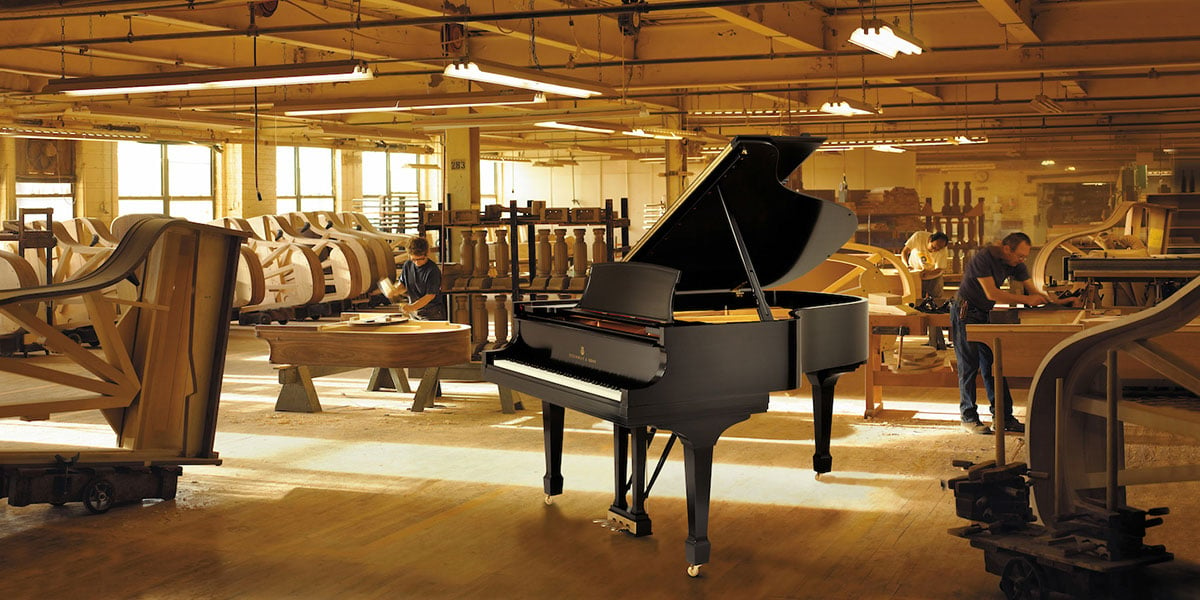
Can You Move a Grand Piano Yourself?
Moving a grand piano yourself is possible in rare cases, but it is usually not a wise project for untrained helpers. The risk is not just lifting the piano. The real challenge is controlling it while turning, lowering, and carrying it.
A grand piano may have a high center of gravity when tilted. If it shifts, even strong people may not be able to stop it. A fall can damage the piano, the building, and anyone nearby.
Professional piano movers commonly use:
• A padded piano board
• Heavy-duty moving straps
• Skid boards and locking belts
• Piano dollies designed for grand pianos
• Protective blankets and corner padding
• Ramps for steps and thresholds
• Four or more trained movers for larger instruments
One practical lesson is worth remembering: never judge a moving plan by the first few feet. A piano may leave a room easily and then become trapped at a narrow doorway or stair landing.
Measure the full route before moving anything. Include door openings, ceiling height, turns, porch rails, elevators, and the truck ramp.

How Professionals Move a Grand Piano
The exact process varies by piano and building, but a trained crew usually follows a careful sequence.
1. Inspect the route
Movers measure doors, halls, stairs, and turns. They also check for loose flooring, low ceilings, sharp corners, and steep steps.
2. Protect the instrument
The lid is secured or removed when needed. The case, keyboard, pedals, and legs are wrapped with thick padding.
3. Secure the piano to a skid
The piano is placed on its side on a padded skid board. Straps hold it firmly in place and keep the body from shifting.
4. Use the correct equipment
Movers use a piano dolly, ramp, liftgate, or specialized truck equipment. They do not rely on a standard furniture dolly for a large grand piano.
5. Load and unload slowly
The crew communicates during every movement. One person should direct the operation so that everyone does not pull in different directions.
6. Set up and inspect the piano
After placement, movers reinstall the legs and pedals. The piano should then rest before tuning because movement and changes in temperature can affect pitch.
The time needed can range from less than an hour to several hours. Stairs, tight corners, long carries, and narrow elevators can change the plan.
Does Moving a Grand Piano Damage It?
Moving a grand piano does not automatically damage it. A careful move with proper equipment is normally safe. Problems arise when people drag the legs, lift by weak parts, push on the lid, or allow the piano to twist.
Common damage includes:
• Broken legs or pedal supports
• Scratches in the finish
• Cracked or loose hinges
• Damaged casters
• Shifted action parts
• Loose tuning pins
• Cracks in the soundboard
• Changes in pitch or regulation
The piano may need tuning after a move even when no visible damage occurs. Temperature, humidity, vibration, and movement can all affect its tuning.
A useful rule is to avoid using the legs as handles. The legs are designed to support the instrument from below, not to pull or steer it across a floor.
How to Find the Exact Weight of a Grand Piano
The most accurate answer to how heavy is a grand piano comes from the manufacturer. Look for the model number inside the piano, often near the soundboard, plate, or frame.
Then check the manufacturer’s product information or contact an authorized dealer. The exact model matters because two grand pianos with the same length may have different weights.
You can also ask a piano mover for an estimate. Experienced movers often recognize common models and know how the weight is distributed.
Keep these details in mind:
• Piano weight may exclude the bench
• Shipping weight may include the skid and packing materials
• A rebuilt or restored piano may weigh more than expected
• Antique cases may contain extra wood or metal
• Digital hybrid pianos can have very different weights
Do not use a household bathroom scale. It is not designed for a grand piano and can create a serious safety risk.
Tips for Buying or Placing a Heavy Grand Piano
Before buying a grand piano, think about the room and the move as carefully as the sound. A beautiful instrument can become a costly problem if it cannot enter the home or sit safely in the planned space.
Use this checklist:
-
Measure every doorway and hallway.
-
Measure the piano’s length, width, and height when standing or tilted.
-
Check whether the delivery truck can reach the property.
-
Ask about stairs, elevators, gates, and steep driveways.
-
Confirm that the floor can support the instrument.
-
Keep the piano away from radiators, vents, fireplaces, and direct sunlight.
-
Leave enough space for the lid to open.
-
Plan for professional delivery and tuning.
-
Protect the floor with suitable cups or pads.
-
Confirm insurance coverage before the move.
Humidity also matters. Extreme dryness can affect the soundboard and wooden parts, while excess moisture can harm the action and finish. Many piano technicians suggest keeping indoor humidity fairly stable, often near 42% to 50%, though the ideal range can vary by climate and instrument.
Grand Piano Weight and Moving Cost
The weight of a grand piano is one factor in moving cost, but it is not the only one. Movers also consider distance, stairs, access, labor, equipment, insurance, and the piano’s value.
A short move with clear ground-floor access may cost much less than a short move involving several stairs and a narrow landing. A concert grand requires more workers and stronger equipment than a compact baby grand.
Ask a moving company these questions:
• Do you specialize in grand pianos?
• How many movers will be assigned?
• Will you use a skid board?
• Does the quote include stairs and tight turns?
• Is the instrument insured during transport?
• Will you provide a written estimate?
• Do you offer setup and tuning referrals?
The lowest quote is not always the safest choice. One damaged leg or cracked case can cost more than the difference between a qualified mover and a general moving crew.
Common Mistakes to Avoid
Many piano problems happen because people underestimate how heavy is a grand piano and how difficult it is to control.
Avoid these mistakes:
• Moving the piano with too few people
• Using a cheap furniture dolly
• Lifting from the lid or music desk
• Dragging the piano across the floor
• Leaving the legs attached during a difficult move
• Ignoring a narrow doorway until moving day
• Carrying the piano up stairs without a trained plan
• Failing to protect floors and walls
• Tuning the piano immediately after a major temperature change
• Assuming every piano of the same length weighs the same
The safest approach is simple: identify the model, measure the route, protect the home, and hire people who move pianos regularly.
Frequently Asked Questions About How Heavy Is a Grand Piano
How heavy is a baby grand piano?
A baby grand piano usually weighs about 500 to 650 pounds. Some compact or unusually heavy models may fall outside this range.
How heavy is a 7-foot grand piano?
A 7-foot grand piano commonly weighs about 750 to 1,000 pounds. The exact weight depends on the brand, cabinet, plate, soundboard, and hardware.
How heavy is a concert grand piano?
A concert grand piano often weighs between 900 and 1,300 pounds. Very large or specially built models may weigh even more.
Can a house floor support a grand piano?
Most sound, modern floors can support a grand piano when it is placed properly. An older, damaged, or unusually designed floor should be checked by a qualified professional before delivery.
How many people are needed to move a grand piano?
A small grand may require at least four trained movers, while a large concert grand may need more. The number depends on the route, stairs, equipment, and piano size.
Does a grand piano need tuning after it is moved?
Yes, most grand pianos should be tuned after moving. Let the piano adjust to its new room first, then have a piano technician tune and inspect it.
Is a grand piano heavier than an upright piano?
A grand piano can be heavier than many upright pianos, but not all of them. A large upright may weigh more than a small baby grand, although the grand is often harder to move because of its shape.
Conclusion
How heavy is a grand piano? Most weigh between 500 and 1,200 pounds, while small baby grands sit near the lower end and concert grands reach the upper end. The cast-iron plate, soundboard, strings, cabinet, legs, and hardware all add to the total.
Weight is only part of the challenge. Shape, balance, floor pressure, stair access, and safe handling matter just as much. Before buying or moving one, find the exact model weight, measure the full route, protect the floor, and use qualified piano movers.
With the right plan, you can protect both the instrument and your home. If you are preparing for a delivery, speak with a professional mover and piano technician before moving day.

Senior Music Reviewer
Alex Carter is a seasoned music reviewer with over a decade of experience in the world of sound and instruments. Passionate about helping musicians and enthusiasts make informed choices, he brings sharp insights and in-depth knowledge to every review. From classical instruments to modern gear, Alex combines technical expertise with a love for music to deliver content that resonates with readers.
As a Senior Music Reviewer and expert author on Tuneluma.com, Alex is dedicated to sharing honest evaluations, practical advice, and thoughtful commentary to guide readers in their musical journey.