What Hz To Tune Violin: Best Tuning Guide
Tune a violin to A4 = 440 Hz, with G, D, and E tuned by perfect fifths.
Knowing what Hz to tune violin strings to makes tuning much easier, whether you use a clip-on tuner, tuning app, or your ear. The standard starting point is A4 at 440 Hz, but orchestras, baroque groups, and solo performers may use other pitches. This guide explains the exact frequencies, tuning methods, common mistakes, and when a different reference pitch makes sense.
What Hz to tune violin strings to
When people ask what Hz to tune violin to, they usually mean the frequency of the A string. The standard reference is A4 = 440 Hz. This means the A string vibrates at 440 cycles per second when it is correctly tuned.
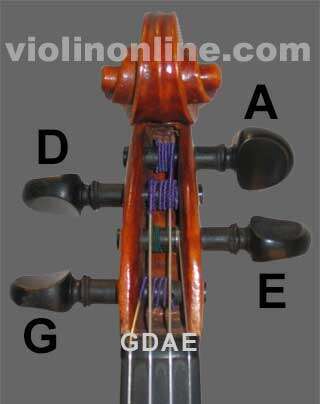
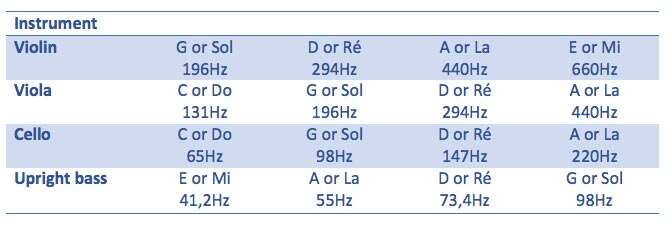
A violin has four strings. In standard tuning, the open strings are:
• G3 = 196.00 Hz
• D4 = 293.66 Hz
• A4 = 440.00 Hz
• E5 = 659.26 Hz
These notes are arranged in perfect fifths. The G string is the lowest, and the E string is the highest.
The note number matters. A4 means the A above middle C. It is not the same as A3 or A5. A3 is 220 Hz, while A4 is 440 Hz.
The answer to what Hz to tune violin is therefore simple for most players: tune the A string to 440 Hz, then tune the other strings by perfect fifths.

Why 440 Hz is the standard
A frequency of 440 Hz gives musicians a shared pitch reference. If every player tunes to the same A, an orchestra can play together without sounding sharp or flat compared with another instrument.
This standard is often called concert pitch or standard pitch. It is widely used in schools, orchestras, chamber groups, music exams, and digital tuners.
A4 = 440 Hz is also linked to the international standard ISO 16. In practice, this gives musicians a clear target, though some ensembles choose a slightly different pitch for artistic or historical reasons.
The number 440 is not a special physical law. It is an agreed reference. Music can still work at 438 Hz, 442 Hz, or another pitch, as long as all instruments use the same reference.
That is an important point when learning what Hz to tune violin to. The correct frequency depends not only on your violin, but also on the group or style of music you are playing.

Violin string frequencies in detail
The standard open-string frequencies help you understand what your tuner is showing.
G string: 196 Hz
The G string is the lowest open string. It is tuned to G3, which has a frequency of about 196 Hz.
The G string often feels less tense than the other strings. Its larger diameter and lower pitch create a warm, deep sound. If it sounds dull or loose, check the tuner before tightening it further.
D string: 293.66 Hz
The D string is tuned to D4. Its frequency is about 293.66 Hz.
D sits a perfect fifth above G. When both strings are in tune, the interval should sound open and stable. A poor fifth may produce audible pulses or wavering between the notes.
A string: 440 Hz
The A string is tuned to A4 = 440 Hz in standard tuning. This is the main reference string for most violinists.
Many teachers begin tuning with A because orchestras and piano players commonly provide this note. A tuning fork, piano, digital tuner, or oboe can provide the A reference.
E string: 659.26 Hz
The E string is tuned to E5, which is about 659.26 Hz.
E is a perfect fifth above A. Because the E string has high tension and a small diameter, it can break if you turn the fine tuner or peg too quickly.
How to tune a violin to 440 Hz
The safest method is to use a reliable tuner and then check the fifths by ear.
Follow these steps:
- Place a chromatic tuner where you can see it clearly.
- Set the tuner to A4 = 440 Hz if it has a calibration setting.
- Play the open A string.
- Adjust the A string with the fine tuner or peg.
- Tune the D string until it matches D4, about 293.66 Hz.
- Tune the G string until it matches G3, about 196 Hz.
- Tune the E string until it matches E5, about 659.26 Hz.
- Play each open-string fifth to check the result.
- Recheck all four strings because changing one string can slightly affect the others.
Turn the peg in small movements. Press the peg gently inward as you turn it so it does not slip. For small changes, use the fine tuners instead.
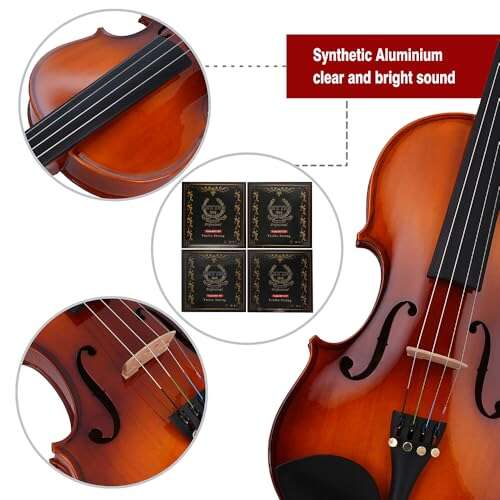
If your violin has only one fine tuner, it is often fitted to the E string. This is common because the E string is thin and sensitive. Some players use four fine tuners, especially beginners, but pegs remain useful for larger pitch changes.
When learning what Hz to tune violin to, avoid chasing the display too quickly. The needle may move because of bow pressure, room noise, or an unstable string.

Should you tune the violin with a tuner or by ear?
A tuner gives you an accurate starting point. Your ear then helps you judge the quality of the interval between strings.
A digital tuner is useful because it shows whether a note is sharp or flat. However, it does not always tell you whether your sound is full, stable, or musically balanced.
Experienced violinists often use both methods:
• Use the tuner to set A4 near 440 Hz.
• Tune the other strings close to their target notes.
• Play adjacent open strings together.
• Listen for a clean perfect fifth.
• Make tiny adjustments by ear.
When two notes form a perfect fifth, the sound should feel calm and focused. If the notes are slightly out of tune, you may hear beats. These are repeating changes in volume caused by the difference between the frequencies.
For example, if your A string is just a little sharp against D, the fifth may sound restless. When you adjust the string, the beats slow down and disappear.
A tuner is like a map. Your ear still tells you whether the musical road feels smooth.

What is the correct tuning order?
Most violinists tune from A outward. This means they tune A first, then D, G, and E.
There are two common approaches.
Tuning each string to a chromatic tuner
This method is simple for beginners. Tune all four strings directly to their displayed notes:
• G3 at about 196 Hz
• D4 at about 293.66 Hz
• A4 at 440 Hz
• E5 at about 659.26 Hz
This is fast and accurate, especially when you are practicing alone.
Tuning by perfect fifths
This method uses the A string as the main reference. After tuning A, tune D by listening to the fifth between D and A. Then tune G from D and E from A.
Many advanced players prefer this because it creates better relationships between neighboring strings. It also trains the ear.
A useful routine is to tune with the tuner first, then make only tiny ear-based corrections. This avoids large mistakes while helping you develop musical judgment.

What Hz to tune violin for an orchestra
If you play with an orchestra, do not assume the group uses 440 Hz. Many orchestras tune A slightly higher, often to 441 Hz, 442 Hz, or 443 Hz.
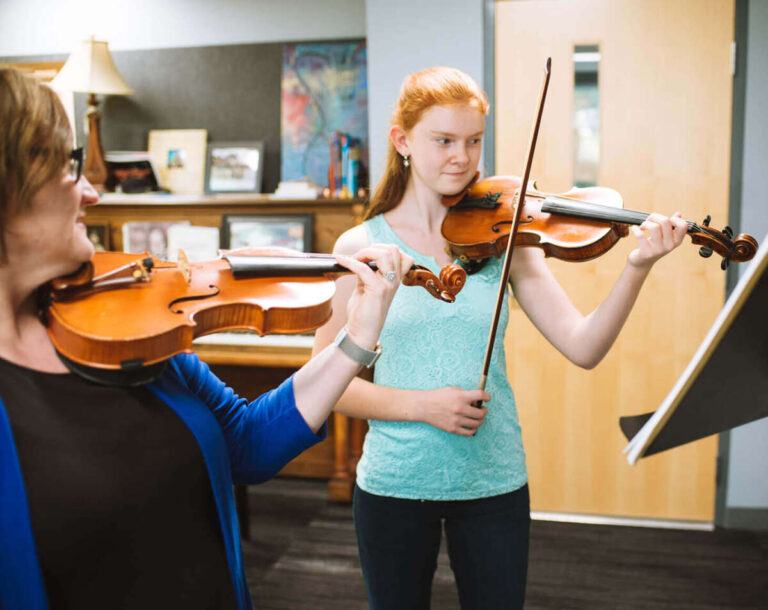
The concertmaster usually leads the tuning process. An oboe often gives the tuning A because its pitch is stable and easy for the orchestra to hear.
Always match the pitch you receive from the ensemble. If the orchestra tunes to A4 = 442 Hz and you tune alone to 440 Hz, your violin will sound slightly flat when you join the group.
The difference may seem small, but it matters. A pitch of 442 Hz raises every note slightly compared with 440 Hz. The change is only a few cents, yet a large group can make the difference easy to hear.
Before a rehearsal or concert, ask:
• What reference pitch does the group use?
• Will the concertmaster provide A?
• Should I set my electronic tuner to 442 Hz?
• Is the performance using a historical tuning system?
The practical answer to what Hz to tune violin for orchestra is: use the orchestra’s A, not an automatic assumption of 440 Hz.

What Hz to tune violin for baroque music
Baroque music often uses a lower tuning pitch. A common reference is A4 = 415 Hz, which is about a semitone below modern A4 = 440 Hz.
Some early music groups use 415 Hz because historical instruments and surviving musical practices often support a lower pitch. Other groups may use 392 Hz, 440 Hz, or another agreed pitch depending on the period and repertoire.
The violin itself does not need a special physical setup just because the reference pitch changes. However, the strings, bridge pressure, instrument response, and playing style may feel different.
If you are playing baroque music, ask the ensemble director or teacher for the exact pitch. Do not switch your tuner to 415 Hz unless the group has confirmed it.