What Are The Notes On A Guitar: Your 2026 Beginner Guide
The notes on a guitar are the specific musical pitches produced by vibrating strings at different fret positions.
Mastering the fretboard is the single most important milestone for any guitarist. I still remember my early days staring at the neck. The frets, the strings, the dots — it all felt like a maze. Then one day it clicked. I learned how the notes repeat and connect across the neck. After that, the guitar stopped feeling random and began to make sense. Whether I was learning a solo or holding down a rhythm part, knowing where each note lives changed everything. By the end of this guide, you will understand the key patterns that shape every song you play and hear.
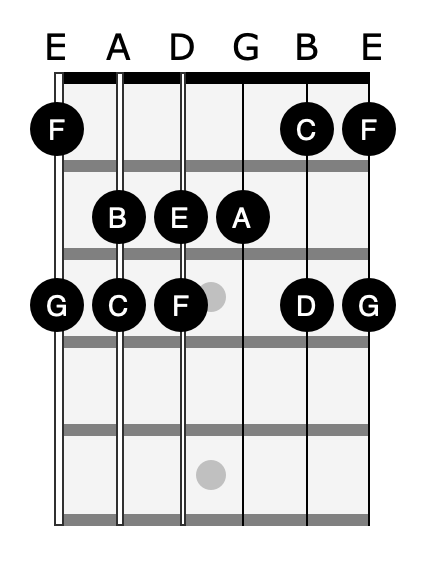
Understanding the Standard Tuning
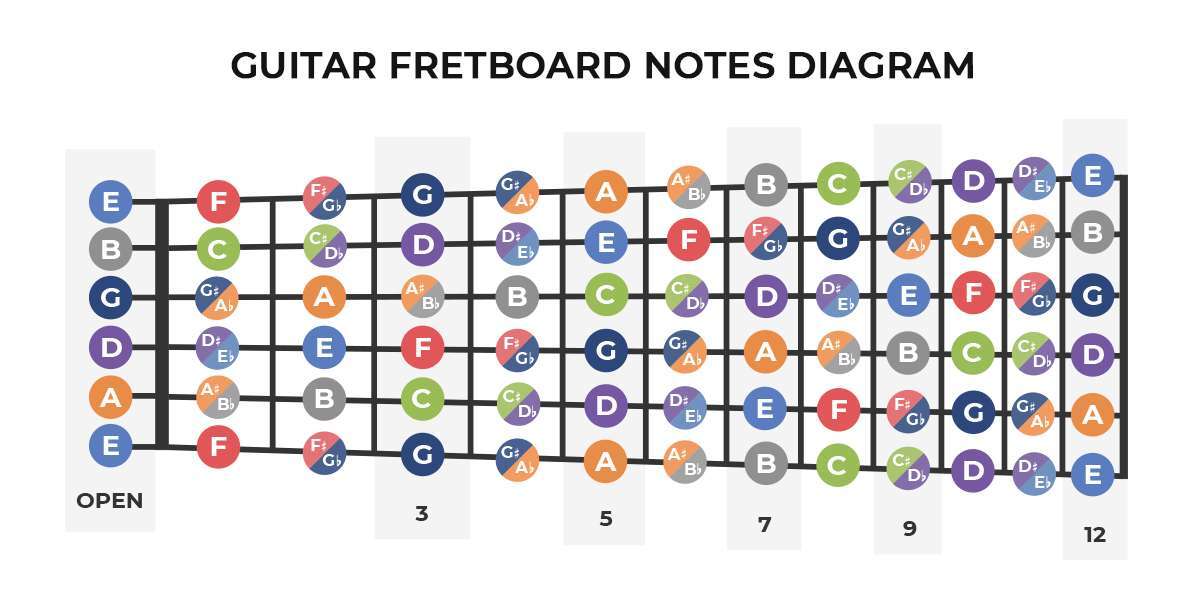
Before you find notes, you need a starting point. Most guitars use standard tuning. From the thickest string to the thinnest, it is: E, A, D, G, B, E. I teach this to students with a simple mnemonic: Every Amateur Does Get Better Eventually. It helps them remember the string names fast.
Each fret moves the pitch up by one half-step. Play a string open. Then press the first fret. That is one half-step up. Move one fret more and you are another half-step higher. This half-step system is how you map every note across the guitar fretboard. It is the backbone of guitar notes, scales, and chords.

The Musical Alphabet and Patterns
The musical alphabet has seven letters: A, B, C, D, E, F, G. After G it starts again at A. Between most letters you will find a sharp (#) or flat (b). The exceptions are the pairs B–C and E–F. These pairs sit a half-step apart. No extra note sits between them.
This sequence repeats across the fretboard. If you press the twelfth fret on any string, you hear the same note as the open string, one octave higher. That repeating cycle makes the guitar predictable. Learn the rules and the neck becomes a logical map.
Semitones, whole steps, and intervals
A half-step equals one fret. Two frets make a whole step. Intervals like minor thirds, perfect fourths, and octaves are patterns of frets. For example, an octave from a note on the low E string often sits on the D string two frets up and two strings over. Learning these interval shapes helps you find notes quickly and supports ear training and soloing.

Practical Tips for Learning the Fretboard
I made a big mistake at first. I tried to memorize every fret at once. That felt impossible. Later I learned a better way. Start small. Focus on the low E and A strings. Most barre chords and root shapes use these strings. Learn the notes on these two strings first. That gives you immediate use on songs and chord shapes.
Use octave shapes. If you know a note on the low E string, you can find its octave on the D string two frets higher. This trick covers many note positions. Pick one note—say G—and find every G on the neck. Do this slowly at first. Then speed up.
Find notes by scale and key
When you know the key of a song, you can narrow the notes you need to find. For example, if a song is in G major, focus on the notes in the G scale. That lowers the guessing and helps you hear the right notes. Learning common scale shapes—major, minor, pentatonic—gives context to the notes you find. It also helps you move from single-note finding to building solos and riffs.
Practice plan: 10 minutes a day
Here is a simple routine I recommend to students. Do it daily for quick progress:
- 2 minutes: Name the open strings (E A D G B E) out loud and pick each one.
- 3 minutes: Pick a note like C or G. Find it on the low E and A strings.
- 3 minutes: Use octave shapes to find that note across the neck.
- 2 minutes: Play a short scale (major or pentatonic) using those notes.
This small, focused work beats random practice. Ten minutes a day builds pattern memory and muscle memory. Over a few months you will be able to find notes fast.
Common mistakes and how to avoid them
Many players try to memorize the whole neck in one session. Don’t do that. Learn a few notes at a time. Another common mistake is ignoring ear training. Don’t only read notes visually; listen to them. Sing the note before you play it. That trains your ear and links sound to position.

Frequently Asked Questions of what are the notes on a guitar
How do I remember the order of notes?
Notes move alphabetically from A to G. After G the cycle starts again at A. Remember that B–C and E–F are half-step pairs. There is no sharp or flat between those pairs. Short drills help. Say the note and then play it. Repeat.
Why do some frets have two names?
Notes like C# and Db are enharmonic. They sound the same but carry different names. Music theory and keys decide which name to use. For playing and ear training, treat them as the same pitch. For reading sheet music, use the correct name for the key.
Does the tuning of the guitar change the notes?
Yes. If you change tuning, string pitches change and the note layout shifts. Most beginners should stick to standard tuning. It makes learning notes and chord shapes simpler. Once you know the fretboard in standard tuning, alternate tunings are easier to learn.
How long does it take to learn the notes?
It varies by practice and focus. With ten minutes a day, many players see strong progress in a few months. The key is consistent, deliberate practice. Short daily sessions beat long, unfocused ones.
Are the notes the same on an acoustic and electric guitar?
The fretboard notes are the same on acoustic and electric guitars. The string type or pickup does not change the note names. Whether you play a steel-string acoustic or a high-gain electric, the fretboard logic stays the same.
Conclusion
Understanding the notes on a guitar unlocks the fretboard. You now know the open string names, the half-step system, and the repeating note patterns that form scales and chords. Use root notes on the low E and A strings, learn octave shapes, and practice a short routine daily. These steps will turn guessing into confident playing.
Try this right now: name and play every note on your low E string up to the twelfth fret. Then find each of those notes on the A string. If you found this guide helpful, feel free to share your progress or leave a question below for more tips on your musical journey.

Senior Music Reviewer
Alex Carter is a seasoned music reviewer with over a decade of experience in the world of sound and instruments. Passionate about helping musicians and enthusiasts make informed choices, he brings sharp insights and in-depth knowledge to every review. From classical instruments to modern gear, Alex combines technical expertise with a love for music to deliver content that resonates with readers.
As a Senior Music Reviewer and expert author on Tuneluma.com, Alex is dedicated to sharing honest evaluations, practical advice, and thoughtful commentary to guide readers in their musical journey.