How Do Guitar Pickups Work: Explained Simply
Guitar pickups turn string vibration into an electrical signal through magnets, coils of wire, and electromagnetic induction.
Understanding how do guitar pickups work helps you choose the right sound, fix common problems, and make smarter upgrades. The idea is simple, but small changes in magnets, wire, winding, height, and materials can transform a bright country twang into a warm jazz voice or a powerful rock tone.
What Is a Guitar Pickup?
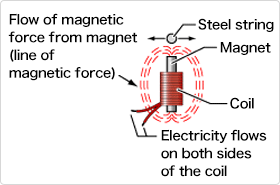
A guitar pickup is a small electrical device that senses the movement of your strings. It converts that movement into a weak electrical signal, which travels through the guitar cable to an amplifier.
Most electric guitar pickups use three main parts:
• A magnetic field created by permanent magnets
• Coils made from very thin copper wire
• A pickup cover, bobbin, baseplate, or other parts that hold the system together
The pickup does not amplify the sound by itself. It only creates the signal. The amplifier then boosts that signal and shapes it with its controls, speakers, and effects.
To understand how do guitar pickups work, picture the pickup as a tiny motion sensor. The vibrating string changes the magnetic field near the coil. That changing field creates a small voltage in the wire.
The pickup hears the strings through magnetism rather than through air. This is why an electric guitar can produce a strong signal even when its unplugged sound is fairly quiet.

How Do Guitar Pickups Work Step by Step?
The process starts when you pluck a steel string. The string moves back and forth near the pickup’s magnetic field. That motion changes the magnetic flux around the coil.
Faraday’s law of electromagnetic induction explains the key event: a changing magnetic field can induce voltage in a nearby conductor. In this case, the conductor is the copper pickup coil.
Here is the process in simple steps:
-
The pickup magnet creates a magnetic field around the strings.
-
A steel string becomes temporarily magnetized as it enters that field.
-
Plucking the string makes it vibrate.
-
The vibrating string changes the magnetic field passing through the pickup coil.
-
The coil produces a small alternating electrical current.
-
The guitar sends that signal through the volume and tone controls.
-
The cable carries the signal to the amplifier.
-
The amplifier increases the signal and sends it to the speaker.
The electrical signal follows the same basic pattern as the string’s motion. A slow, wide vibration creates a lower-frequency signal. A fast vibration creates a higher-frequency signal.
The signal also contains harmonics. These are extra frequencies created by the string’s complex movement. Harmonics give a note its character, which is why the same note sounds different on a Telecaster, Les Paul, Stratocaster, or hollow-body guitar.
A useful analogy is a microphone placed beside a moving flag. The microphone does not create the flag’s movement. It detects the movement and turns it into an electrical pattern. A pickup does something similar, but it uses magnetism instead of air pressure.
The Main Parts of a Guitar Pickup
Each pickup part affects the final sound. Even two pickups with the same general design can sound very different because their materials and construction vary.
Magnets
Pickup magnets create the magnetic field that interacts with the strings. Common magnet materials include Alnico and ceramic.
Alnico magnets contain aluminum, nickel, and cobalt. Different Alnico formulas have different magnetic strength and tonal results.
• Alnico II often feels soft, warm, and smooth.
• Alnico V usually offers stronger attack and more treble.
• Alnico VIII can provide high output and a firm response.
Ceramic magnets are often strong and can produce a clear, tight, and aggressive sound. They are common in many high-output pickups, although magnet type alone does not determine the entire tone.
Magnet strength matters, but stronger is not always better. A very strong magnetic field can pull on the strings. This may reduce sustain, create strange pitch movement, or make the note sound stiff.
Coil Wire
The coil consists of many turns of thin copper wire wrapped around the magnets or bobbin. The number of turns affects output, resistance, inductance, and frequency response.
More wire can increase output and create a thicker sound. It can also reduce some high frequencies, making the pickup seem darker.
Fewer turns often produce lower output with more openness and brightness. This is one reason vintage-style pickups often sound clear and dynamic.
The wire’s insulation also matters. Different insulation types change how tightly the wire can sit in the coil. Small construction details can affect the pickup’s capacitance and resonance.
Bobbin and Baseplate
The bobbin supports the coil and keeps the wire in place. A baseplate may sit below the pickup and alter the magnetic field or mechanical response.
Steel baseplates are common in some bridge pickups. They can increase focus, punch, and perceived output by shaping the magnetic field.
Pole Pieces
Pole pieces sit beneath each string. They may be adjustable screws, fixed metal rods, or individual magnets.
Adjustable pole pieces let you balance string volume. If the B string sounds too loud, for example, you can lower its pole piece slightly. However, pickup height and playing style should be checked before making large adjustments.
Pickup Cover
A metal or plastic cover protects the coil. Metal covers can slightly reduce high-frequency response, especially when they use certain alloys or construction methods.
A cover is not just cosmetic. It can influence capacitance, resonance, noise, and the way the pickup responds to picking.

How Single-Coil Pickups Work
Single-coil pickups use one coil of wire. They are known for clarity, snap, note separation, and strong high-frequency detail.
Classic single-coil designs appear in many Stratocaster and Telecaster-style guitars. Their sound often works well for blues, country, funk, pop, and clean rock.
The main weakness is noise. Single-coil pickups can pick up electromagnetic interference from lights, computer screens, power supplies, and other electrical devices.
This hum usually comes from the surrounding environment rather than from the strings. Rotating your guitar or moving away from a noisy device can sometimes reduce it.
Single-coil pickups can also differ widely. A low-output vintage pickup may sound glassy and soft, while a hotter single-coil may sound thicker and more forceful.

How Humbucker Pickups Work
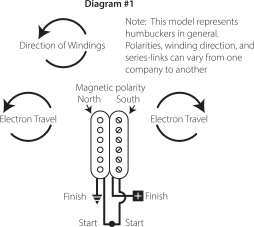
A humbucker uses two coils instead of one. The coils have opposite magnetic and electrical polarity, so they cancel much of the unwanted hum.
The string signal remains because the two coils respond to the string in a useful way. Environmental noise, however, appears in opposite phase and is reduced.
This design explains the name “humbucker.” It bucks, or rejects, the hum.
Humbuckers often sound fuller, louder, and smoother than traditional single-coils. They commonly suit blues, hard rock, metal, jazz, and lead guitar.
The two coils also affect the sound in another way. They sense a wider area of the string and often produce stronger mids with less sharp treble.
A humbucker does not always sound dark. Coil winding, magnets, pole pieces, pickup position, and electronics can make one humbucker bright and another very warm.
Coil Splitting and Coil Tapping
Coil splitting turns off one coil in a humbucker. This can create a more single-coil-like sound, but it may not match a true single-coil pickup.
Coil tapping is different. It uses a connection partway through a coil to select fewer windings. This can create a lower-output sound without fully disabling a coil.
These terms are often confused, so check the wiring diagram before buying a replacement pickup.

How Pickup Position Changes Guitar Tone
Pickup position is one of the biggest factors in electric guitar tone. The bridge, middle, and neck positions hear different parts of the string.
Bridge Pickup
The bridge pickup sits near a narrow section of the vibrating string. The string moves less there, but it contains strong upper harmonics.
This creates a bright, sharp, and focused sound. Bridge pickups work well for rhythm parts, country picking, punk, rock, and metal.
Because the string moves less near the bridge, bridge pickups often use more output or stronger voicing to avoid sounding thin.
Neck Pickup
The neck pickup senses the string near a wider, more flexible area. The string moves more there, producing a warmer and fuller sound.
Neck pickups are useful for jazz, blues, smooth leads, and clean chords. They can become muddy if they are too close to the strings or heavily overwound.
Middle Pickup
A middle pickup provides a balanced sound between the bridge and neck. On guitars with three pickups, combining the middle pickup with another pickup can create a hollow or “in-between” tone.
That sound comes from phase-related frequency changes as the pickups hear different points along the string.

Active and Passive Guitar Pickups
Passive pickups generate their signal without a battery. They are the traditional choice in most electric guitars.
Passive pickup tone depends strongly on the coil, magnets, guitar controls, cable capacitance, amplifier, and playing dynamics. Many players like their natural response because they react well to changes in picking strength.
Active pickups use a preamp powered by a battery. The pickup itself may use lower coil output, while the preamp boosts and shapes the signal.
Active designs often provide:
• Low noise
• Strong output
• Clear note separation
• A consistent response
• Useful control over bass, middle, and treble frequencies
Active pickups need battery maintenance. A weak battery can cause low output, distortion, or sudden failure.
Neither design is automatically superior. Passive pickups often feel more open and touch-sensitive, while active pickups can sound tight, clean, and controlled.
What Factors Affect Pickup Tone?
Knowing how do guitar pickups work also means understanding why their tone changes from one guitar to another.
Output Level
Pickup output refers to the strength of the signal. High-output pickups can push an amplifier into overdrive more easily.
High output does not always mean better tone. A lower-output pickup may offer more clarity, touch response, and room for your amplifier to shape the sound.
Inductance and Resonance
Inductance describes how the coil reacts to changing current. Higher inductance often shifts the pickup’s resonant peak lower, which can create a thicker and darker sound.
The pickup has a natural resonant frequency. This is where certain upper frequencies become more noticeable. The guitar cable and tone capacitor can reduce or shift that high-frequency peak.
Pickup Height
Pickup height changes volume, attack, bass response, and sustain. If a pickup is too close to the strings, the magnetic pull may create tuning problems or reduce sustain.
If it is too far away, the signal may sound weak and lack focus.
A practical starting point is to fret the last fret and measure the gap between the string and pickup. Many manufacturers suggest roughly 1/16 inch on the treble side and 3/32 inch on the bass side for some designs, but there is no universal setting.
Adjust in small steps. Listen after each change.
String Material and Gauge
Nickel-plated steel strings work well with most magnetic pickups. Pure nickel strings may sound warmer, while stainless steel strings often sound brighter.
Heavier strings can produce a fuller response. Lighter strings may feel easier to bend and can sound more immediate.
Bronze acoustic guitar strings may not work properly with standard magnetic pickups because they contain less magnetic material than electric guitar strings.
Guitar Cable and Controls
A passive pickup interacts with the guitar cable. A cable with higher capacitance can reduce some treble and make the tone darker.
The volume and tone pots also affect the circuit. A 500k volume pot often preserves more brightness than a 250k pot, although the best choice depends on the pickup and guitar.
Common Guitar Pickup Problems
Pickup problems can sound serious, but many have simple causes.
Weak or Uneven Output
Check pickup height first. Then inspect the strings, selector switch, volume control, solder joints, and cable.
A pickup can also sound weak if one coil has a broken wire. A multimeter can help measure resistance, but resistance alone does not prove that a pickup sounds healthy.
Excessive Hum
Single-coil hum is normal in many environments. Try a different outlet, move away from monitors and chargers, and rotate the guitar.
If the hum changes when you touch the strings or bridge, the guitar’s ground system may need inspection by a qualified technician.
Thin or Hollow Tone
Two pickups may be electrically out of phase. This can happen after rewiring or mixing pickups from different manufacturers.
The tone may also become thin when pickup height is poorly balanced or when a pickup is wired incorrectly.
Muddy Tone
Lower the neck pickup slightly. Check the tone control, cable, amplifier settings, and pickup design.
Overwound pickups often have more mids and less high-end detail. That character may be useful for heavy music but less suitable for clean chord work.
How to Adjust Guitar Pickup Height
Pickup height adjustment is one of the easiest ways to improve a guitar without buying new parts.
-
Tune the guitar accurately.
-
Press the highest fret.
-
Measure the space between each pickup and the strings.
-
Start with the manufacturer’s recommended setting.
-
Play clean notes on every string.
-
Compare the volume and clarity of each pickup.
-
Raise or lower the pickup in small steps.
-
Test the guitar through the amplifier you use most.
Listen for more than volume. Pay attention to sustain, attack, bass, treble, and unwanted magnetic pull.
A common mistake is raising every pickup as high as possible. This may create more output, but it can also cause harsh attack and poor intonation. A slightly lower pickup often gives a more open and musical response.
Should You Replace Your Guitar Pickups?
Replacing a pickup can improve a guitar, but it is not always the best first step.
Try these changes before buying new hardware:
• Adjust pickup height
• Replace old strings
• Test another cable
• Check the amplifier’s tone controls
• Clean the selector switch and output jack
• Confirm that the guitar’s wiring is correct
If the guitar still lacks the sound you need, a replacement pickup may help. Choose based on your amplifier, music style, tuning, playing technique, and preferred output.
Read manufacturer specifications, but do not rely on resistance alone. Two pickups with the same resistance can sound different because of magnet type, coil geometry, inductance, and resonance.
When I work through pickup choices, I treat the guitar, amplifier, and player as one system. A pickup that sounds perfect in a bright solid-state amp may sound too sharp through a vintage-style tube amp.
How to Choose the Right Pickup
Start with the sound you want, not the brand name.
For a bright and clean sound, consider a lower-output single-coil or a clear, vintage-style humbucker.
For thick rock tones, look at a medium or high-output humbucker with strong mids.
For modern metal, a tight ceramic or active pickup may provide the attack and low-end control you need.
For jazz or warm blues, a neck humbucker or lower-output pickup can offer smooth mids and a softer top end.
Also consider these points:
• Match the pickup to the guitar’s pickup route and mounting style.
• Check whether the pickup uses two-conductor or four-conductor wiring.
• Confirm the correct magnet polarity when mixing pickups.
• Make sure the pots and capacitor suit the pickup.
• Use a professional technician if you are not comfortable soldering.
A pickup swap cannot fix poor fretwork, bad intonation, weak strings, or an unsuitable amplifier. It is one part of the signal chain, not a magic solution.
Frequently Asked Questions About How Do Guitar Pickups Work
How do guitar pickups work without a battery?
Passive pickups use permanent magnets and coils of copper wire to create a signal through electromagnetic induction. They do not need a battery because the string’s movement creates the changing magnetic field that induces voltage.
Do guitar pickups detect sound?
No. Guitar pickups do not detect sound waves in the air like microphones do. They detect the movement of magnetic guitar strings and convert that movement into an electrical signal.
Why do single-coil pickups hum?
Single-coil pickups can receive electromagnetic interference from lights, electronics, and power systems. This noise is a normal limitation of the single-coil design, although shielding and careful wiring can reduce it.
Are humbuckers louder than single-coil pickups?
Humbuckers are often louder because they use two coils and commonly have higher inductance. However, output depends on winding, magnets, pickup height, and the specific design, so a strong single-coil can be louder than a weak humbucker.
Can guitar pickups wear out?
The magnets can slowly lose strength, and the coil wire or solder connections can fail. In normal use, though, a well-made pickup can last for decades, especially when it is protected from moisture and physical damage.
Does pickup height change tone?
Yes. Raising a pickup usually increases output and may add attack, while lowering it can improve clarity and sustain. A pickup that sits too close to the strings may cause magnetic pull and tuning problems.
Can acoustic guitar pickups work like electric guitar pickups?
Some acoustic pickups use magnetic induction, but others use piezo crystals, microphones, or hybrid systems. A magnetic acoustic pickup usually needs strings with enough magnetic material to produce a strong signal.
Conclusion
Guitar pickups use magnets and copper coils to turn vibrating strings into electrical signals. Single-coils offer clarity and snap, while humbuckers reduce hum and often provide a thicker sound. Pickup position, magnet type, winding, height, strings, controls, and amplifier settings all shape the final result.
The best way to learn how do guitar pickups work is to adjust one variable at a time and listen closely. Start with pickup height and fresh strings before spending money on new parts. Explore pickup designs, compare them through your own amplifier, and share your questions or experiences with other guitar players.

Senior Music Reviewer
Alex Carter is a seasoned music reviewer with over a decade of experience in the world of sound and instruments. Passionate about helping musicians and enthusiasts make informed choices, he brings sharp insights and in-depth knowledge to every review. From classical instruments to modern gear, Alex combines technical expertise with a love for music to deliver content that resonates with readers.
As a Senior Music Reviewer and expert author on Tuneluma.com, Alex is dedicated to sharing honest evaluations, practical advice, and thoughtful commentary to guide readers in their musical journey.