What Are The White Keys On A Piano Called: Key Guide
The white keys on a piano are called natural keys because they play the seven natural musical notes.
If you have ever looked at a piano and wondered what the white keys on a piano are called, the answer is simple but useful: they are natural keys, and each one has a letter name from A through G. Understanding these keys helps you read music, find chords, learn scales, and feel more at home at the keyboard.
What Are the White Keys on a Piano Called?
The white keys on a piano are called natural keys. They play the natural notes in music:
• A
• B
• C
• D
• E
• F
• G
After G, the letter names start again at A. This repeating pattern continues across the whole piano.
The term “natural” means that the key plays a note without a sharp or flat symbol. For example, pressing a white C key plays the natural note C. Pressing the black key just above it usually plays C-sharp or D-flat, depending on the musical setting.
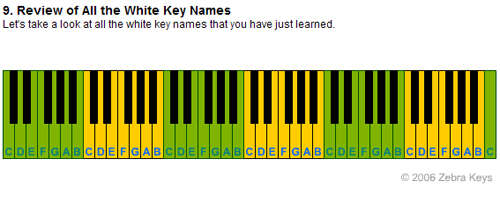
A standard 88-key piano has 52 white keys and 36 black keys. The white keys cover several repeating groups of the seven natural notes. So, when people ask what are the white keys on a piano called, they are usually asking about both their general name, natural keys, and their individual note names.

The Seven Names of the White Piano Keys
Every white key belongs to one of seven note names. These names repeat from left to right:
- A
- B
- C
- D
- E
- F
- G
The order is always the same. Once you reach G, the next white key is A again.
For example, moving from left to right, you might see:
C, D, E, F, G, A, B, C, D, E
The second C is higher in pitch than the first C, but both keys have the same note name. This is called an octave relationship.
A piano has many versions of the same note. The low A on the left sounds deep and rich, while a high A on the right sounds bright and light. Their pitch differs, but their musical identity remains A.
This is why learning what are the white keys on a piano called is only the first step. You also need to learn where each note sits in the repeating pattern.

How to Find the White Keys on a Piano
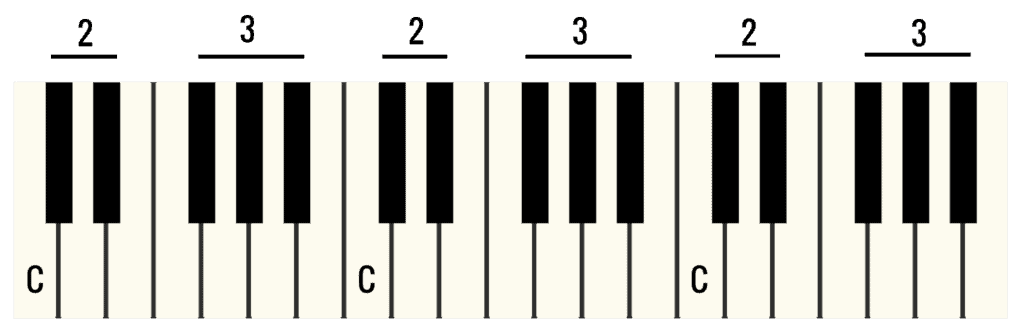
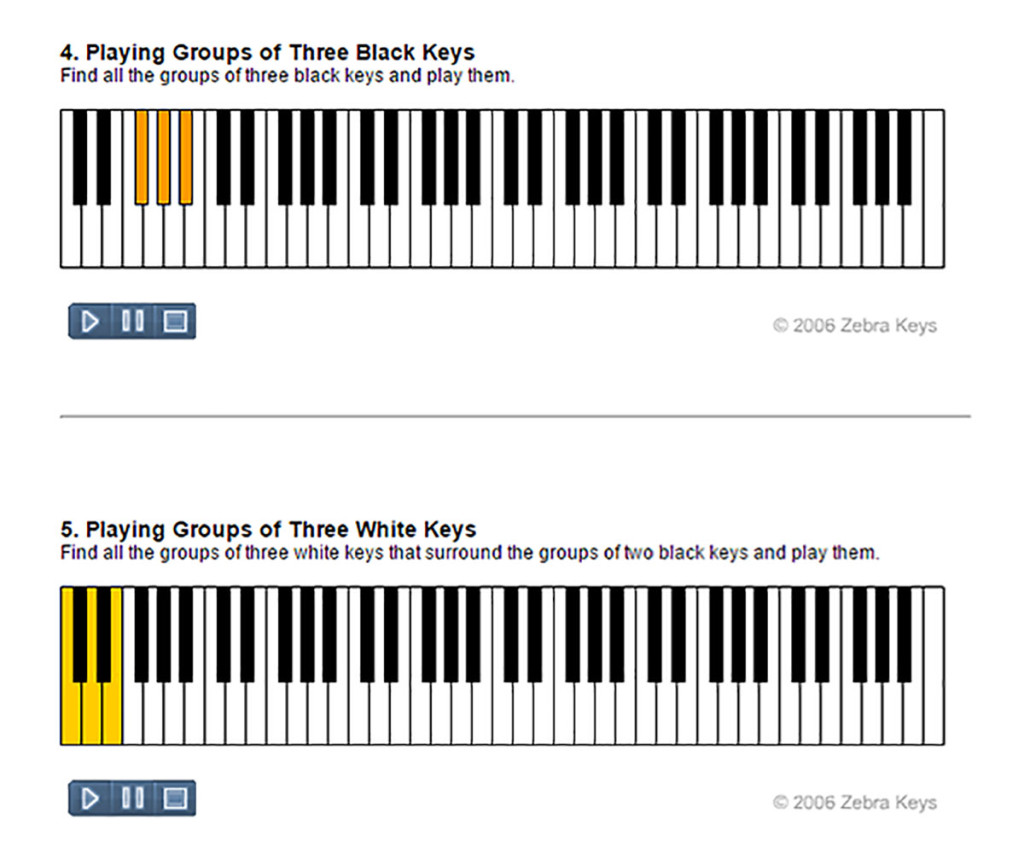
The easiest way to identify the white keys on a piano is to use the groups of black keys as landmarks. The black keys appear in groups of two and three.
Find a group of two black keys. The white key directly to the left of that group is C.
From C, the next white keys are:
• C
• D
• E
• F
• G
• A
• B
Then the pattern begins again with C.
You can also use the groups of three black keys. The white key directly to the left of a group of three is F. This gives you another reliable way to orient yourself.
A simple memory trick is to think of the piano as a repeating road map. The black keys act like signs, while the white keys provide the main path. Once you recognize the two-key and three-key groups, finding any natural note becomes much easier.
When teaching beginners, I recommend finding every C on the keyboard first. This builds a strong visual habit and prevents the common mistake of counting every key from the far left.

Why Are They Called Natural Keys?
The white keys on a piano are called natural keys because they represent the natural notes of the musical alphabet. These notes do not have a sharp or flat added to their names.
In basic music theory, a natural note is shown by one of these letter names:
• A
• B
• C
• D
• E
• F
• G
A natural symbol can also appear in written music. It looks similar to a small square-edged “n” and cancels a previous sharp or flat. For example, if a piece raises F to F-sharp, a natural sign can return the note to F.
The word “natural” does not mean that every white key is always untouched by accidentals. A white key can sometimes represent a note that has been altered in a special musical context. The key itself remains white, but the written note may use a sharp, flat, or natural sign.
White Keys Versus Black Keys
The white keys on a piano play the seven natural notes, while the black keys usually play sharp or flat notes. The black keys sit between many of the white keys, but not between every pair.
The common black-key names are:
• C-sharp or D-flat
• D-sharp or E-flat
• F-sharp or G-flat
• G-sharp or A-flat
• A-sharp or B-flat
For example, the black key between C and D can be called C-sharp or D-flat. These are two names for the same piano key, a concept called enharmonic equivalence.
There are no black keys between E and F or between B and C. This is an important detail for beginners. The distance between E and F is a half step, even though both notes use white keys. The same is true for B and C.
A half step is the smallest common distance between neighboring piano keys. A whole step equals two half steps. These distances help form scales, chords, and melodies.
What Is the Difference Between a Key and a Note?
A piano key is the physical part you press. A note is the sound or pitch that the key produces.
For example, the white key marked C is a physical key. When you press it, you hear the note C. In casual conversation, people often use “key” and “note” as if they mean the same thing, but music teachers may separate the terms.
The difference becomes clearer with black keys. One black key can be called C-sharp or D-flat. It is one physical key, but it has two possible note names based on the musical context.
This distinction matters when reading sheet music. A composer chooses the name that best fits the key signature, scale, chord, or melody. Beginners do not need to master every naming rule at once, but knowing the difference makes later music theory much easier.

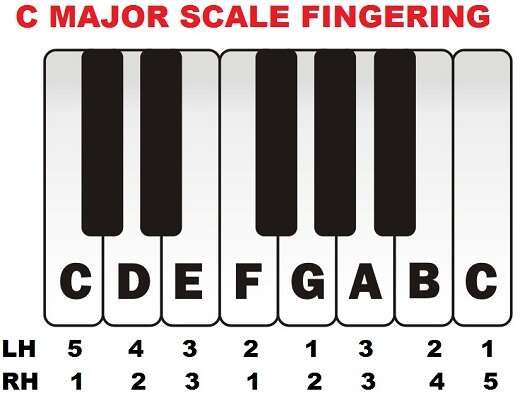
How the White Keys Form the C Major Scale
The C major scale uses only white keys:
C, D, E, F, G, A, B, C
It contains no sharps or flats, which makes it one of the best scales for beginners. You can play it by starting on any C and moving through the next seven white keys.
The pattern of whole steps and half steps in C major is:
Whole, whole, half, whole, whole, whole, half
The half steps occur between E and F and between B and C. These natural half steps explain why the C major scale can use only white keys.
Many beginner piano books start with C major because the pattern is easy to see. However, that does not mean C major is more important than every other scale. Each major and minor scale has its own sound and purpose.
When practicing, play the C major scale slowly with even timing. Focus on relaxed fingers rather than speed. A smooth, quiet motion will help more than rushing through the notes.

How White Keys Help You Learn Piano
Learning the names of the white keys gives you a base for nearly every early piano skill. You can use them to find scales, build simple chords, and understand written music.
White keys help you learn:
• Note reading
• Finger numbers
• Major scales
• Minor scales
• Chord shapes
• Intervals
• Melodies
• Basic improvisation
For example, a C major chord uses C, E, and G. All three are white keys. An F major chord uses F, A, and C. A G major chord uses G, B, and D.
These simple chords appear in many songs. With just C, F, and G major, a beginner can play or accompany a wide range of music.
A useful practice method is to name each white key aloud as you play it. This connects your eyes, ears, hands, and memory. It may feel slow at first, but it builds skill that transfers to every part of piano playing.

Common Mistakes Beginners Make
Many beginners understand what are the white keys on a piano called but still struggle to identify them quickly. The issue is usually not musical ability. It is a lack of repeated visual practice.