Can A Guitar Be A Carry On: Flight Guide
Yes, a guitar can usually be a carry-on if it fits the airline’s rules and available cabin space.
Knowing whether can a guitar be a carry on can save you from damage, surprise fees, and a stressful airport experience. Most airlines allow guitars in the cabin, but size limits, aircraft space, ticket type, and crew decisions all matter. This guide explains the rules, packing options, airline policies, and smart ways to fly with your instrument.
Can a Guitar Be a Carry-On?
Yes, a guitar can be a carry-on on many flights. You may bring an acoustic guitar, electric guitar, bass guitar, or another small string instrument into the cabin if it fits in an approved storage space.
The key issue is not only the guitar itself. Airlines also consider the case size, weight, overhead bin space, and flight load. A guitar in a compact soft case has a better chance of fitting than one in a large, rigid case.
In the United States, federal law generally requires airlines to accept a small musical instrument as a carry-on when:
• The instrument fits safely in the overhead bin or another approved storage area
• You have followed the airline’s carry-on rules
• The cabin has space available
• The instrument does not block exits or create a safety risk
This does not mean every guitar is guaranteed cabin space. The airline may ask you to gate-check it if the bins are full or the case cannot fit safely.

What Do U.S. Airline Rules Say?
The U.S. Department of Transportation protects a traveler’s right to carry certain musical instruments in the cabin. Under federal transportation rules, an instrument may travel as carry-on baggage if it fits in the aircraft’s storage space and meets the airline’s size and weight limits.
Airlines may also let you buy an extra seat for a guitar. This option is useful for large, valuable, or fragile instruments that cannot fit in an overhead bin. The guitar must usually sit in a secured seat with an approved restraint, and it cannot block an emergency exit.
Airline policies still differ. Before your trip, check the exact rules for your airline, aircraft, and route. A policy that works on a wide-body international flight may not work on a small regional jet.
Look for these details on the airline’s website:
• Musical instrument carry-on rules
• Maximum cabin baggage dimensions
• Weight limits
• Extra-seat rules
• Gate-check procedures
• Fees for oversized or special baggage
The answer to can a guitar be a carry on is often “yes,” but airline approval is based on practical cabin limits. A ticket does not guarantee that a full overhead bin will have room for your guitar.
Will a Guitar Fit in the Overhead Bin?
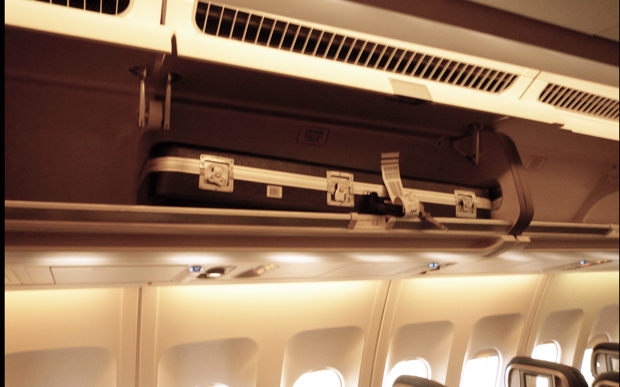
Many standard guitars fit in an airplane’s overhead bin, but the case may be the deciding factor. A typical dreadnought acoustic guitar can measure about 40 to 44 inches long inside its case. Some airline carry-on limits use a total measurement near 45 linear inches, while others focus on height, width, and depth.
A guitar case may fit lengthwise in a large overhead compartment. On smaller planes, it may not fit at all. Regional aircraft often have narrow bins, limited cabin storage, or no space for long items.
Measure your fully packed case before leaving home. Record these measurements:
• Length from the top of the headstock to the bottom of the case
• Width at the widest point
• Depth, including pockets and handles
• Total weight
Do not measure only the guitar. The case, padding, locks, and accessories determine whether can a guitar be a carry on.
A slim gig bag gives you more flexibility, but it provides less protection. A hard case offers stronger protection but takes more space. Think of the choice as a trade-off between armor and portability.

Can You Bring a Guitar on Different Types of Planes?
Aircraft size makes a major difference. Large planes often have bigger overhead compartments, while small commuter aircraft may have very limited storage.
Large commercial aircraft
A guitar often fits in the overhead bin on a Boeing 737, Airbus A320, or larger aircraft. You may need to place the case lengthwise or use a bin near the rear of the cabin.
Regional jets
Regional jets can be difficult. Their bins may be too small for a full-size guitar case, even when the case meets a normal carry-on length limit. The crew may tag the guitar for gate checking.
Small propeller aircraft
Small turboprop planes usually have very little cabin storage. You may need to check the guitar at the gate or place it in a special baggage compartment.
If your trip includes a connection, plan for the smallest aircraft on your route. This is one of the most important answers to can a guitar be a carry on. A guitar may fit on the first flight but fail on the connecting regional plane.

Should You Use a Gig Bag or a Hard Case?
The best case depends on how much protection your guitar needs and how likely it is to stay in the cabin.
Soft gig bag
A padded gig bag is light and easy to carry. It may fit more easily in an overhead bin or coat closet. It also makes the guitar look less bulky while you move through the airport.
However, a gig bag offers limited protection from crushing, drops, and rough handling. It is a poor choice if the guitar must go into the aircraft’s cargo hold.
Hard case
A hard case protects the body, neck, bridge, and tuning machines much better. It is the safer option for checking a guitar or gate-checking it at the aircraft door.
The drawback is size. A hard case may exceed the airline’s standard carry-on limits, even if the guitar itself would fit. It can also be heavy and awkward in crowded airport aisles.
Hybrid case
A hybrid case combines a rigid shell with backpack straps and padding. It can offer a useful middle ground for travelers who want protection without the bulk of a traditional wooden case.
For most cabin trips, a well-padded gig bag or hybrid case works well. For valuable vintage guitars or instruments that might be checked, a strong hard case is the safer choice.

How to Pack a Guitar for Air Travel
Good packing lowers the risk of damage and makes airport checks easier. Before your trip, remove loose items from the case and secure every pocket.
Follow these steps:
- Loosen the strings slightly. Do not remove them completely. A small amount of tension can help protect the neck while allowing for changes in temperature and pressure.
- Add soft padding around the headstock, neck, and body. Use clean clothing or purpose-made padding.
- Place a small support under the neck if the case design allows it.
- Secure the tremolo arm, strap, picks, tuner, and cables so they cannot move.
- Do not store heavy objects on top of the guitar.
- Lock or close the case properly, but keep the key or combination accessible.
- Take photos of the guitar before leaving home.
- Add your name, phone number, and email inside and outside the case.
Avoid overpacking. A tightly stuffed case can press against the guitar and cause damage. The instrument should sit firmly, but it should not be forced into place.
Temperature changes can also affect the guitar. Once you arrive, let the instrument rest in its closed case for a while before opening it in a very hot, cold, or dry place.

How to Get a Guitar Through Airport Security
Airport security procedures can vary, but a guitar normally passes through the screening process as carry-on property. Security officers may inspect the case or ask you to remove the guitar for screening.
Keep your boarding pass and identification ready. Arrive early, especially during busy travel periods or when you are using a hard case.
Helpful steps include:
• Tell the security officer that the case contains a musical instrument
• Do not place the guitar on a conveyor belt unless an officer directs you to do so
• Keep small tools, spare strings, and liquids within security limits
• Check whether tools such as wire cutters or large screwdrivers must go in checked baggage
• Allow extra time for a manual inspection
The Transportation Security Administration advises travelers to check current rules and confirm airline requirements before flying. Security approval does not guarantee that the guitar will fit in the cabin, so both security and airline policies matter.

What Happens If the Guitar Cannot Fit?
If the guitar cannot fit in the overhead bin, airline staff may offer several options. The exact choice depends on the aircraft, available space, and company policy.
Your options may include:
• Placing the guitar in an onboard closet
• Gate-checking the guitar
• Checking the guitar at the ticket counter
• Buying an extra seat for the instrument
• Shipping the guitar separately
An onboard closet is often the best solution, but closet space is limited. Flight attendants may reserve it for crew equipment, wheelchairs, or other approved items.
Gate checking is more convenient than regular baggage handling because you usually hand the guitar to staff at the aircraft door. Even so, it still leaves the instrument outside your control. Use a strong case if gate checking is possible.
If you are wondering can a guitar be a carry on after boarding, do not argue with the crew. Ask politely about the safest available option. Flight attendants must follow safety rules, and their decision may depend on the aircraft and cabin conditions.

Can You Buy a Seat for a Guitar?
Yes, many airlines allow you to purchase a separate seat for a guitar or another large musical instrument. This can be the safest method for an expensive or fragile instrument.
The guitar usually must be secured in an upright position against the seat. It cannot sit in an exit row, block an aisle, or interfere with safety equipment. The airline may also require advance arrangements with its reservations department.
Call the airline before booking. Ask these questions:
• Is an extra seat allowed for a guitar?
• What is the maximum instrument size and weight?
• How must the guitar be secured?
• Can you choose a window seat?
• Is a hard case required?
• Are there special check-in rules?
Buying a seat costs more, but it gives you more control. For a rare, handmade, or high-value guitar, that extra cost may be sensible insurance.