What Are The Keys On A Keyboard Piano: Key Names
A piano keyboard has white and black keys that repeat notes across several octaves.
Understanding what are the keys on a keyboard piano makes reading music, finding chords, and learning songs much easier. Each key has a note name, a place in the octave pattern, and a musical role. This guide explains the keyboard layout in simple terms, from the first white key to the highest note.
What Are the Keys on a Keyboard Piano?
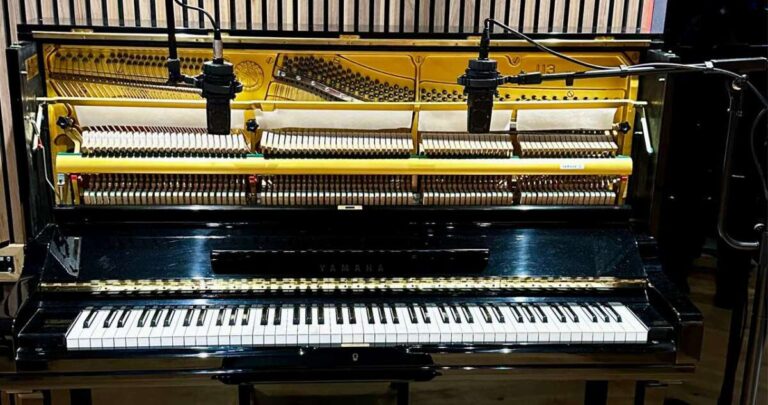
The keys on a keyboard piano are the buttons you press to create musical notes. Most piano-style keyboards use the same note system as an acoustic piano, with white keys and black keys arranged in a repeating pattern.
A full-size piano has 88 keys:
• 52 white keys
• 36 black keys
• 7 complete octaves plus a few extra notes
The white keys play the natural notes:
• A
• B
• C
• D
• E
• F
• G
The black keys play notes between many of the white keys. These notes can have two names, such as C-sharp and D-flat. The sound is the same, but the name depends on the musical scale or chord.
When people ask what are the keys on a keyboard piano, they may mean the note names, the number of keys, or the purpose of each key. This article covers all three meanings.

How the White Keys Are Named
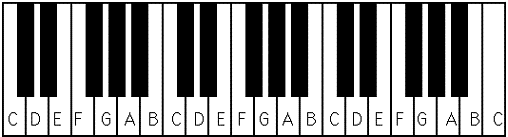
The white keys follow a simple seven-note pattern: A, B, C, D, E, F, and G. After G, the pattern starts again at A. This repeating design helps you find notes quickly.
On most keyboards, the note C sits just to the left of a group of two black keys. Once you find one C, you can locate every other C by moving up or down in groups.
The white key pattern looks like this:
• C
• D
• E
• F
• G
• A
• B
• C again
This pattern repeats across the entire keyboard. It is one of the first things beginners should learn because it gives every key a clear musical address.
A useful trick is to look for the groups of black keys. Find a pair of black keys, then move one white key to the left. That white key is C.
Why C Is Often the First Note Beginners Learn
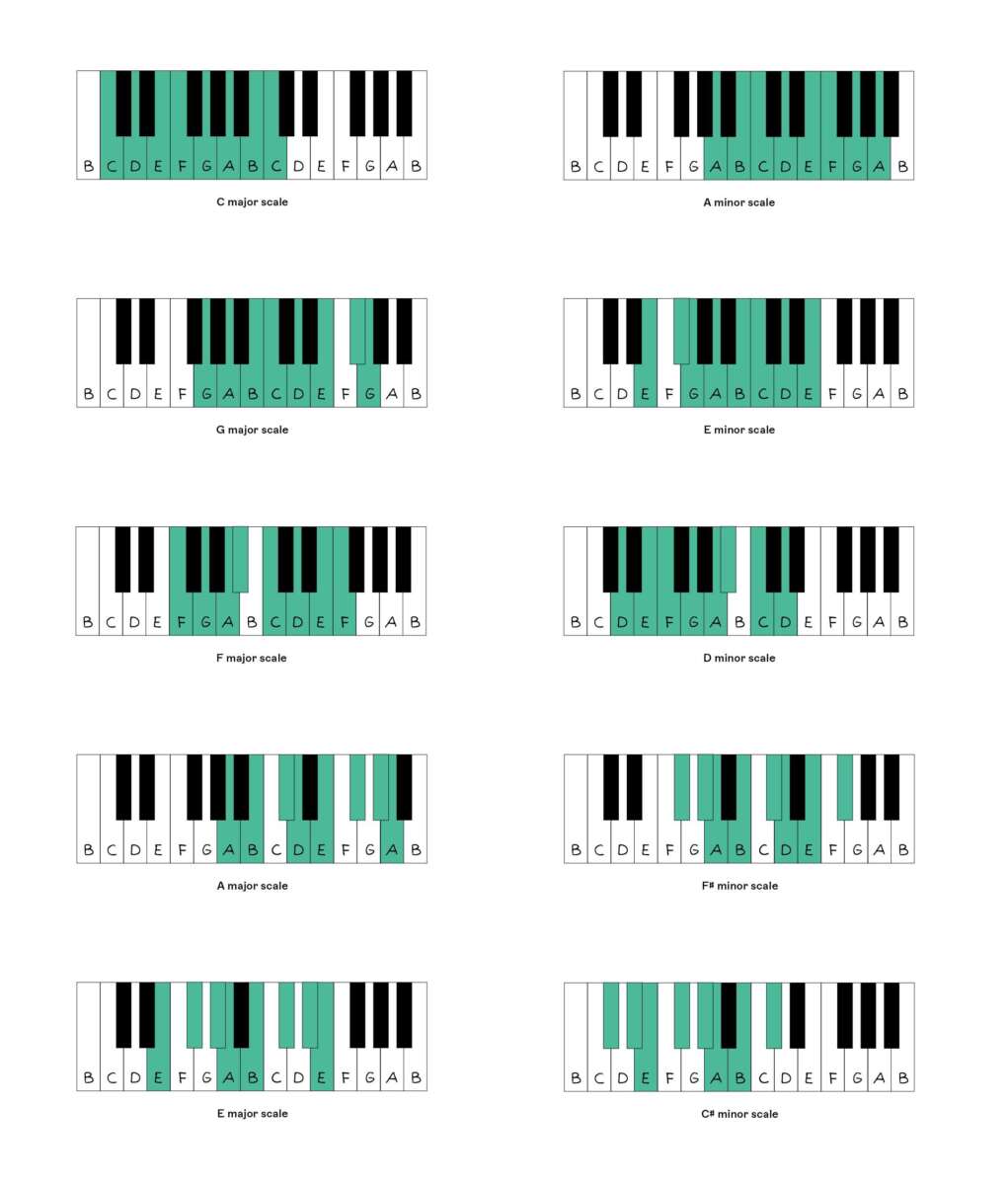
Many beginner books start with C because the C major scale uses only white keys. It has no sharps or flats, so it is easy to see and play.
The C major scale is:
C, D, E, F, G, A, B, C
This does not mean C is more important than every other note. It is simply a convenient starting point for learning the layout.
What Are the Black Keys on a Keyboard Piano?
The black keys play sharp and flat notes. A sharp raises a note by one half step, while a flat lowers a note by one half step.
For example:
• The black key between C and D is C-sharp or D-flat
• The black key between D and E is D-sharp or E-flat
• The black key between F and G is F-sharp or G-flat
• The black key between G and A is G-sharp or A-flat
• The black key between A and B is A-sharp or B-flat
There are no black keys between E and F or between B and C. These pairs are already only one half step apart.
The black key pattern is easy to recognize:
• Two black keys
• Three black keys
• Two black keys
• Three black keys
this pattern repeats from left to right. It acts like a visual map, even when you are not looking at the note labels.
Sharp and Flat Names
A black key can have two names because music theory uses different names for different musical situations. For example, the key between F and G may be called F-sharp in one scale and G-flat in another.
The sound does not change when the name changes. This is called an enharmonic relationship. Beginners do not need to worry about this at first, but learning both names becomes useful when reading sheet music.

How Many Keys Does a Keyboard Piano Have?
Keyboard pianos come in several sizes. The number of keys affects the instrument’s range, portability, and suitability for different players.
88-Key Keyboard
An 88-key keyboard matches the range of a standard acoustic piano. It is best for:
• Classical music
• Advanced piano study
• Concert performance
• Music that uses a wide range of notes
The lowest note is A0, and the highest note is C8. This gives the player a broad range for bass lines, chords, melodies, and advanced piano pieces.