Best Affordable Keyboard Piano For Beginners: Top Picks
The best affordable keyboard piano for beginners balances easy lessons, useful sounds, good keys, and a fair price.
Many new players face the same problem: they want to learn piano, but a full acoustic piano costs too much and takes up too much room. A good beginner keyboard solves that problem with headphones, built-in lessons, and simple controls. I tested the main features that matter most, such as key size, sound, portability, included gear, and learning tools. These picks can help a child, adult, or returning player start with less stress and more confidence.
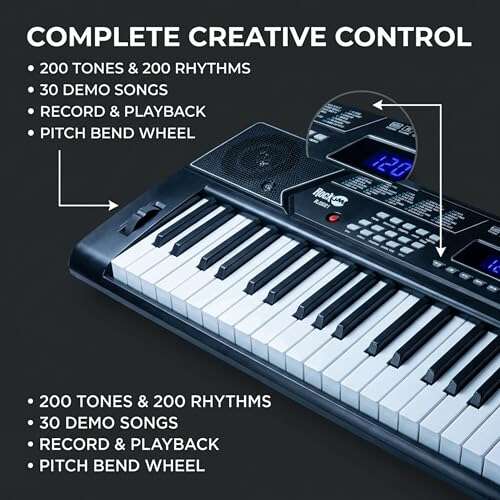
RockJam RJ5061 61-Key Keyboard Kit

The RockJam RJ5061 is a complete starter set for players who want more than a keyboard alone. It includes a 61-key keyboard, stand, bench, and headphones. That makes setup simple, especially for a family buying a first instrument. The 61-key layout gives beginners enough range for lessons, chords, and many popular songs.
I like this kit because it removes several extra buying steps. The bench helps create a better playing position, while the stand keeps the keyboard at a useful height. Headphones let a student practice without filling the room with sound. The main trade-off is that the keys are not weighted like those on an acoustic piano, so advanced players may want a more piano-like touch later.
Pros:
- Complete kit with stand, bench, and headphones
- 61 keys provide useful room for beginner songs
- Good choice for children and first-time adult players
- Headphone support allows quiet practice
- Easy setup with fewer separate items to buy
- Compact size suits bedrooms and small homes
Cons:
- Keys do not provide true weighted piano action
- The included bench may feel basic for larger adults
- Some learners may outgrow the basic sound controls
Eastar 61-Key Lighted Keyboard Set

This 61-key portable keyboard targets beginners who enjoy visual help while they learn. Its lighted keys can guide a player through notes and simple songs. The package also includes an LCD screen, headphones, an X-stand, a stool, a music rest, a microphone, and note stickers. For a new student, that is a generous set of learning aids.
The lighted-key feature may appeal to children who need a clear prompt to stay focused. The three teaching modes can also make early practice feel more like a game than a chore. I would still encourage students to learn note names and rhythm instead of relying only on the lights. This model works best as an engaging first keyboard, not as a replacement for formal piano technique.
Pros:
- Lighted keys make early note finding easier
- Includes a stand, stool, headphones, and music rest
- Three teaching modes support guided practice
- LCD screen offers clear control feedback
- Built-in speakers work for casual playing
- Microphone adds fun for children and family use
Cons:
- Lighted lessons may not suit serious traditional study
- Non-weighted keys offer limited piano feel
- The large bundle needs more storage space
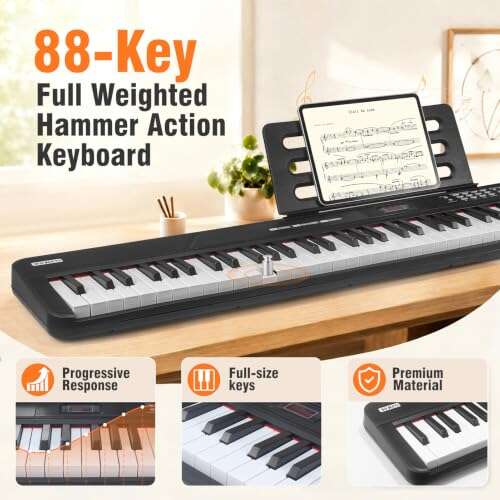
88-Key Semi-Weighted Digital Piano

This 88-key digital piano is aimed at learners who want the full range of a standard piano. Its semi-weighted keys offer more resistance than basic synth-style keys. The package includes a music stand, power supply, sustain pedal, Bluetooth, carrying case, headphones, and USB-MIDI support. Those features give a beginner room to grow into lessons, recording, and music apps.
The full 88-key layout matters if you plan to study classical music or use sheet music with a wide range. Semi-weighted action also helps build finger strength and control. I find this type of keyboard more satisfying for adults who expect to practice for years. It is less convenient than a 61-key model, but the added range can prevent an early upgrade.
Pros:
- Full 88-key range matches a traditional piano
- Semi-weighted action gives a more natural playing feel
- Bluetooth supports compatible wireless learning use
- USB-MIDI works with computers and music software
- Includes sustain pedal, case, and headphones
- Strong long-term choice for serious beginners
Cons:
- Larger and heavier than most 61-key keyboards
- May cost more than a basic first keyboard
- Semi-weighted keys are not the same as hammer action
Alesis Melody 61 MK4 Keyboard
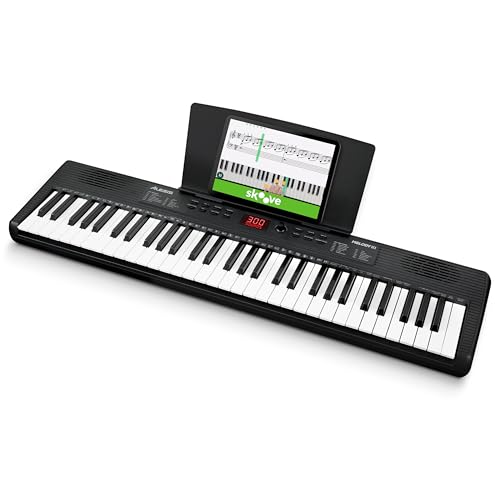
The Alesis Melody 61 MK4 is a practical choice for a student who wants a familiar brand and a simple layout. Its 61 keys leave enough space for melodies, scales, and basic two-hand work. The keyboard design stays approachable, so a beginner can start playing without reading a long manual. It is also easier to move than a full-size 88-key digital piano.
This keyboard makes sense for lessons at home, casual songwriting, and first attempts at playing by ear. I would pair it with a proper stand and a comfortable bench if those items are not already available. Its non-weighted keys keep the price and weight down, but they do not copy the heavy feel of an acoustic piano. For many beginners, that compromise is fair because a lighter keyboard encourages more frequent practice.
Pros:
- Useful 61-key range for early piano study
- Simple controls are friendly to new players
- Portable design fits small rooms
- Good option for casual songs and basic lessons
- Recognized brand with broad beginner appeal
- Lower weight makes moving and storing it easier
Cons:
- Does not offer weighted piano action
- A stand and bench may require extra spending
- Advanced players may want more detailed sound control
Removable Piano Keyboard Note Stickers
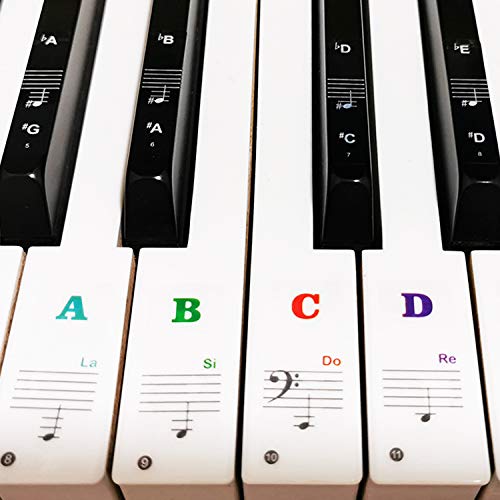
These removable piano stickers are a low-cost learning aid for students who still mix up key names. They fit common 88-, 61-, 54-, 49-, and 37-key layouts. The bold letters and colors make the first few practice sessions less confusing. A child can look down, find a note, and connect the printed symbol with the sound.
I see note stickers as training wheels, not a permanent substitute for learning the keyboard. Use them during the first stage, then remove them as note memory improves. The removable design helps protect the keyboard from a long-term visual clutter problem. They can also help parents guide practice when they do not play piano themselves.
Pros:
- Very affordable way to support early learning
- Fits several common keyboard sizes
- Bold labels help children find notes quickly
- Removable design supports a gradual learning process
- Color coding can make basic exercises more inviting
- Useful for home lessons and first practice books
Cons:
- Stickers do not teach rhythm or hand position
- Some learners may rely on labels for too long
- Placement requires care for a neat result
Alesis Recital Play 88-Key Bundle

The Alesis Recital Play gives beginners a full 88-key keyboard in a convenient bundle. A full range helps students follow traditional piano books without missing very low or high notes. The bundle format also makes it easier to begin right after delivery. This is a sensible path for an adult learner who wants a piano-style layout but has a limited budget.
Its size feels closer to a real piano than a compact 61-key keyboard. That can help students form good habits when they move between octaves. It also gives a growing player more room for classical pieces, chord work, and simple arrangements. Before buying, measure your desk or stand area because 88 keys need a long, stable surface.
Pros:
- Full-size 88-key layout supports long-term learning
- Bundle gives beginners a convenient starting package
- Useful for classical study and wide-range songs
- Better fit for adults who want a piano layout
- Allows more room for two-hand practice
- Can delay the need for a larger upgrade
Cons:
- Needs more space than a 61-key model
- Less portable for frequent travel
- Beginners with small desks may need a separate stand
Yamaha YPT-280 61-Key Keyboard

The Yamaha YPT-280 is one of the strongest choices for a beginner who values guided practice. It offers 61 keys, built-in songs, a music rest, and a quiz mode. Yamaha’s long history in musical instruments adds confidence for buyers who want a dependable first keyboard. The included power adapter also helps simplify home setup.
The quiz feature gives students a clear task instead of leaving them unsure what to practice. Built-in songs can keep lessons fresh when scales start to feel repetitive. I especially like this approach for children and adults who need gentle structure. The keys are not weighted, so advanced classical students may eventually prefer a digital piano with hammer action.
Pros:
- Quiz mode creates a clear and fun practice goal
- Built-in songs help prevent early boredom
- 61 keys provide a useful beginner range
- Yamaha design offers strong brand confidence
- Music rest supports books and sheet music
- Power adapter makes home use straightforward
Cons:
- Non-weighted keys feel lighter than acoustic piano keys
- Does not include a full furniture-style stand
- Serious players may need more advanced features later
BEATBIT Removable Piano Note Guide

The BEATBIT piano note guide is designed for beginners who need a clear view of the keyboard pattern. It uses removable labels to show note names in a direct, easy-to-read way. This can lower the first barrier for a child or adult who has never touched a piano. The black design also keeps the guide simple and less flashy.
A note guide works well beside a beginner method book or a teacher’s first exercises. It can help a student locate middle C, find repeated notes, and play short melodies with less guessing. I recommend removing it for part of each practice session once the player gains confidence. That small step builds true note recognition and avoids dependence on the guide.
Pros:
- Clear note labels support early keyboard reading
- Removable format allows gradual skill building
- Simple black design looks neat on most keyboards
- Useful for children, adults, and visual learners
- Works as a low-cost supplement to lessons
- Can reduce frustration during first practice sessions
Cons:
- It cannot replace a teacher or method book
- Labels may slow note memory if used too long
- Careful placement is needed for the best fit
88-Key Semi-Weighted Piano with Accessories

This 88-key piano keyboard focuses on value for adult beginners who want a broad feature set. It includes semi-weighted keys, a sustain pedal, power supply, stand, carrying case, headphones, and USB-MIDI compatibility. That combination covers home practice, basic recording, and quiet late-night playing. The full keyboard also supports traditional piano pieces with a wide note range.
Semi-weighted keys provide a useful middle ground between light portable keyboards and costly digital pianos. They can help a learner become comfortable with some resistance under the fingers. Bluetooth or MIDI-related features may also support lessons and music software, depending on the device and setup. I would choose this model for someone who wants a complete home kit and does not plan to carry the keyboard every day.
Pros:
- 88 keys support full-range piano learning
- Semi-weighted action feels more substantial than basic keys
- Includes stand, pedal, case, and headphones
- USB-MIDI helps connect with compatible music software
- Good fit for adult beginners and home studios
- Carrying case adds protection during occasional travel
Cons:
- Full-size design takes considerable floor space
- May be too large for young children or tiny rooms
- Semi-weighted action may not satisfy advanced pianists
RockJam RJ361 Compact 61-Key Keyboard
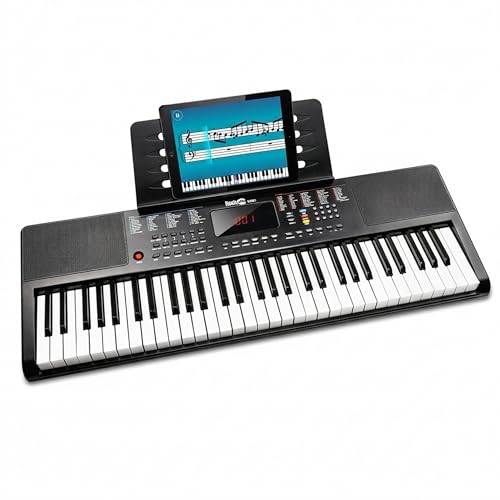
The RockJam RJ361 is built for beginners who need a small and simple keyboard. Its 61-key format gives more range than a tiny 49-key model while keeping the body easy to store. This makes it a useful pick for apartments, dorm rooms, and shared family spaces. A compact keyboard can also remove the excuse that there is no room to practice.
I would consider this model for a child’s first lessons or an adult who wants to test the hobby before spending more. It is easy to place on a table and move after practice. The lighter key feel suits basic chords and melodies, though it will not teach the same finger response as a weighted digital piano. Its value comes from being approachable, small, and ready for casual learning.
Pros:
- Compact body suits small homes and bedrooms
- 61 keys provide more range than mini keyboards
- Easy to move, store, and set up
- Good starter option for cautious buyers
- Simple design helps reduce control confusion
- Useful for basic songs, chords, and melodies
Cons:
- Light, non-weighted keys limit piano realism
- May need extra accessories for a full setup
- Advanced learners may outgrow it sooner
My Recommendation
After comparing these models, I would choose the Yamaha YPT-280 for most first-time players who want clear guidance and dependable beginner features. Its built-in songs and quiz mode give practice a friendly path, which matters when motivation starts to fade. The RockJam RJ5061 is a better all-in-one choice when a buyer needs a stand, bench, and headphones in one package. For long-term piano study, I would move to one of the 88-key semi-weighted models.
The best affordable keyboard piano for beginners should match the player, not just the price. A child may enjoy lighted keys, while an adult may prefer full-size keys and MIDI support. I also suggest buying a stable bench, using headphones when needed, and practicing in short daily sessions. Small, steady steps turn a keyboard into a lasting musical habit.
| Best for | Why |
|---|---|
| Guided lessons | Yamaha YPT-280 offers built-in songs and quiz mode for structured practice. |
| Complete starter setup | RockJam RJ5061 includes a stand, bench, and headphones for quick use. |
| Long-term piano study | An 88-key semi-weighted model gives full range and a more piano-like touch. |
How I Choose an Affordable Beginner Keyboard Piano
Price matters, but it should not lead the entire decision. I first look at how easily a new player can start. A keyboard with confusing menus may sit unused, even if it offers many sounds. Clear controls, a stable playing position, and useful learning tools often deliver more value than a long list of minor features.
I also check the key count. A 61-key keyboard works well for early songs, simple chords, and most beginner lessons. An 88-key model makes more sense for classical study, adult learners, and anyone who wants to avoid an early upgrade. A 49-key or smaller model can work for very young children, but the limited range may become frustrating.
Key action is another major point. Most low-cost keyboards use light, non-weighted keys. These feel easy to press and keep the instrument light. Semi-weighted keys add some resistance and often feel closer to a piano, but they still do not equal the hammer action found in many higher-end digital pianos.
I pay close attention to included accessories as well. A sustain pedal can make a basic keyboard feel much more expressive. Headphones support quiet practice, while a stand and bench improve comfort and posture. A bundle may cost slightly more than the keyboard alone but still save money when it includes items a beginner would buy later.
61 Keys or 88 Keys: Which Is Better?
A 61-key keyboard is often the easiest starting point. It has enough notes for common beginner songs and takes less space. It also weighs less, so a child or one adult can move it without much trouble. If you are learning pop, basic worship music, simple film themes, or chords, 61 keys may be enough for a long time.
An 88-key keyboard matches the note range of a standard acoustic piano. This helps when a teacher uses traditional books or when a student studies classical pieces. The wider layout also makes octave patterns easier to understand. The cost is extra size, weight, and space.
I usually recommend 61 keys for a child with limited space or a buyer who is unsure about the hobby. I recommend 88 keys for an adult who already knows they want to study piano seriously. If the price gap is small and the room can handle the size, the full layout may offer better long-term value.
Weighted, Semi-Weighted, or Light Keys?
Light keys are common on affordable portable keyboards. They respond with little force, which can feel comfortable for children and casual players. They work well for simple melodies, chords, and music games. However, they do not build the same touch control used on an acoustic piano.
Semi-weighted keys add a modest level of resistance. They can feel more controlled during slow practice and two-hand playing. They remain lighter than true hammer-action keys, so they are still easier to move. For many adult beginners, semi-weighted action offers a useful balance between price and feel.
Fully weighted hammer-action keys feel closest to an acoustic piano. They respond differently across the keyboard and help players work on dynamics. This feature often raises the price and weight. A beginner does not need it to learn, but a serious student may value it as practice becomes more advanced.
Features That Really Help Beginners
Headphone output is one of the most useful features on any beginner keyboard. It lets a student practice early in the morning or late at night. It also helps a new player feel less self-conscious while learning. I consider it far more useful than having dozens of extra sound effects.
A sustain pedal adds length and color to notes. Beginners can use it to make chords flow and melodies sound less dry. Some keyboards include one, while others sell it separately. Check the connection before buying a pedal because keyboards may use different input styles.
Built-in lessons, quiz modes, and lighted keys can support practice. They work best when the player also learns note names, rhythm, and hand position. These tools are like a map; they help show the way, but the student still needs to walk the path.
USB-MIDI and Bluetooth can make a keyboard more flexible. MIDI may allow connection to a computer, tablet, or compatible music app. Bluetooth can support wireless functions on models that include the needed feature. Compatibility can vary, so I suggest checking the keyboard manual and the app requirements before purchase.
Built-in speakers are useful for normal practice and family listening. Look for a clear sound at a comfortable volume. A small keyboard does not need concert-hall power. It needs enough sound for the player to hear notes clearly without harsh distortion.
Why a Keyboard Piano Helps New Players Learn
A keyboard piano gives immediate feedback. Press a key, hear a note, and try again. That quick link between action and sound helps beginners understand pitch and rhythm. It also makes practice feel less like homework and more like discovery.
Many affordable keyboards offer sounds beyond piano. Strings, organ, electric piano, and other tones can keep a student curious. These sounds should support learning, not distract from it. I tell new players to spend most of their time with a clear piano sound first.
Portability can improve practice habits. A player can move a smaller keyboard near a window, desk, or family room. When the instrument stays easy to reach, short practice sessions happen more often. Ten focused minutes each day usually beat one long session each weekend.
Common Buying Mistakes to Avoid
The first mistake is choosing the most feature-packed model without checking the basics. Hundreds of sounds do not matter if the keys feel poor or the controls confuse the student. I start with key count, comfort, sound clarity, and headphone support. Then I consider extra features.
The second mistake is ignoring the stand and bench. A keyboard on a low table can cause raised shoulders and poor wrist position. A proper setup helps the player relax. Even an affordable instrument deserves a comfortable playing height.
The third mistake is expecting a cheap keyboard to feel exactly like an acoustic piano. Affordable models make useful compromises. Light keys, small speakers, and basic pedals help lower the cost. Set realistic expectations, and the instrument will feel more rewarding.
Another mistake is buying a full-size keyboard without measuring the room. An 88-key model needs a long surface and safe storage. Leave space for the player’s knees and arms. A crowded setup can make practice feel harder than it should.
How Much Should a Beginner Spend?
A beginner can start with a basic portable keyboard at a modest cost. This is a good route when the player is unsure about continuing. A basic model can teach notes, chords, rhythm, and simple songs without a large investment. Add a pedal or headphones later if needed.
A mid-level bundle may offer better value when it includes a stand, bench, and headphones. The total cost can be lower than buying each item separately. Bundles also help families avoid compatibility problems. Just make sure the included accessories meet the player’s size and comfort needs.
An 88-key semi-weighted model usually makes sense for a buyer who plans to study for years. The initial price may be higher, but the wider range can delay an upgrade. I would not pay for advanced features that the student will never use. Buy for the next stage of learning, not an imaginary professional career.
Setup Tips for a Better First Practice
Place the keyboard on a stable surface. It should not slide when the player uses both hands. Set the bench so the elbows sit near the level of the keys. Keep the back relaxed and avoid reaching up toward the instrument.
Start with a clear piano tone. Learn where middle C sits, then practice five-note patterns with each hand. Add simple chords after the fingers feel comfortable. A slow tempo helps the brain connect each note with the correct finger.
Use headphones when the keyboard supports them. This protects family peace and lets the player focus on small mistakes. Take short breaks if the hands or wrists feel tired. Pain is not a sign of good practice.
Keep a simple practice plan. Spend a few minutes on notes, a few minutes on rhythm, and a few minutes on a song. End with something fun. A positive finish makes it easier to return the next day.
Are Beginner Keyboard Bundles Worth It?
Bundles can be a smart buy when they include useful items. A stand, bench, pedal, and headphones can turn a keyboard into a ready-to-play station. This saves time and may reduce the final cost. It also helps a first-time buyer avoid guessing which accessories fit.
Still, not every included item has the same quality as the main instrument. A small bench may not suit a tall adult. A light stand may need extra care. I judge the bundle by its total usefulness, not by the number of pieces in the box.
For a child, a complete kit can make the first day exciting. For an adult, a semi-weighted 88-key keyboard may offer better value than a large accessory package. Think about the player’s habits, room, and goals before choosing.
Best Affordable Keyboard Piano for Different Learners
For children, I favor a model with clear prompts and fun learning tools. Lighted keys, quiz modes, and built-in songs can hold attention during the first months. The Eastar model is especially appealing for this type of learner because it combines several visual and interactive tools. Parents should still guide the child toward basic note memory.
For adult beginners, comfort and long-term value matter more. An 88-key semi-weighted keyboard can feel more satisfying and support serious study. The full layout also reduces the chance that a student will need to replace the instrument soon. The trade-off is a larger footprint.
For small rooms, the RockJam RJ361 or another compact 61-key model makes the most sense. It can sit on a table and move into a closet after practice. That convenience matters because an instrument that is hard to reach often gets ignored. Small size can be a feature, not a weakness.
For buyers who want an established name and guided practice, the Yamaha YPT-280 is an excellent match. It gives beginners a clear set of songs and quiz activities. The design feels focused rather than overloaded. That balance makes it one of the safest recommendations in this group.
Care and Maintenance Tips
Keep the keyboard away from direct sunlight, moisture, and extreme heat. Dust can collect between keys, so use a soft, dry cloth for regular cleaning. Do not spray cleaner directly onto the instrument. Spray a little onto a cloth only if the manual allows it.
Unplug the power adapter during storms or long periods of storage. Store the sustain pedal and cables so they do not pull on the ports. If the keyboard includes a case, use it during transport. A little care can help an affordable instrument last for many years.
Teach children to use clean hands and gentle pressure. Piano keys do not need hard strikes to produce sound. Avoid placing books, drinks, or toys on the keyboard. These small habits protect both the keys and the player’s progress.
FAQs Of best affordable keyboard piano for beginners
What is the best affordable keyboard piano for beginners?
The Yamaha YPT-280 is a strong overall choice for guided learning. Its 61 keys, built-in songs, and quiz mode help new players practice with clear goals. The RockJam RJ5061 is better if you want a complete kit with a stand, bench, and headphones.
Is a 61-key keyboard enough for a beginner?
Yes. A 61-key keyboard is enough for most basic lessons, melodies, chords, and popular songs. Choose 88 keys if you plan to study classical music or want the full range of an acoustic piano.
Should a beginner buy weighted keys?
Weighted or semi-weighted keys can help a serious student build better touch control. They also feel more like an acoustic piano. Light keys are still fine for casual learning, children, and buyers who need a portable instrument.
Do beginners need a sustain pedal?
A sustain pedal is not required for the first lesson, but it becomes useful quickly. It helps notes and chords flow together. A pedal is a worthwhile upgrade if the keyboard does not include one.
Are keyboard bundles good for children?
Yes, a bundle can make learning easier because it may include a stand, bench, headphones, and other helpful items. Check that the bench height suits the child. Also make sure the keyboard stays stable during play.
Final Verdict: Which Should You Buy?
The Yamaha YPT-280 is my top all-around pick for the best affordable keyboard piano for beginners. Choose the RockJam RJ5061 for a complete starter kit, or an 88-key semi-weighted model for serious long-term study.
Match the keyboard to your space, goals, and practice plan. The right affordable beginner piano can make each lesson feel simple, fun, and worth returning to.

Senior Music Reviewer
Alex Carter is a seasoned music reviewer with over a decade of experience in the world of sound and instruments. Passionate about helping musicians and enthusiasts make informed choices, he brings sharp insights and in-depth knowledge to every review. From classical instruments to modern gear, Alex combines technical expertise with a love for music to deliver content that resonates with readers.
As a Senior Music Reviewer and expert author on Tuneluma.com, Alex is dedicated to sharing honest evaluations, practical advice, and thoughtful commentary to guide readers in their musical journey.