What A Friend We Have In Jesus Piano Sheet: Easy Guide
Free and paid versions of the What a Friend We Have in Jesus piano sheet help beginners play this beloved hymn.
The What a Friend We Have in Jesus piano sheet is a useful way to learn a calm, familiar hymn while building skills in chords, rhythm, melody, and worship accompaniment. This guide explains where to find reliable music, how to choose the right level, how to read the arrangement, and how to avoid copyright problems. It also shares practical playing tips that help the hymn sound warm rather than stiff.
What Is the What a Friend We Have in Jesus Piano Sheet?
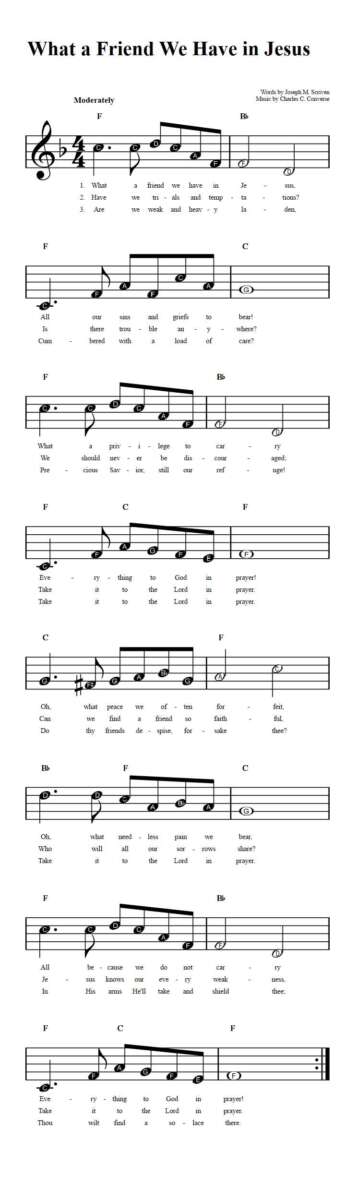
The What a Friend We Have in Jesus piano sheet is written music for piano based on the Christian hymn “What a Friend We Have in Jesus.” It may include the melody, chord symbols, lyrics, left-hand patterns, and full piano accompaniment.
The hymn was written by Joseph M. Scriven in the 19th century. Charles C. Converse later composed the tune most people know today. The song is often played in churches, funerals, prayer meetings, weddings, and private devotion.
Most versions use a gentle 4/4 meter. The melody moves in a clear and singable way, which makes it suitable for new piano players. More advanced arrangements may add flowing broken chords, richer harmonies, and a fuller concert style.

Where to Find Reliable Sheet Music
You can find the What a Friend We Have in Jesus piano sheet in several places. The best choice depends on your skill level, budget, and intended use.
Look for music through:
• Public-domain hymn collections: Many older hymn melodies and texts are in the public domain in the United States.
• Church music websites: These may offer simple lead sheets, chord charts, or printable hymn arrangements.
• Digital sheet music stores: These often include recordings, previews, key changes, and several difficulty levels.
• Hymnal collections: A printed hymnal may contain the melody and harmony, even when it does not include a detailed piano part.
• Piano method books: Beginner hymn books often include simplified arrangements of familiar songs.
Check the license before downloading or sharing a file. A hymn may be old enough to be public domain, while a modern piano arrangement of that hymn may still have copyright protection.
A good What a Friend We Have in Jesus piano sheet should show the arranger, key, meter, tempo marking, and copyright information. Avoid files with unclear authorship or poor scans that contain missing notes and hard-to-read symbols.

How to Choose the Right Arrangement
The best What a Friend We Have in Jesus piano sheet is not always the most complex one. Choose an arrangement that matches your current ability and your reason for playing.
Beginner arrangement
A beginner version usually has:
• A single melody line
• Simple left-hand bass notes
• Basic triads
• Few page turns
• A slow or moderate tempo
This type of sheet music is ideal if you are still learning to read notes or form common chords. It lets you focus on steady timing and clean transitions.
Intermediate arrangement
An intermediate version may include:
• Broken chord patterns
• Passing notes
• Wider left-hand movement
• Simple introductions and endings
• More independent movement between both hands
This level works well for church pianists who want a fuller sound without managing difficult leaps.
Advanced arrangement
An advanced What a Friend We Have in Jesus piano sheet may use:
• Extended chords
• Modulation
• Countermelodies
• Octaves
• Arpeggios
• Expressive rubato
These versions can sound beautiful, but they need careful practice. Do not select an advanced arrangement only because it looks impressive. A clear and musical performance is better than a difficult piece played with tension.
How to Read the Music
Before playing, study the basic parts of the What a Friend We Have in Jesus piano sheet. This small step can prevent many mistakes.
Start with the key signature. The key tells you which notes are sharp or flat throughout the piece. If the key feels too high or low for singing, use a legal transposition feature or choose another edition.
Next, check the time signature. The common 4/4 meter means each measure has four beats. Count steadily, even during rests and longer notes.
Then review the chord symbols. Common chords may include:
• I chord: The home chord of the key
• IV chord: A chord that creates movement
• V chord: A chord that often leads back home
• vi chord: A softer minor chord
For example, in the key of C major, the main chords are C, F, G, and Am. Learning these shapes can help you play a simple version even when the full arrangement feels difficult.
Finally, mark repeated sections. Hymns often use the same musical pattern for each verse. Once you learn the first verse well, later verses may require only small changes.
A Simple Practice Plan
Learning the What a Friend We Have in Jesus piano sheet is easier when you divide it into small tasks. Trying to play the entire piece at once often leads to frustration.
Follow this practice plan:
-
Read through the score without playing. Notice the key, tempo, repeats, and difficult measures.
-
Practice the right hand alone. Learn the melody until it feels natural.
-
Practice the left hand alone. Use slow, even movements and watch for large jumps.
-
Combine two to four measures. Repeat them until both hands feel relaxed.
-
Add the next small group of measures. Connect each group to the one before it.
-
Practice with a metronome. Begin much slower than the final tempo.
-
Add dynamics and phrasing. Make the melody sing above the accompaniment.
-
Record yourself. Listen for uneven rhythm, loud accents, and rushed pauses.
Many learners make the mistake of increasing speed too soon. Slow practice is not a delay. It is the foundation that makes faster playing secure.
How to Make the Hymn Sound Musical
Correct notes are only the first step. A good performance of the What a Friend We Have in Jesus piano sheet should feel calm, caring, and natural.
Keep the melody slightly louder than the inner notes. Think of the melody as a singer and the accompaniment as a supportive choir. If every note has the same volume, the music may sound flat.
Use gentle pedal changes. Press the pedal at the start of a harmony, then lift it when the chord changes. Too much pedal can blur the harmony and make the hymn sound unclear.
Shape each phrase toward its main point. Most musical phrases need a small rise and fall, much like a spoken sentence. Avoid playing every measure with the same force.
For a church setting, leave enough space for people to sing. A solo piano arrangement may use more freedom, but congregational accompaniment should provide a steady pulse.
Common Chord Progressions
A basic chord approach can help you understand the harmony behind the hymn. The exact chords vary by key and arrangement, but many versions use familiar hymn progressions.
In C major, a simplified pattern may include:
• C for a stable opening
• F for forward motion
• C for return
• G or G7 for tension
• C for resolution
This pattern creates a musical feeling of leaving home and returning home. That movement is one reason the hymn feels reassuring.
If you use chord symbols instead of full notation, play the melody with your right hand and simple chord tones with your left. Start with blocked chords. Later, turn them into broken chords if the arrangement calls for more motion.
Do not add random chords just to make the music sound richer. Each chord should support the melody and preserve the character of the hymn.
Transposing the Piano Sheet
Transposition means moving the music to another key. This can make the What a Friend We Have in Jesus piano sheet more comfortable for a singer or easier for a pianist.
For example, a song written in C major may be moved to G major. The melody keeps the same shape, but every note shifts to a new pitch. Digital keyboards and sheet music software often include transposition tools.
Manual transposition takes more care. You must move every melody note, chord, accidental, and bass note by the same interval. One missed note can create an unexpected clash.
For group singing, ask the vocalist or worship leader which key feels comfortable. A good accompaniment supports the voice rather than forcing the singer to strain.
Copyright and Legal Use
Many people search for a free What a Friend We Have in Jesus piano sheet. Free does not always mean legal, and public domain does not apply to every arrangement.
The original hymn text and traditional tune may be public domain in the United States because of their age. However, a new arrangement can have its own copyright. This includes changes to harmony, rhythm, introduction, ending, and decorative passages.
Before using a file, check:
• The publication date
• The arranger’s name
• The license terms
• Whether printing is allowed
• Whether performance or recording permission is needed
• Whether the file comes from a trusted music provider
Do not remove a copyright notice or upload a purchased arrangement for others to download. If you need music for a church service, school concert, livestream, or recording, confirm that the license covers that use.
Copyright rules differ by country. When in doubt, use an arrangement clearly marked public domain or purchase a licensed edition.
Mistakes to Avoid
Even simple hymn music can expose weak habits. These common mistakes are easy to fix.
• Playing too fast: A calm hymn needs room to breathe.
• Ignoring rests: Silence is part of the rhythm.
• Using heavy pedal: Clear harmony matters more than a large sound.
• Hitting every chord equally: Shape the phrases with gentle dynamics.
• Looking only at the right hand: The left hand controls much of the movement and balance.
• Choosing music that is too hard: A simpler arrangement can build stronger technique.
• Downloading unclear scans: Missing notes can teach the wrong version.
• Forgetting the singer: Accompaniment should serve the people singing.
When I help pianists prepare hymn arrangements, I encourage them to make one recording before changing anything. Listening back often reveals problems that are hard to notice while playing, especially rushed endings and uneven chord changes.
Using the Sheet for Worship or Personal Practice
The What a Friend We Have in Jesus piano sheet can serve more than one purpose. It can support congregational singing, quiet prayer, music lessons, or a reflective solo performance.
For worship, prepare a short introduction. Use the final phrase or the first two measures as a simple opening. Keep the introduction in the same key and tempo as the verse.
For personal practice, play one verse slowly and focus on phrasing. You can then play the second verse with a softer touch or a different accompaniment pattern. This keeps the music fresh without changing its message.
For a memorial or prayer service, avoid dramatic effects that distract from the setting. A gentle tempo, warm tone, and clear melody usually communicate more than complex technique.
PAA-Style Questions About Learning
Is this hymn good for beginner pianists?
Yes. The melody is clear, the rhythm is usually steady, and many simplified arrangements use common chords. Beginners should start with an easy version rather than a large concert arrangement.
Can I play it with only chords?
Yes. A pianist can play the melody in the right hand and chord shapes in the left hand. This approach is useful for worship leaders and players who read chord charts more easily than full notation.
What if the sheet music is too difficult?
Reduce the tempo, practice each hand alone, and simplify the left-hand pattern. You can also choose a beginner arrangement or transpose the song to a more comfortable key.
Frequently Asked Questions About the What a Friend We Have in Jesus Piano Sheet
Is the What a Friend We Have in Jesus piano sheet free?
Some versions are free, especially older public-domain arrangements. Modern arrangements may require payment or a performance license, so always check the terms before downloading or sharing them.
What key is What a Friend We Have in Jesus usually played in?
The hymn appears in several keys, including C major, F major, G major, and other keys suited to singers. The best key depends on the arrangement and the vocal range of the person or group singing.
Is What a Friend We Have in Jesus easy to play on piano?
A simplified version is often suitable for beginners. Full arrangements can be more challenging because they may include wider chords, moving bass lines, and decorative passages.
Who wrote What a Friend We Have in Jesus?
Joseph M. Scriven wrote the hymn text, and Charles C. Converse composed the familiar tune. The hymn became widely known through church hymnals and Christian worship traditions.
Can I use the sheet music in a church service?
You can use it if the music is public domain or you have the correct license. A purchased or downloaded arrangement may have separate rules for printing, performance, livestreaming, and recording.
Should I use a metronome when practicing?
Yes, especially when your rhythm is uneven. Begin slowly, keep the beat steady, and then increase the tempo only after you can play each section with control.
How much pedal should I use?
Use enough pedal to connect the harmony, but lift it when the chord changes. Too much pedal can make the notes blend into a muddy sound.
Conclusion
The What a Friend We Have in Jesus piano sheet can help beginners build confidence and give experienced players a meaningful hymn to interpret. Start with a clear arrangement, learn the melody, understand the chords, and practice in short sections. Pay close attention to tempo, dynamics, pedal use, and copyright status.
Choose music that fits your skill and your setting. Then play with patience and warmth, allowing the melody to speak clearly. Explore a trusted sheet music collection, try a simple practice plan, and share your favorite arrangement or playing tip in the comments.

Senior Music Reviewer
Alex Carter is a seasoned music reviewer with over a decade of experience in the world of sound and instruments. Passionate about helping musicians and enthusiasts make informed choices, he brings sharp insights and in-depth knowledge to every review. From classical instruments to modern gear, Alex combines technical expertise with a love for music to deliver content that resonates with readers.
As a Senior Music Reviewer and expert author on Tuneluma.com, Alex is dedicated to sharing honest evaluations, practical advice, and thoughtful commentary to guide readers in their musical journey.