How Many Drum Majors Are In A Marching Band: Typical Count
Most marching bands have one to three drum majors, but the exact number depends on size and style.
The answer to “how many drum majors are in a marching band” is not set by one universal rule. Small school bands may use one drum major, while large high school, college, and competitive bands may use two, three, or even more. The right number depends on field size, rehearsal needs, musical style, and how the band manages leadership.
How Many Drum Majors Are in a Marching Band?
Most marching bands have one, two, or three drum majors. One drum major can lead a small group with ease. Larger bands often need more leaders to keep the ensemble together across a wide field.
Here is a simple guide:
• Small school band: One drum major
• Medium high school band: One or two drum majors
• Large high school band: Two or three drum majors
• College marching band: Two to five drum majors
• Highly competitive or parade band: Two or more drum majors
There is no official rule that says how many drum majors are in a marching band. Each organization sets its own structure. Some bands even use a drum major team with four or more members.
A drum major does more than wave a baton. This leader gives commands, sets the tempo, directs movement, and helps the band stay focused. As the group grows, more drum majors can make communication easier.

Why Do Marching Bands Use More Than One Drum Major?
The main reason is communication. A football field is large, and sound does not always travel clearly from one end to the other. A second or third drum major can help pass commands across the field.
Multiple drum majors also help with visual leadership. Marchers may not see one leader from every position. When several leaders stand at key points, more members can follow the same count and motion.
Here are common reasons for adding drum majors:
• The band has a large number of members.
• The marching formation covers a wide area.
• The band performs complex formations.
• The group uses several rehearsal fields or practice zones.
• The band has both parade and field responsibilities.
• The leadership program includes training for younger students.
In my experience observing marching rehearsals, a second drum major can make a major difference when a band grows beyond a manageable size. The extra leader is not simply another person on a podium. That person becomes another set of eyes, ears, and signals.
Still, more is not always better. Too many leaders can create mixed commands. A strong band gives every drum major a clear role before rehearsal begins.

How Many Drum Majors Are in a Small Marching Band?
A small marching band usually has one drum major. This setup is common in middle school bands, small high school programs, community bands, and beginner groups.
One drum major can stand in front of the band and control the rehearsal. This keeps the chain of command simple. Marchers know where to look, and the director can work closely with one student leader.
A small band may choose two drum majors when both students share duties. For example, one person may lead the parade block while the other helps with field practice. They may also alternate during concerts, games, or competitions.
A single drum major works best when:
• The band has fewer than about 50 members.
• The field formation is simple.
• The band performs short shows.
• The members can easily see the main podium.
• The drum major has strong command skills.
These numbers are general planning points, not official limits. A band with 40 skilled marchers may need two leaders, while a band with 70 members may work well with one.
How Many Drum Majors Are in a Large High School Band?
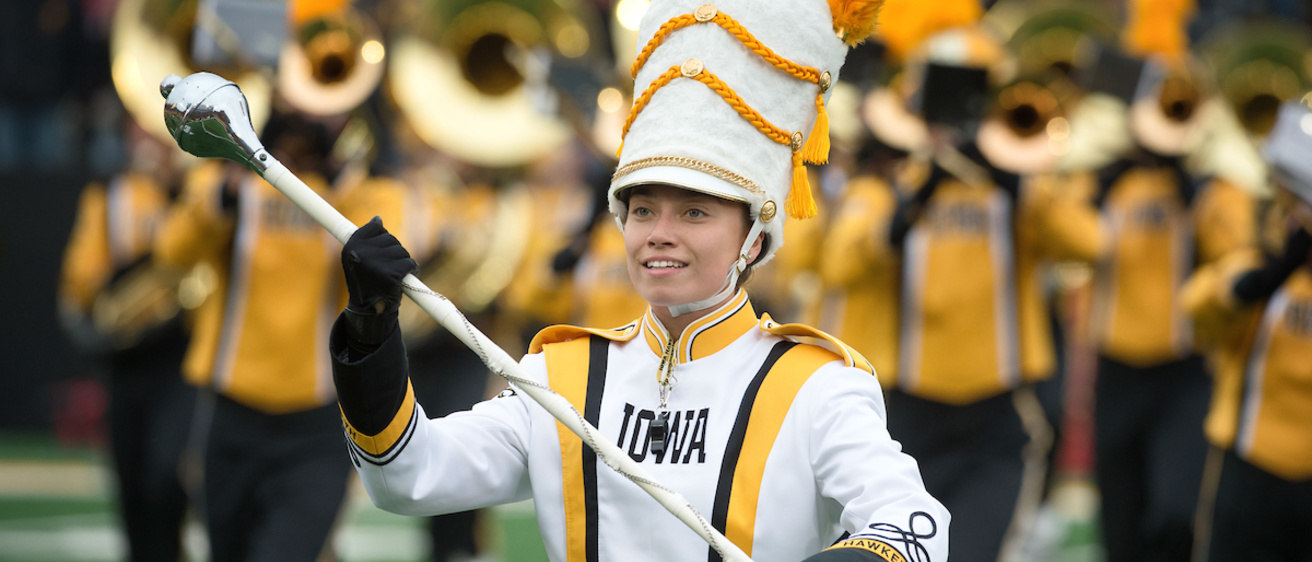
A large high school band often has two or three drum majors. Some programs select one head drum major and one or two assistant drum majors.
The head drum major usually leads the full ensemble. Assistant drum majors may help with warmups, commands, marching technique, and section communication. They may also fill in when the head drum major is absent.
A large band may divide duties in several ways:
• One drum major leads the full band.
• One assistant focuses on the winds.
• One assistant supports the percussion section.
• One leader handles parade formations.
• Another leader helps with backstage or competition tasks.
When asking how many drum majors are in a marching band at a large school, the best answer is often two or three. The exact number depends on the director’s plan and the band’s performance needs.
I have seen groups struggle when every drum major gives commands at once. The lesson is simple: assign one leader as the main voice. Other drum majors should support that voice rather than compete with it.
How Many Drum Majors Are in a College Marching Band?
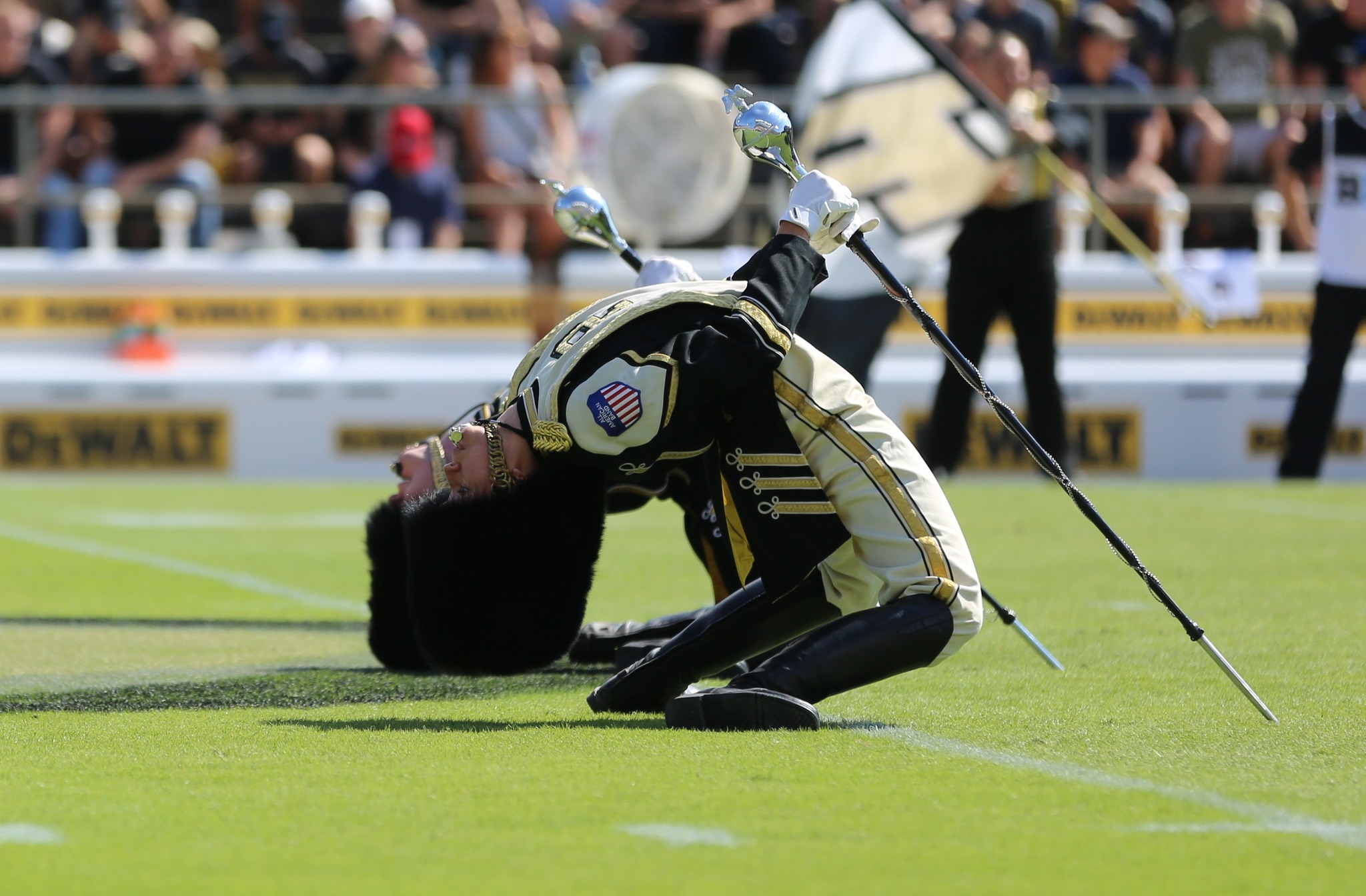
College marching bands often have two to five drum majors. Some large university bands may use even more, especially when they perform in stadiums, parades, pep events, and community programs.
College bands can include more than 100 members. They may also perform complex pregame shows, halftime productions, and special ceremonies. Several drum majors help the band move with control in these different settings.
The structure may look like this:
• Head drum major: Leads the team and works with the band director.
• Assistant drum majors: Support field commands and rehearsal control.
• Section drum majors: Help manage specific areas of the formation.
• Parade drum majors: Lead the band during street performances.
• Training drum majors: Learn the role while serving as junior leaders.
In some college programs, drum majors also represent the band in public. They may greet guests, lead traditions, and appear at major athletic events. Their role can be both musical and ceremonial.
The answer to how many drum majors are in a marching band at the college level therefore changes widely. A small college band may need only one or two. A major university band may use four or five.
What Does a Drum Major Do?
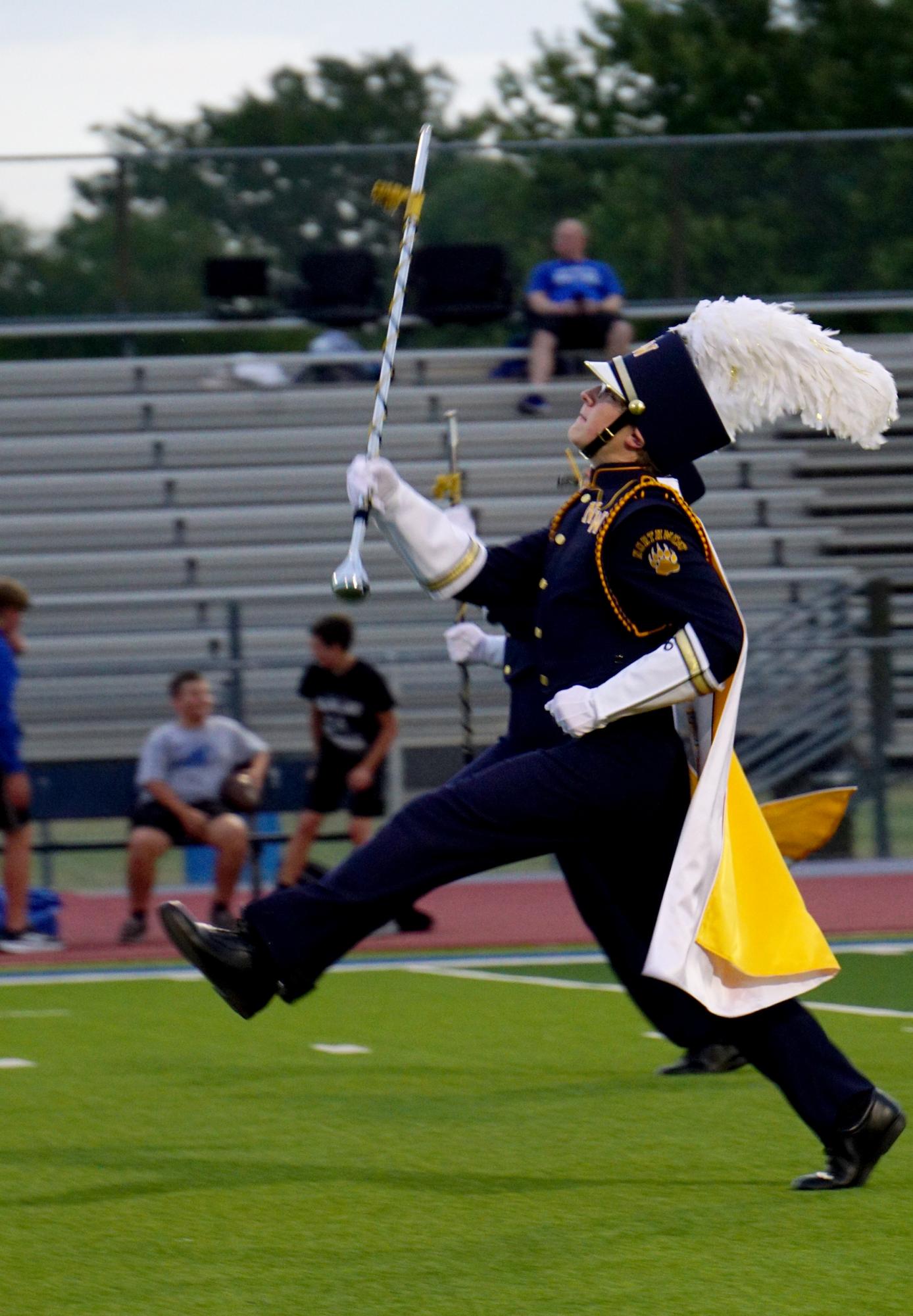
A drum major is the visible leader of a marching band. This person helps the band start, stop, move, and perform as one group.
Common drum major duties include:
• Giving verbal commands.
• Setting the marching tempo.
• Conducting during rehearsals.
• Using a mace, baton, or hand signals.
• Starting and ending performances.
• Checking alignment and spacing.
• Motivating the band.
• Communicating the director’s instructions.
• Helping solve problems during events.
The drum major is often called the bridge between the director and the musicians. The director focuses on music, design, and teaching. The drum major helps turn those plans into clear action on the field.
A good drum major must understand music and people. Clear timing matters, but calm leadership matters too. A sharp command delivered with poor judgment can hurt morale. A simple command delivered with confidence can steady the entire group.

How Does Band Size Affect the Number of Drum Majors?
Band size is one of the strongest factors. A larger group creates more distance between members. It also creates more chances for people to miss commands or lose visual contact.
However, member count is not the only factor. The shape of the drill matters as well. A band with 80 members in a compact block may need fewer leaders than a band with 60 members spread across the entire field.
Other factors include:
• The number of formations.
• The speed of the drill.
• The band’s experience level.
• The quality of the sound system.
• The height of the main podium.
• The type of performance.
• The director’s leadership system.
A band should choose the number of drum majors that improves control. It should not select extra leaders only because a larger number looks impressive.
One Drum Major Versus Multiple Drum Majors
One drum major offers simple leadership. Everyone looks in one direction, and commands come from one clear source. This structure is easy to teach and works well for many small and medium bands.
Multiple drum majors offer greater coverage. They can help marchers see signals from different parts of the field. They can also divide work during long rehearsals and busy event days.
The advantages of one drum major include:
• Clear authority.
• Fewer mixed signals.
• Easier training.
• Simple rehearsal control.
• Strong personal connection with the band.
The advantages of multiple drum majors include:
• Better visibility.
• More support during rehearsals.
• Faster communication.
• Shared responsibility.
• Backup when one leader is absent.
The risk of one drum major is overload. The risk of multiple drum majors is confusion. Directors should weigh both issues before choosing how many drum majors are in a marching band.
How Are Drum Majors Chosen?
Most bands choose drum majors through an audition, interview, or teacher recommendation. The process may include conducting, marching, speaking, music reading, and leadership tasks.
Directors often look for these traits:
• Reliable attendance.
• Strong rhythm and tempo control.
• Clear speaking skills.
• Good posture and visual presence.
• Knowledge of marching technique.
• Respect for band members.
• Ability to stay calm under pressure.
• Willingness to accept feedback.
The best performer is not always the best drum major. Leadership requires patience and awareness. A student may play an instrument at a high level but still need more practice before leading others.
A useful selection process gives candidates real tasks. Ask them to start the band, stop the band, explain a correction, and lead a short warmup. These tests show how they think under pressure.
Common Mistakes Drum Majors Should Avoid
New drum majors often focus too much on appearance. A strong salute or high baton toss looks impressive, but control and timing matter more.
Common mistakes include:
• Giving unclear commands.
• Speaking too softly.
• Changing tempo without warning.
• Correcting members in an embarrassing way.
• Moving out of the band’s sightline.
• Allowing several leaders to speak at once.
• Ignoring safety during fast drill.
• Failing to prepare for weather or equipment issues.
One lesson I often share with developing leaders is to make commands short. Marchers should understand the instruction before they act. Long speeches in the middle of a rehearsal usually create more confusion than progress.
Drum majors should also learn to pause. A calm pause can reset a noisy group better than repeated yelling. Leadership is not about being the loudest person on the field. It is about being the clearest person.
How Many Drum Majors Are in a Marching Band for a Competition?
Competition bands commonly use two or three drum majors, but there is no standard competition number. Judges focus on the quality of the performance, not simply the size of the drum major team.
A competition band may use:
• One main drum major on the podium.
• One or two field leaders.
• Additional ceremonial leaders for entrances and exits.
The judging system can vary by event. Some competitions score music, visual performance, general effect, and percussion. Drum major duties support these areas, but the number of drum majors alone does not guarantee a higher score.
A smaller team may perform better if its commands are unified. A larger team may perform better if the leaders are well trained and carefully placed. The goal is not to fill the field with leaders. The goal is to help the ensemble perform with precision.
Related Roles in a Marching Band
A drum major is only one part of a band’s leadership system. Other student leaders help the group function each day.
These roles may include:
• Band captain: Supports discipline, teamwork, and daily organization.
• Section leader: Guides a specific instrument section.
• Squad leader: Helps a small group with marching and drill.
• Field captain: Assists with movement and formations.
• Librarian: Manages music and performance materials.
• Equipment manager: Organizes props, instruments, and supplies.
Clear roles prevent the drum major from carrying every responsibility. When the whole leadership team works together, the band feels more stable.
This matters when deciding how many drum majors are in a marching band. A strong support team may allow one or two drum majors to lead a very large group successfully.
A Practical Way to Choose the Right Number
Directors can use a simple planning process. Start with the band’s size, then examine the drill and performance schedule.
-
Count the active marching members.
-
Review how far the formation spreads.
-
Check whether all members can see the main leader.
-
Consider the number of performances.
-
Identify parade, field, and pep band needs.
-
Assign clear duties to each drum major.
-
Test the plan during a full rehearsal.
-
Ask marchers whether commands are easy to see and hear.
If many members miss commands, the band may need another visible leader or a better communication system. If members receive mixed signals, the band may need fewer voices and clearer authority.
This practical test is more useful than copying another school’s structure. The right answer to how many drum majors are in a marching band should come from the band’s real needs.
Frequently Asked Questions About How Many Drum Majors Are in a Marching Band
Can a marching band have only one drum major?
Yes, a marching band can have only one drum major. This setup is common in small and medium bands where members can easily see and hear the main leader.
Can a marching band have four or more drum majors?
Yes, large college, parade, and competitive bands may use four or more drum majors. Each leader should have a specific role to prevent mixed commands.
Is there a required number of drum majors?
No, there is no universal required number. The band director or organization usually decides how many drum majors are needed.
Do drum majors play an instrument during performances?
Most drum majors focus on leadership rather than playing an instrument during the show. Some may play during concerts or special events when they are not performing drum major duties.
Are drum majors ranked by seniority?
Some bands have a head drum major and assistant drum majors. Other bands treat all drum majors as equals and divide duties by location or task.
What is the best number of drum majors for a high school band?
One to three drum majors works well for many high school bands. The best number depends on enrollment, field coverage, drill complexity, and rehearsal needs.
Conclusion
The answer to how many drum majors are in a marching band usually ranges from one to three, with larger college and competitive bands sometimes using more. Band size, field coverage, performance style, and leadership structure all shape the decision.
One drum major offers simple control. Multiple drum majors improve visibility and share the workload. The key is not choosing the biggest team, but building a clear system with trained leaders and one consistent command structure.
Whether you are a director, student, parent, or new marcher, use your band’s needs as the guide. Watch rehearsals, test communication, and choose the number of drum majors that helps every member perform with confidence. Explore more marching band leadership resources, and share your band’s drum major structure in the comments.

Senior Music Reviewer
Alex Carter is a seasoned music reviewer with over a decade of experience in the world of sound and instruments. Passionate about helping musicians and enthusiasts make informed choices, he brings sharp insights and in-depth knowledge to every review. From classical instruments to modern gear, Alex combines technical expertise with a love for music to deliver content that resonates with readers.
As a Senior Music Reviewer and expert author on Tuneluma.com, Alex is dedicated to sharing honest evaluations, practical advice, and thoughtful commentary to guide readers in their musical journey.