How To EQ Bass Drum: Get Punchy, Clear Low End
To EQ a bass drum, shape its low-end weight, attack, and room tone while leaving space for the bass guitar.
Learning how to EQ bass drum is less about boosting one “magic” frequency and more about making smart choices for the song. After working on many drum mixes, I have found that the best results come from listening to the kick in context, cutting problems before adding boosts, and using the smallest moves that create a clear change.
What Bass Drum EQ Actually Does
Bass drum EQ changes the balance of frequencies inside the kick drum. It can make the drum feel deep, punchy, sharp, soft, thin, or boomy.
A kick usually contains three key areas:
• Sub and low bass: This creates weight and power.
• Low mids: This controls body but can also create mud.
• Upper mids and highs: This adds beater attack and definition.
The exact tone depends on the drum, microphone, tuning, recording space, and music style. A live rock kick may need more shell tone and attack, while an electronic kick may need careful control of sub-bass energy.
The goal is not to make the bass drum sound impressive by itself. The goal is to help it work with the bass guitar, snare, vocals, guitars, and other instruments.
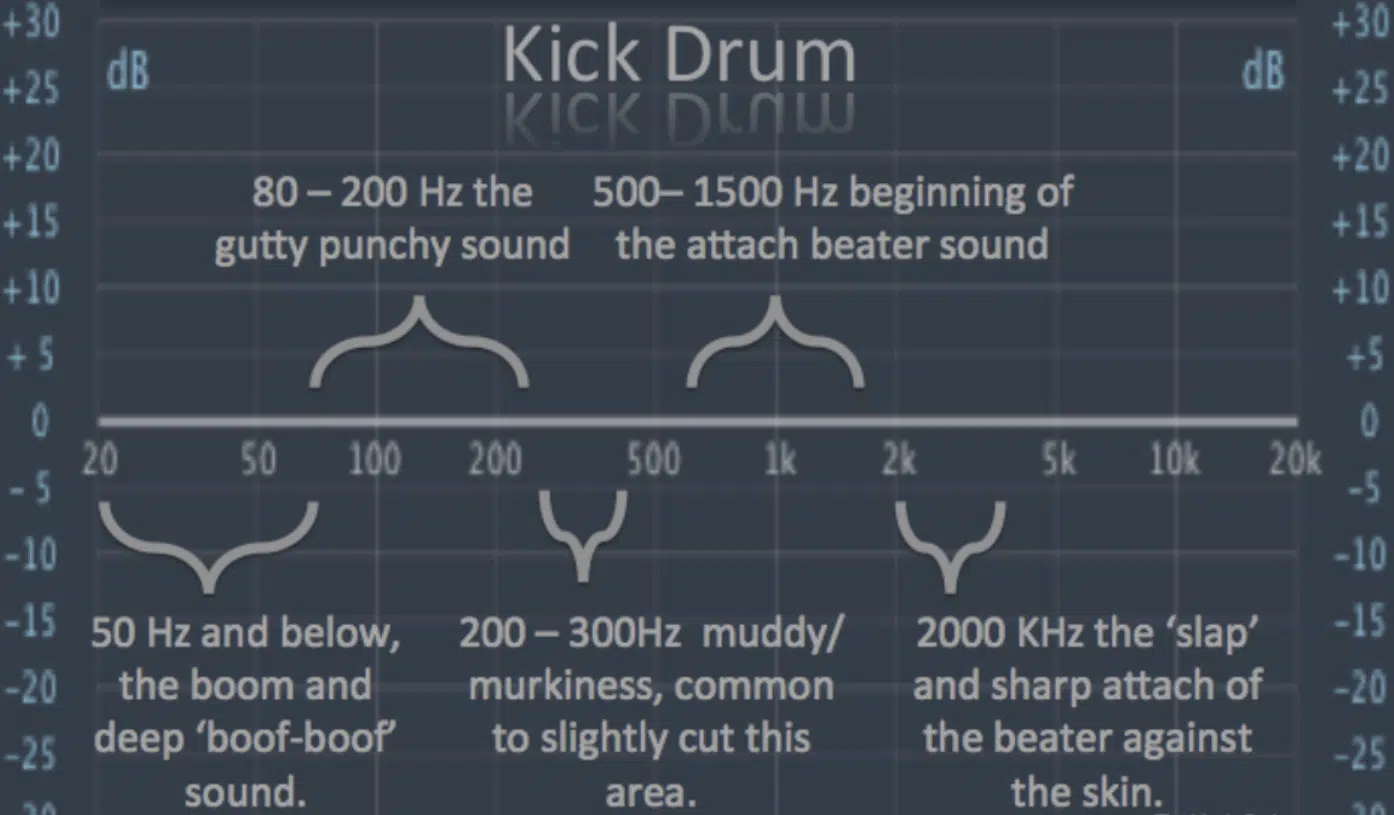
How to EQ Bass Drum Step by Step
Before touching an EQ plugin, listen to the bass drum with the full mix playing. Solo mode can help you find noise, but it often tricks you into making the kick too large or too bright.
Follow this basic process:
1. Clean the Unwanted Low End
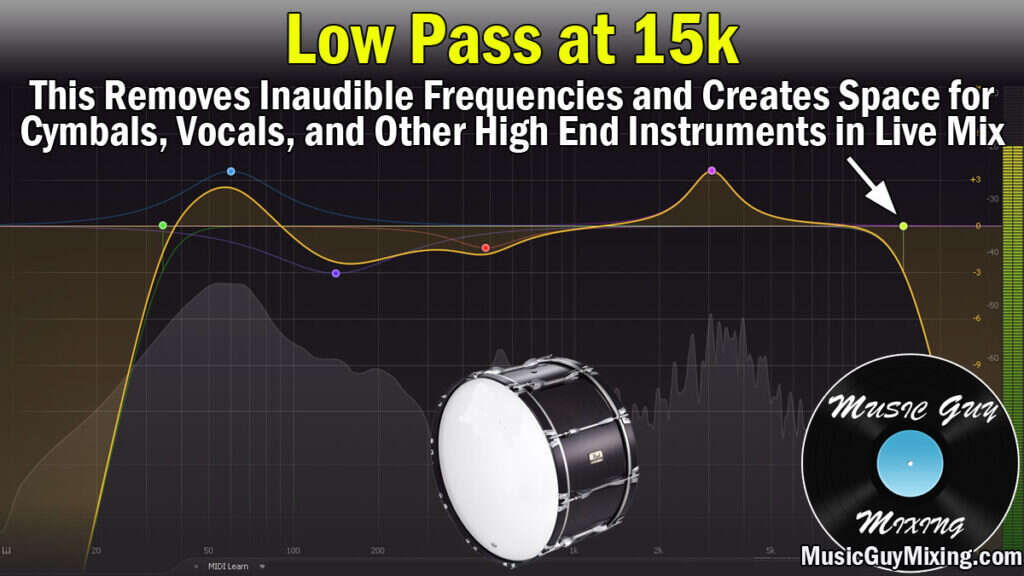
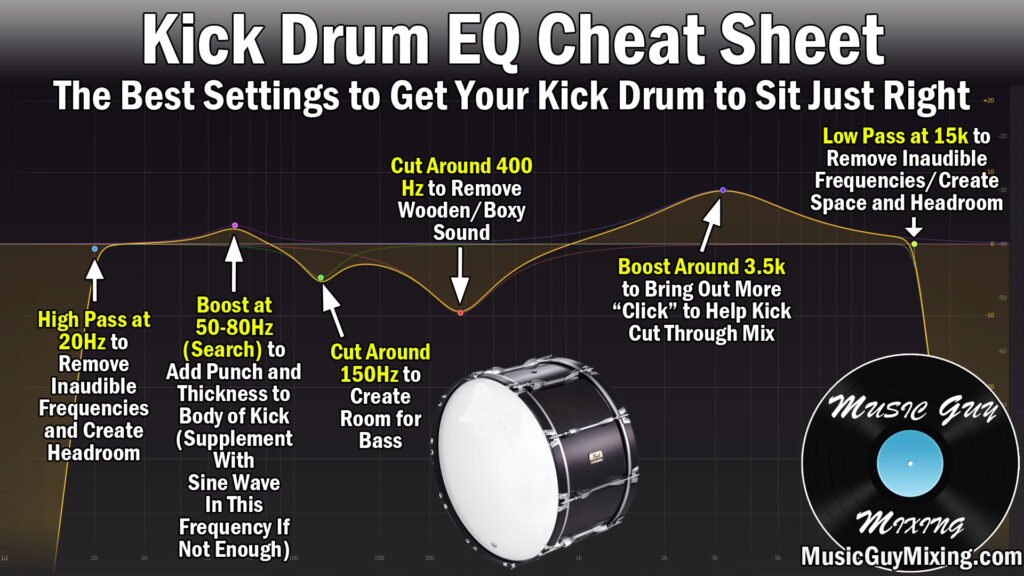
Start with a high-pass filter only if the kick contains useless subsonic energy. Try a gentle filter around 20 to 30 Hz, then listen carefully.
Do not remove useful low-end power. A steep filter set too high can make the bass drum feel small. The correct setting depends on the recording and the key of the song.
Subsonic rumble may come from:
• Microphone movement
• Stage vibration
• Air conditioning
• Poor room isolation
• Unwanted preamp or recording noise
A high-pass filter is useful for cleanup, but it should not become a habit. If the kick loses depth, lower the filter frequency or use a gentler slope.
2. Find the Main Low-End Weight
The main body of a bass drum often sits between 50 and 90 Hz. Many acoustic kicks have strong energy around 60 to 80 Hz, but there is no universal “correct” frequency.
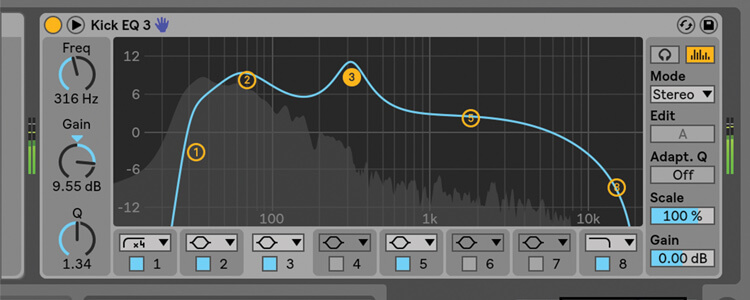
Use a narrow bell boost of about 4 to 6 dB. Sweep slowly through the low range until you find the point where the drum feels heavy and musical. Then reduce the boost or turn it into a small cut or boost.
A better final move may be only 1 to 3 dB. Large boosts can reduce headroom and make the mix feel slow.
3. Control Boxiness and Mud
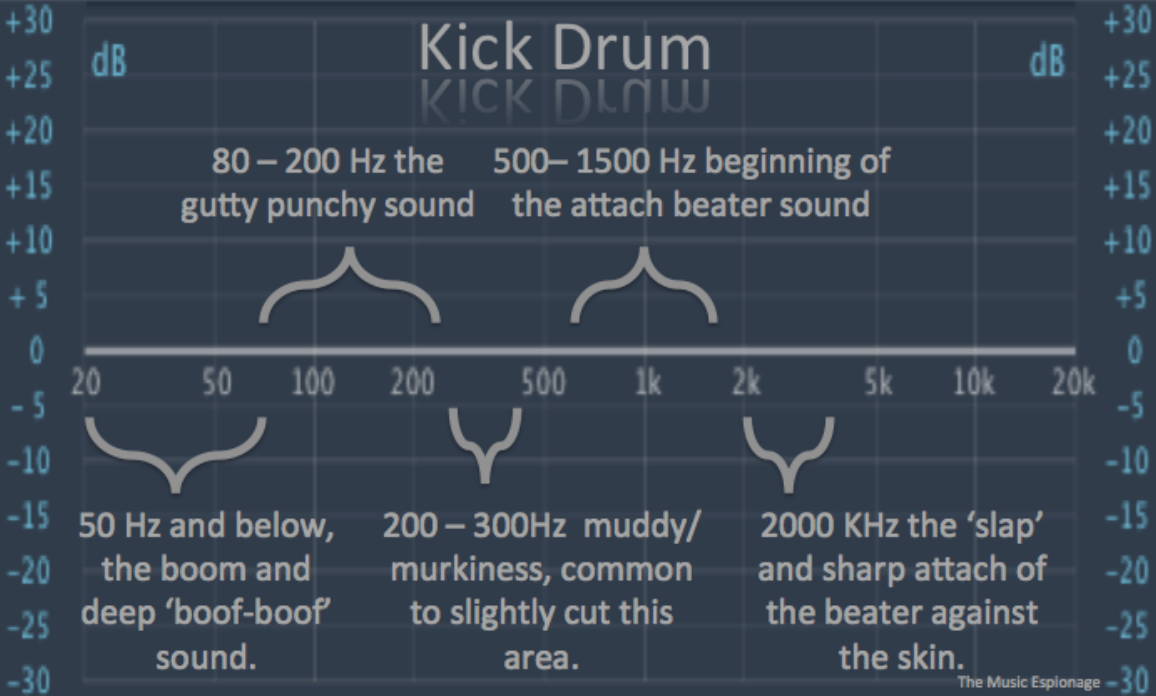
The area between 200 and 400 Hz often makes a kick sound cloudy, hollow, or boxy. This range is not always bad. It gives the drum character and helps it sound natural.
If the kick fights with the bass guitar, floor tom, or lower piano notes, try a small cut in this area. Sweep with a narrow band to find the problem, then widen the EQ band and use a gentle cut.
Common starting points include:
• 200 to 250 Hz for excessive boom
• 250 to 350 Hz for boxiness
• 350 to 500 Hz for a papery or hollow tone
These are starting points, not rules. Your ears should make the final decision.
4. Add Beater Attack
Kick drum attack often lives between 2 and 5 kHz. This is where you hear the beater hit the drum head.
A small boost can help the kick cut through dense guitars or synths. Too much boost can make it clicky, harsh, or tiring.
For a softer sound, reduce this area slightly. For metal, punk, or fast rock, a controlled boost may help each kick hit remain clear.
5. Check the Top End
Some bass drums have useful air and snap above 6 kHz. This can add detail, especially when the microphone captures the beater clearly.
However, excessive high-frequency boost can emphasize:
• Stick or beater noise
• Cymbal bleed
• Microphone hiss
• Plastic-like attack
Use a shelf or wide bell only when the recording needs more openness. Often, the 2 to 5 kHz range does more for clarity than a large high-shelf boost.

The Best Bass Drum EQ Frequencies
There is no fixed bass drum EQ chart that works for every recording. Still, frequency ranges can help you begin with purpose.
| Frequency range | Common effect | Possible action |
|---|---|---|
| 20 to 30 Hz | Subsonic rumble | Cut gently if unnecessary |
| 40 to 60 Hz | Deep sub weight | Boost carefully for large systems |
| 60 to 90 Hz | Main kick body | Boost or cut to shape weight |
| 100 to 150 Hz | Warmth and boom | Reduce if the kick feels loose |
| 200 to 400 Hz | Boxiness and mud | Cut slightly when cloudy |
| 500 Hz to 1 kHz | Hollow or papery tone | Cut if the shell sounds weak |
| 2 to 5 kHz | Beater attack | Boost for definition |
| 6 to 10 kHz | Click and brightness | Add only when needed |
These ranges overlap because every drum is different. The drum’s fundamental note may change with tuning, shell size, head choice, and recording method.
For example, a large kick tuned low may have strong energy near 55 Hz. A smaller kick tuned higher may feel more powerful around 80 Hz. This is why how to EQ bass drum cannot be reduced to one preset.

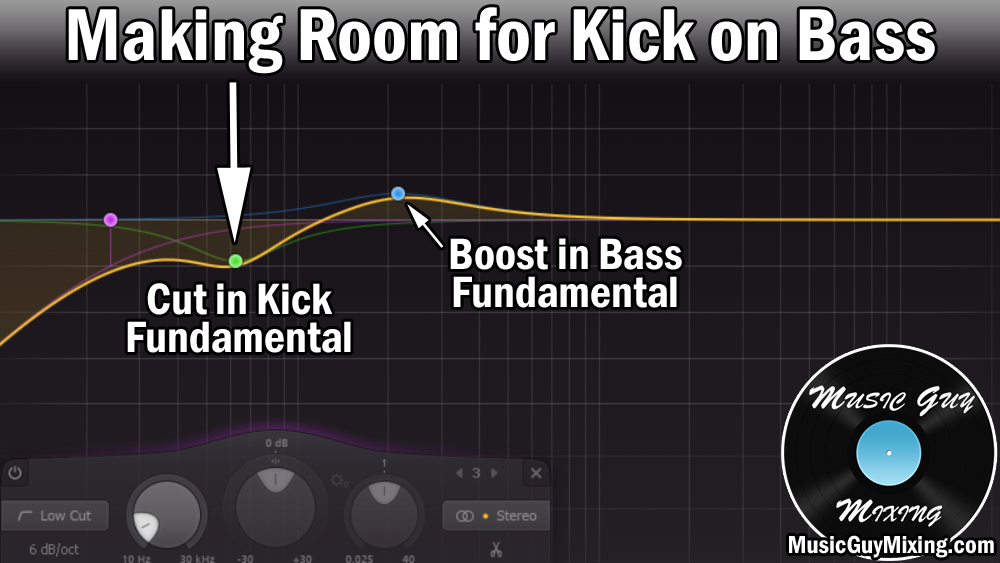
How to EQ Bass Drum and Bass Guitar Together
The bass drum and bass guitar often compete for the same low-frequency space. If both instruments dominate the same range, the mix can sound thick but unclear.
First, decide which instrument owns the deepest low end. In some productions, the kick owns 50 to 70 Hz and the bass guitar has more energy around 80 to 120 Hz. In others, the bass guitar owns the sub-bass while the kick gets more punch above it.
Try this process:
-
Listen to the kick and bass together.
-
Identify the frequency where the kick feels strongest.
-
Check whether the bass guitar masks that area.
-
Cut a small amount from the bass guitar where the kick needs room.
-
Add only a modest boost to the kick if it still lacks weight.
This approach is often better than boosting the kick by 6 dB. A small complementary cut in the bass guitar can create more space than a large kick boost.
Also listen to the rhythm and timing. A short, sharp kick may work well with a sustained bass note. A long kick can overlap with the bass and make the low end feel blurred.
Use Sidechain Compression When EQ Is Not Enough
EQ changes the tone, but it does not always solve timing problems. If the bass guitar continues to cover the kick, use gentle sidechain compression.
Route the kick into the bass compressor. Set a moderate ratio, a fast attack, and a release that follows the song’s groove. Aim for a small amount of gain reduction, often around 1 to 3 dB.
Do not use sidechain compression automatically. It can make the bass pump or lose natural movement. Use it when the kick and bass need clearer separation during the same musical moments.
How to EQ Bass Drum for Different Music Styles
The right bass drum tone depends on the arrangement, playback system, and musical style.
Rock and Pop
Rock and pop kicks often need solid low-end body and clear beater attack. A small cut around 250 to 350 Hz may reduce mud, while a gentle boost around 60 to 80 Hz can add weight.
If guitars are dense, a controlled boost around 3 to 4 kHz may help the kick speak through the mix. Be careful with too much click, since bright guitars already occupy this area.
Hip-Hop and R&B
Hip-hop and R&B often use a round, deep kick. The low end may be the main focus, but it still needs definition on small speakers.
You may need controlled energy around 50 to 70 Hz, along with a modest cut in the low mids. Check the kick on headphones, studio monitors, and a small speaker because sub-bass can sound very different across systems.
Electronic Music
Electronic kicks are often designed around a specific pitch. Use a spectrum analyzer to observe the shape, but trust your ears and the musical key.
A kick with too much sub energy can overload a limiter or master bus. A kick with too much click may sound disconnected from the rest of the track. Use EQ with saturation, compression, and envelope control rather than expecting EQ to create the whole sound.
Metal and Punk
Fast music needs a kick that remains clear at high speed. The low end should be controlled, while the beater attack may need emphasis around 2 to 5 kHz.
A narrow boost can make the kick click through distorted guitars. However, too much upper-mid energy creates fatigue and can make the drum sound like a typewriter.
Jazz, Folk, and Acoustic Music
Natural styles often benefit from less aggressive EQ. Preserve the body of the drum and avoid excessive sub-bass or click.
A gentle cut for room buildup may be enough. The goal is usually realism, not maximum impact.
Subtractive EQ Versus Boosting
Many engineers begin with cuts because removing a problem often sounds more natural than boosting a desirable trait.
For example, if the bass drum sounds muddy, cutting 3 dB around 300 Hz may reveal its low-end weight and attack. You may not need to boost 70 Hz at all.
A practical EQ order is:
• Remove rumble if it affects the mix.
• Cut muddy or boxy frequencies.
• Check the kick beside the bass guitar.
• Add low-end weight only if needed.
• Add attack only when the kick lacks definition.
This method protects headroom and reduces the risk of an overprocessed sound. It also helps you understand what the recording already offers.
One mistake I often see is boosting 60 Hz, 80 Hz, 100 Hz, and 4 kHz at the same time. The result may sound exciting in solo mode but becomes oversized and tiring in the full mix.
Using Compression, Saturation, and Dynamic EQ
EQ is only one part of bass drum processing. If the kick changes too much from hit to hit, compression may create a more stable sound.
A moderate compressor can:
• Even out inconsistent hits
• Increase apparent punch
• Control long low-frequency tails
• Help the kick sit steadily in the mix
Use the attack carefully. A very fast attack can remove the initial punch. A slightly slower attack may let the beater transient pass before the compressor reduces the body.
Saturation can add harmonics that make the kick easier to hear on small speakers. This is helpful when the deepest bass is not audible on phones or laptop speakers.
Dynamic EQ is useful when one or two kick hits become too boomy. Instead of cutting the low end all the time, set the band to reduce only when the problem appears.
The main limitation is that no processor can fix a badly recorded or poorly tuned drum completely. Editing, phase correction, sample blending, or re-recording may be better solutions.
Phase, Polarity, and Microphone Placement
Sometimes a bass drum sounds weak because of phase problems, not EQ. This is common when you use multiple microphones, room microphones, or a sample layered with an acoustic kick.
Try flipping the polarity of one microphone and listen for the stronger low end. If the sound changes dramatically, check the timing and phase relationship between the tracks.
You can also move one track slightly in time, but do this carefully. The goal is to improve the punch without creating an unnatural transient.
Microphone placement also changes EQ needs:
• Near the beater gives more attack.
• Near the resonant head gives more body and air.
• Deep inside the drum gives a focused, tight sound.
• Outside the drum gives more natural low end and room tone.
In recording sessions, I have often achieved a better kick by moving the microphone a few inches than by adding several EQ bands. Good placement is the first EQ.

Common Bass Drum EQ Mistakes
Learning how to EQ bass drum also means learning what not to do.
Boosting Too Much Sub-Bass
A huge boost below 60 Hz may sound powerful in headphones but overload the mix bus. It can also disappear on small speakers.
Use a spectrum analyzer as a guide, not a judge. If the kick feels strong and controlled, do not boost simply because the analyzer shows less energy than expected.
EQing in Solo Mode
Solo mode is useful for finding clicks, hum, and bleed. It is not the best way to judge whether the kick belongs in the song.
A kick that sounds slightly thin alone may fit perfectly with the bass. A huge solo kick may swallow the entire mix.
Using Extreme Narrow Cuts
Very narrow cuts can make the drum sound unnatural. Start with a moderate Q and widen the band when making musical decisions.
Use narrow filters mainly for clear problems, such as ringing or electrical noise.
Ignoring the Room
Room modes can make certain bass notes seem much louder than they are. Move around the room, check headphones, and compare with trusted reference tracks.
Do not assume your monitors tell the full story, especially in an untreated room.
Forgetting the Arrangement
The bass drum may not be the real problem. A bass synth, low guitar, tom, or piano may occupy the same range.
Mute the suspected competing track for a moment. If the kick suddenly becomes clear, solve the masking at the source.

A Practical Bass Drum EQ Workflow
Here is a simple workflow you can use in almost any DAW.
-
Set the kick fader at a useful level before processing.
-
Listen with the full mix, not only in solo.
-
Add a high-pass filter below the useful range if rumble exists.
-
Sweep the low end to locate the kick’s natural weight.
-
Reduce muddy frequencies around the low mids when necessary.
-
Add beater attack only if the kick lacks definition.
-
Compare the kick with the bass guitar and other low instruments.
-
Check phase if using more than one kick microphone or a layered sample.
-
Bypass the EQ and match the output volume.
-
Test the mix on several playback systems.
The output-volume step matters. A louder processed signal often seems better even when the EQ has not improved the tone. Matching volume helps you judge the actual change.
Save a version before making major moves. If the mix starts sounding smaller, harsher, or less natural, return to the earlier version and make fewer changes.
How to Know When Your Bass Drum EQ Is Finished
Your bass drum EQ is probably close when the kick feels clear without demanding attention. It should have enough weight to support the groove, enough attack to show its rhythm, and enough control to leave space for the bass.
Listen for these signs:
• The kick remains audible at low volume.
• The bass guitar still has its own identity.
• The low end does not feel blurry.
• The master bus does not pump unexpectedly.
• The kick sounds balanced on both headphones and speakers.
• The EQ works across different sections of the song.
Try bypassing the EQ every few minutes. If you cannot tell which version works better, the move may be unnecessary.
In my own mixes, the best kick EQ decisions are often surprisingly small. A 2 dB cut, a subtle attack boost, or a better arrangement can do more than a dramatic preset.
Frequently Asked Questions About How to EQ Bass Drum
What frequency should I boost on a bass drum?
Many kicks benefit from a gentle boost between 50 and 90 Hz for weight. The best point depends on the drum’s tuning, size, microphone, and the role of the bass guitar.
What frequency makes a kick drum punchy?
Punch often comes from a balance between low-end body around 60 to 100 Hz and attack around 2 to 5 kHz. Boosting only one range may make the kick boomy or clicky instead of punchy.
Should I cut bass drum frequencies?
Yes, cutting muddy or boxy frequencies can make the kick clearer. Try a small cut between 200 and 400 Hz when the drum sounds cloudy, but always confirm the change in the full mix.
Should the bass drum be louder than the bass guitar?
Not always. The balance depends on the genre and arrangement, but the kick and bass should be easy to distinguish from each other without one masking the other.
Do I need a high-pass filter on a bass drum?
Use one only when the kick contains unwanted subsonic rumble. A gentle filter around 20 to 30 Hz may clean the track, but setting it too high can remove useful low-end power.
Can EQ fix a weak bass drum?
EQ can improve balance, but it cannot fully repair poor tuning, phase cancellation, bad microphone placement, or an unsuitable performance. In those cases, editing, re-recording, layering, or phase alignment may work better.
How do I EQ an acoustic kick drum?
Start by finding its natural low-end body, then reduce boxiness if needed and add a small amount of beater attack. Keep the moves modest if you want a natural sound.
Conclusion
Good bass drum EQ is about balance, not extreme settings. Clean unwanted rumble, shape the main low-end weight, reduce mud, add attack when needed, and make room for the bass guitar.
The most reliable way to learn how to EQ bass drum is to practice with real mixes and compare every change in context. Start with small moves, check phase, test several playback systems, and trust what supports the song. Try these steps on your next session, then share your results or explore more mixing techniques to keep improving.

Senior Music Reviewer
Alex Carter is a seasoned music reviewer with over a decade of experience in the world of sound and instruments. Passionate about helping musicians and enthusiasts make informed choices, he brings sharp insights and in-depth knowledge to every review. From classical instruments to modern gear, Alex combines technical expertise with a love for music to deliver content that resonates with readers.
As a Senior Music Reviewer and expert author on Tuneluma.com, Alex is dedicated to sharing honest evaluations, practical advice, and thoughtful commentary to guide readers in their musical journey.