Best 7 String Guitar For Metal: Top Metal Picks
The best 7 string guitar for metal pairs tight low notes, strong pickups, and a stable neck for crushing riffs.
You know the feeling: your low B string sounds loose, your tuning drifts during a fast song, and big chords turn into mud. A good seven-string setup fixes much of that trouble. It gives metal players a wider range, firmer low notes, and more room for modern riffs. In this guide, I review one seven-string guitar kit and several seven-string string sets. Strings shape the feel and tone of any guitar, so they matter just as much as the body and pickups when you want the best 7 string guitar for metal.
Jim Dunlop Heavy Core 7-String 10-65

The Jim Dunlop Heavy Core set uses a 10-65 gauge range for seven-string guitar. That heavy .065 low string gives the bottom end more grip than a light set. I find this useful for palm-muted riffs, drop tunings, and hard picking. The set suits players who want a firm feel without moving all the way into very heavy gauges.
These strings focus on a bold metal voice with clear attack and solid sustain. The thicker bass string can help reduce the loose feel that often appears on a long-scale seven-string guitar. The trade-off is greater tension, so you may need a small truss rod or intonation check after installation. For the best 7 string guitar for metal, this is a practical first upgrade when the stock strings feel too soft.
Pros:
- Heavy .065 low string supports tight low riffs
- Good balance for drop tuning and standard seven-string tuning
- Strong pick attack for metal rhythm work
- Useful tension for players who dislike floppy bass strings
- Works well with high-gain amplifiers and noise gates
- Suitable for modern groove and nu-metal styles
Cons:
- Heavier tension may feel stiff to new seven-string players
- May require setup changes on some guitars
- Less ideal for players who prefer a very light top string
My Recommendation
I recommend this set to metal players who hit hard and tune below standard pitch. It is also a good choice for anyone whose low B or low A string feels unstable. The 10-65 spread gives a useful mix of bendable treble strings and a firm bass string. If you want a low-cost way to make your existing seven-string feel more controlled, this set offers strong value and is widely available online.
Ernie Ball Zippy Slinky 7-36

The Ernie Ball Zippy Slinky set uses an extremely light 7-36 gauge range. It is not a normal heavy metal set, but it can help players who want a very soft touch. The thin strings bend with little effort and feel fast under the fretting hand. They may suit a short-scale seven-string guitar or a player who spends more time on leads than low-tuned rhythm.
I would not choose this set as the default for aggressive drop-metal work. The low string has much less tension than a 10-60 or 10-65 set, so hard picking can make the note wobble. Still, it can be useful for bright, high-pitched parts, practice, or players with hand pain. It also shows why string gauge matters when you compare options for the best 7 string guitar for metal.
Pros:
- Very easy to bend and fret
- Comfortable for players with low hand strength
- Fast feel for lead guitar and solo practice
- Bright response at moderate playing volume
- Light tension can suit short-scale instruments
- Simple option for players moving from six-string guitar
Cons:
- Too light for many low-tuned metal rhythm styles
- Low string may feel loose under hard picking
- Can need careful setup and picking control
My Recommendation
I recommend this set only for a specific player. It fits beginners who want the softest possible seven-string feel, lead players who use standard tuning, and musicians who need low tension. It is not my pick for djent, death metal, or deep drop tunings. If comfort ranks above low-end punch, this set may work, but most metal players will get better control from a heavier set.
Ernie Ball Skinny Top Heavy Bottom 10-62

Ernie Ball’s Skinny Top Heavy Bottom set uses 10-62 gauges. This design keeps the upper strings fairly easy to bend while adding more mass to the low strings. That balance works well for metal players who switch between riffs and solos. I like this type of set because it avoids the common problem of a stiff top and weak bottom.
The .062 bass string gives a more secure feel for down tuning than a very light seven-string set. The plain strings still feel familiar to players who use 10-gauge six-string sets. As with any heavier bass gauge, check the nut, intonation, and relief after fitting the strings. For many players, this is a strong all-purpose choice for the best 7 string guitar for metal.
Pros:
- Balanced feel between lead and rhythm strings
- Heavy bass strings support lower tunings
- Comfortable .010 high string for common bends
- Good match for modern metal and hard rock
- Easy transition for players familiar with 10-gauge sets
- Useful for mixed playing styles and live work
Cons:
- May feel uneven to players who prefer one uniform gauge style
- Low string can need extra setup attention
- Not as firm as a .065 or .072 bass string for extreme tunings
My Recommendation
This set is best for the player who wants one flexible setup for riffs, chords, and solos. It suits standard seven-string tuning, drop A, and many related tunings when the guitar has a suitable scale length. I would choose it for a working metal guitarist who does not want to change strings for every song. Its practical balance and easy availability make it one of the safest purchases in this guide.
D’Addario NYXL 7-String 11-64
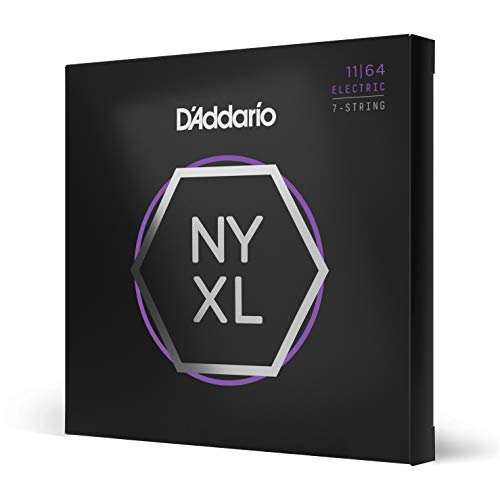
The D’Addario NYXL 11-64 set takes a firmer approach to seven-string playing. Its .011 high string and .064 low string give the instrument a focused, stable feel. NYXL strings are known for a strong steel core and a nickel-plated steel wrap. In daily use, that construction can help the strings feel lively while handling firm picking.
This set suits players who want dependable tuning and a clear midrange under gain. The 11-gauge top may feel more demanding during wide bends, but it rewards accurate fretting and strong rhythm control. I would pair it with a guitar that has a stable bridge and a proper setup. When someone asks me about the best 7 string guitar for metal, I often explain that a stable string set like this can reveal the guitar’s real potential.
Pros:
- Firm tension for accurate low-string rhythm playing
- Clear note separation under high gain
- Strong feel for alternate and down picking
- Durable construction for frequent practice and shows
- Good choice for players who use a heavier top string
- Works well with extended-range metal guitars
Cons:
- 11-gauge top can feel stiff for light-touch players
- May need a setup when replacing lighter strings
- Costs more than some basic nickel-wound sets
My Recommendation
I recommend NYXL 11-64 to serious rhythm players, touring musicians, and anyone who values stable tuning over a soft feel. It is especially useful for fast palm muting and songs that stay in low tunings. Players with small hands may prefer a lighter top string. Overall, this is a premium, dependable set for a well-adjusted seven-string guitar.
AKLOT Multi-Scale 7-String Guitar Kit
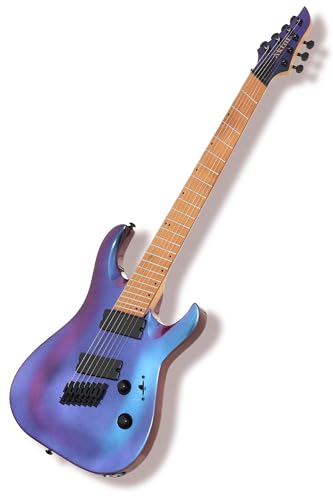
The AKLOT XRN-7 AD is the only complete guitar in this group. It uses a multi-scale layout, a roasted maple neck, an okoume body, dual humbuckers, and a string-through bridge. The kit also includes a gig bag, strap, and distortion pedal. For a new player, that package can remove several extra purchases from the first setup.
The multi-scale design places the bass side at a longer angle than the treble side. That can improve low-string tension while keeping the upper strings comfortable. The included pedal may help a beginner start making metal sounds, though experienced players may later upgrade the amp and effects. As an entry-level candidate for the best 7 string guitar for metal, the AKLOT stands out because it offers a full starting package rather than only a replacement part.
Pros:
- Complete seven-string guitar package for new players
- Multi-scale design supports low-note control
- Roasted maple neck offers a modern playing feel
- Dual humbuckers suit thick metal tones
- String-through bridge can support sustain and stability
- Includes useful starter accessories
Cons:
- Entry-level hardware may not satisfy touring professionals
- Multi-scale frets can take time to learn
- Included distortion pedal may have limited sound shaping
- Setup quality can vary between individual instruments
My Recommendation
I recommend this kit for a beginner who wants to enter seven-string metal without buying every item separately. It is also useful for a home player who needs a spare guitar and a basic practice rig. I would ask an experienced technician to check the neck, nut, action, and intonation after delivery. Among the listed products, this is the most direct answer for shoppers seeking a complete best 7 string guitar for metal package at an accessible starting price.
Ernie Ball Regular Slinky 10-56

The Ernie Ball Regular Slinky seven-string set uses a 10-56 gauge range. It offers a familiar feel for players who do not want a very heavy bass string. The top strings remain comfortable for bends, vibrato, and quick lead lines. The set also gives a balanced, general-purpose response for standard tuning.
I see this as a sensible baseline set rather than an extreme low-tuning choice. The .056 low string can work well for standard B and some moderate drop tunings, especially on a longer-scale guitar. It may feel too soft for very hard picking in drop G or lower. If you are testing the best 7 string guitar for metal for the first time, this set gives you a clear reference point.
Pros:
- Comfortable all-around gauge for many players
- Easy bends and vibrato on the treble strings
- Good starting point for standard seven-string tuning
- Familiar nickel-wound tone
- Works for both rhythm and lead parts
- Usually easy to find and replace
Cons:
- Low string may feel loose in deep tunings
- Less tension than heavy-bottom alternatives
- May not suit aggressive picking styles
My Recommendation
This set is best for beginners, standard-tuning players, and musicians who value comfort. It is also a good choice when you want to learn how a seven-string responds before moving to heavier gauges. I would not make it my first choice for very low modern metal. For standard B, classic metal, hard rock, and mixed practice, it offers reliable value.
Ernie Ball Regular Cobalt Slinky 10-56

The Ernie Ball Cobalt Slinky set keeps the familiar 10-56 gauge but changes the wrap material. Cobalt is designed to interact strongly with magnetic pickups, which can produce a vivid and forceful signal. I notice the benefit most when using passive humbuckers and a fairly clean amp setting before adding gain. The result can help riffs speak with more edge and presence.
This set gives you the same general tension as a regular 10-56 set, so it does not solve every low-tuning issue. Its main appeal is output feel and tonal response, not a massive bass gauge. It may suit players who want more bite from an otherwise dark guitar. For the best 7 string guitar for metal, this is an interesting choice when pickup response matters as much as string tension.
Pros:
- Strong magnetic response with compatible pickups
- Bright, clear attack for metal riffs
- Comfortable 10-56 gauge range
- Can add presence to darker-sounding guitars
- Useful for recording and layered rhythm parts
- Maintains a familiar Slinky playing feel
Cons:
- Not a heavy-bottom set for extreme drop tunings
- Some players may find the tone too bright
- Can cost more than regular nickel-wound strings
My Recommendation
I recommend Cobalt Slinky strings to metal players who want more attack and pickup response without moving to heavier tension. They fit standard tuning and moderate drop tunings well. They are especially useful on a warm guitar with passive humbuckers. If your main problem is a floppy low string, choose a heavier set instead. If your problem is a dull or buried tone, Cobalt is worth trying.
DR DDT7-11 Drop-Down 11-65

DR DDT7-11 strings use an 11-65 gauge range and target drop tuning. The heavy low string gives the bottom note a sturdy feel under hard picking. The 11-gauge high string also adds tension across the set. This design favors control, tuning stability, and a firm response over effortless bends.
I would look at this set when your songs spend much of their time below standard seven-string tuning. The extra tension can help the low string return to pitch after strong attacks. It may also make fast palm muting sound more even through a high-gain amp. You should still match the strings to the guitar’s scale length and have the nut checked if the current slots are narrow.
Pros:
- Designed for drop-down tuning needs
- Heavy .065 bass string resists a loose feel
- Firm response for palm-muted metal rhythm
- Good note focus through high gain
- Suitable for players with a strong picking hand
- Useful for low modern metal and hard rock
Cons:
- 11-gauge top can make bends harder
- May require a full professional setup
- Not ideal for players who prefer a soft feel
My Recommendation
This set is best for serious drop-tuning players who want the low string to stay firm. It suits djent, metalcore, groove metal, and other styles built around tight low riffs. I would choose it over a 10-56 set when tuning stability is the main concern. It delivers a focused metal feel, but beginners should allow time for the heavier tension.
Stringjoy Heavy Bottom Light 10-64

Stringjoy’s HVY107 set combines a 10-gauge top with a heavy .064 bottom. It follows the same useful idea as other hybrid sets: keep the high strings friendly and give the low strings more support. The set includes two packs, which can lower the cost per change. That matters to players who rehearse often or record several times each month.
The 10-64 layout offers a good middle ground between comfort and low-end control. It can make a seven-string guitar feel more versatile across standard and drop tunings. The tone should also stay clear when you add gain, provided the guitar and amp are set correctly. For shoppers seeking the best 7 string guitar for metal, this set is a smart option when you want practical balance and extra value.
Pros:
- Comfortable high strings with a strong bass side
- Useful 10-64 range for modern metal
- Two-pack provides better replacement value
- Good choice for mixed riff and lead playing
- Supports low notes without an overly heavy top
- Can fit many standard and drop-tuning setups
Cons:
- May need nut work on guitars made for light strings
- Not as heavy as a 12-72 set for extreme tunings
- Availability can vary by gauge and seller
My Recommendation
I recommend this set to players who want a comfortable top and a controlled low end. It is a strong choice for home recording, regular rehearsals, and live metal sets. The two-pack adds useful value for musicians who go through strings quickly. If 11-gauge tops feel too stiff but 10-56 feels too loose, this set may be the sweet spot.
Stringjoy Heavy Bottom Heavy 12-72

Stringjoy’s HVY127 set is the heaviest option in this review, with a 12-72 range. It targets players who need serious tension on the bass side. The .072 low string can feel much more stable during deep tuning and forceful picking. The set arrives as a two-pack, which is useful for players who change strings on a fixed schedule.
This is not a casual upgrade for every seven-string guitar. The heavy gauges can require a wider nut slot, bridge adjustment, and truss rod check. They also demand more left-hand effort, especially during bends and long practice sessions. Still, for very low metal tunings, the set can act like an anchor and keep the rhythm part clean.
Pros:
- Very firm .072 bass string for deep tuning
- Excellent control for hard rhythm picking
- Helps reduce low-note wobble and pitch drift
- Two-pack improves long-term string value
- Strong option for djent and extreme metal
- Supports a thick, focused low-end sound
Cons:
- Very stiff for many players
- May not fit a standard nut without modification
- Requires careful setup and intonation work
- Heavy tension can increase hand fatigue
My Recommendation
I recommend this set for experienced players who tune very low and pick with force. It is a specialist choice, not the best beginner set. Use it on a guitar with enough scale length and a bridge that can handle the tension. If you need maximum low-end control, this is one of the strongest options here; if you play standard tuning, choose a lighter set.
How I Judge a Seven-String Metal Setup
The phrase “best 7 string guitar for metal” can point to two different purchases. It may mean the guitar itself, or it may mean the strings that make a current guitar perform better. I separate those needs before I recommend anything. A complete guitar should have a stable neck, suitable scale length, useful pickups, and hardware that holds tune. A string set should match the tuning, picking force, and feel you want.
Scale length matters because longer scales place more tension on the same gauge. A 26.5-inch or multi-scale instrument often keeps a low B or low A clearer than a short-scale model. That does not make short-scale guitars bad, but they may need heavier strings for the same firmness. I also check whether the nut, bridge, and tuning machines suit the chosen gauge.
Pickups affect the final result, too. High-output humbuckers can push an amplifier harder, but output alone does not create a good metal tone. Clear note separation matters more when you play fast chords with lots of gain. A well-set pickup height, fresh strings, controlled gain, and a noise gate often improve the sound more than simply buying hotter pickups.
What String Gauge Should You Use?
For standard seven-string tuning, many players feel comfortable with a set around 10-56. This keeps the top easy to play and the low B reasonably firm. If you tune to drop A or use heavy picking, 10-62, 10-64, or 10-65 may work better. Players who tune lower may prefer 11-65 or 12-72.
Gauge is not a simple race toward thicker strings. A heavy string can improve control, but it can also make bends harder and place more stress on the neck and bridge. Your guitar’s scale length changes the result. A 25.5-inch guitar and a 27-inch multi-scale guitar will not feel the same with identical strings.
My practical advice is to move one step at a time. If 10-56 feels too loose, try a 10-62 or 10-64 hybrid set. If that still does not hold your tuning, move toward 11-65. After each change, check neck relief, action, tuning, and intonation. This small process helps you find the best 7 string guitar for metal setup for your hands and music.
How to Set Up a Seven-String for Metal
Start with a fresh set of strings and tune the guitar several times. Stretch each string gently, then tune again until the pitch stays stable. Check the neck relief by fretting the first and last fret and viewing the gap near the middle. A technician should handle truss rod work if you do not know how much adjustment is safe.
Next, check intonation. Compare the open note with the fretted note at the twelfth fret. If the fretted note is sharp or flat, the saddle may need to move. Heavy or hybrid strings can change intonation, so do not skip this step after changing gauges.
Set pickup height with the strings fretted at the last fret. Keep the bass side from sitting too close if the low string sounds boomy or pulls sharp. Lowering the pickup a little can improve clarity. Finally, adjust gain slowly. Too much gain hides mistakes and turns separate notes into a blur.
Best For Comparison
| Best for | Why |
|---|---|
| Complete beginner setup | The AKLOT kit includes a seven-string guitar and useful starter accessories. |
| Balanced modern metal feel | The Ernie Ball Skinny Top Heavy Bottom 10-62 set blends easy bends with stronger low-string control. |
| Very low tuning | The Stringjoy 12-72 and DR DDT 11-65 sets provide firm tension for deep metal tunings. |
Buying Guide: Finding the Best 7 String Guitar for Metal
Before you buy, decide how you will tune the guitar. Standard B tuning needs less tension than drop A, drop G, or lower. If your band uses several tunings, a multi-scale seven-string can offer more flexibility. It does not remove the need for the right string gauge, but it gives the bass side a helpful advantage.
Look for a neck that feels easy to reach. Seven-string necks are wider, and that change can surprise six-string players. A thin, stable neck may help during fast riffs, while a thicker neck can feel more solid to some players. There is no perfect neck shape for everyone, so comfort should guide the choice.
For pickups, dual humbuckers remain the common metal choice. A bridge humbucker should give clear attack and enough output for your amp. A neck humbucker can add weight for leads without becoming too soft. I prefer a pickup that keeps chord notes separate rather than one that simply sounds huge on a single low note.
Hardware deserves equal attention. A string-through bridge can offer a direct feel and good sustain, while a locking tremolo may support certain techniques but add setup work. Fixed bridges are easier for beginners and make alternate tuning changes simpler. Tuning machines should turn smoothly and hold the pitch after string stretching.
Do not ignore the amplifier. Even the best 7 string guitar for metal can sound poor through a weak or badly set amp. Start with moderate gain, enough bass to support the riff, and controlled treble for pick attack. Cut unwanted low mids if chords sound muddy. A good tone lets you hear each note, not just the noise around it.
Care Tips for Seven-String Metal Guitars
Wipe the strings after every practice session. Sweat and dirt shorten string life and can make the tone dull. Use a clean cloth and pay attention to the area under the low string. If a string feels rough, will not tune, or loses its clear sound, replace the whole set.
Store the guitar away from extreme heat and dry air. Fast changes in humidity can affect the neck and fretwork. A padded gig bag protects the finish and hardware during transport. If you use a heavy string set, check the guitar after a few days because the neck may settle into a new position.
Keep a record of your gauge and tuning. Write down the date of each string change and any setup adjustments. This simple habit makes it easier to find your best combination. It also helps you avoid buying a string set that felt wrong on your instrument.
FAQs Of best 7 string guitar for metal
What is the best string gauge for a seven-string metal guitar?
A 10-56 set works well for standard B tuning and a comfortable feel. For drop A or hard picking, try 10-62, 10-64, or 10-65. Very low tunings may need 11-65 or 12-72. Match the gauge to your guitar’s scale length and setup.
Is a seven-string guitar hard to play?
It takes a short adjustment period because the neck is wider and the low string adds new note choices. Start with simple riffs and keep your thumb relaxed. Most players become comfortable after regular practice.
Are multi-scale guitars better for metal?
They can be helpful, especially for low tunings. The longer bass scale adds tension to the low strings, while the shorter treble scale keeps bends comfortable. Some players need time to adjust to the angled frets.
Can I use six-string guitar strings on a seven-string guitar?
No. A seven-string guitar needs a set with a seventh string. A six-string set leaves one position empty and may not provide the right low-string gauge. Always confirm the package says seven-string.
How often should I change seven-string guitar strings?
Change them when they sound dull, feel rough, or stop holding tune. Players who practice daily may change them every few weeks. Occasional players may get several months, depending on sweat, storage, and playing time.
Final Verdict: Which Should You Buy?
The AKLOT is the best 7 string guitar for metal here because it offers a complete multi-scale guitar kit. For an existing instrument, I prefer the Ernie Ball 10-62 set for its useful balance.
Choose DR or Stringjoy heavy sets for very low tuning. Choose lighter sets for comfort and standard tuning. The right setup turns a seven-string into a tight, clear metal tool.

Senior Music Reviewer
Alex Carter is a seasoned music reviewer with over a decade of experience in the world of sound and instruments. Passionate about helping musicians and enthusiasts make informed choices, he brings sharp insights and in-depth knowledge to every review. From classical instruments to modern gear, Alex combines technical expertise with a love for music to deliver content that resonates with readers.
Similar Posts
Is Guitar Hero Coming Back: Latest News And Future Updates
Is Guitar Hero coming back? Explore the latest news, rumors, and signs of a possible revival for the iconic music game franchise.
Best Small Amplifier For Electric Guitar: Top Compact Picks
Find the best small amplifier for electric guitar with top compact picks for practice, recording, portability, and powerful tone at home.
Ernie Ball Earthwood Acoustic Guitar Strings Review: Rating
Honest ernie ball earthwood acoustic guitar strings review — tone, feel, durability and value tested to help you choose the best set for your acoustic.