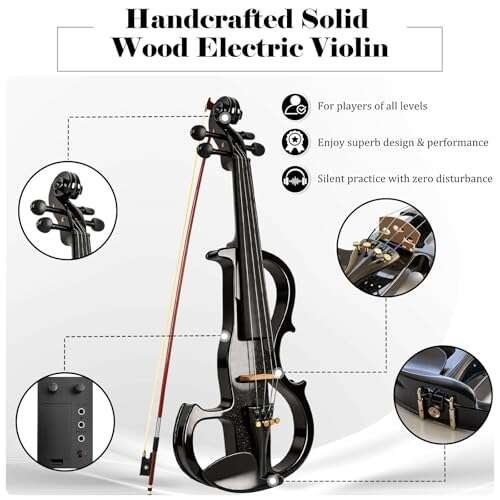
Choose an electric violin by matching its feel, sound, electronics, and setup to your playing goals and budget.
Learning how to buy an electric violin can feel confusing because many models look alike but play very differently. The right choice depends on more than price or appearance. You also need to consider the violin’s pickup, neck shape, bridge, strings, output options, comfort, and intended use. This guide explains how to buy an electric violin with practical advice for beginners, students, performers, and recording artists.

Decide Why You Want an Electric Violin
The best way to learn how to buy an electric violin is to begin with your purpose. An instrument for quiet practice may not need the same features as one for a stage show or studio session.


Think about where and how you will play:
• Quiet practice at home: You may want a headphone output, volume control, and an ergonomic body.
• Live performance: You will need a reliable pickup, strong output, durable hardware, and easy access to controls.
• Recording: Look for a clean signal, low noise, and a tone that works well with an audio interface.
• Effects and looping: Choose a model with a standard output and a pickup that responds well to pedals.
• Classical practice: Prioritize a familiar neck, good bow response, and a setup close to an acoustic violin.
An electric violin is not always silent. The strings and body still make some acoustic sound, although it is much quieter than a standard violin. If you need near-silent practice, check for a headphone output and a proper headphone volume control.
In my experience helping players compare instruments, many buyers focus on the body shape first. That is often a mistake. A stylish design cannot fix a poor bridge, uncomfortable neck, or weak pickup.

Understand How Electric Violins Work
An electric violin changes string vibration into an electrical signal. That signal travels through a cable to an amplifier, audio interface, mixer, effects pedal, or headphones.
Most electric violins use one of these pickup types:


Piezo pickups
Piezo pickups sit under the bridge or inside the bridge area. They sense pressure and vibration from the strings.
Advantages include:
• Strong resistance to feedback
• Good performance at high volume
• Simple wiring
• Clear attack for amplified playing
Limitations include:
• A sharper or more direct tone
• Greater sensitivity to bridge setup
• Possible differences in volume between strings
Piezo systems are common in stage violins because they can handle loud environments well.
Magnetic pickups
Magnetic pickups use magnets to sense vibration from suitable strings. They are common in some electric string instruments.
Advantages include:
• A smooth and focused sound
• Good compatibility with effects


• Less sensitivity to body noise
Limitations include:
• Possible limits on string choice
• A tone that may feel less acoustic
• Less common in traditional violin designs
Microphone systems
A small microphone captures the sound from the instrument. This can produce a more natural tone, but it may also pick up room noise and feedback.
Microphones can work well at low volume or in controlled studio settings. They are often less practical for loud bands.
Active and passive electronics
Passive instruments do not need a battery for the pickup system. Active instruments use a battery-powered preamp.
Active systems may provide:
• Higher output
• Built-in tone controls
• Better signal shaping
• Lower need for external preamps
However, active electronics need regular battery changes. Always check whether the instrument uses a 9-volt battery, button cell, or another battery type.
Understanding these parts makes it easier to compare electric violins. The pickup is the instrument’s voice, while the amplifier and effects chain shape the final sound.


Choose the Right Number of Strings
Most electric violins have four strings, like a standard violin. Some models have five, six, or even seven strings.
A four-string electric violin is usually the safest choice for:
• Beginners
• Classical players
• Students moving from acoustic violin
• Players who want a familiar fingerboard
A five-string violin adds a low viola-style C string. This can expand your range and make the instrument useful for folk, jazz, rock, and improvisation.
Six- and seven-string models offer an even wider range. However, they may have a wider neck and require more adjustment. The extra strings can also affect bow control and left-hand technique.
If you are unsure how to buy an electric violin with extra strings, try a five-string model before buying a six- or seven-string instrument. More strings are not always better. They are useful only if you will use the added range.
New players often assume that a larger range means faster progress. In practice, a familiar four-string layout may help you build cleaner intonation and better bow control.

Check the Violin’s Feel and Physical Setup
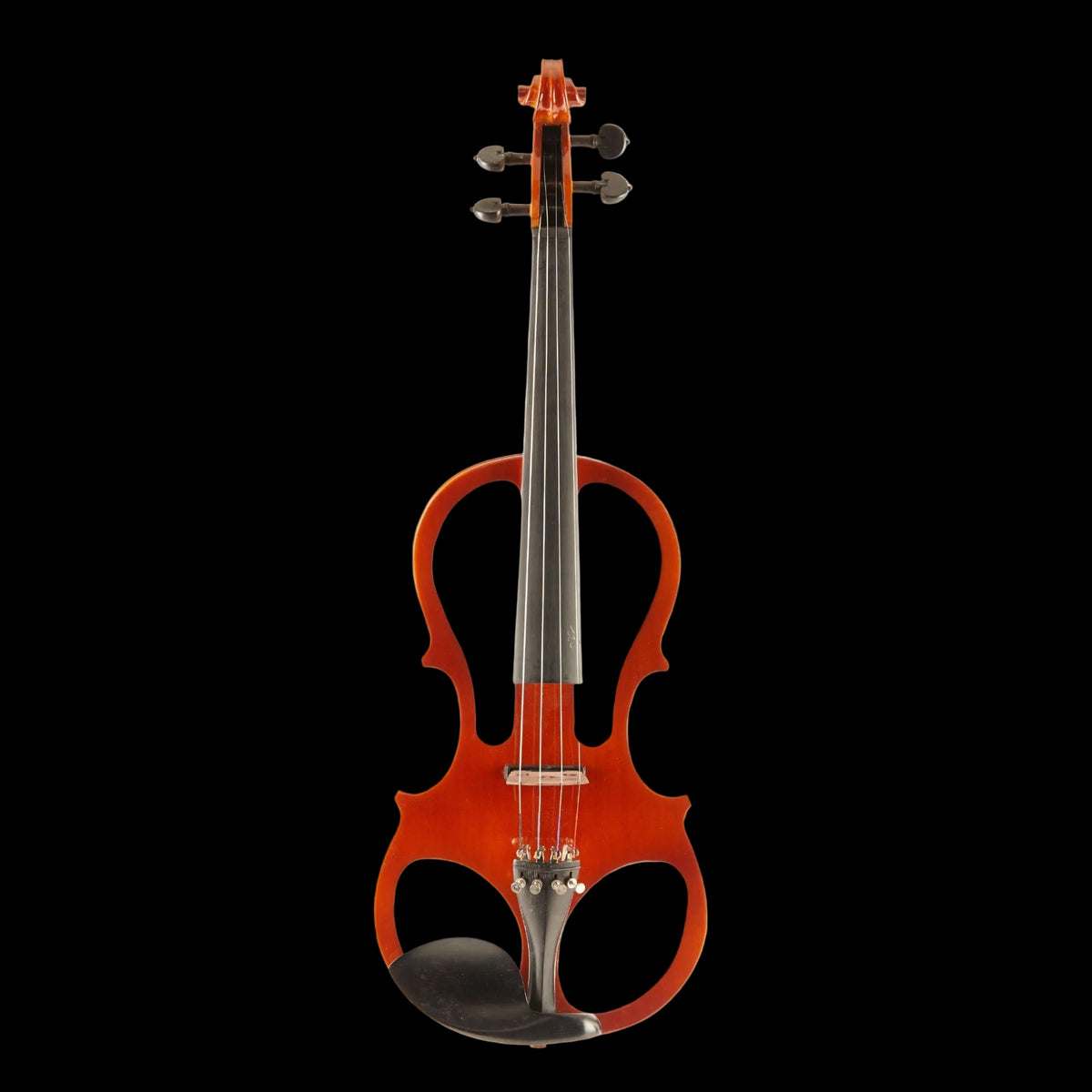
An electric violin should feel stable under your chin and shoulder. Its body may be smaller or more open than an acoustic violin, but the neck should still feel natural.
Check these physical features:
Neck shape
The neck should feel smooth, even, and comfortable. Run your thumb along the back of the neck. Watch for rough spots, sharp edges, or sudden changes in shape.


Fingerboard
Many electric violins use an ebony fingerboard, while others use synthetic materials or painted wood. The material matters less than the finish and accuracy.
Look for:
• Smooth edges
• A clean curve across the fingerboard
• No deep grooves or rough marks
• Even string height
Bridge
The bridge transfers string vibration to the pickup and body. It should sit straight and fit the instrument correctly.
A bridge that leans forward may warp or fall. A bridge that is too high can make the violin hard to play. A bridge that is too low may cause buzzing.
Chin rest and shoulder rest
Some electric violins use standard violin chin rests and shoulder rests. Others have unusual body shapes that limit your choices.
Bring your own shoulder rest to a store if possible. This gives you a more accurate sense of comfort.
Weight and balance
An electric violin can feel heavier than an acoustic violin because of its electronics and body construction. Hold it in playing position for several minutes.
A model that feels fine for one minute may strain your neck after a full rehearsal. Comfort is not a luxury. It affects posture, stamina, and intonation.

Test the Electric Violin Before Buying
If you can visit a music store, test the violin both without amplification and through an amplifier. If you buy online, choose a seller with a clear return policy.
Use this simple test:


-
Tune every string.
-
Play open strings with slow bows.
-
Play scales across the full fingerboard.
-
Test soft, medium, and loud bow pressure.
-
Listen for buzzing or uneven volume.
-
Check every control and output.
-
Try the instrument with headphones if supported.
-
Connect it to an amplifier at a moderate volume.
-
Move while playing to check cable noise and balance.
-
Play for at least 15 minutes.
Listen for a clean signal and even response. The instrument should not suddenly become harsh when you bow harder.
Try both pizzicato and arco playing. A violin that sounds acceptable with a bow may produce an unpleasant click when plucked.
When I compare instruments, I pay close attention to the highest notes and the lowest string. Problems often hide at the edges of the range. I also test long, slow notes because they reveal uneven volume better than fast songs do.
Evaluate the Sound and Pickup Quality
The sound of an electric violin depends on the instrument, pickup, preamp, cable, amplifier, and effects. A violin may sound thin through one amplifier and warm through another.
Do not judge an electric violin only by a product video. Online videos use different microphones, rooms, strings, equalizers, and effects. The recording may not represent the raw instrument.
A good test should answer these questions:
• Does each string have similar volume?
• Is the attack too sharp or too soft?
• Does the tone stay clear at high volume?
• Does the sound become harsh under strong bow pressure?
• Is there unwanted hum or hiss?
• Does the pickup respond well to vibrato?
• Can you shape the tone with the instrument’s controls?
A raw electric violin signal often sounds more direct than an acoustic violin. Many players use a preamp, equalizer, reverb, delay, chorus, or amp model to create a fuller sound.
This is normal. An electric violin is part of a signal chain, not a complete acoustic orchestra inside a small body.

Learn Which Connections You Need
Before you buy, check every connection on the violin.
Standard output
A 1/4-inch output is the most common connection. It works with many amplifiers, pedals, mixers, and audio interfaces.
Headphone output
A headphone output is useful for quiet practice. Check whether the headphones connect directly or require a separate device.
Some instruments offer an auxiliary input. This lets you play along with music from a phone or music player.
USB connection
A USB output may allow direct connection to a computer. This can be useful for recording, virtual instruments, or digital effects.
USB features vary widely. Some connections carry audio, while others are used only for power or data. Read the product specifications before assuming it works as a recording interface.
Wireless systems
A wireless transmitter can make stage movement easier. However, wireless systems add cost, battery needs, and possible signal problems.
For a first electric violin, a reliable cable is often the simpler choice. You can add wireless equipment later.

Set a Realistic Budget
Electric violins range from low-cost beginner models to professional instruments with custom electronics and hand-finished setups.
Your budget should include more than the violin. You may also need:
• Bow
• Rosin
• Case
• Shoulder rest
• Instrument cable
• Headphones
• Amplifier or preamp
• Spare strings
• Batteries
• Effects pedals
• Professional setup
A very cheap instrument can appear attractive, but repairs and upgrades may cost more than expected. Common problems include poor tuning machines, noisy electronics, uneven frets or fingerboards, and weak output jacks.
A mid-priced instrument from a respected maker may offer better value than a low-cost model with many features. Focus on playability and reliable electronics before decorative details.
If your budget is limited, spend first on a good setup and comfortable playability. A basic electric violin with a strong setup can be more enjoyable than an expensive model that needs major adjustment.

Compare New, Used, and Custom Instruments
A new electric violin gives you a warranty and a cleaner buying process. It may also come with a return window and customer support.
A used instrument can offer better value, but inspect it carefully. Ask the seller:
• How old is the instrument?
• Has it ever been repaired?
• Does every control work?
• Is the battery compartment clean?
• Is the output jack loose?
• Are the original case and accessories included?
• Why is the owner selling it?
Check the body for cracks, loose parts, and damaged screws. Plug it in and move the cable gently. A sudden crackle may indicate a worn output jack.
Custom electric violins can offer excellent craftsmanship and unique tone options. They usually cost more and may have longer wait times. A custom instrument makes sense after you understand your preferred neck shape, string count, pickup style, and tone.
For most first-time buyers, a well-supported production model is the easiest choice.
Choose Strings Carefully
Strings strongly affect tone, feel, and response. Electric violins can use many of the same string types as acoustic violins, but the pickup may respond differently to each set.
Steel-core strings often provide a direct attack and stable response. Synthetic-core strings may offer a warmer feel. The best option depends on the violin and your playing style.
Do not change strings immediately after buying unless needed. First learn how the instrument responds with its current setup. Then change one factor at a time.
If you test several string sets at once, it becomes difficult to know what improved the sound. Keep notes about the brand, tension, tone, and playability.
Also confirm that the strings are suitable for the pickup system. Some magnetic systems may require specific string materials.
Pick an Amplifier or Headphone Setup
An electric violin needs a suitable way to produce sound. A standard guitar amplifier may work, but it may not provide the clearest or most natural result.
Many violin players prefer:
• Full-range acoustic instrument amplifiers
• Keyboard amplifiers
• Small powered speakers
• Audio interfaces
• Dedicated violin preamps
A clean, full-range system usually preserves more detail. Guitar amplifiers can add useful color, especially for rock and experimental music, but they may shape the tone heavily.
For private practice, headphones can be convenient. Closed-back headphones reduce sound leakage, while open-back headphones may feel more natural but allow more room sound.
Avoid turning the volume too high. Long exposure to loud sound can damage hearing. Use moderate levels and take regular breaks.
Watch for Common Buying Mistakes
Knowing what not to do is a major part of learning how to buy an electric violin.
Buying based only on appearance
A dramatic body design may look exciting, but it does not guarantee good playability or sound.
Ignoring the setup
Even a quality violin may need bridge adjustment, soundpost work, string changes, or control inspection. A poor setup can make a good instrument feel broken.
Choosing too many strings
Extra strings add range, but they can also increase weight and change technique. Buy the number of strings you will actually use.
Forgetting the full signal chain
A violin may sound weak through a poor cable or unsuitable amplifier. Test the whole setup when possible.
Skipping the return policy
Online shopping involves uncertainty. A return window protects you if the instrument arrives damaged or does not suit your playing style.
Expecting an acoustic tone without processing
Electric violins often need equalization, reverb, or a preamp. This does not mean the instrument is poor. It means amplified tone works differently.
Buying without trying the neck
A comfortable neck supports better technique. If you cannot test the violin, study detailed photos and confirm the seller’s return terms.
Use This Electric Violin Buying Checklist
Save this checklist before visiting a store or placing an online order.
Playing and comfort
• Is the neck comfortable?
• Does the violin balance well?
• Can you hold it without shoulder or neck strain?
• Does the bridge feel properly shaped?
• Can you use your preferred shoulder rest?
Sound and response
• Is every string clear?
• Is the volume even across the strings?
• Does the pickup handle soft and loud playing?
• Is there unwanted hum or buzz?
• Does the violin respond well to vibrato and pizzicato?
Electronics
• Does the output work correctly?
• Are the controls easy to reach?
• Does the battery compartment close securely?
• Is a headphone output included?
• Does the instrument work with your amplifier or interface?
Ownership
• Is the case included?
• Are a bow and cable included?
• Does the seller offer a warranty?
• Is there a return period?
• Can a qualified technician service the instrument?
This checklist prevents an emotional purchase from becoming an expensive lesson.
Consider Maintenance and Repairs
Electric violins need many of the same care habits as acoustic violins. Wipe rosin dust from the strings and body after each session. Store the instrument in a dry case away from extreme heat and moisture.
Never leave a battery inside the instrument for a long period if you will not play it. A leaking battery can damage the electronics.
Have a qualified violin technician inspect the instrument if you notice:
• Buzzing
• Uneven string height
• Tuning problems
• A leaning bridge
• Crackling from the output
• Sudden volume loss
• A loose jack
Do not spray cleaner into the output jack or control openings. Electrical parts need careful service.
A professional setup is especially important for a new electric violin. The technician can check bridge fit, string height, tuning pegs, tailpiece alignment, and pickup balance.
How to Buy an Electric Violin Online
Buying online can work well if you research the seller and understand the return terms.
Start with the manufacturer’s specifications. Check the scale length, string count, pickup type, output options, body material, weight, and included accessories.
Then read customer reviews with care. Look for repeated comments about:
• Tuning stability
• Neck comfort
• Pickup noise
• Bridge quality
• Battery access
• Customer support
One review may reflect a single defective unit. Several similar reviews may reveal a pattern.
Watch demonstration videos from more than one source. Favor videos that show clean playing without heavy effects. If possible, ask the seller whether the video uses the raw signal or added processing.
Before paying, confirm:
• The exact model and color
• The included accessories
• Shipping insurance
• Return shipping costs
• Warranty coverage
• Restocking fees
A return policy is one of the most important features when you cannot play the violin before buying it.
How to Buy an Electric Violin as a Beginner
Beginners should choose an instrument that supports good habits. A simple four-string model with a comfortable neck is often easier to learn on than a complex multi-string instrument.
Look for:
• Standard violin spacing
• Familiar tuning
• A stable bridge
• Low electronic noise
• A clear warranty
• Easy access to replacement strings and parts
You do not need a large effects setup at first. Start with a tuner, cable, headphones or a small amplifier, and a dependable bow.
Remember that an electric violin will not correct poor finger placement or bow control. It can make practice more enjoyable, but you still need regular lessons and careful listening.
If possible, take a teacher or experienced player when shopping. A second set of ears can notice buzzing, uneven response, or poor intonation that a new player may miss.
How to Buy an Electric Violin for Stage Performance
Stage players need reliability above all else. A beautiful tone means little if the output fails during a performance.
Choose a model with:
• A strong output jack
• Secure tuning machines
• Low feedback at performance volume
• Easy-to-reach controls
• A comfortable strap or support option
• A durable case
Test the violin with the same type of amplifier or sound system used on stage. Walk around while playing. Move the cable gently and listen for crackle.
Carry backup essentials to every show:
• Spare strings
• Spare cable
• Fresh battery
• Rosin
• Tuner
• Small screwdriver
• Backup instrument plan
One practical lesson I often share with performers is to test the complete setup before the event, not during sound check. Small problems are easier to solve at home than under stage lights.
How to Buy an Electric Violin for Recording
Recording places different demands on an electric violin. Low noise and a stable signal are often more important than maximum volume.
You may connect the violin to an audio interface, mixer, preamp, or digital effects unit. Record a dry signal first if you want flexibility during mixing.
Listen for:
• Background hum
• Finger noise
• Bow scratch
• Uneven string output
• Harsh high frequencies
• Excessive compression
A clean recording does not always sound exciting by itself. Engineers often add equalization, reverb, delay, or amp modeling later.
Record short samples with different bow speeds and pressure. This helps you hear how the instrument behaves across real playing situations instead of judging it from one sustained note.
Frequently Asked Questions About How to Buy an Electric Violin
Is an electric violin good for beginners?
Yes, an electric violin can suit beginners, especially those who need quiet practice. Choose a comfortable four-string model with a familiar neck and reliable setup.
Do electric violins sound like acoustic violins?
Not exactly. An electric violin produces a pickup-based signal, so it often sounds more direct and focused than an acoustic violin. A preamp, amplifier, and effects can create a warmer or more natural tone.
Can I use headphones with an electric violin?
You can use headphones if the violin has a headphone output or connects to a device that provides one. Check the manual because some output jacks are not designed to drive headphones directly.
How much should I spend on an electric violin?
Spend enough to get reliable electronics, good playability, and proper support. Remember to budget for a bow, case, cable, headphones or amplifier, strings, and possible setup work.
Is a five-string electric violin better than a four-string model?
A five-string model gives you a lower C string and a wider range. It is better only if you need that range and feel comfortable with its wider fingerboard.
Can I connect an electric violin to a guitar amplifier?
Usually, yes, but the tone may change because guitar amplifiers color the sound. A full-range acoustic instrument amplifier or clean audio system may provide a more natural result.
Do electric violins need special strings?
Many electric violins use standard violin strings, but some magnetic pickup systems may require particular string materials. Always follow the manufacturer’s guidance before changing string types.
Conclusion
The right way to buy an electric violin is to match the instrument to your goals, playing style, comfort, and complete audio setup. Focus on the neck, bridge, pickup, string count, connections, signal quality, warranty, and return policy before you think about appearance.
Test the violin if you can. If you shop online, choose a trusted seller and protect yourself with a clear return window. A well-set-up instrument that feels comfortable will help you practice longer and play with more confidence.
Use the checklist in this guide, compare a few models, and ask an experienced player or teacher for help. Then explore local music stores, trusted retailers, and player reviews before making your purchase.

Senior Music Reviewer
Alex Carter is a seasoned music reviewer with over a decade of experience in the world of sound and instruments. Passionate about helping musicians and enthusiasts make informed choices, he brings sharp insights and in-depth knowledge to every review. From classical instruments to modern gear, Alex combines technical expertise with a love for music to deliver content that resonates with readers.
As a Senior Music Reviewer and expert author on Tuneluma.com, Alex is dedicated to sharing honest evaluations, practical advice, and thoughtful commentary to guide readers in their musical journey.