A 4/4 violin usually costs between $100 and $10,000 or more in the United States, depending on its quality, age, brand, materials, condition, and setup.
For most new players, a reliable full-size violin costs about $300 to $800. A used student violin may cost less, while a professional or hand-built violin can cost several thousand dollars.
Introduction
In the United States, the price of a 4/4 violin depends more on its build and setup than on its size. The term 4/4 means full size. It does not mean the violin is a higher grade or a professional model.
A low-cost violin may look attractive online but still need a new bridge, better strings, or proper adjustment. Those extra costs can change the real price by $100 to $300 or more.
This guide explains typical US prices, what each price range offers, hidden costs, and how to choose a violin without paying for features you do not need.

Typical 4/4 Violin Prices in the United States
Most buyers should expect to spend $300 to $800 for a dependable beginner 4/4 violin. Prices below or above that range can still be reasonable, but the buyer should check the instrument carefully.
| Violin category | Typical US price | Best for |
|---|---|---|
| Very basic new violin | $100–$250 | Short-term practice or limited budgets |
| Better student violin | $250–$800 | Beginners and school orchestra players |
| Advanced student violin | $800–$2,000 | Serious students and regular performers |
| Professional violin | $2,000–$10,000+ | Conservatory students and working musicians |
| Contemporary handmade violin | $5,000–$20,000+ | Advanced players and collectors |
| Vintage or antique violin | $1,000–$100,000+ | Buyers seeking history, sound, or collectibility |
These are broad retail ranges, not fixed prices. A sale, local market, brand, condition, or included accessories can move the price higher or lower.
A $150 violin is not always a poor choice. It may work for a child who is unsure about continuing. However, very cheap violins often have rough fingerboards, weak bows, poor tuning pegs, or bridges that were never fitted correctly.
The best value for many US beginners is a violin from a specialist string shop. A shop may charge more than a large online marketplace, but the instrument often includes basic setup and a chance to receive service after the sale.

What Does “4/4 Violin” Mean?
A 4/4 violin is the full-size violin used by most teens and adults. It is also called a full-size violin.
The fraction refers to violin size, not a quality rating. A 4/4 violin can be a $100 factory instrument, a $1,000 advanced student model, or a valuable antique.
Most young players move to a 4/4 violin when their arm length and hand size allow them to reach the instrument comfortably. Age alone does not determine the correct size. A teacher or violin shop can help measure the player.
A full-size violin may be too large for some children. If the player must stretch to reach the scroll, twist the wrist, or press hard to control the bow, a smaller violin may be safer and easier to play.
Before buying, check:
- The player can hold the violin without strain.
- The left hand can reach the notes with a relaxed wrist.
- The bow arm can move freely.
- The player can support the instrument without lifting the shoulder.
- A teacher or trained shop worker agrees that 4/4 is suitable.
A smaller violin is not a lesser instrument. It is the right tool for a smaller player.

What Changes the Price of a 4/4 Violin?
The main price factors are construction, setup, materials, condition, and the maker’s reputation.
Construction and materials
A violin is made from several types of wood. The top is commonly spruce. The back, ribs, neck, and scroll are often maple.
Low-cost violins may use inexpensive wood, thick varnish, or parts made by machine. More costly instruments usually receive more hand work. This may improve response, tone, projection, and balance, but price does not guarantee that every player will prefer the sound.
Setup
Setup means adjusting the violin so it can be played properly. It may include:
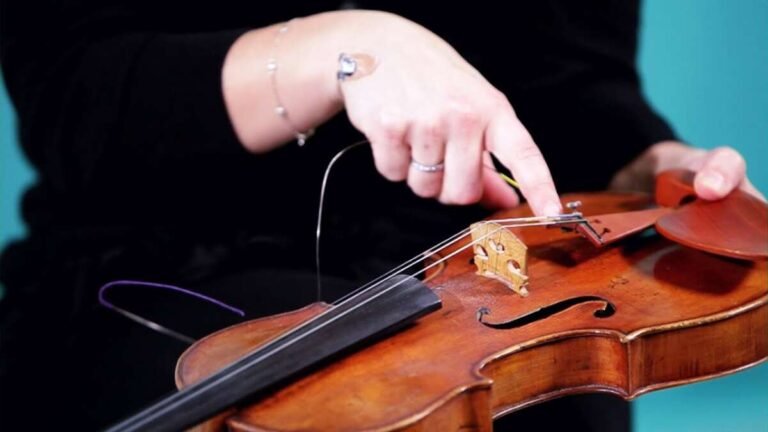
- Fitting the bridge
- Shaping the bridge feet
- Adjusting the soundpost
- Filing or smoothing the nut
- Checking the fingerboard
- Adjusting the pegs
- Installing suitable strings
- Checking the tailpiece and endpin
Setup is one of the most important parts of a violin’s value. A modest violin with a careful setup may feel better than a more expensive violin that was shipped without adjustment.
Strings and fittings
Strings can range from about $20 to more than $100 per set. Fine tuners, a tailpiece, pegs, chin rest, and endpin also affect the cost.
Upgraded parts do not automatically make a violin better. A professional should choose parts that match the instrument and the player.
Condition
A used violin may cost less than a new one, but repairs can erase the savings. Look for:
- Open seams
- Cracks in the top or back
- A warped or loose neck
- A bridge that leans
- Pegs that slip
- A fingerboard that needs work
- Signs of water or heat damage
- Missing or damaged purfling
Some cracks are repairable. Others can greatly reduce value. A qualified violin repairer should inspect an expensive used violin before purchase.
Maker and provenance
A known maker, documented history, or respected workshop can increase the price. A label inside the violin is not proof that the named maker built it.
Many old violins carry copied labels. The instrument should be judged by its construction, condition, sound, and documented history—not by a label alone.

How Much Should a Beginner Spend on a 4/4 Violin?
A beginner should usually budget $300 to $800 for the violin and basic setup, before adding lessons and maintenance.
For a player who is uncertain about continuing, renting can be a better choice. A US rental plan may cost roughly $15 to $40 per month, depending on the shop, location, insurance, and instrument level. Some plans allow rental payments to apply toward a later purchase.
A purchase in the $100 to $250 range can make sense when:
- The player needs a temporary instrument.
- The budget is very limited.
- The instrument comes from a shop that checks and sets it up.
- The player can return or exchange it.
- A teacher has approved it.
A $300 to $800 violin is often a safer starting point when the player plans to take regular lessons. It may offer better tuning stability, easier response, and fewer mechanical problems.
Avoid spending thousands of dollars at the start unless a qualified teacher or violin specialist has helped with the choice. A new player may not yet know which tone, neck shape, or response feels comfortable.

New vs. Used 4/4 Violins
A new violin gives you a known purchase date and, often, a store warranty. A used violin may provide better materials for the money, but its condition matters more than its age.
New violins
New instruments are often easier to compare by price. They may also include a case, bow, and basic warranty.
The main risk is buying a low-cost outfit that has not received proper setup. Ask the seller whether the bridge, soundpost, pegs, fingerboard, and strings were checked before shipping.
Used violins
Used instruments can offer strong value. A well-maintained violin that has been played for years may be more comfortable and responsive than a new instrument at the same price.
Ask the seller:
- Who made the violin?
- Where and when was it purchased?
- Has it had any cracks or major repairs?
- When was it last set up?
- Are the bridge and soundpost original or replaced?
- Can you return it after trying it?
- Is the bow included, and is the bow usable?
For a used violin priced above about $1,000, an inspection by a violin shop is a sensible precaution. The inspection fee may prevent a much larger repair bill.

The Hidden Cost of Buying a 4/4 Violin
The listed violin price is not always the total cost. A complete beginner outfit may need several items.
| Item | Common US cost |
|---|---|
| Violin setup | $75–$200+ |
| Beginner bow | Often included; $50–$300 separately |
| Protective case | Often included; $50–$300 separately |
| Shoulder rest | $20–$60 |
| Rosin | $5–$30 |
| Extra strings | $20–$100+ |
| Electronic tuner | $10–$30 |
| Music stand | $20–$80 |
| Annual maintenance | $50–$200+, depending on work |
These figures are general estimates. A shop may bundle accessories into an outfit, while a professional setup may cost more in a major US city.
A practical first-year budget might look like this:
- Violin outfit: $450
- Teacher-approved setup: $100
- Shoulder rest: $35
- Extra strings and rosin: $60
- Music stand: $40
- Repairs or adjustments: $50
Hypothetical total: $735, before lessons.
Lessons may become the largest ongoing expense. US private violin lessons often cost about $30 to $100 or more per session, depending on the teacher, location, lesson length, and experience.

How to Check a 4/4 Violin Before Buying
A good violin should be checked both as an object and as a musical tool. If possible, have a teacher or experienced player test it.
Check the body
Look for cracks, open seams, loose parts, and deep damage. Small marks in the varnish may be cosmetic. A crack near the soundpost or bridge area can be more serious.
The bridge should stand upright. It should not lean sharply toward the fingerboard or tailpiece.
Check the neck and fingerboard
The neck should feel stable. The fingerboard should be smooth and properly shaped. Deep grooves under the strings may cause buzzing or make the instrument difficult to play.
Check the pegs
Turn each peg slowly. It should hold the string at pitch without slipping or becoming extremely hard to turn.
Check the sound
Listen for a clear response across all four strings. Watch for:
- Persistent buzzing
- A weak or silent note
- Strong imbalance between strings
- Harsh sound under light bow pressure
- Notes that stop speaking easily
Some sound problems come from setup rather than from the violin itself. That is why a repairer or teacher should help judge an expensive instrument.
Check the return policy
A return period is valuable because a violin can feel different after several minutes of playing. A player may need time to notice tuning problems, discomfort, or poor response.
Get the return terms in writing. Ask who pays return shipping and whether setup fees are refundable.

Is an Expensive 4/4 Violin Worth It?
An expensive violin is worth considering when the player can identify a real benefit, such as better response, stronger projection, improved comfort, or a tone that suits their music.
Price alone does not prove that a violin sounds better. Tone is personal, and the player’s technique affects what they hear.
A higher-priced violin may make sense for:
- An advanced student preparing for auditions
- A college music major
- A professional performer
- A player who has tried several instruments
- Someone seeking a documented antique or contemporary handmade violin
A costly violin may not be worth it for a new player who cannot yet compare instruments. At that stage, money may produce more progress when spent on lessons, practice space, quality strings, and a reliable bow.
When comparing violins, focus on the complete result:
- Can you play comfortably?
- Does the violin respond at a soft volume?
- Does it remain clear when played loudly?
- Are the four strings balanced?
- Can a teacher hear useful potential?
- Does the price include setup and service?
The best choice is not always the most expensive one. It is the violin that meets the player’s needs without creating avoidable repair or financial problems.

Common Mistakes When Buying a Full-Size Violin
The most common mistake is choosing by appearance alone. A glossy finish or decorative case tells you little about playability.
Other common errors include:
- Assuming “4/4” means professional quality
- Buying from a marketplace without a return policy
- Ignoring the cost of setup
- Trusting an old label without authentication
- Buying a valuable violin without an inspection
- Choosing a child’s violin by age instead of arm length and comfort
- Replacing parts without asking a qualified repairer
- Testing only one instrument
- Comparing a violin with different strings and setup conditions
- Spending the entire budget on the violin and nothing on the bow
The bow deserves special attention. A weak or warped bow can make a good violin feel difficult to play. For a beginner, a sound violin outfit with a usable bow is often better than a more expensive violin paired with a poor bow.

A Simple 4/4 Violin Buying Budget
Use this budget as a starting point, then adjust it for your goals.
Budget option: $150–$300
Choose this range only when the seller offers a return policy and the instrument has been checked. Renting may be safer if the player is still deciding whether to continue.
Beginner option: $300–$800
This is the most practical range for many new players in the United States. Look for a well-set-up student instrument, a usable bow, and basic accessories.
Serious student option: $800–$2,000
This range can offer better response and tone. Try several instruments with a teacher before buying.
Advanced or professional option: $2,000 and above
At this level, personal testing, a specialist shop, and a written condition report become much more important. The instrument’s maker, history, repairs, and sound should all support the price.
If the budget is fixed, do not spend every dollar on the violin. Reserve money for setup, strings, a bow, lessons, and repairs.

Key Takeaways
- A 4/4 violin is a full-size violin, not a quality grade.
- A dependable beginner violin often costs $300 to $800 in the United States.
- Very basic models may cost $100 to $250, but setup quality matters.
- Advanced student violins often cost $800 to $2,000.
- Professional, handmade, and antique violins can cost $2,000 to $100,000 or more.
- Setup, strings, bow quality, lessons, and repairs add to the real cost.
- Renting may be the better choice for a player who is not sure about continuing.
- Have a teacher or violin repairer inspect expensive used instruments.
Frequently Asked Questions
Is a $100 4/4 violin good enough for a beginner?
It can be usable, but quality varies widely. Some $100 violins need so much setup work that the final cost becomes much higher. Buy only from a seller with a return policy, or have a teacher inspect it first.
Is a 4/4 violin suitable for every adult?
Most adults use a 4/4 violin, but not every adult has the same reach or comfort level. A violin teacher or shop can check arm length, hand position, and posture.
Should I rent or buy a 4/4 violin?
Rent if the player is unsure about continuing, is still growing, or needs access to shop support. Buy when the player has committed to regular study and can choose an instrument with help.
How much does a violin setup cost?
A basic setup in the United States often costs about $75 to $200 or more. Repairs, new strings, bridge work, or soundpost adjustments may raise the total.
Do expensive violins sound better?
Not always. Expensive violins may use better materials, more skilled workmanship, or have a respected history, but sound is personal. The player should compare instruments in person with a teacher or experienced player.
Can I buy a good 4/4 violin online?
Yes, but use a specialist seller with clear photos, setup details, and a reasonable return policy. Avoid treating a label, star rating, or low price as proof of quality.
Conclusion
For most beginners in the United States, a realistic budget for a good 4/4 violin is $300 to $800, including or allowing for basic setup. A cheaper violin may work for temporary use, while advanced and professional instruments can cost thousands.
Before buying, confirm the size, inspect the condition, test the sound, check the bow, and calculate accessory and repair costs. If you are unsure, ask a violin teacher or specialist shop to compare instruments with you.

Senior Music Reviewer
Alex Carter is a seasoned music reviewer with over a decade of experience in the world of sound and instruments. Passionate about helping musicians and enthusiasts make informed choices, he brings sharp insights and in-depth knowledge to every review. From classical instruments to modern gear, Alex combines technical expertise with a love for music to deliver content that resonates with readers.
As a Senior Music Reviewer and expert author on Tuneluma.com, Alex is dedicated to sharing honest evaluations, practical advice, and thoughtful commentary to guide readers in their musical journey.