Introduction
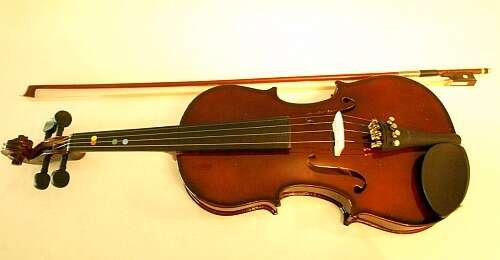
Yes. A viola has a lower pitch than a violin. In U.S. orchestras, school music programs, and chamber groups, the viola fills the middle-low part between the violin and cello.
The main reason is tuning. A standard viola’s lowest string is tuned to C3, while a violin’s lowest string is tuned to G3. C3 is a perfect fifth below G3, so the viola reaches lower notes than the violin.
What does “lower” mean in music?
“Lower” usually means lower in pitch, not lower in physical position. Pitch is how high or low a note sounds. A larger vibrating string tends to create a lower pitch, much like a large guitar string produces a deeper tone than a small one.


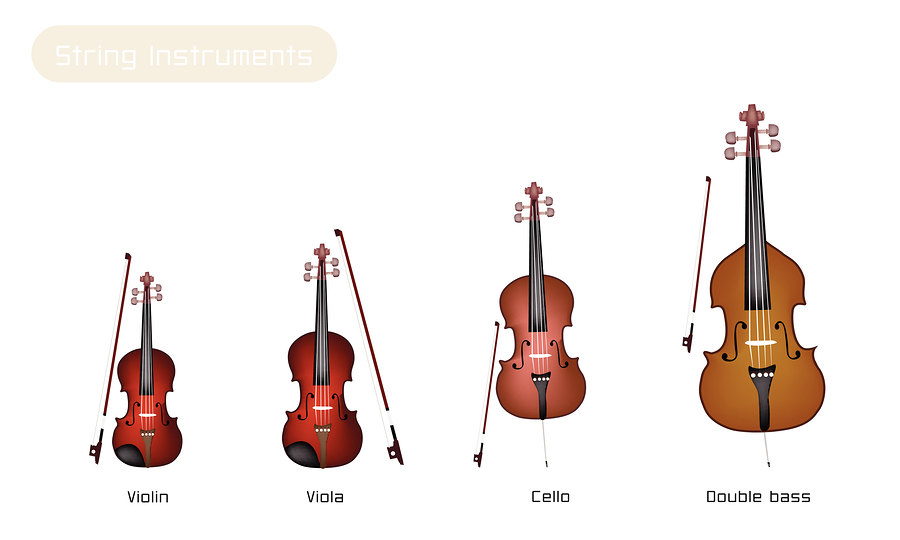
The viola is also larger than the violin. Its longer strings and larger body help it produce a darker, warmer sound. However, size alone does not determine every note an instrument can play. Players, strings, setup, and instrument design also affect range and tone.
The standard comparison is simple:
| Feature | Violin | Viola |
|---|---|---|
| Lowest open string | G3 | C3 |
| Other open strings | D4, A4, E5 | G3, D4, A4 |
| Number of strings | 4 | 4 |
| Main clef | Treble clef | Alto clef |
| General sound | Bright and clear | Warm and mellow |
| Typical role | High melody | Middle harmony and inner lines |
The viola and violin share three strings: G, D, and A. The viola adds a lower C string, while the violin adds a higher E string.

How much lower is a viola than a violin?
A viola’s lowest open string is one perfect fifth lower than a violin’s lowest open string.
Here is the standard tuning:
- Violin: G3–D4–A4–E5
- Viola: C3–G3–D4–A4
The viola’s C3 string vibrates at about 130.8 hertz. The violin’s G3 string vibrates at about 196 hertz. A lower frequency means a lower pitch.
The viola is not lower on every note. Its highest notes can overlap with the violin’s lower and middle range. The difference is most obvious in the lowest register, where the viola can play notes that a standard violin cannot play without special techniques or alternate tuning.
A simple example
Suppose a piece includes a written C3:
- A standard viola can play it on its open C string.
- A standard violin cannot play C3 because its lowest open string is G3.
Now consider A4:
- Both instruments can play A4.
- On the viola, A4 is the highest open string.
- On the violin, A4 is the third open string.
This overlap lets violins and violas blend well. It also means the two instruments can sometimes share musical lines, even though their usual roles differ.


Instrument references from Encyclopaedia Britannica describe the violin as the higher member of the violin family and the viola as its larger, lower counterpart (violin, viola).

Is a viola bigger than a violin?
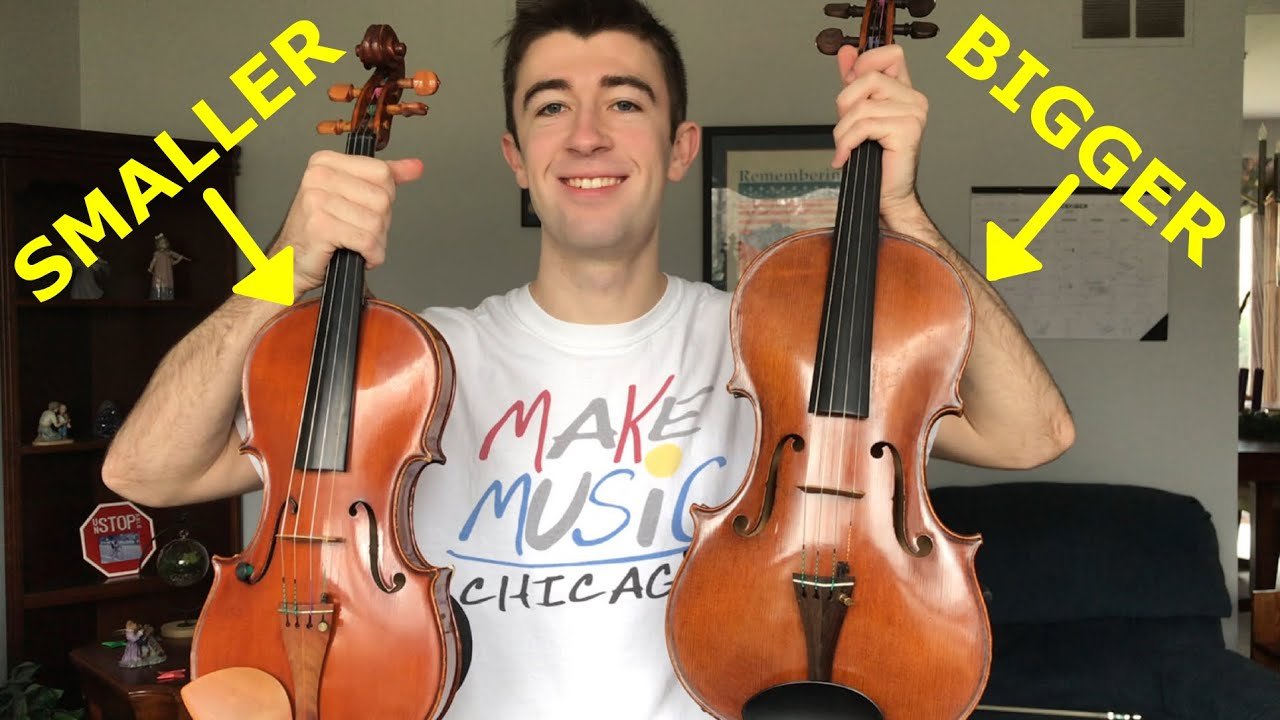
Yes. A viola is generally larger than a violin, but there is no single standard viola size.
A full-size violin is commonly about 14 inches long in body length. Violas often range from about 15 to 17 inches, though some are smaller or larger. These measurements describe the body, not the total length from the scroll to the end button.
Viola size varies because the instrument must balance two needs:
- A larger body helps create a deeper, fuller tone.
- A very large body can be hard for a player to hold and reach around.
Unlike violins, violas are not labeled by one universally fixed full size. A teacher or violin-family specialist may recommend a viola based on the player’s arm length, hand span, comfort, and technique.
A larger viola is not automatically better. If it causes shoulder, wrist, or hand strain, the player may lose control and develop poor habits. Comfort and healthy posture matter more than choosing the biggest instrument available.
Why does the viola sound darker than the violin?
The viola often sounds darker because it uses lower strings and has a larger resonating body. Its C string gives the instrument a rich, deep quality that is not part of standard violin tuning.
The violin usually has a brighter, more focused tone. Its high E string supports clear melodies that project well over an orchestra. The viola has a softer edge in many settings, although a skilled player can produce a wide range of colors.
The difference is not absolute. A violin with certain strings, playing styles, or instrument designs may sound warm. A viola can also sound bright and powerful. Bow pressure, bow speed, string choice, setup, room acoustics, and the player’s technique all change the result.
In an ensemble, the viola often supports the music by:
- Filling out inner harmonies
- Doubling parts with cellos or violins
- Adding warmth beneath a melody
- Connecting the high and low string sections
- Providing a clear middle voice
That middle range is why the viola can be easy to overlook but hard to replace. It often acts as the bridge between the violin and cello.

Does the viola use different notes or music?
The viola is usually written in alto clef, while the violin is usually written in treble clef.


Alto clef places middle C on the center line of the staff. This helps keep many viola notes readable without using a large number of ledger lines. In higher passages, viola music may use treble clef as well.
The instrument’s tuning also changes where the player finds each note. Viola and violin finger patterns are similar because both use fifths between neighboring strings. However, the viola’s longer strings and larger spacing can make the physical reach feel different.
A violinist moving to viola may need time to adjust to:
- A wider fingerboard
- A heavier instrument
- A longer bow
- Different left-hand spacing
- Alto-clef reading
- A deeper and less immediate response from the low strings
The basic bowing and fingering ideas transfer well, but the instruments do not feel identical.
Which instrument should you choose?
Choose the viola if you like a lower, warmer sound and enjoy playing harmony or middle-range parts. Choose the violin if you prefer a higher sound, melodic lines, and a lighter instrument.
Your choice may depend on more than pitch:
| If you prefer… | You may prefer… |
|---|---|
| A bright, high sound | Violin |
| A warm, deep sound | Viola |
| A smaller instrument | Violin |
| Middle harmonies | Viola |
| Common beginner materials | Violin |
| A less common but important ensemble role | Viola |
These are general tendencies, not rules. Many players enjoy both instruments. A student should try each one before choosing, if possible. A teacher can also check whether the instrument size allows a relaxed shoulder, natural wrist position, and easy finger movement.
Do not switch to viola solely because someone says it is “easier.” The viola can be a good fit for some players, but its larger size, different clef, and wider string spacing create their own learning demands.
Common mistakes about viola and violin
“The viola is just a big violin.”
The two instruments belong to the same family and share much of the same technique. Still, the viola has different tuning, proportions, clef use, string response, and sound.
“Every viola is exactly one octave below the violin.”
That is not correct. The viola is generally tuned a perfect fifth below the violin, not a full octave. The instruments’ ranges overlap.
“The viola always plays harmony.”
Violas often play harmony or inner parts, but they also play melodies, solos, rhythmic figures, and lines shared with other instruments.
“A bigger viola always sounds better.”
A larger body may support a deeper sound, but playability matters. An instrument that is too large can make accurate playing and healthy posture more difficult.
“The violin is always louder.”
A violin often projects strongly in its high register, but loudness depends on the instrument, strings, bow, player, room, and musical register. Pitch and volume are different properties.
FAQs
Is viola lower than cello?
Yes. A viola is higher than a cello but lower than a violin. Standard cello tuning is C2–G2–D3–A3, while standard viola tuning is C3–G3–D4–A4. Each viola string is one octave above the matching cello string.
Is a viola lower than a violin in an orchestra?
Yes. In a typical orchestra, violas sit below the violins in pitch and often provide the middle voice between violins and cellos. Seating can vary by ensemble, but the tuning relationship remains the same.


Can a violinist play viola?
Yes. The techniques are closely related, but the player must adjust to the viola’s larger body, wider spacing, heavier feel, and alto clef. A teacher can help with posture and instrument size.
Does viola have the same strings as violin?
Viola and violin share G, D, and A strings. The violin has a higher E string, while the viola has a lower C string. Viola strings are made and sized for the viola’s longer scale and lower tuning.
Is viola easier than violin?
Neither instrument is automatically easier. The violin may feel more manageable because it is smaller and has many beginner resources. The viola may appeal to players who prefer its lower sound, but its size and alto clef can take extra practice.
Conclusion
The viola is lower than the violin in pitch. Its standard tuning begins with C3, while the violin begins with G3, making the viola’s lowest string one perfect fifth lower.
The viola is also usually larger and has a darker, warmer tone. Still, the instruments share part of their range, so “lower” does not mean that every viola note is below every violin note. If you are choosing between them, listen to both, try their sizes, and select the one that feels comfortable and sounds inspiring to you.

Senior Music Reviewer
Alex Carter is a seasoned music reviewer with over a decade of experience in the world of sound and instruments. Passionate about helping musicians and enthusiasts make informed choices, he brings sharp insights and in-depth knowledge to every review. From classical instruments to modern gear, Alex combines technical expertise with a love for music to deliver content that resonates with readers.
As a Senior Music Reviewer and expert author on Tuneluma.com, Alex is dedicated to sharing honest evaluations, practical advice, and thoughtful commentary to guide readers in their musical journey.