How Does A Piano Make Sound: Piano Sound Explained
A piano makes sound when felt hammers strike strings, causing vibrations that the soundboard amplifies into music.
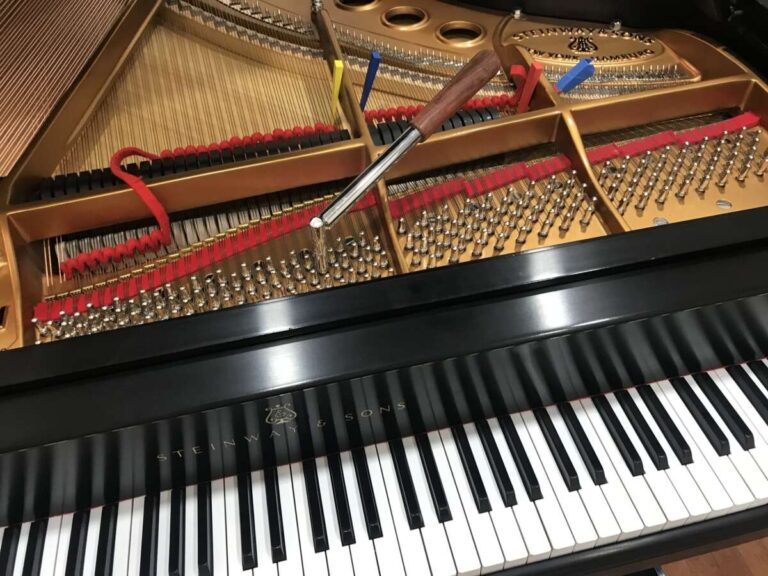
If you have ever watched a pianist play, you may notice only the keys moving. Yet beneath each key is a carefully balanced system of levers, hammers, strings, bridges, and wooden panels. Understanding how does a piano make sound reveals why a gentle touch can create a soft whisper while a firm touch can fill a concert hall.
How does a piano make sound?
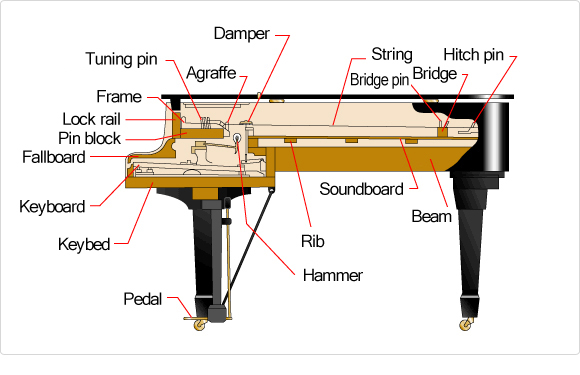
A piano makes sound through a chain of mechanical actions. When you press a key, the key moves a small lever inside the piano. That lever pushes a felt-covered hammer toward one or more tightly stretched strings.
The hammer strikes the strings and quickly moves away. This fast release is important because the strings must vibrate freely. If the hammer stayed against the string, it would stop the vibration and create little or no musical tone.
The vibrating strings produce the first sound, but they are not loud enough by themselves. Their energy travels through a small wooden part called the bridge and into the soundboard. The soundboard then moves the surrounding air, making the sound much louder.
In simple terms, the process works like this:
- Your finger presses a piano key.
- The key moves a system of levers.
- A felt hammer strikes a string.
- The string vibrates at a set frequency.
- The bridge transfers the vibration to the soundboard.
- The soundboard amplifies the vibration.
- The vibration travels through the air to your ears.
This is the basic answer to how does a piano make sound, but the details explain the instrument’s wide range, rich tone, and expressive control.
What happens when you press a piano key?
A piano key is part of a precise mechanical action. The visible key is only the starting point. Under it are small components that control the hammer’s speed, distance, and timing.
When the key moves down, it lifts a whippen, which transfers motion to the jack. The jack pushes against the repetition lever and causes the hammer to move toward the string. Near the end of the motion, the jack escapes from the mechanism so the hammer can strike and rebound.
This escape system lets the pianist play repeated notes quickly. It also allows the hammer to leave the string even when the key remains partly depressed. That design gives the performer control over both speed and volume.
The key does not directly hit the string. Instead, the action changes the force and motion created by your finger. This is why piano playing feels responsive. A light touch sends the hammer forward slowly, while a stronger touch sends it forward faster.
The hammer’s speed affects loudness. A faster hammer delivers more energy to the string, creating a louder note. The key does not produce volume by traveling farther in a simple on-or-off way. It produces volume through the speed and force of the hammer.
A practical mistake for beginners is to press harder with stiff fingers. Good tone usually comes from controlled movement, relaxed joints, and proper timing. The piano responds best when the hand transfers energy smoothly rather than forcing the key downward.

How do piano strings create different notes?
Piano strings are made from high-tensile steel and are stretched across the instrument under strong tension. Each string is designed to vibrate at a particular fundamental frequency, which determines the perceived pitch of the note.
Longer, thicker, and looser strings vibrate more slowly. They create lower notes. Shorter, thinner, and tighter strings vibrate more quickly and create higher notes.
A piano uses several string designs across its range:
• Bass notes often use thick strings with copper winding around a steel core.
• Middle notes usually use two or three steel strings for each pitch.
• High notes often use three thin steel strings for each pitch.
When two or three strings share one note, they must be tuned to nearly the same frequency. Small differences in tuning create beats, or gentle fluctuations in loudness. Skilled piano technicians use these beats to tune unisons accurately.
The vibrating string produces more than one frequency. It creates a fundamental frequency and a series of higher frequencies called overtones or partials. These extra frequencies give the piano its color, warmth, brightness, or depth.
This explains why a piano note does not sound like a simple electronic tone. The string produces a complex blend of frequencies, much like a singer’s voice contains more than one layer of sound.
String length also helps explain the shape of a piano. Grand pianos can use longer bass strings because the strings extend across the instrument. Upright pianos use clever diagonal placement and other design choices to fit useful string lengths into a vertical cabinet.

What does the soundboard do?
The soundboard is one of the most important parts of a piano. It is a large, thin wooden panel that acts as an acoustic amplifier.
A string alone moves very little air. Its vibration is easy to hear only when your ear is close to it. The soundboard solves this problem by receiving the string’s energy through the bridge and moving a much larger surface area.
The bridge is attached to the soundboard and touches the strings. When the strings vibrate, the bridge transfers that motion to the soundboard. The soundboard then vibrates and pushes air outward.
A useful comparison is a small speaker. The string is like the tiny part that creates the original vibration, while the soundboard acts like a larger surface that spreads the vibration through the room.
Many piano soundboards use spruce because it is light, strong, and good at carrying vibration along its grain. The wood must be carefully shaped and dried. Changes in humidity can make the soundboard expand or contract, which may affect tuning and tone.
The soundboard does not simply make every note louder. Its shape and stiffness influence the balance between low, middle, and high frequencies. This is one reason two pianos with similar strings can still sound very different.
When considering how does a piano make sound, it helps to remember that amplification begins after the hammer strike. The hammer starts the event, but the bridge and soundboard give the note its room-filling voice.

How do the pedals change piano sound?
Piano pedals change how long notes ring and how the instrument responds. Most modern pianos have three pedals, although the exact design can vary.
The sustain pedal
The sustain pedal is usually on the right. When you press it, dampers lift away from the strings. The strings can then continue vibrating after you release the keys.
This creates a connected, resonant sound. It also allows sympathetic vibration, where other undamped strings respond to related frequencies in the room.
The sustain pedal can make music beautiful, but too much use can blur chords. A common beginner mistake is to hold it down for an entire passage. Good pedaling often requires lifting and pressing the pedal in time with changes in harmony.
The soft pedal
The soft pedal is usually on the left. On a grand piano, it shifts the action so the hammers strike fewer strings or a different part of the strings. This changes both volume and tone.
On many upright pianos, the soft pedal moves the hammers closer to the strings. The hammers then have less distance to travel and strike with less force.
The soft pedal does not always create a simple “quiet mode.” It often changes the color of the sound as well.
The sostenuto pedal
The middle pedal on many grand pianos is the sostenuto pedal. It sustains only the notes already held when the pedal is pressed. Other notes played afterward remain unaffected.
Some upright pianos use a practice pedal in the middle instead. This pedal may place a strip of felt between the hammers and strings, reducing volume for quiet practice.
Pedals do not change the basic answer to how does a piano make sound. They change the length, color, and blend of the vibrations that the piano has already created.

Why does a piano have a unique tone?
A piano’s tone comes from several factors working together. The string, hammer, bridge, soundboard, case, and room all influence what you hear.
The felt on the hammer is especially important. Soft, well-shaped felt produces a rounder tone. Harder or more compact felt can create a brighter attack. Piano technicians voice the hammers by adjusting the felt so the notes match across the keyboard.
The point where the hammer strikes also affects tone. Different parts of a string contain different harmonic patterns. The piano’s design places the hammers at carefully chosen strike points to create a balanced sound.
The sound changes during a single note. At the beginning, you hear the hammer’s attack and the strongest upper frequencies. As the note continues, the sound becomes softer and often darker.
This changing quality is called the envelope of the sound. It includes:
• Attack, when the hammer strikes the string.
• Decay, when the sound begins to fade.
• Sustain, when the vibration continues at a lower level.
• Release, when dampers stop the strings after the key or pedal is released.
Piano makers also shape the bridges, soundboard, rim, and cabinet to control resonance. The room matters too. A piano may sound warm in a carpeted room and bright in a room with hard floors and bare walls.
In my experience of explaining piano mechanics, the most useful lesson is that tone is not controlled by volume alone. A player can shape tone through touch, timing, pedal use, and release. Two people can play the same note at the same loudness and still produce very different sounds.

How do upright and grand pianos make sound differently?
Both upright and grand pianos use the same core process: hammers strike strings, and the strings transfer energy to a soundboard. Their layouts create different playing responses and tonal results.
In a grand piano, the strings run horizontally. The hammers move upward toward the strings and return partly through gravity. This design supports fast repetition and gives the action room to respond quickly.
In an upright piano, the strings run vertically. Springs help return the hammers after each strike because gravity cannot perform the same job in a vertical action.