How Great Is Our God Piano Chords: Easy Worship Guide
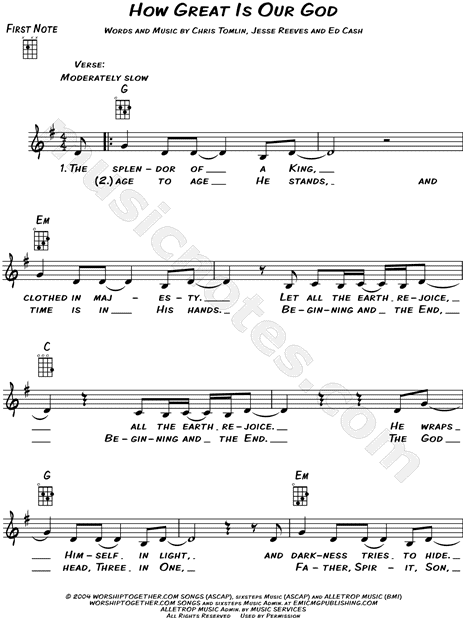
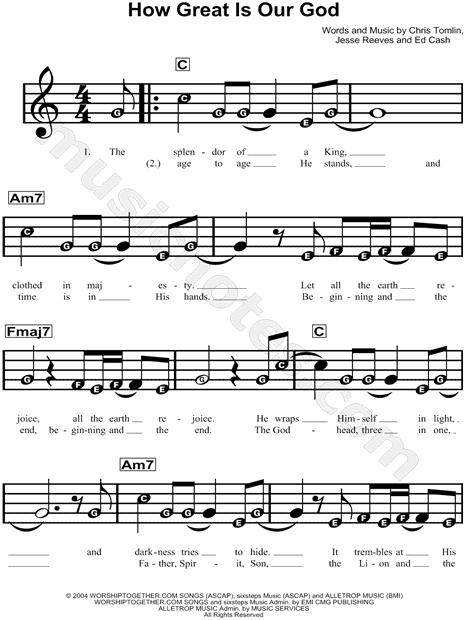
How Great Is Our God piano chords are often played in C using C, Em, Am, F, and G.
Learning how great is our god piano chords can be simple, even if you are new to the keyboard. Chris Tomlin’s worship song uses a warm, repeatable pattern that works well for solo piano, church worship, and group singing. This guide explains the main chord progression, easy voicings, rhythm, transposition, and practice tips so you can play with confidence.
How Great Is Our God Piano Chords in the Key of C
The key of C is a popular starting point because it uses only white keys. The basic how great is our god piano chords are easy to read and simple to move between.
Here is a common chord set:
| Chord | Notes |
|---|---|
| C | C, E, G |
| Em | E, G, B |
| Am | A, C, E |
| F | F, A, C |
| G | G, B, D |
A common verse and chorus pattern is:
C     Em     Am     F
C     Em     Am     F
Some arrangements use G as a passing chord or add G at the end of a phrase:
C Em Am F G
The exact pattern can differ by recording, church arrangement, or chord chart. Listen to the version you want to play before practicing, since live performances may change the order, rhythm, or ending.

Basic Chord Shapes for Beginners
Start with simple triads. A triad has three notes: the root, the third, and the fifth. Play these notes together with your right hand.
Use these shapes for how great is our god piano chords:
• C major: C, E, G
• E minor: E, G, B
• A minor: A, C, E
• F major: F, A, C
• G major: G, B, D
For the left hand, play only the root note at first. For example, play C in the left hand while your right hand plays a C major chord. This keeps the sound clear and helps you focus on smooth changes.
A simple beginner setup looks like this:
Left hand:   C       E       A       F
Right hand:  C-E-G   E-G-B   A-C-E   F-A-C
Do not worry about playing large chords at once. Clean timing matters more than complex technique. A quiet, steady chord can support worship far better than a busy chord played without control.

Easy Piano Chord Progression
The main progression creates a gentle rise and fall. Each chord has a role in the key of C:
• C is the home chord. It feels settled.
• Em adds a soft and reflective color.
• Am brings a more emotional sound.
• F gives the progression warmth and lift.
• G creates movement back toward C.
This is why how great is our god piano chords sound natural under the melody. The progression moves like a conversation. C feels like the opening statement, while F and G help the music build toward its next phrase.
Try playing each chord for four slow counts:
C       | Em      | Am      | F       |
1 2 3 4 | 1 2 3 4 | 1 2 3 4 | 1 2 3 4 |
Once this feels easy, play each chord for two counts. Then try one chord per measure while using a steady left-hand bass note.
How to Play the Chords With Both Hands
A full piano arrangement can use the left hand for bass and the right hand for chords. Begin with root notes, then add fifths when your hands feel comfortable.
For example:
C chord:  Left hand C and G | Right hand C, E, G
Em chord: Left hand E and B | Right hand E, G, B
Am chord: Left hand A and E | Right hand A, C, E
F chord:  Left hand F and C | Right hand F, A, C
G chord:  Left hand G and D | Right hand G, B, D
The root and fifth give the left hand a fuller sound without making it too heavy. Keep the left hand lower than the right hand, but avoid playing so low that the notes sound muddy.
One useful lesson from repeated worship practice is to leave space. You do not need to fill every beat. Let the chord ring, especially during softer parts of the song. Space can make the music feel calm and sincere.
Smooth Chord Changes With Inversions
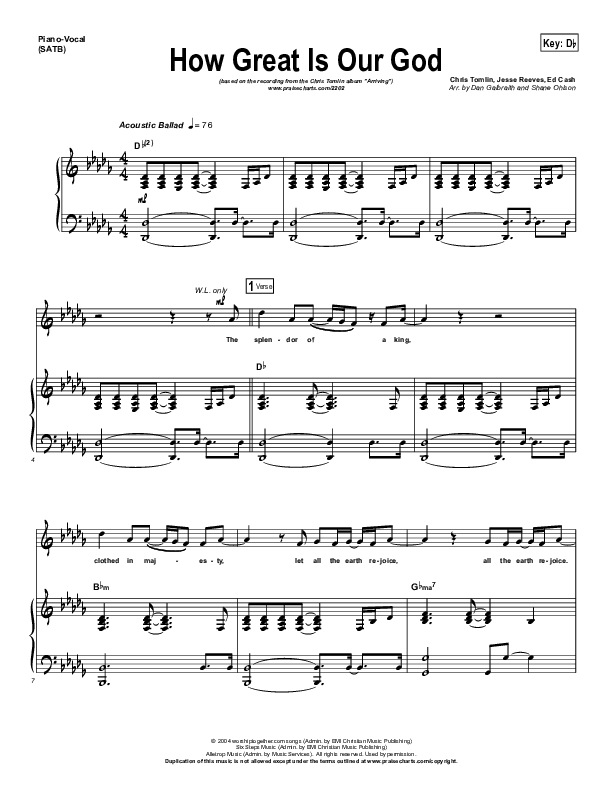
Chord inversions help your hand move less. Instead of playing every chord in root position, choose the nearest shape.
For example, use these right-hand shapes:
C:  C, E, G
Em: B, E, G
Am: A, C, E
F:  A, C, F
G:  G, B, D
Notice how some notes stay close together. This makes the progression smoother and reduces large jumps across the keyboard.
Try this exercise slowly:
- Play C in root position.
- Move to Em using B, E, and G.
- Move to Am using A, C, and E.
- Move to F using A, C, and F.
- Return to C using C, E, and G.
Inversions are not required for beginners, but they make how great is our god piano chords sound more polished. They are also helpful when you want to sing while playing because your hands use less motion.

A Simple Worship Piano Rhythm
The easiest rhythm is to press each chord once and let it ring. This works well for prayer, practice, or a quiet solo performance.
For a fuller sound, try this four-beat pattern:
Beat:    1     2     3     4
Action:  Chord       Chord
Play the chord on beats 1 and 3. Keep the touch light and even.
You can also try a gentle broken-chord pattern:
Low note – middle note – high note – middle note
For C major, that might be:
C – G – E – G
For F major, try:
F – C – A – C
Match the rhythm to the singer. A beginner mistake is playing too loudly or too quickly. The piano should support the message of the song, not compete with it.
How Great Is Our God Piano Chords in Other Keys
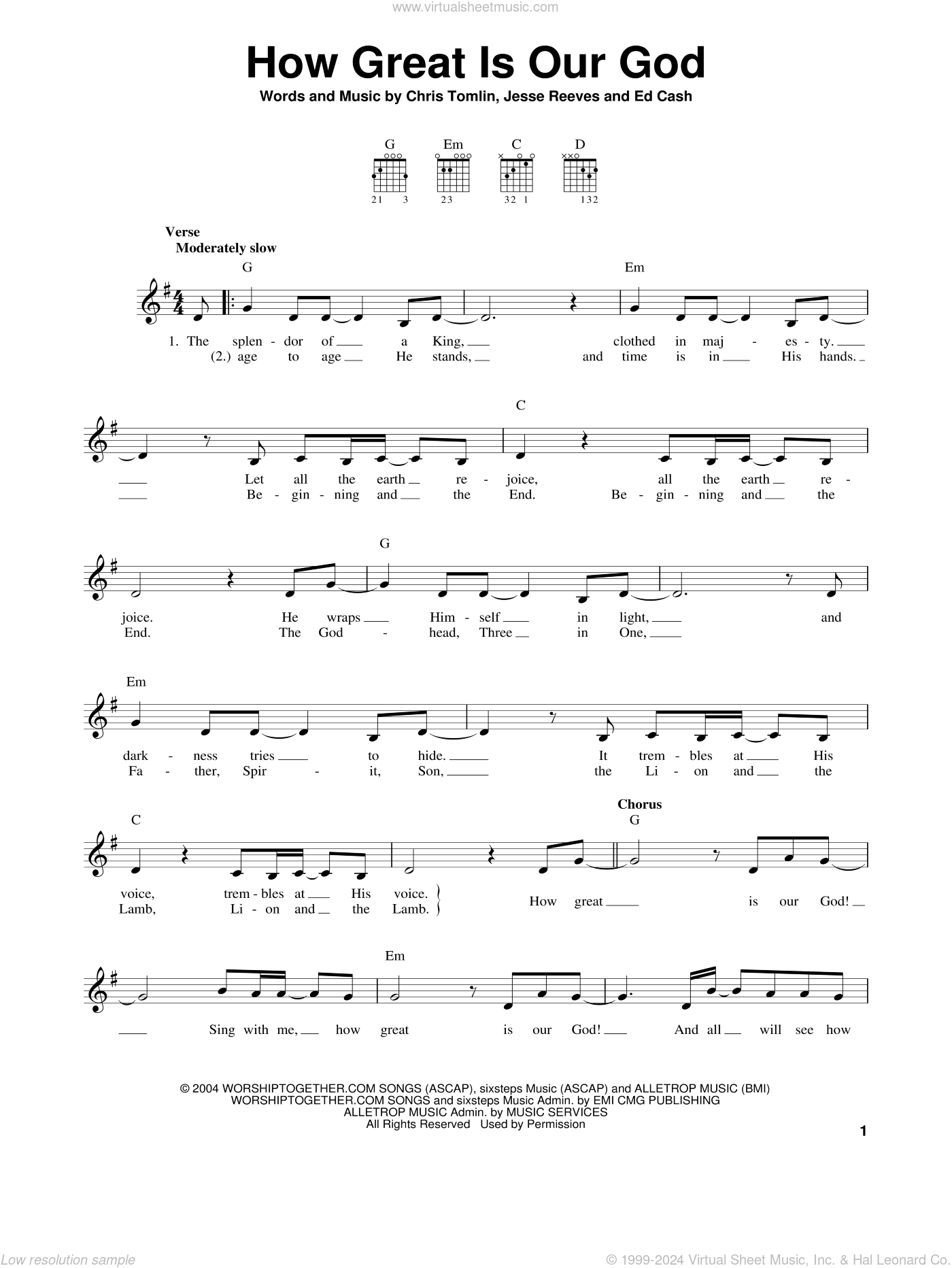
Many singers find the key of C comfortable, but it may not fit every voice. You can transpose how great is our god piano chords to another key by moving every chord the same number of half steps.
Common keys include:
• Key of C: C, Em, Am, F, G
• Key of G: G, Bm, Em, C, D
• Key of D: D, F#m, Bm, G, A
• Key of A: A, C#m, F#m, D, E
The pattern stays similar:
1 major – 3 minor – 6 minor – 4 major
In the key of G, this becomes:
G Bm Em C
In the key of D, it becomes:
D F#m Bm G
Choose a key that lets the singer reach the highest note without strain. A comfortable key usually sounds better than one chosen only because it is easy for the pianist.
How to Practice These Piano Chords
A short, focused practice plan often works better than playing the song from start to finish again and again.
Use this routine:
- Practice each chord alone.
- Change between C and Em ten times.
- Change between Em and Am ten times.
- Change between Am and F ten times.
- Play the full progression slowly.
- Add the left-hand roots.
- Add a steady rhythm.
- Practice while humming the melody.
Use a metronome at about 60 beats per minute. Increase the speed only when your chord changes stay clean.
Record yourself on a phone. This can reveal uneven timing that you may not notice while playing. In my own practice approach, recording one slow take is often more useful than playing five rushed takes.
Common Mistakes to Avoid
Several small problems can make how great is our god piano chords sound less natural.
• Playing too fast: Start slowly and let the progression breathe.
• Using too much force: Worship piano usually benefits from a soft touch.
• Ignoring the singer: Adjust the volume and rhythm to the vocal line.
• Changing chords late: Practice the next chord before the beat arrives.
• Holding poor posture: Keep your wrists relaxed and your shoulders loose.
• Adding too many notes: Simple triads often sound clear and strong.
• Skipping transitions: Practice the difficult chord changes in short loops.
The most common issue is uneven timing. If one chord lasts three beats and the next lasts five by accident, the whole group can lose the pulse. Count aloud until your hands can keep time without much thought.
How to Make the Arrangement More Advanced
After you know the basic how great is our god piano chords, you can add color without making the song crowded.
Try these ideas:
• Add the ninth to C by playing D with the C chord.
• Add the seventh to G by playing F with the G chord.
• Use suspended chords such as Csus2 or Csus4 before resolving to C.
• Add octave bass notes for a stronger chorus.
• Use a higher inversion during the final chorus.
• Play fewer notes during the verse and more during the chorus.
For example, Csus2 uses C, D, and G. It creates gentle tension before moving to C major. Gsus4 uses G, C, and D, then resolves naturally to G.
These colors are optional. The song does not need advanced harmony to sound meaningful. Start with the basic progression, then add one change at a time.
Chord Chart and Number System
A number system makes it easier to understand how great is our god piano chords in every key. In the key of C, the chords are:
C  = 1
Dm = 2
Em = 3
F  = 4
G  = 5
Am = 6
The common progression is:
1 – 3 – 6 – 4
This means you can move the same pattern to any key. The number system is widely used by worship musicians because it helps a band change keys quickly.
For example:
Key of C:  C   Em   Am   F
Key of G:  G   Bm   Em   C
Key of D:  D   F#m  Bm   G
This method is more flexible than memorizing one fixed chord chart. It also helps you understand why the progression works instead of simply copying shapes.
Using Chord Charts Responsibly
Chord charts can differ for valid reasons. One chart may simplify the song for beginners, while another may include passing chords, inversions, or a different key.
Check these details before you practice:
• The key of the chart
• The version or arrangement
• The starting chord
• The number of beats per chord
• Any repeat signs
• The ending pattern
Song lyrics and official arrangements may be protected by copyright. This guide focuses on chord theory and practice rather than reproducing copyrighted lyrics. Use an authorized chart or licensed resource when you need the complete song arrangement.
Frequently Asked Questions About How Great Is Our God Piano Chords
What are the easiest how great is our god piano chords?
The easiest version uses C, Em, Am, and F in the key of C. You can add G when the arrangement needs a stronger transition or ending.
What key is How Great Is Our God usually played in?
Many beginner chord charts use C, while singers and worship teams may choose G, D, or another key. The best key depends on the singer’s range and the chosen recording.
Can beginners play How Great Is Our God on piano?
Yes. Beginners can start with simple right-hand triads and left-hand root notes. Practice the chord loop slowly before adding rhythm or inversions.
What is the main chord progression?
A common progression is C, Em, Am, and F. In Roman numerals, this is 1, 3 minor, 6 minor, and 4 in the key of C.
How can I make the chords sound smoother?
Use inversions so your right hand moves only a short distance between chords. Let common notes stay in place when possible, and avoid jumping between widely separated shapes.
Should I play the melody with the chords?
You can, but it is not required. Start with steady chords, then add small melody notes only when your rhythm and chord changes feel secure.
Conclusion
How great is our god piano chords are approachable because the main pattern is simple, musical, and easy to move to other keys. Begin with C, Em, Am, F, and G, then build your sound with steady rhythm, gentle dynamics, and smooth inversions.
Practice in short loops, listen to the singer, and leave room for the music to breathe. Once the basic progression feels natural, try the number system and add tasteful chord colors. Explore an authorized chart for the full arrangement, and share your favorite key or practice tip in the comments.

Senior Music Reviewer
Alex Carter is a seasoned music reviewer with over a decade of experience in the world of sound and instruments. Passionate about helping musicians and enthusiasts make informed choices, he brings sharp insights and in-depth knowledge to every review. From classical instruments to modern gear, Alex combines technical expertise with a love for music to deliver content that resonates with readers.
As a Senior Music Reviewer and expert author on Tuneluma.com, Alex is dedicated to sharing honest evaluations, practical advice, and thoughtful commentary to guide readers in their musical journey.