A Minor 7th Chord Piano: Easy Guide For Beginners
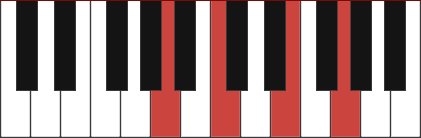
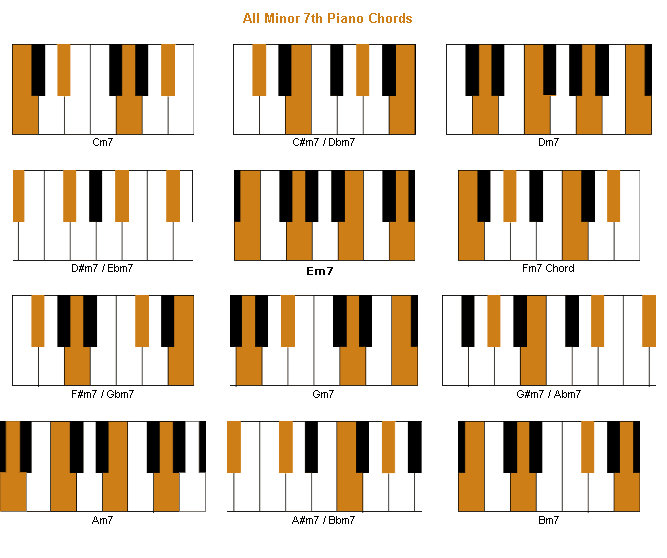
The A minor 7th chord piano voicing uses A, C, E, and G for a warm, soulful sound.
The A minor 7th chord piano players use most often contains the root, minor third, perfect fifth, and minor seventh. It sounds mellow, rich, and slightly dreamy, which makes it useful in jazz, pop, R&B, gospel, blues, and film music. In this guide, you will learn how to build the chord, play easy voicings, use inversions, avoid common mistakes, and place the A minor 7th chord piano shape into real progressions.
What Is the A Minor 7th Chord on Piano?
An A minor 7th chord is written as Am7. Its four notes are:
• A, the root
• C, the minor third
• E, the perfect fifth
• G, the minor seventh
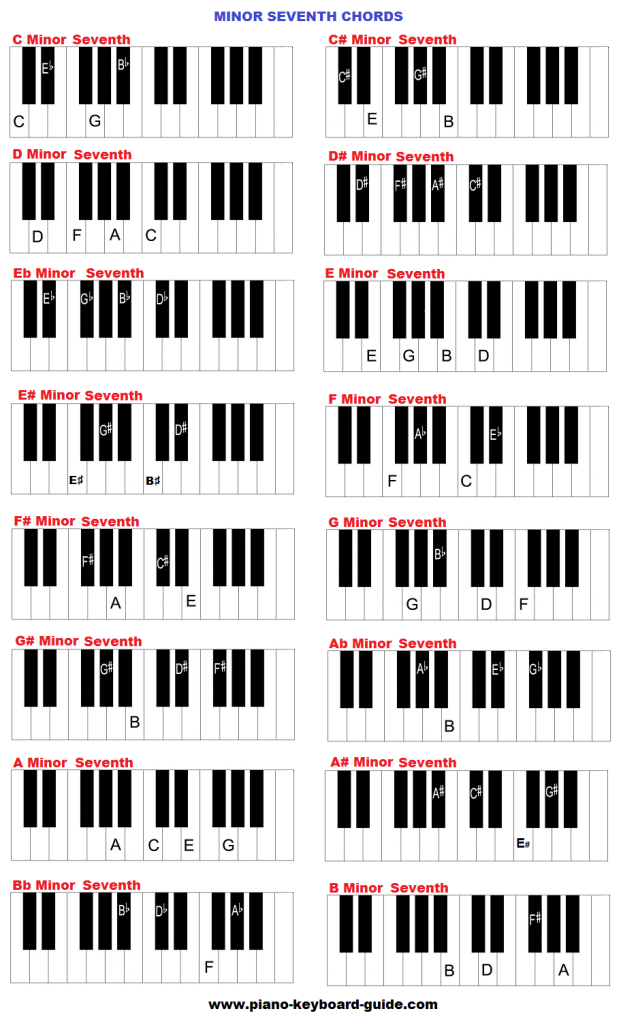
On a piano, play A, C, E, and G together to form the basic A minor 7th chord piano shape. You can play the notes in any octave, as long as the chord keeps the same four-note identity.
The chord comes from the A natural minor scale:
A, B, C, D, E, F, G
If you build a seventh chord from the first note of this scale, you get A, C, E, and G. This gives the chord its minor color without making it sound too dark.
The formula is:
- Root: 1
- Minor third: ♭3
- Perfect fifth: 5
- Minor seventh: ♭7
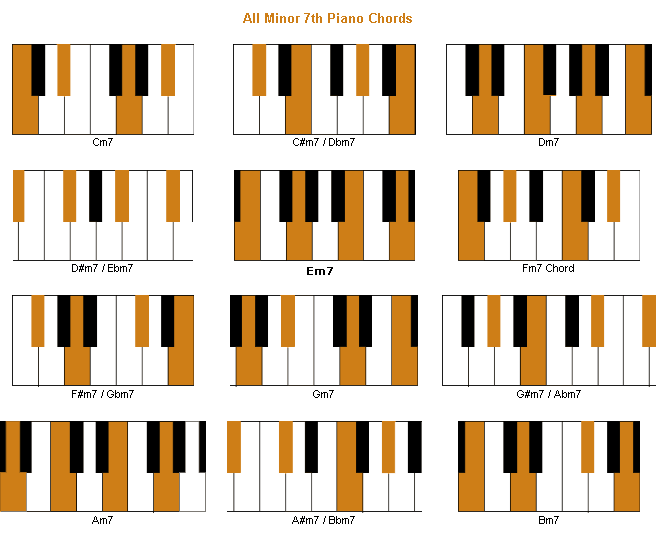
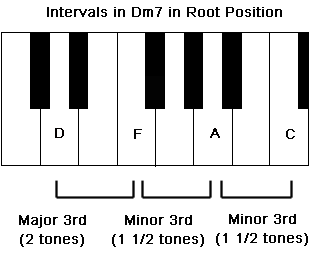
In A, that formula becomes A, C, E, and G. Learning this formula helps you build any minor seventh chord, such as Dm7, Em7, or Bm7.
How to Find the A Minor 7th Chord Piano Notes
Start by finding the A key. On the piano, A is the white key directly to the left of the group of three black keys. From A, count the chord tones using the A minor scale.
Play A first. Skip B and play C. Skip D and play E. Then skip F and play G. This gives you the notes A, C, E, and G.
A simple right-hand fingering is:
• Thumb on A
• Index finger on C
• Middle finger on E
• Pinky on G
This fingering works well for beginners because each finger rests on a chord note. Keep your wrist loose and let your fingers curve naturally. Do not press the keys with a stiff hand.
For the left hand, try:
• Pinky on A
• Middle finger on C
• Index finger on E
• Thumb on G
You do not need to use all four notes in every left-hand voicing. In many styles, the left hand plays A and G while the right hand plays C and E. This creates a clean A minor 7th chord piano sound without making the bass too heavy.
A Minor 7th Chord Piano Fingering and Technique
Good technique matters more than force. Press the keys with a calm, even motion. The notes should start together unless you want a broken-chord effect.
Try this practice method:
- Place your right hand over A, C, E, and G.
- Play all four notes slowly.
- Release them together.
- Repeat at a steady tempo.
- Listen for equal volume in each note.
Many beginners play the root too loudly. This can make the chord sound blunt. Aim for a balanced tone, with the upper notes clear enough to hear the minor color.
A common mistake is flattening the wrist. This limits finger movement and can cause tension. Keep the wrist level with the back of your hand, and allow small movements as you change chords.
When practicing the A minor 7th chord piano shape, use a metronome at a slow speed. Play the chord once every four beats, then twice every four beats. Slow practice helps your hand learn the distance between the notes.
A Minor 7th Chord Piano Inversions
An inversion changes which chord note sits at the bottom. The chord remains Am7 because it still contains A, C, E, and G.
The four positions are:
• Root position: A, C, E, G
• First inversion: C, E, G, A
• Second inversion: E, G, A, C
• Third inversion: G, A, C, E
Root position places A in the bass. It sounds stable and direct. The other inversions create smoother movement when you connect Am7 to nearby chords.
For example, compare these two progressions:
• Am7 to Dm7
• Am7 to Cmaj7
If you use only root position, your hand may jump across the keyboard. Inversions let you keep the notes close together. This is called voice leading, and it is one of the most useful skills in piano harmony.
Practice each A minor 7th chord piano inversion slowly. Say the lowest note aloud as you play. This trains your ear and helps you recognize the shape without relying only on sight.

Easy A Minor 7th Chord Piano Voicings
A full four-note chord is useful, but different settings call for different voicings. A beginner can start with simple shapes and add color over time.
Basic four-note voicing
Play A, C, E, and G in root position. This is the clearest way to learn the chord.
Shell voicing
Play A and G with the left hand, then C and E with the right hand. The root and seventh create the chord frame, while the third confirms that the chord is minor.
Open voicing
Play A with the left hand and C, E, and G higher with the right hand. The wider space gives the sound more air.
Rootless voicing
In a band, the bass player may already play A. You can then play C, E, and G with the right hand. This keeps the piano part light and avoids a muddy low register.
Spread voicing
Play A and E with the left hand, then C and G with the right hand. This wide layout works well for ballads and slow R&B.
The best A minor 7th chord piano voicing depends on the song, tempo, register, and other instruments. A low four-note chord can sound thick, while the same notes in the middle register may sound smooth and open.
How the A Minor 7th Chord Sounds
The A minor 7th chord has a soft tension. It is minor, but the G adds warmth and movement. You might hear it as thoughtful, relaxed, soulful, or slightly nostalgic.
The minor third, C, tells your ear that the chord is minor. The minor seventh, G, prevents the chord from sounding like a plain Am triad. Together, these notes create more depth.
The chord often works as:
• A resting chord in a minor key
• A ii chord in the key of G major
• A vi chord in the key of C major
• A passing chord in pop or soul progressions
• A color chord under a melody
In the key of G major, Am7 is the second chord. The progression Am7 to D7 to Gmaj7 is a classic ii V I progression. In the key of C major, Am7 is the sixth chord and often appears in progressions such as Cmaj7, Am7, Dm7, and G7.
Popular Chord Progressions With Am7
Playing the A minor 7th chord piano shape inside a progression helps you understand its musical purpose.
Am7 to Dm7 to G7 to Cmaj7
This is a ii V I movement in C major, with Am7 acting as the vi chord at the start. It has a smooth jazz sound and teaches you how seventh chords connect.
Cmaj7 to Am7 to Dm7 to G7
This progression is common in jazz, soul, and pop. Use close inversions so the right hand moves only a short distance between chords.
Am7 to Fmaj7 to Cmaj7 to G
This progression has a modern pop feel. Try playing the A minor 7th chord piano voicing in the middle register, then use simple triads for contrast.
Am7 to Em7 to Fmaj7 to G
This sequence sounds open and emotional. It works well for songwriting because each chord gives the melody space.
Am7 to D7
This creates a strong minor ii V sound. The D7 chord may lead to Gmaj7 or Gm7, depending on the style and key center.
When you practice, play each chord for four beats. Then try two beats per chord. Finally, use a slow song or backing track. This turns a theory exercise into a musical skill.

A Minor 7th Chord Piano Exercises
Use these exercises to build memory, control, and musical timing.
Exercise one: chord recognition
Play A, C, E, and G together. Release the chord, then play each note one at a time. Listen to how the notes combine and separate.
Exercise two: inversion cycle
Play the root position, then move to the first inversion, second inversion, and third inversion. Return to root position without stopping.