Best 88 Key Digital Piano For Beginners: Smart Top Picks
The best 88 key digital piano for beginners combines realistic key feel, simple controls, useful lessons, and strong value.
Picture a new player sitting down after work, ready to learn a first song, but facing a small keyboard that feels nothing like a real piano. That can make practice feel awkward fast. An 88-key digital piano solves this by matching the full range of an acoustic piano while saving space, money, and maintenance. I looked at key action, sound, learning tools, included gear, connection options, and everyday value to find the best 88 key digital piano for beginners. The models below suit first-time players, adult learners, families, and students who want room to grow.
88 Key Digital Piano with Bluetooth and Case

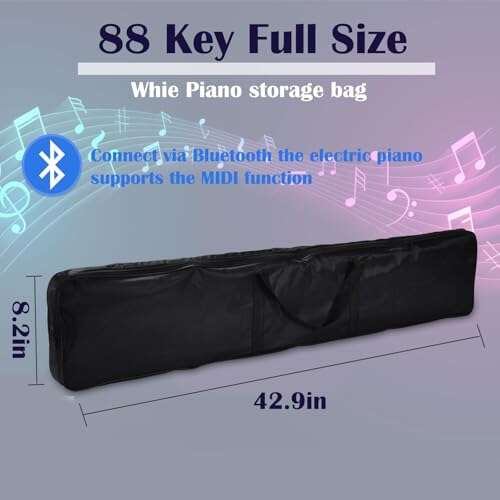
This 88-key digital piano is built around the needs of a new player who wants a complete setup. Its semi-weighted keyboard should feel more substantial than a basic, light-action keyboard, while still staying easy for smaller hands and younger students. The included music stand, sustain pedal, power supply, headphones, and carrying case reduce the extra shopping often needed after purchase. Bluetooth also adds a simple way to connect a phone or tablet for lessons and backing tracks.
I like this bundle for beginners who want to start playing on day one. USB-MIDI compatibility gives the piano a path into music apps, recording software, and online lessons as your skills improve. The headphones are helpful in shared homes, and the case makes moving the instrument less stressful. As a practical starter package, it offers many of the features I expect when comparing the best 88 key digital piano for beginners.
Pros:
- Full 88-key range supports proper piano study
- Semi-weighted action offers a more piano-like response
- Bluetooth supports lessons and wireless audio use
- Includes stand, pedal, headphones, and carrying case
- USB-MIDI helps with apps and computer recording
- Good all-in-one choice for home practice
Cons:
- Semi-weighted keys may not feel like a traditional hammer action
- The large bundle may take more storage space
- Beginners may need time to learn the connection features
My Recommendation
I recommend this model for a beginner who wants value without buying each accessory separately. It suits adults, teens, and families who need quiet practice, Bluetooth learning, and easy transport. The full keyboard also helps students avoid outgrowing a small instrument too soon. If the current Amazon price remains competitive, this is a strong contender for the best 88 key digital piano for beginners.
88 Key Electric Keyboard with Stand and Bluetooth

This electric keyboard focuses on giving beginners a useful home and stage setup in one package. It includes a power adapter, sustain pedal, stand, carrying case, headphones, and USB-MIDI support. That list matters because a bare keyboard can become surprisingly expensive once you add the basic parts. The 88-key layout gives a new player the same note range used on a standard acoustic piano.
Bluetooth makes this keyboard more flexible for modern practice. I would use it with a phone for video lessons, a metronome app, or background music, while the headphone option keeps the room quiet. The carrying case is useful for students who travel between home and lessons. It may be a better fit for a beginner who values convenience more than advanced piano controls.
Pros:
- Full-size 88-key layout for long-term learning
- Includes a stand and sustain pedal
- Headphones support quiet practice
- Carrying case helps with transport
- Bluetooth adds useful lesson and playback options
- USB-MIDI supports digital music tools
Cons:
- Key action details may not satisfy advanced classical players
- Included accessories may be basic in quality
- Some beginners may prefer a simpler control panel
My Recommendation
This piano is best for a beginner who wants a ready-to-play bundle for home, church, school, or small performances. It gives you the main accessories without forcing a separate setup hunt. I especially like it for adult learners who want to practice with headphones and use phone-based lessons. Check the current listing for exact dimensions and power details before ordering, but it deserves a place among the best 88 key digital piano for beginners options.
Donner DEP-1S 88-Key Beginner Digital Piano

The Donner DEP-1S is aimed at beginners who want more than a simple keyboard but do not need a large professional workstation. Its 88 velocity-sensitive keys respond to playing force, so pressing softly and firmly can produce different volume levels. That feature helps students learn control and expression from the start. The bundle includes a piano stand, sustain pedal, piano stickers, and other useful starter items.
Its record function can make practice more useful because students can listen back to timing and mistakes. Bluetooth and chord features add variety for casual playing, while the retro wood color gives it a warmer look than many plain black keyboards. The piano stickers may help a young learner understand note names, though I would remove them once the layout becomes familiar. This is a friendly option for a family music room or a first serious instrument.
Pros:
- Velocity-sensitive keys teach dynamic control
- Includes a stand and sustain pedal
- Record function supports self-review
- Bluetooth adds modern practice flexibility
- Chord feature can make early playing enjoyable
- Retro wood finish looks inviting in a home
Cons:
- Built-in teaching tools may not replace a private teacher
- Piano stickers can feel distracting to experienced players
- Portable design may use lighter materials than furniture-style pianos
My Recommendation
I recommend the DEP-1S for a child, teen, or adult who learns best through short, active practice sessions. The velocity response gives it a useful advantage over non-sensitive entry keyboards. It is also a good choice for buyers who want a stand and beginner aids in the same order. For buyers comparing the best 88 key digital piano for beginners, this Donner model offers a balanced mix of learning tools and comfort.
88 Key Semi-Weighted Piano Keyboard Bundle

This keyboard is a straightforward choice for adults and beginners who want a full range without a bulky cabinet. The semi-weighted keys should offer more resistance than a lightweight arranger keyboard, which can make basic scales and chords feel more controlled. The package includes a sustain pedal, power supply, stand, carrying case, headphones, and USB-MIDI compatibility. That combination makes it easy to move from unboxing to the first lesson.
I see this model as a practical middle ground. It gives a new student enough key range for classical pieces, pop songs, and chord work, but it does not appear focused on complex sound design. Headphones help in apartments, while the case helps with lessons or performances. Buyers should confirm the current listing for exact sound count, dimensions, and warranty terms because those details can vary by seller and production run.
Pros:
- Full 88-key range supports proper hand movement
- Semi-weighted response feels more controlled than light keys
- Includes stand, case, headphones, and pedal
- USB-MIDI works with computers and learning apps
- Simple design suits first-time players
- Useful for home practice or small gigs
Cons:
- May lack the deeper tone editing found on advanced keyboards
- Semi-weighted action is not the same as graded hammer action
- Accessories may need replacement after heavy travel use
My Recommendation
This model is best for an adult beginner who wants a clean, complete package and does not need hundreds of sounds. It is also suitable for a student who plans to connect a laptop or tablet later. The included headphones and case make it especially useful in shared homes. If you want the best 88 key digital piano for beginners with a simple learning path, this bundle is worth checking.
Donner DEP-20 Weighted 88-Key Digital Piano

The Donner DEP-20 is one of the more piano-focused choices in this group. It uses a full 88-key weighted keyboard, which can help beginners build finger strength and get used to the resistance of an acoustic piano. It includes a sustain pedal and power supply, so the core playing setup is covered. Its portable format also makes it easier to store than a traditional upright piano.
Weighted action is a major reason I would consider this model for a serious student. It can make the transition to an acoustic piano feel less surprising later, although no entry digital piano perfectly copies every acoustic action. The design works well for lessons, daily scales, and chord practice. Buyers who need a furniture stand or several advanced voices may prefer another version, but this package keeps the focus on playing.
Pros:
- Weighted 88-key action supports piano technique
- Portable shape suits small rooms
- Includes sustain pedal and power supply
- Good fit for classical and lesson-based study
- Full range reduces the need to upgrade quickly
- Simple layout may feel less overwhelming
Cons:
- Basic package may not include a stand
- Weighted keys make the unit heavier to move
- Fewer extra features may appeal less to casual entertainers
My Recommendation
I recommend the DEP-20 for a beginner who puts key feel first. It is a strong match for students working with a teacher, practicing scales, or preparing for classical music. Add a stable stand and adjustable bench for the best posture. Among the best 88 key digital piano for beginners, this is a sensible pick for technique-focused learning at a modest cost.
Donner DEP-20 with Furniture Stand and Three Pedals

This version of the Donner DEP-20 adds a furniture stand and three-pedal unit. That changes the experience from a portable keyboard on a folding stand to something that looks and feels more like a home piano. The weighted 88-key design gives beginners a useful foundation for traditional piano technique. A fixed stand can also reduce movement while playing, which helps children and new adults keep a steady posture.
The three pedals are useful for students who want to learn more than basic sustain. The furniture-style design takes more time to assemble and needs a dedicated place, so I would not choose it for frequent travel. It makes sense for a living room, bedroom, or lesson corner where the piano can stay ready to play. If appearance and stability matter as much as portability, this package has a clear advantage.
Pros:
- Weighted 88-key keyboard supports traditional technique
- Furniture stand gives the piano a stable home position
- Three-pedal unit supports more advanced pedal work
- Full setup looks more polished than a bare keyboard
- Good choice for regular daily practice
- Reduces the need to buy a separate pedal system
Cons:
- Furniture stand takes more floor space
- Less convenient to move than the portable package
- Assembly requires time and careful tightening
My Recommendation
This model is best for a family that wants a permanent beginner piano at home. I would choose it over a portable package when stability, appearance, and three-pedal practice matter. It can support a child through early lessons while still looking appropriate in a main room. For home buyers seeking the best 88 key digital piano for beginners, this is a strong furniture-style value.
Yamaha P71 88-Key Weighted Digital Piano

The Yamaha P71 remains a popular beginner digital piano because it keeps the design focused. It provides 88 weighted keys, built-in speakers, a music rest, a sustain pedal, and a power supply. Yamaha’s long experience with acoustic and electronic instruments gives this model a familiar level of brand confidence. Its simple control layout can help a first-time player start without sorting through a large menu.
The P71 is a portable piano, not a full furniture console. That makes it easier to place in a small apartment or carry to a lesson, but you may need to buy a stand and bench separately. Its limited feature set is both a benefit and a trade-off. I would choose it for someone who wants dependable piano practice rather than a large collection of rhythms and effects.
Pros:
- Weighted 88-key action supports piano study
- Trusted Yamaha name and broad beginner appeal
- Simple controls are easy for new players
- Built-in speakers make setup quick
- Portable design fits smaller spaces
- Includes a sustain pedal and power supply
Cons:
- Stand and bench may cost extra
- Fewer sounds and features than an arranger keyboard
- No included carrying case in the listed package
My Recommendation
The Yamaha P71 is best for beginners who want a focused, piano-first instrument from a well-known maker. It suits lessons, home practice, college rooms, and players who dislike complicated menus. I would select it when key feel and brand support matter more than bundle size. It is one of the safest traditional choices when searching for the best 88 key digital piano for beginners.
Donner DEP-1S Natural 88-Key Beginner Piano

This natural-finish DEP-1S offers the same beginner-friendly idea in a softer, home-focused style. Its velocity-sensitive 88-key keyboard lets the player shape notes with touch instead of producing the same volume at every press. The included stand, stickers, sustain pedal, and recording tools give new players a comfortable place to begin. Bluetooth adds another way to use lessons and music from a smart device.
I think the natural finish may appeal to buyers who want a keyboard that blends with wood furniture. The record feature can help students spot uneven rhythm, while the chord function gives casual players a quick way to make music. It is still important to sit at the correct height and keep wrists relaxed. The package has a friendly learning focus, but experienced musicians may want a more refined action and stronger sound system.
Pros:
- Velocity-sensitive keys encourage expressive playing
- Natural finish looks warm in a home setting
- Stand and sustain pedal are included
- Recording helps track practice progress
- Bluetooth supports phone and tablet learning
- Chord feature makes early play more enjoyable
Cons:
- Sticker aids may not suit every player
- Not the best match for advanced classical performance
- Furniture-like styling may not be ideal for frequent travel
My Recommendation
This DEP-1S is best for a beginner who wants a friendly instrument that looks at home in a living room. It works well for children with parent support, casual adult learners, and players who enjoy recording simple ideas. The natural finish is a nice change from the usual black keyboard. It is a useful best 88 key digital piano for beginners choice when appearance and learning features share equal importance.
Donner DDP-95 Digital Piano with Teaching Tools

The Donner DDP-95 is designed for learners who want many sounds and practice tools in one digital piano. Its listing describes a weighted 88-key keyboard, wireless connection, a 4.3-inch LCD, recording, 610 tones, and 600 rhythms. It also includes three piano teaching modes, which may help keep practice fresh during the early months. This is much closer to an entertainment keyboard than a minimal piano-only design.
The screen can make settings easier to see, especially for users who dislike guessing which button is active. Large tone and rhythm libraries offer plenty of room for musical play, but they can also distract a student from scales and reading. I suggest setting a simple practice routine before exploring every feature. This model is a good fit for families who want both structured piano study and creative play after lessons.
Pros:
- Weighted 88-key keyboard supports beginner technique
- Large tone and rhythm libraries encourage exploration
- Three teaching modes add practice variety
- LCD screen can simplify navigation
- Wireless connection supports modern use
- Recording lets players review their work
Cons:
- Many features may feel overwhelming at first
- Large console design is less portable
- Entertainment sounds may distract from focused study
My Recommendation
I recommend the DDP-95 for a beginner household with more than one musical goal. It is best for students who want lessons but also enjoy rhythms, tone changes, and recording. Parents may like the teaching modes, while children can explore sounds after practice. If you want the best 88 key digital piano for beginners with the broadest feature set here, this model deserves close attention.
Yamaha P45B 88-Key Weighted Portable Piano
The Yamaha P45B is a portable 88-key digital piano for players who want a trusted, uncluttered design. It has weighted keys, built-in speakers, a music rest, USB connectivity, and a sustain foot switch. The full key range allows beginners to learn pieces without missing low or high notes. Its portable body also makes it easier to move when a room serves several purposes.
USB connectivity gives the P45B useful value beyond basic practice. A student can connect to compatible music software, notation tools, or lesson resources, depending on the device and setup. Like the P71, this piano keeps the feature list focused, so it does not offer the rhythm-heavy experience of the DDP-95. I would view it as a reliable learning tool for someone who values straightforward piano playing.
Pros:
- Weighted 88-key action suits proper piano practice
- Portable body fits small homes and classrooms
- Built-in speakers offer instant sound
- USB connectivity supports digital learning tools
- Music rest keeps sheet music easy to view
- Yamaha reputation may reassure first-time buyers
Cons:
- May require a separate stand and bench
- Limited voices and rhythms compared with arranger models
- Portable body does not provide furniture-style stability
My Recommendation
The P45B is best for a beginner who wants a portable Yamaha piano with weighted action and basic computer connection. It works well for private lessons, dorm rooms, apartments, and careful daily practice. I would choose it when simple controls are more important than a large accessory bundle. It remains a dependable best 88 key digital piano for beginners option for piano-first learners.
How to Choose the Best 88 Key Digital Piano for Beginners
Choosing a first piano can feel like choosing a first car. You need enough room to grow, but you do not need every luxury feature. I start with the keyboard itself, then check sound, pedals, speakers, connections, size, and support. A flashy feature list cannot rescue keys that feel poor or a setup that makes practice hard.
Why 88 Keys Matter
A standard acoustic piano has 88 keys. That full range lets beginners learn bass notes, treble melodies, chords, and two-hand pieces without changing octaves. A smaller keyboard may cost less and take less space, but it can limit lessons and force an upgrade later. For most serious beginners, an 88-key digital piano is the better long-term starting point.
There is one exception. If a child is very young or a buyer has almost no room, a smaller keyboard may be easier to use at first. Still, I would buy an 88-key model when space and budget allow. It builds good habits from the beginning and supports a wider range of music.
Weighted, Semi-Weighted, and Velocity-Sensitive Keys
These terms are not identical. Weighted keys add resistance to imitate the feel of an acoustic piano. Some use a hammer-action system, while others use a simpler weight system. Semi-weighted keys add resistance but usually feel lighter and less detailed. Velocity-sensitive keys respond to how hard you press, but they may not have true piano weight.
For classical study, I prefer weighted keys. For casual pop playing, a semi-weighted model can feel more comfortable and cost less. A child or adult with weak fingers may enjoy lighter action at first. The best 88 key digital piano for beginners should match the player’s goal, not just the product label.
Sound Quality and Speakers
Beginners need a clear piano tone more than hundreds of average sounds. Listen for a tone that stays pleasant in both soft and loud playing. Built-in speakers should fill a small room without harsh distortion at normal volume. Headphone output also matters because quiet practice helps people play more often.
Product pages may use terms such as sampled piano, stereo sound, or advanced speaker design. Those terms can be useful, but I do not treat them as proof of superior sound by themselves. Room size, speaker placement, and headphones all change what you hear. If possible, use the Amazon listing’s customer videos and return policy as part of your decision.
Pedals and Piano Technique
A sustain pedal is essential for many beginner songs. It lets notes ring after you lift your fingers and teaches a key part of piano expression. Some packages include a basic single pedal. Furniture-style models may include three pedals, which can support more traditional study.
A cheap pedal can slide across a hard floor. I look for a stable pedal or plan to add a non-slip mat. Beginners should also learn to use the pedal with care. Holding it down all the time can make music muddy, even on the best 88 key digital piano for beginners.
Bluetooth, USB, and MIDI
Bluetooth can mean different things on digital pianos. Some models receive audio from a phone, while others send MIDI data or support an app. Read the listing details before assuming every Bluetooth feature works in both directions. USB-MIDI is useful because it lets the keyboard communicate with compatible computers, tablets, and music programs.
These connections can support video lessons, practice apps, notation, and recording. They are helpful extras, but they should not replace a good practice plan. I recommend learning the basic controls first. Then add one app or device at a time so technology remains a tool instead of a distraction.
Portability and Stand Design
Portable keyboards are easier to store and move. They work well for renters, students, and musicians who play in more than one room. However, a portable piano needs a strong stand and a proper bench. A dining chair may be too low, and an unstable stand can affect posture and confidence.
Furniture-style pianos look cleaner and stay ready to play. They also take more floor space and are harder to move. Measure the room, doorway, and storage path before buying. A model that fits your home will get more use than a larger model that becomes a burden.
What Beginners Should Avoid
I would avoid choosing only by the number of tones or rhythms. A huge sound library sounds exciting, but most beginners spend their first weeks on finger numbers, chords, scales, and simple songs. I would also avoid a keyboard with no sustain pedal unless the low price leaves room to add one.
Be careful with vague terms such as “professional feel” or “real piano sound.” Check the actual key type, included accessories, return terms, and current seller information. Amazon prices and bundles can change, so review the listing before checkout. Independent safety guidance also supports keeping power cords secure and using electronics according to the supplied instructions.
Best Features at a Glance
| Best for | Why |
|---|---|
| Focused piano lessons | Weighted 88-key models, such as the Yamaha P71, keep attention on technique. |
| Complete beginner bundle | The first semi-weighted model includes a stand, pedal, headphones, case, and USB-MIDI. |
| Home entertainment and lessons | The Donner DDP-95 adds teaching modes, tones, rhythms, recording, and a display. |
Beginner Setup and Practice Tips
A good setup can make a cheap practice session feel much better. Place the keyboard so your elbows sit slightly above the keys when your shoulders stay loose. Keep your feet flat and use a bench that lets your knees sit near a right angle. These small details reduce strain and help you build a steady habit.
Start with ten to fifteen minutes a day. Play five-finger patterns, simple scales, and one short song. Use a metronome at a slow speed, then increase it only when your notes stay even. I would rather see a beginner practice ten calm minutes each day than rush through one long session once a week.
Use headphones when you need privacy, but listen through the built-in speakers from time to time. Speakers reveal how the sound fills the room and can expose harsh volume levels. Keep the volume moderate. The National Institute for Occupational Safety and Health recommends protecting hearing from long exposure to loud sound, so quiet practice is a smart habit.
How I Compare Beginner Digital Pianos
I judge each instrument by how easy it is to begin, how well it supports real progress, and how much extra gear comes in the box. Key response receives the most weight because it affects every note. I then consider piano tone, pedal quality, speaker use, connections, size, and price at the time of review.
I also separate facts from expectations. A product title may list Bluetooth or a large sound library, but the exact function depends on the current model. That is why I advise checking the listing, user manual, warranty, and return policy before ordering. This approach helps buyers find the best 88 key digital piano for beginners based on real needs rather than marketing alone.
Which Type Should You Buy?
Choose the Yamaha P71 or P45B if you want a focused piano from an established maker. Choose the Donner DEP-20 if weighted action matters and you prefer a simple portable design. Select the furniture-stand DEP-20 if you want a permanent home setup with three pedals.
Choose a semi-weighted bundle if accessories and easy transport matter most. The DEP-1S models suit learners who enjoy recording, Bluetooth, chord tools, and a warmer look. The DDP-95 fits a family that wants lessons and entertainment in one instrument. There is no single perfect piano for every beginner, but there is a best match for each goal.
FAQs Of best 88 key digital piano for beginners
Is an 88-key digital piano too large for a beginner?
No. It may take more room than a small keyboard, but it matches the range of a standard piano. That helps beginners learn proper hand movement and avoid an early upgrade.
Should beginners buy weighted keys?
Weighted keys are best for students who want piano technique or plan to play an acoustic piano later. Semi-weighted keys can be fine for casual playing, pop songs, and buyers who want a lighter touch.
Do I need a sustain pedal?
Yes, most piano students should have one. A sustain pedal teaches basic expression and appears in many beginner songs. Check that the pedal uses the correct connection for the keyboard.
Are Bluetooth and USB-MIDI the same?
No. Bluetooth may stream audio or connect to a device, depending on the model. USB-MIDI sends musical performance data to compatible equipment. Read the product details to learn which functions each connection supports.
What accessories should a beginner buy first?
Start with a stable stand, proper bench, sustain pedal, headphones, and a beginner method book or lesson app. A metronome is also useful, although many phones can provide one.
Final Verdict: Which Should You Buy?
For most learners, the Yamaha P71 is the safest piano-first choice, while the Donner DEP-20 offers strong weighted-key value. The first semi-weighted bundle wins for included gear and easy practice.
The best 88 key digital piano for beginners is the one that fits your hands, room, goals, and budget. Choose a full range, practice often, and verify the current Amazon listing before you buy.

Senior Music Reviewer
Alex Carter is a seasoned music reviewer with over a decade of experience in the world of sound and instruments. Passionate about helping musicians and enthusiasts make informed choices, he brings sharp insights and in-depth knowledge to every review. From classical instruments to modern gear, Alex combines technical expertise with a love for music to deliver content that resonates with readers.
As a Senior Music Reviewer and expert author on Tuneluma.com, Alex is dedicated to sharing honest evaluations, practical advice, and thoughtful commentary to guide readers in their musical journey.