Best Digital Piano For Home Recording: Top Picks
The Yamaha YDP105 is the best digital piano for home recording when you want natural weighted keys and a trusted grand-piano tone.
You sit down to record a song, but the room is quiet, the computer is ready, and your old keyboard feels more like a toy than a real piano. That is a common problem. The right digital piano can give you full-size keys, useful MIDI control, headphone practice, and a clean signal for your recording setup. I reviewed the models below with home players in mind. I focused on key feel, recording tools, sound choices, layout, value, and how easily each piano can fit into a real home studio.
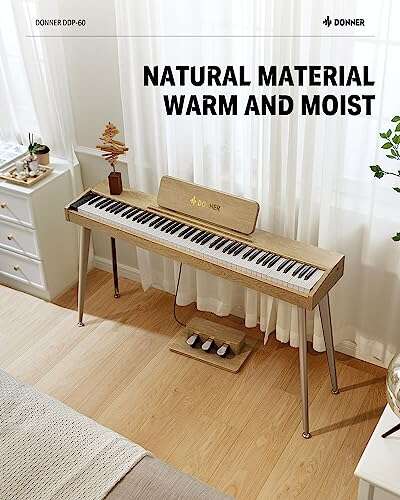
Donner OURA DDP-60 Digital Piano

The Donner OURA DDP-60 is a strong choice for a new player who wants a full-size piano in a home studio. Its 88-key layout gives you the full range used by most piano music. Sensitive touch response can help your recording sound more human because soft and hard playing create different levels. The built-in three-pedal unit also makes it feel more like a traditional upright piano.
Donner lists 128 voices, eight reverb effects, and a recording function for this model. Those features give you room to test piano, electric piano, and other sounds without opening your computer. I like this approach for song sketches, lessons, and late-night practice with headphones. Still, serious producers may want to use external MIDI software for deeper editing and a wider sound library.
Pros:
- Full 88-key range for piano lessons and serious practice
- Touch-sensitive keys support more expressive recordings
- Three-pedal unit adds sustain, sostenuto, and soft-pedal control
- 128 voices offer useful variety for demos and songwriting
- Built-in recording feature helps capture quick ideas
- Reverb effects can add space without extra studio gear
Cons:
- Its built-in sounds may not match premium software instruments
- The furniture-style design needs more floor space than a portable keyboard
- New users may need time to learn the control panel
My Recommendation
I recommend the Donner OURA DDP-60 for beginners, home songwriters, and families who want one complete piano setup. It works well when you need weighted-style practice, simple recording, and a fixed place to play. This may be the best digital piano for home recording on a budget if your main goal is to build skills and record basic piano parts without a complex interface.
It offers more useful tools than a plain starter keyboard, yet it remains approachable. I would pair it with a computer, a USB or MIDI connection if supported by your setup, and a simple recording program. Check the current listing for connection details and package contents before ordering, as sellers can update bundles over time. Overall, it is a practical home piano with good value when available at its current price.
RockJam RJ5061 61-Key Keyboard Kit

The RockJam RJ5061 takes a different path from the full-size models in this guide. It has 61 keys and comes as a kit with a stand, bench, and headphones. That package can save a new player the trouble of buying several basic items. It also takes less room, which matters in a bedroom, apartment, or small writing space.
A 61-key keyboard cannot cover the same range as an 88-key piano. However, it can handle many pop chords, melodies, lessons, and simple recording parts. The included headphones make quiet practice easy, while the stand and bench help you begin at once. I see it as a starter music station rather than a full replacement for a weighted digital piano.
Pros:
- Complete kit includes a stand, bench, and headphones
- 61 keys fit small rooms better than full-size pianos
- Lower setup cost helps first-time buyers manage a budget
- Headphones support quiet practice and late-night writing
- Simple layout can feel less intimidating to children and beginners
- Portable size suits casual songwriters and mobile users
Cons:
- 61 keys provide less range for classical piano music
- It may not offer the weighted feel advanced players expect
- The included accessories may be basic rather than studio-grade
My Recommendation
The RockJam RJ5061 is best for a beginner who wants an affordable, ready-to-play kit. I would choose it for a child, a casual learner, or a songwriter who mainly records chords and short melodies. It can serve as a first home recording keyboard, especially when space and price matter more than realistic piano action.
If your long-term plan includes classical pieces, two-handed arrangements, or highly expressive piano tracks, I would move to an 88-key model. For simple demos, however, this kit removes several barriers. It gives you a seat, stand, and headphones in one purchase, which can be a smart value for a new home studio.
UISCOM 88-Key Weighted Home Piano

This UISCOM 88-key piano is made for the player who wants a home instrument with a classic furniture look. The weighted keyboard gives your fingers more resistance than a light synth action. That resistance can support better technique and more natural dynamics over time. Its wooden desk-style cabinet also gives the room a stable, finished appearance.
The triple-pedal setup is useful for players who want traditional piano control. A fixed cabinet can reduce movement while you record, which helps when you play long parts or repeat takes. I would place this model in a quiet corner with enough room for the bench and pedal unit. Before buying, confirm the listing’s audio, MIDI, and recording connections if direct computer recording is important to you.
Pros:
- 88 weighted keys support full-range piano playing
- Triple pedals provide more complete performance control
- Wooden desk design looks at home in a living room
- Stable cabinet helps keep the instrument steady during takes
- Weighted action can encourage proper finger strength and control
- Full-size layout works well for classical and modern arrangements
Cons:
- Cabinet design is less convenient to move than a portable keyboard
- It takes more space than a compact recording controller
- Connection features should be checked carefully before purchase
My Recommendation
I recommend this UISCOM piano for a beginner or intermediate player who wants a permanent home setup. It is especially suited to people who value a furniture-style cabinet and a complete pedal system. For many home musicians, the best digital piano for home recording should also look good in the room, and this model meets that need.
It is not the obvious choice for a traveling producer. It is better for a person who writes, practices, and records in one dedicated space. Its main value comes from the full key range, weighted feel, and comfortable home design. Review the current Amazon specifications for output and MIDI support before using it as the center of a computer-based studio.
Vediya 88-Key Semi-Weighted Piano

The Vediya digital piano offers a full 88-key range with semi-weighted action. That design sits between a light keyboard and a heavier hammer-action piano. It can feel more substantial than a basic arranger keyboard while remaining easier to move. This balance may appeal to a songwriter who needs piano range but does not want a large cabinet.
A semi-weighted keyboard can work well for chords, ballads, pop parts, and basic learning. It may not reproduce the exact resistance pattern of an acoustic piano, so advanced classical players should set their expectations carefully. I would use it for writing sessions, home demos, and MIDI work when portability matters. Always check the current listing for the included accessories and connection options.
Pros:
- Full 88-key range supports both low bass and high melody parts
- Semi-weighted action offers more control than many light keys
- Portable format suits small studios and shared rooms
- Useful for songwriting, practice, and basic recording
- Full keyboard layout reduces the need for octave-shift buttons
- Can be easier to handle than a heavy furniture-style piano
Cons:
- Semi-weighted keys may feel light to trained acoustic pianists
- It may require a separate stand or bench in some setups
- Built-in sounds may have fewer editing options than a workstation
My Recommendation
The Vediya is best for home musicians who want 88 keys but need a simpler and more flexible setup. I would consider it for a songwriter, a new producer, or a learner who moves between rooms. It can be the best digital piano for home recording when full range and easy handling matter more than premium hammer action.
This model also makes sense for someone who plans to use virtual instruments on a computer. In that case, the keyboard becomes a performance tool, while the software supplies the final piano sound. Its value depends on the current bundle and price, so compare those details with the weighted models before ordering.
Yamaha YDP105 Digital Piano

The Yamaha YDP105 is the most natural fit for players who want an upright-style digital piano from a long-established instrument brand. It has 88 weighted keys, dynamic response, a grand-piano sound, and a three-pedal unit. The upright design can make a home feel like a small practice room instead of a temporary studio. A bench is included, which helps complete the setup.
Yamaha’s strength here is focus. This piano is built around the core playing experience rather than a large menu of novelty sounds. The weighted action and dynamic response matter when you record a piano part with changing volume and touch. I would still use an external audio interface or MIDI setup when producing polished tracks, because the final workflow depends on the piano’s available outputs and your recording software.
Pros:
- Trusted brand with a strong history in piano instruments
- 88 weighted keys support realistic piano technique
- Dynamic response helps expressive playing feel more natural
- Grand-piano voice suits many recording styles
- Three pedals provide traditional control during performance
- Upright design looks polished in a home or studio
- Included bench makes the package easier to use right away
Cons:
- It may cost more than entry-level digital piano brands
- Its focused sound set may not satisfy players seeking many tones
- The upright cabinet is not ideal for frequent transport
My Recommendation
I recommend the Yamaha YDP105 for serious beginners, intermediate players, and home musicians who want dependable piano feel. It is my leading choice for the best digital piano for home recording because its weighted action, dynamic response, and focused grand-piano sound support the part that matters most: playing. It also fits a home room better than many large studio workstations.
Choose it if you plan to practice often and keep the piano for years. The clean design, full range, pedals, and included bench make it feel like a complete instrument. It may not be the cheapest option, but the Yamaha name and piano-first design add confidence. Check current stock and seller details because color, bundle, and shipping options can change.
MOSEN 88-Key Weighted Piano Set

The MOSEN 88-key digital piano targets players who want weighted hammer action in a portable set. Hammer action can offer a closer response to an acoustic piano than springy, unweighted keys. The full range helps with lessons, classical pieces, film-style chords, and wide arrangements. Its portable format also makes it easier to place near a desk or move after a session.
The listed 128 tones give you options beyond the main piano voice. That can help when you sketch bass, strings, pads, or electric piano ideas before opening a software instrument. I would see this as a useful middle ground between a fixed home piano and a small keyboard controller. Confirm whether the set includes the stand, pedals, power supply, and other accessories shown in the current listing.
Pros:
- 88 keys cover the full standard piano range
- Weighted hammer action supports a more piano-like response
- Portable design works well in flexible home studios
- 128 tones provide variety for demos and practice
- Suitable for beginners who want room to grow
- Can serve as both a practice piano and a recording keyboard
Cons:
- Portable models may need a separate furniture-style stand
- Keyboard action can feel different from a premium acoustic piano
- Accessory details may vary by seller or package
My Recommendation
The MOSEN is best for a beginner or intermediate player who wants weighted keys without committing to a large upright cabinet. I would choose it for a bedroom studio, a rented home, or a player who needs to clear the room after recording. It has the basic shape of the best digital piano for home recording: a full range, expressive action, and sounds for quick ideas.
Its portable design gives it an edge over heavy home consoles. It can also work well as a controller for virtual piano software, provided the available connections match your computer. I see it as a flexible value pick, but I would read the latest product details closely before checkout.
Eastar EUP-110 88-Key Digital Piano

The Eastar EUP-110 is a home-focused piano with an 88-key weighted keyboard and a light wood finish. It includes a three-pedal system and headphones, which are both useful for a household instrument. The screen can make settings easier to see, while the music stand supports lessons and sheet music. This model has the friendly feel of a family piano rather than a bare studio controller.
Eastar lists wireless recording among the features, but I recommend checking the current listing for the exact recording method and device support. That feature may help players move ideas to a phone or compatible device without a long cable run. The included headphones also let you practice without filling the room with sound. I would choose it for a learner who wants a full setup and a warm piece of furniture in the home.
Pros:
- 88 weighted keys support full-range playing
- Three pedals provide familiar piano performance control
- Headphones make quiet practice easier for families
- Screen helps users view selected settings
- Music stand supports lessons and sheet music
- Light wood finish adds a welcoming home look
- Wireless recording may simplify quick idea capture
Cons:
- Furniture-style design takes more room than a portable keyboard
- Wireless features may depend on the device and current software support
- Its built-in sounds may not replace professional virtual instruments
My Recommendation
The Eastar EUP-110 is best for families, teen learners, and home players who want a complete piano package. It is a good match when quiet practice, a full key range, and a built-in pedal system all matter. For a buyer seeking the best digital piano for home recording with a comfortable home appearance, this model deserves attention.
I especially like its blend of learning tools and recording features. It may help a student move from daily practice to simple song creation without buying many extras. Check the current Amazon page for wireless compatibility, warranty details, and delivery information. Its overall value is strongest when the included accessories match your needs.
UISCOM 88-Key Desk and Vanity Piano

This UISCOM model stands out because it can transform between a desk and a vanity. That dual-use design may suit a small apartment where every piece of furniture must earn its space. It has 88 weighted keys and progressive hammer action, so it aims to provide a more gradual piano-like feel across the keyboard. The apricot finish adds a softer look than a plain black controller.
The listed MIDI support makes this model interesting for computer recording. MIDI does not send recorded audio; it sends performance data such as note, timing, velocity, and pedal information. Your computer can then play that data through a virtual instrument. I like this workflow because you can change the piano sound after recording without replaying the part.
Pros:
- 88 keys provide complete piano range
- Progressive hammer action can feel more natural across registers
- Desk and vanity conversion saves space in small homes
- MIDI support can connect performance data to recording software
- Furniture design suits a home office or bedroom
- Useful for players who need one item with more than one purpose
Cons:
- Transforming furniture may be heavier than a portable keyboard
- The desk function may limit ideal monitor and speaker placement
- Computer recording still requires compatible cables and software
My Recommendation
I recommend this UISCOM piano for apartment owners, students, and home producers with limited floor space. It is especially useful when your piano must also work as a desk or vanity. For MIDI-based music making, it could be the best digital piano for home recording among the space-saving choices in this guide.
Its strongest benefit is not just the key action. It is the way the instrument fits into daily life. You can practice, record, work, and store your gear around one piece of furniture. Just measure your room first and confirm the current MIDI and accessory details before buying.
How I Choose a Digital Piano for Recording
A good recording piano must do more than make sound. I first look at the keyboard action because the keys are the player’s direct link to the music. Weighted or hammer-action keys usually give better control for piano parts, while semi-weighted keys can offer a useful balance of feel and portability. A light action may still work for synth parts, but it can feel less natural for expressive piano.
I also check the number of keys. An 88-key piano covers the normal acoustic piano range and avoids frequent octave changes. A 61-key keyboard can save space and money, but it may limit low bass notes and high melodies in the same take. For home recording, the right choice depends on whether you record full piano performances or mainly build short musical ideas.
Next, I consider the recording path. Some digital pianos record inside the instrument. Others send MIDI to a computer, and some provide audio outputs for direct recording. These are not the same thing. MIDI records instructions, while an audio connection records the sound that the piano produces. A USB audio interface may be useful when you want a clean track in a digital audio workstation.
Headphone output also matters. It lets you record without room noise, family interruptions, or microphone bleed. Pedals matter too, since the sustain pedal changes the shape of a piano phrase. Finally, I look at the cabinet, bench, included parts, warranty, seller history, and current price. The best digital piano for home recording should fit your hands, room, workflow, and budget.
Weighted Keys, Semi-Weighted Keys, or Light Keys?
Weighted keys use resistance to mimic the feel of an acoustic piano. Hammer action goes further by copying the basic movement of piano hammers. This does not make every digital piano feel the same, but it can help a player control volume and timing with the fingers. If you plan to learn piano seriously, I usually favor 88 weighted keys.
Semi-weighted keys use some resistance but often feel lighter and quicker. They can be comfortable for pop, electronic music, chords, and simple melodies. They also reduce the weight of the instrument. A semi-weighted model may be the better practical choice if you move your keyboard often or use it mostly with virtual instruments.
Light keys respond quickly and can work well for organ, synth, and basic keyboard parts. They often appear on low-cost arranger keyboards. However, a pianist may find them less satisfying for quiet notes, repeated passages, and classical practice. I would not reject a keyboard only because it lacks hammer action, but I would match the action to the music I plan to record.
How to Record a Digital Piano at Home
Start with the simplest setup. Put the piano on a firm surface, connect headphones if you need quiet monitoring, and place the instrument where you can sit with relaxed shoulders. If you record audio, connect the piano’s audio output to an appropriate input on your interface. Avoid forcing a headphone output into a microphone input, since the levels may not match.
For MIDI recording, connect the piano to a compatible computer or mobile device. Open a digital audio workstation, select the keyboard as the MIDI input, and load a piano instrument. Set the track to record MIDI rather than audio. This method lets you edit wrong notes, change velocity, quantize timing with care, and choose another piano sound later.
Use a light touch with editing. A perfect grid can remove the small timing changes that make a performance breathe. I usually fix clear mistakes, then keep the natural movement. Add reverb after recording instead of using too much built-in effect during the take. A little room sound can make a dry piano feel like it has space, while too much reverb can blur fast notes.
If you record the piano’s own sound, listen for hum, fan noise, and unwanted room reflections. Headphones can reveal clicks and electrical noise that speakers hide. Record a short test before doing a full take. This small step can save an hour of work and helps you learn how your chosen instrument behaves in your room.
Best Features for Home Recording
Touch response should sit near the top of your list. A touch-sensitive piano changes volume based on how hard you play. That gives your recording contrast and feeling. Without it, every note can sound flat, like a sentence spoken with one volume.
Polyphony is another useful feature. It describes how many notes the instrument can process at one time. Sustain pedals, layered sounds, and complex passages use more notes. A higher polyphony count can reduce dropped notes, though the practical result also depends on the instrument’s internal design.
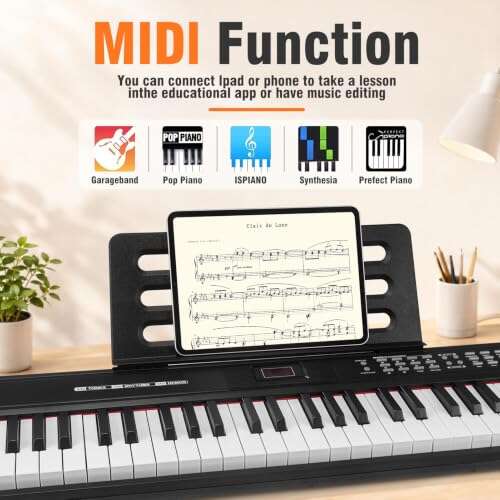
MIDI is important if you use a computer. It makes the piano a hands-on controller for software instruments, notation programs, and recording tools. Look for clear information about USB MIDI, traditional MIDI ports, or wireless MIDI. Do not assume that every USB port carries audio; some carry only data or power.
Built-in recording is helpful for sketches, practice checks, and songwriting. It is not always a substitute for a full digital audio workstation. Internal recordings may have limited editing, storage, or export options. I treat this function as a notebook: useful for capturing an idea before it disappears.
Pedals, headphone output, speakers, and a stable stand also affect daily use. A piano can have many tones but still be frustrating if the bench is poor or the pedal slides. Good design removes small problems. Those small problems often decide whether you play every day or leave the instrument covered in dust.
Best For Table
| Best for | Why |
|---|---|
| Serious piano practice | Yamaha YDP105 offers 88 weighted keys, dynamic response, pedals, and an upright design. |
| Small home studios | Vediya and the UISCOM desk model provide full range while supporting more flexible room layouts. |
| Low-cost beginner recording | RockJam includes key accessories, while Donner adds voices, reverb, touch response, and recording tools. |
FAQs Of best digital piano for home recording
What is the best digital piano for home recording?
The Yamaha YDP105 is my top pick for most players who want realistic weighted keys and a focused piano sound. The Donner OURA DDP-60 is a strong lower-cost option with many voices and built-in recording. Your best choice depends on budget, room size, key feel, and the way you plan to connect to your computer.
Is an 88-key piano better for recording?
An 88-key piano gives you the full range of a traditional piano. It is better for classical pieces, wide arrangements, and two-handed performances. A 61-key model can still work well for pop, chords, melodies, and compact home studios.
Do I need MIDI to record digital piano?
No. You can record audio from a suitable line output, or use the piano’s internal recording feature. MIDI is very useful because it captures note data and lets you change the sound later. Check the piano’s connection type and your computer’s compatibility before buying.
Are weighted keys important for home recording?
Weighted keys are helpful when you want natural piano control and expressive dynamics. They can also support better practice habits. Semi-weighted keys may be enough for pop, synth work, and players who need a lighter, more portable instrument.
Can I record with headphones?
Yes. Headphones are one of the easiest ways to practice and record quietly. They also help you hear timing, clicks, and unwanted noise. Use closed-back headphones when recording audio to reduce sound leaking into a microphone.
Final Verdict: Which Should You Buy?
The Yamaha YDP105 is the best digital piano for home recording for most serious beginners and intermediate players. Choose Donner for more built-in sounds and lower-cost features, or RockJam for a simple starter kit.
Match the key feel and recording connections to your needs. With the right setup, the best digital piano for home recording can turn a quiet room into a dependable creative space.

Senior Music Reviewer
Alex Carter is a seasoned music reviewer with over a decade of experience in the world of sound and instruments. Passionate about helping musicians and enthusiasts make informed choices, he brings sharp insights and in-depth knowledge to every review. From classical instruments to modern gear, Alex combines technical expertise with a love for music to deliver content that resonates with readers.
As a Senior Music Reviewer and expert author on Tuneluma.com, Alex is dedicated to sharing honest evaluations, practical advice, and thoughtful commentary to guide readers in their musical journey.