What Size Is An Adult Violin: Find The Right Fit
An adult violin is usually a full-size 4/4 violin with a body about 14 inches long.
If you are asking what size is an adult violin, the standard answer is 4/4, also called a full-size violin. However, body length is only part of the answer. Your arm length, hand span, finger reach, and playing comfort also matter. This guide explains adult violin measurements, how sizing works, and how to choose the right instrument with confidence.
What Size Is an Adult Violin?
The standard adult violin size is 4/4. It is made for most players around age 11 or older, including teens and adults with average arm and hand size.
A full-size violin usually has these measurements:
• Body length: About 14 inches, or 35.5 centimeters
• Total length: About 23 to 24 inches, or 58 to 61 centimeters
• Bow length: About 29 inches, or 74 centimeters
• Scale length: About 13 inches, or 33 centimeters
The body length is the most useful measurement when comparing violin sizes. Total length can change slightly because of the scroll, neck, tailpiece, and end button.
So, what size is an adult violin in practical terms? It is normally a 4/4 violin with a body near 14 inches long. Some adults, however, may play better on a 7/8 violin or another slightly smaller model.

Understanding Violin Size Labels
Violin makers use fractions to describe instrument sizes. These labels can seem confusing because they do not always match a simple measurement in inches.
A 4/4 violin is the full-size model. It is the normal choice for most adults and advanced teenage players.
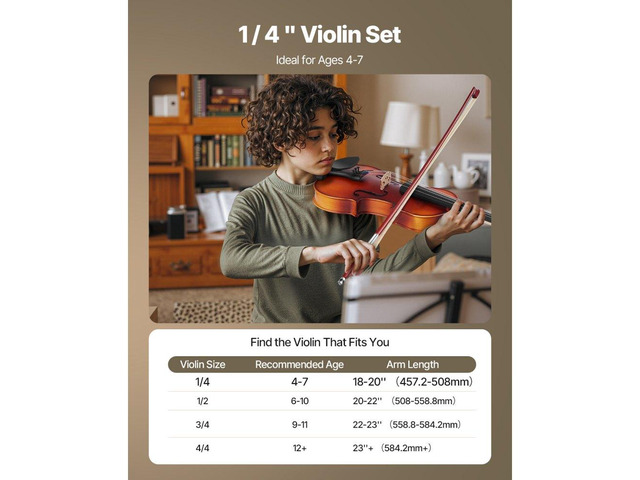
Common violin sizes include:
• 1/16: For very young beginners
• 1/10: For small children
• 1/8: For young children
• 1/4: Often suited to children around 5 to 7 years old
• 1/2: Often suited to children around 7 to 9 years old
• 3/4: Often suited to children around 9 to 11 years old
• 4/4: Full size for most older children, teens, and adults
These age ranges are only general guides. Two children of the same age can need different sizes. The same is true for adults.
A 7/8 violin is sometimes called a ladies’ violin or a reduced-size adult violin. That older term is less useful today because body shape and player anatomy matter more than gender.

How Large Is a Full-Size 4/4 Violin?
A 4/4 violin has a body length of about 14 inches. This measurement runs from the top of the body near the neck joint to the bottom edge.
The instrument’s full length is longer because it includes the neck and scroll. Depending on the model, a full-size violin may measure close to 24 inches from the scroll to the end button.
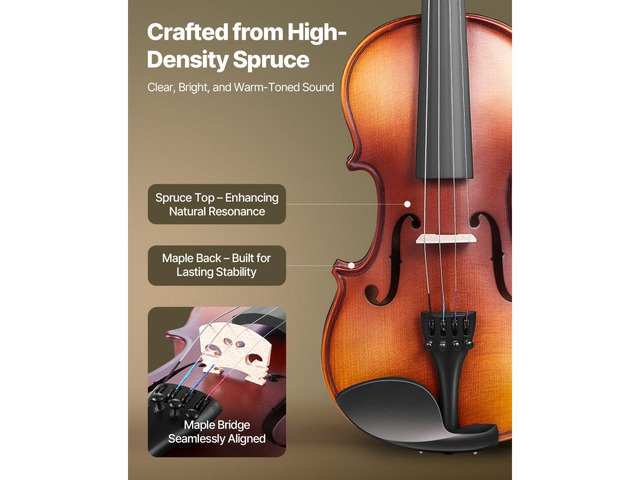
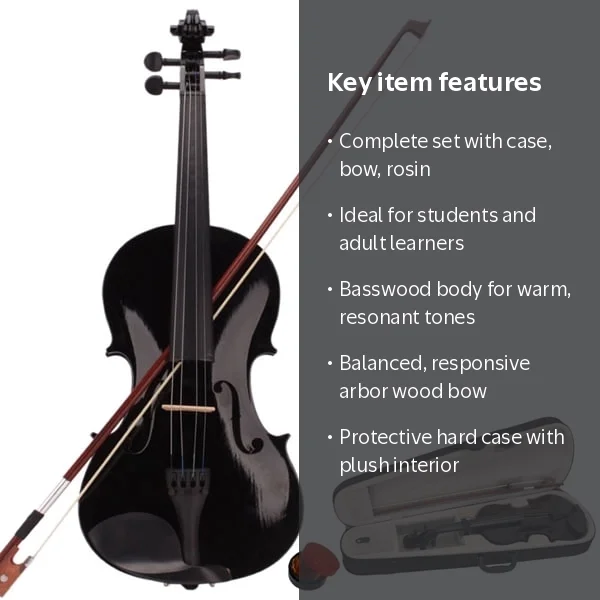
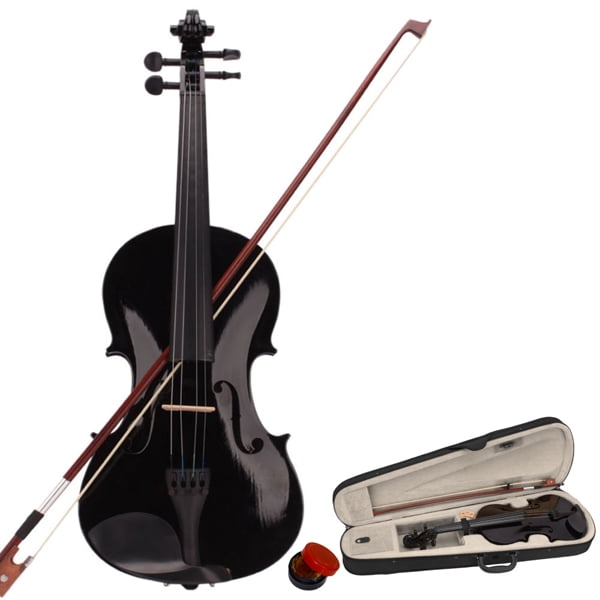
The main parts of an adult violin include:
• Body: The hollow wooden section that creates the sound
• Neck: The long section that supports the fingerboard
• Fingerboard: The black surface where the left hand presses the strings
• Scroll: The carved curl at the top
• Tailpiece: The part that holds the strings at the lower end
• Bridge: The small wooden piece that transfers string vibration to the body
When someone asks what size is an adult violin, they may be thinking about the entire instrument. In violin fitting, though, the body length and playing reach are usually more helpful than total length.
Does Every Adult Need a 4/4 Violin?
No. Most adults use a 4/4 violin, but not every adult needs one.
A full-size violin can feel too large for a player with short arms, narrow shoulders, small hands, or limited finger reach. A 7/8 violin may provide a better fit while still producing a mature, professional sound.
A smaller adult violin may help if:
• Your left wrist bends sharply while you play
• You struggle to reach fourth position or wide finger patterns
• Your shoulder feels tense after a short practice session
• The violin feels unstable when you hold it
• You cannot comfortably place your fingers on the strings
• You often miss notes because the instrument stretches your hand
A smaller violin is not automatically a beginner instrument. Many skilled players use 7/8 violins because the proportions suit their bodies.
One common mistake is choosing the largest violin because it seems more serious. Size should support relaxed technique. A violin that causes tension is like a shoe that is too long: it may look fine, but walking becomes difficult.

How to Measure Yourself for an Adult Violin
A simple arm measurement can provide a useful starting point. It should not replace an in-person fitting, but it can help you narrow your choices.
Follow these steps:
- Stand upright and extend your left arm fully to the side.
- Keep your palm facing upward.
- Measure from the neck to the middle of your left palm.
- Compare the measurement with a violin size chart.
- Test the instrument in playing position before buying it.
Many traditional charts suggest that an arm length of about 23 inches or more may suit a 4/4 violin. A shorter reach may point toward a 7/8 or 3/4 instrument. These numbers vary by chart, so treat them as estimates rather than strict rules.
A better test is comfort. You should be able to hold the violin without lifting your shoulder. Your left hand should reach the notes without strain, and your fingers should curve naturally over the fingerboard.

How to Tell if a Violin Fits Correctly
Knowing what size is an adult violin is useful, but knowing how it feels is even more important. A properly fitted violin should feel secure without forcing your body into an awkward position.
Check these areas:
Left-hand reach
Your fingers should reach the strings without a locked wrist or stretched thumb. You should be able to place your first and fourth fingers with control.
Shoulder and neck comfort
Your left shoulder should remain relaxed. If it rises toward your ear, the violin may be too large, or your shoulder rest may need adjustment.
Chin-rest position
Your chin should rest comfortably without excessive pressure. A poorly placed chin rest can make a correctly sized violin feel wrong.
Bow control
Your right arm should move freely. The bow should sit near the middle of the strings without making you twist your wrist or raise your elbow too high.
Short playing test
Play a slow scale for several minutes. Then try simple songs, low notes, and high notes. A violin that feels comfortable after ten minutes is often a better choice than one that feels impressive for ten seconds.
In real fitting sessions, this short test often reveals more than a ruler. Players may arrive convinced they need a 4/4 violin, then discover that a 7/8 model gives them better control and less tension.
4/4 Violin Versus 7/8 Violin
The main difference between a 4/4 and 7/8 violin is size. A 7/8 violin is slightly smaller, but the exact measurements differ among makers.
A 4/4 violin may be best when:
• You have average or long arm length
• Your hands comfortably reach the fingerboard
• You can play without shoulder or wrist tension
• You want the most common size and widest instrument selection
A 7/8 violin may be best when:
• A 4/4 instrument feels too large
• You have shorter arms or smaller hands
• You want easier reach in higher positions
• You need a compact instrument without moving to a child-size model
A 7/8 violin may have a slightly smaller body and shorter string length. Some players find it easier to control, while others prefer the broader feel of a 4/4 violin.
Try both sizes if possible. The right choice depends on your body and playing style, not only on age.
Does Violin Size Affect Sound?
Yes, size can influence sound, but construction quality matters just as much.
A full-size violin often has a broad, rich sound because its body and air cavity support strong resonance. A smaller violin may have a slightly different response, but a well-made 7/8 instrument can still sound excellent.
Sound depends on many factors:
• Wood quality
• Body design
• Varnish
• Bridge shape
• Soundpost placement
• String type
• Bow quality
• Setup and maintenance
• Player technique
A cheap 4/4 violin may sound weaker than a carefully made 7/8 violin. This is why size should not be the only buying factor.
For a beginner, a good setup is especially important. A qualified violin shop can adjust the bridge, soundpost, pegs, and strings so the instrument responds more easily.
Common Mistakes When Choosing an Adult Violin
Many players focus only on the label. That can lead to discomfort, poor technique, and frustration.
Avoid these mistakes:
• Assuming every adult must use 4/4
• Measuring total length instead of body length
• Buying online without checking return rules
• Ignoring shoulder, neck, and wrist tension
• Choosing the cheapest instrument without a setup
• Using age as the only sizing guide
• Believing a larger violin automatically sounds better
• Testing the violin for only a few seconds