How Do You Mute A Guitar String: Easy Techniques
Mute a guitar string by lightly touching it with your fretting or picking hand until the note stops cleanly.
Learning how do you mute a guitar string is one of the fastest ways to improve your tone, rhythm, and control. unwanted string noise can make a simple chord sound messy, but the right muting technique turns each note into a clear, controlled sound. This guide explains the best methods for acoustic, electric, rhythm, lead, and alternate guitar playing.
Why muting a guitar string matters
A guitar string keeps vibrating until something stops it. That “something” may be your finger, palm, thumb, or another part of your hand. If nearby strings vibrate by accident, they create noise that can blur chords, riffs, and solos.
Good muting helps you:
• Keep chords clean
• Stop unwanted ringing
• Play faster with more control
• Improve palm-muted rhythm parts
• Make guitar solos sound precise
• Control feedback on an electric guitar
• Create rests and rhythmic accents
Think of muting as the silent side of guitar playing. Playing a note tells the string when to speak. Muting tells it when to stop.
When people ask how do you mute a guitar string, they often expect one single trick. In reality, the best method depends on which hand is free, which string is making noise, and what style you are playing.
How do you mute a guitar string with your fretting hand?
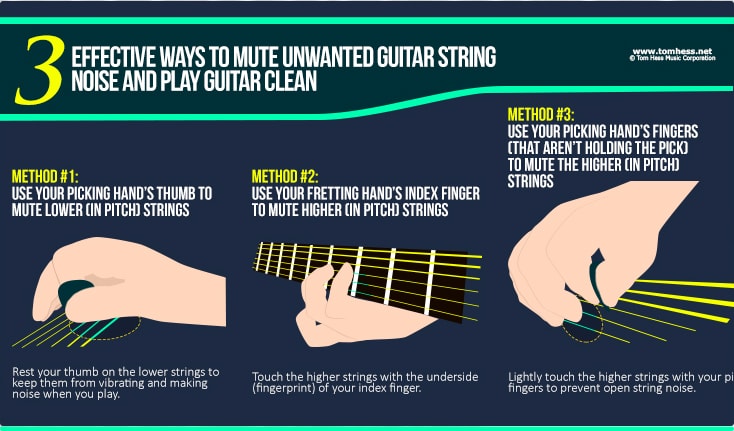
Your fretting hand can mute strings by touching them without pressing them down. This stops the string from producing a clear pitch.
Use this method when you are already holding a chord or moving through a scale.
Step-by-step fretting-hand muting
-
Place your finger lightly on the noisy string.
-
Do not press hard enough to touch the fret.
-
Pick or strum the string.
-
Listen for a dull, short sound instead of a clear note.
-
Adjust your finger until the string stops ringing.
For example, when playing an open A chord, your index finger may touch the low E string. This prevents the low E from ringing if your strumming hand accidentally hits it.
You can also use the underside of your fretting fingers. When playing a power chord, the first finger often rests lightly across nearby strings. This creates a natural mute without slowing down your movement.
Muting while playing chords
Chord muting is useful when strumming. Let your fretting fingers relax slightly between chord hits. Do not lift them completely. A small release of pressure can stop the notes while keeping your hand ready for the next chord.
This technique works well for funk, pop, rock, and percussive acoustic patterns. The muted strum becomes part of the rhythm, almost like a small drum hit.
A common mistake is pressing too hard all the time. Excess pressure makes it harder to release the chord quickly. Use only enough pressure to make the chord sound, then relax when you want silence.

How do you mute a guitar string with your picking hand?
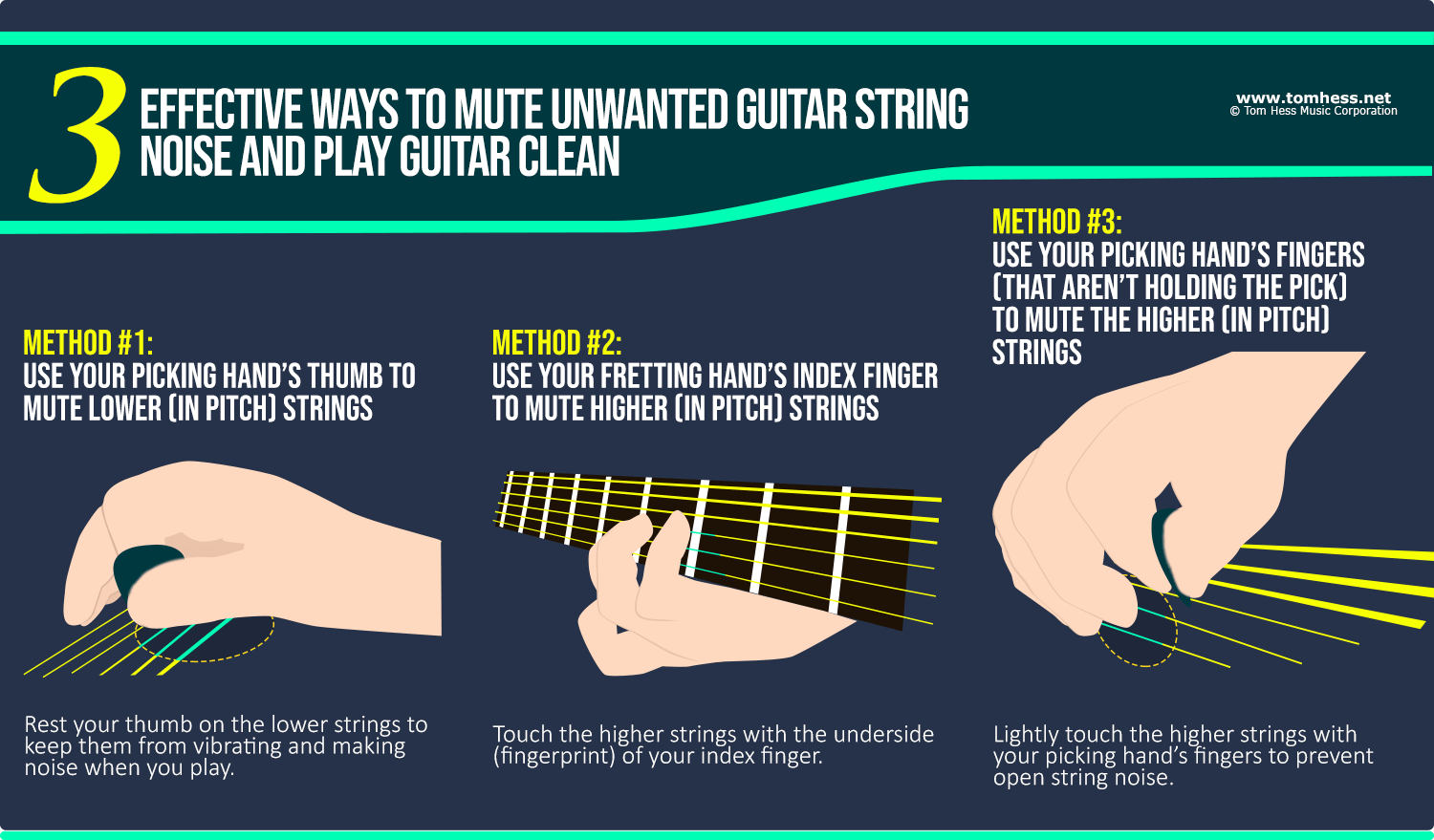
Your picking hand can mute strings with the side of your palm, the thumb, or unused fingers. This is often the best way to control low strings and unwanted noise during lead playing.
The most common method is palm muting.
Palm muting
To palm mute, place the outside edge of your picking hand near the bridge. The soft area below your pinky should lightly touch the string as you pick.
Follow these steps:
-
Rest the edge of your palm near the bridge saddles.
-
Touch the string lightly.
-
Pick one note or a group of notes.
-
Move your palm closer to the bridge for a more open tone.
-
Move it farther from the bridge for a tighter, darker sound.
Do not press your palm down too hard. Heavy pressure can stop the string completely. Light contact creates the short, punchy sound used in rock, metal, country, and pop.
Palm muting should not feel like putting your hand over the whole bridge. Your hand needs to stay relaxed so your picking remains smooth.
Using the thumb and fingers
Your picking-hand thumb can rest on thicker strings while your pick plays thinner strings. This helps control bass-string noise during solos.
For example, while bending a note on the high E string, your thumb may gently touch the B and G strings. Your palm can control the lower strings at the same time.
Some players also use the unused fingers of the picking hand to touch thin strings. This is helpful during string skipping, sweep picking, and fast alternate picking.
When learning how do you mute a guitar string, practice using the picking hand as a safety net. Your fretting hand handles some noise, while your picking hand handles the rest.

How do you mute a guitar string while playing chords?
Chord muting uses a mix of light fretting-hand pressure and controlled strumming. The goal is to let the correct strings ring while stopping the rest.
Start with a simple chord, such as E minor or A minor. Strum each string slowly and listen for unwanted sounds. Then identify which string should not ring.
Try these techniques:
• Touch the unwanted string with a nearby fretting finger.
• Relax the chord after each strum.
• Stop your strumming hand after the final beat.
• Use the thumb to cover the low E string when playing open chords.
• Avoid swinging the pick too deeply into the strings.
Thumb muting on open chords
Many guitarists use the fretting-hand thumb to touch the low E string. This works well when playing an open C chord, because the low E may create a bass note you do not want.
Your thumb does not need to wrap far over the neck. A small touch is enough. Keep your wrist comfortable, and do not force your hand into an unnatural position.
Muted strumming
For muted strumming, keep your fingers in chord shape but release pressure slightly. Strum across the strings. You should hear a soft “chuck” rather than individual notes.
Practice this pattern:
-
Play the chord clearly.
-
Release finger pressure.
-
Strum the muted strings.
-
Press again for the next chord.