What Order To Tune Violin Strings: Easy Tuning Guide
Tune violin strings in the order A, D, G, then E, checking each string again before you finish.
Knowing what order to tune violin strings makes tuning faster, safer, and more stable. The usual method starts with the A string, which is set to concert pitch at 440 Hz, then moves through D and G before ending with the high E string. This guide explains why that order works, how to tune with pegs or fine tuners, and how to avoid common mistakes that can break strings or damage your bridge.
What order to tune violin strings?
The standard order to tune violin strings is:
- A
- D
- G
- E
The A string is the usual starting point because violinists commonly use it as the reference pitch. A tuner, piano, pitch pipe, or another trusted instrument can provide the A above middle C, which vibrates at 440 Hz in standard tuning.
After tuning A, tune D, then G, and finish with E. This approach moves from the middle of the violin toward the lower and higher strings in a controlled way.
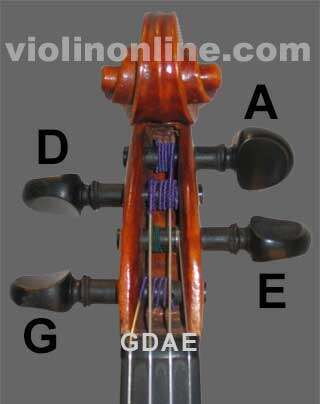
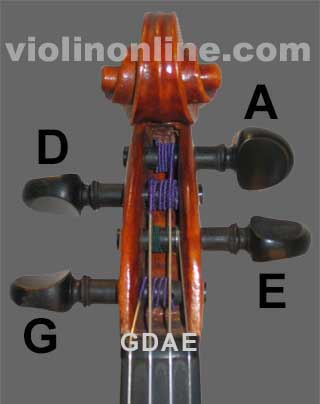
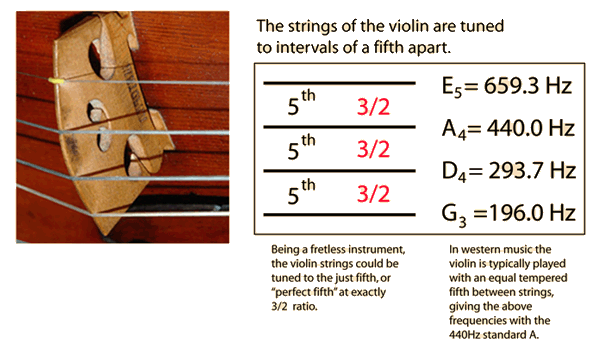
The open strings of a violin are tuned in perfect fifths:
• G3, the lowest string
• D4
• A4
• E5, the highest string
So, from lowest to highest, the strings are G, D, A, and E. However, when asking what order to tune violin strings, most players mean the practical tuning sequence: A, D, G, E.

Why tune the violin in the A-D-G-E order?
Starting with A gives you a reliable reference pitch. The A string sits near the center of the violin’s range, so it is easy to hear and compare with a tuner or another instrument.
Tuning D and G next helps you work toward the lower strings without making sudden changes to the whole instrument. E comes last because it has the highest tension and can sound sharp or harsh when it is far out of tune.
A useful way to remember the process is to think of the violin like a small suspension bridge. Every string adds tension. If you adjust one string, the bridge and soundpost respond slightly, which can change the pitch of the other strings.
That is why you should not tune each string only once. After tuning all four, go back and check them again.
How to tune violin strings step by step
Use this method whether you tune with fine tuners, tuning pegs, or both.
1. Place the violin correctly
Hold the violin in a stable position. You can rest it on your shoulder or place it carefully on your lap with the strings facing upward.
Keep the bridge upright. Its feet should sit flat on the violin’s top, and it should stand at roughly a right angle to the instrument.
2. Tune the A string first
Play the open A string. Compare it with a tuner set to chromatic mode or with a dependable A4 reference.
Turn the fine tuner in small movements if your violin has one. If you use the peg, make very small turns while gently pushing the peg inward. Violin pegs can slip if they are not seated properly.
3. Tune the D string
play the open D string after A is stable. The D string should form a perfect fifth below A.
You can use a tuner for a precise result. You can also compare the two open strings by listening for a clean, steady sound when played together.
4. Tune the G string
Next, tune G. It should form a perfect fifth below D.
The G string often needs more peg movement than the others because it is thicker and has lower tension. Make slow adjustments, and avoid forcing a stiff peg.
5. Tune the E string last
Finish with the E string. It is the thinnest string and carries the most tension, so it deserves extra care.
Use small adjustments. If the E string is very flat, raise it gradually rather than turning the peg quickly. A sudden turn can push the pitch too high and may cause the string to break.
6. Check all four strings again
Return to A, then check D, G, and E. You may need to make small corrections because changing string tension affects the bridge and the other strings.
This second pass is an important part of learning what order to tune violin strings. A violin rarely stays perfectly balanced after only one adjustment.
Should you tune from low to high or high to low?
For most players, A-D-G-E is the best practical order. It starts with the standard reference string and ends with the most delicate string.
Some violinists prefer tuning from G to D to A to E because that follows the strings from lowest pitch to highest pitch. This method can also work well, especially when replacing all four strings.
The key is not only what order to tune violin strings. The key is to make small changes and keep checking the instrument as tension shifts.
Use A-D-G-E when:
• You are tuning before practice or performance
• You are using a tuner or piano for reference
• You want a simple routine that is easy to remember
• Your violin is already close to standard pitch
Use G-D-A-E when:
• You have just installed new strings
• The instrument is far out of tune
• You want to bring tension up gradually
• You are carefully watching the bridge during setup
Never raise a string rapidly from a very low pitch. Slow tuning protects the string, bridge, and instrument.
How to tune violin strings with a digital tuner
A chromatic tuner detects the note and shows whether the pitch is flat, sharp, or centered. Clip-on tuners are useful because they pick up the violin’s vibration and work well in noisy rooms.
Follow these steps:
- Turn on the tuner and select chromatic mode.
- Play the open A string.
- Adjust A until the tuner centers on A4.
- Tune D, G, and E in that order.
- Play each string again to confirm the result.
- Check the fifths by playing neighboring open strings together.
Tune upward whenever possible. If you turn the string too sharp, loosen it slightly below the correct pitch and then raise it back up. This helps the peg and string settle with less slipping.
A tuner is useful, but it should not replace careful listening. The tuner tells you the frequency. Your ear tells you whether the strings sound balanced and pleasant together.

How to tune violin strings by ear
Experienced players often tune A with a reliable reference and tune the remaining strings by perfect fifths.
Play open A and open D together. When the interval is correct, the sound becomes clear and smooth. If the strings are slightly out of tune, you may hear a pulsing or wavering sound called beats.
Adjust D until the beats slow and the fifth sounds stable. Repeat the process between D and G, then A and E.
This method takes practice. It is also affected by the room, the violin’s tone, and your hearing. For beginners, a tuner is usually the most dependable starting point.
The best approach is to use both tools. Let the tuner establish accurate pitch, then train your ear to recognize clean fifths.

Fine tuners and tuning pegs: Which should you use?
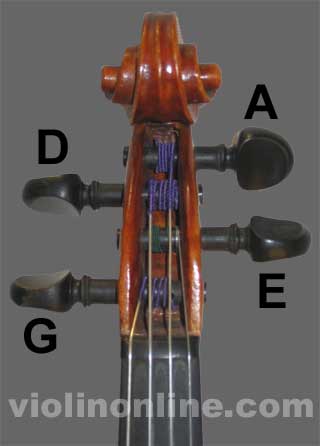
Fine tuners make small pitch changes easy. They are especially helpful for beginners and for the E string, which can be sensitive to tiny adjustments.
Tuning pegs make larger changes. Most violins use the pegs for rough tuning and fine tuners for the final adjustment.
A common setup has:
• Four fine tuners for easy control
• One fine tuner on the E string only
• No fine tuners for players who prefer traditional peg tuning
If a peg feels loose, do not force it. If it feels very stiff, do not twist it aggressively. Peg problems may need attention from a violin shop or qualified luthier.
When learning what order to tune violin strings, many beginners focus only on pitch. It is just as important to learn how the tuning hardware feels and responds.

Common mistakes when tuning violin strings
Small habits can make tuning much easier. Avoid these common errors.
Tuning too quickly
Fast peg turns can overshoot the note, stress the string, or cause a break. Move slowly, especially on the E string.
Ignoring the bridge
The bridge can lean toward the fingerboard as string tension changes. Look at it from the side while tuning.
If the bridge begins to tilt, loosen the strings slightly and ask a luthier for help if you are unsure how to correct it. Pulling a bridge without experience can damage the violin.
Tuning only once
The strings affect one another. A violin that sounds correct after the first pass may be noticeably out of tune a minute later.