Where Is The C On A Piano: Find Middle C Fast
The C on a piano is the white key immediately left of each group of two black keys.
Knowing where is the C on a piano gives you a simple map for the whole keyboard. Once you find one C, you can name every other white key, locate middle C, read basic sheet music, and start playing scales with confidence. This guide explains where is the C on a piano, how to find it quickly, and which C beginners usually need first.
How to Find C on a Piano
The easiest way to find C is to look at the black keys. They appear in repeating groups of two and three.
The white key directly to the left of every group of two black keys is C. This pattern repeats across the full keyboard.
Use these steps:
- Look for any pair of two black keys.
- Find the white key immediately to their left.
- That white key is C.
- Move to the next group of two black keys to find the next C.
The black keys act like road signs. You do not need to count every key. Just spot a pair of black keys, then look one white key to the left.
This answer works on acoustic pianos, digital pianos, electric keyboards, and most MIDI keyboards. The size of the instrument may change, but the black-and-white key pattern stays the same.
Where Is the C on a Piano Keyboard?
On a full-size 88-key piano, C appears several times from left to right. Each C starts a new repeating musical pattern:
C, D, E, F, G, A, B
Then the pattern begins again with C.
The lowest note on a standard 88-key piano is A. Therefore, the first C is not the first key on the instrument. It appears after the first two white keys, A and B.
From there, you will see several C notes across the piano. The highest C is near the far right end of the keyboard.
If you are using a smaller keyboard, you may see fewer C notes. A 61-key keyboard often has several. A 49-key or 25-key keyboard may have only one or two.
Here is the basic layout around C:
| White key | Relationship to C |
|---|---|
| C | Starting note |
| D | One white key to the right |
| E | Two white keys to the right |
| F | After E |
| G | After F |
| A | After G |
| B | After A |
| C | The pattern repeats |
The answer to where is the C on a piano does not depend on the brand or model. Find a group of two black keys, and C is always on the left.
:max_bytes(150000):strip_icc()/middle-C_88-key-56a72cfa5f9b58b7d0e796a6.png)
Where Is Middle C on a Piano?
Middle C is the C closest to the center of the piano. On a standard 88-key piano, it is usually the fourth C from the left.
Sit at the center of the keyboard and find the pair of black keys closest to you. The white key just to the left of that pair is usually middle C.
Middle C is important because it connects the right-hand and left-hand parts of beginner music. In piano notation, it sits between the treble clef and bass clef.
On many music systems, middle C is labeled C4. Some systems, especially certain software and electronic instruments, label it C3. The note itself is the same. Only the numbering system changes.
You can also find middle C by looking for the brand name or center point on a digital keyboard. Some keyboards mark it clearly, but the black-key pattern is the most reliable guide.
A simple way to remember it is this:
• Middle C is near the player’s knees when sitting at the piano.
• It is the C near the center of the keyboard.
• It is one white key left of a pair of black keys.
• It is often called C4 in scientific pitch notation.
When someone asks where is the C on a piano, they often mean middle C. That is the C most commonly used in beginner lessons.
Why the Black Keys Help You Find C
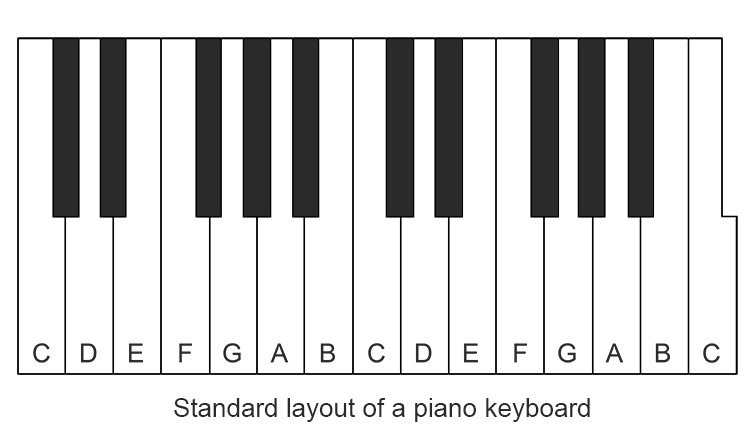
The black keys are arranged in a repeating pattern of groups of two and three. This pattern makes the keyboard easy to read by sight.
C sits immediately before every group of two black keys. F sits immediately before every group of three black keys. These two landmarks help you locate all seven white notes.
Think of the keyboard as a repeating neighborhood:
• C is before the group of two black keys.
• D is between the two black keys.
• E is after the two black keys.
• F is before the group of three black keys.
• G and A sit between the three black keys.
• B comes after the group of three black keys.
This pattern is more useful than memorizing key numbers. Key numbers change with keyboard size, but the note pattern does not.
A common beginner mistake is to look for a special mark on the piano. Most pianos do not label every C. Learning the black-key pattern lets you find C without labels, stickers, or an app.
Finding C on Different Piano Sizes
The answer to where is the C on a piano remains the same, but smaller keyboards can feel different.
88-key acoustic or digital piano
A standard 88-key piano usually has eight C notes, including the high C at the top. The lowest C appears near the left side, not at the very beginning.
76-key keyboard
A 76-key keyboard has a wider range than most beginner keyboards. It may start or end on a note other than C, so use the two-black-key pattern instead of counting from the edge.
61-key keyboard
A 61-key keyboard normally includes multiple C notes. Middle C is still found in the same way, although it may not sit at the exact visual center.
49-key keyboard
A 49-key keyboard may include only a few C notes. You can still identify each one by finding the white key left of a pair of black keys.
25-key MIDI keyboard
A compact MIDI keyboard may have a small range and may not include middle C in the center. Check the black-key groups, then confirm the octave label in your music software if needed.
This is why counting from the left edge can cause trouble. The keyboard may begin on A, F, or another note. The black-key pattern gives a faster and more accurate answer.

How to Use C as a Starting Point
Once you know where is the C on a piano, you can find the other white notes with ease. Start at C and move right through the alphabet:
C, D, E, F, G, A, B
After B, the pattern returns to C. Moving left works in reverse:
C, B, A, G, F, E, D, C
This skill helps with:
• Learning simple melodies
• Reading beginner sheet music
• Playing the C major scale
• Understanding octaves
• Finding chords
• Following piano lessons
• Using music apps and keyboard tutorials
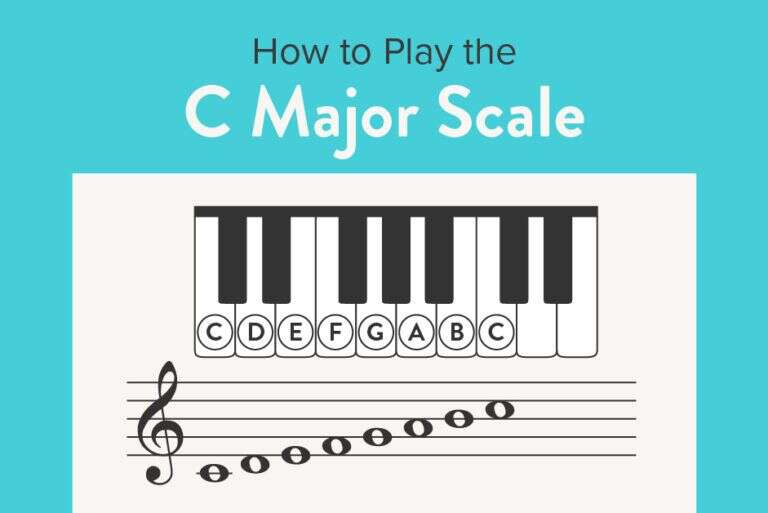
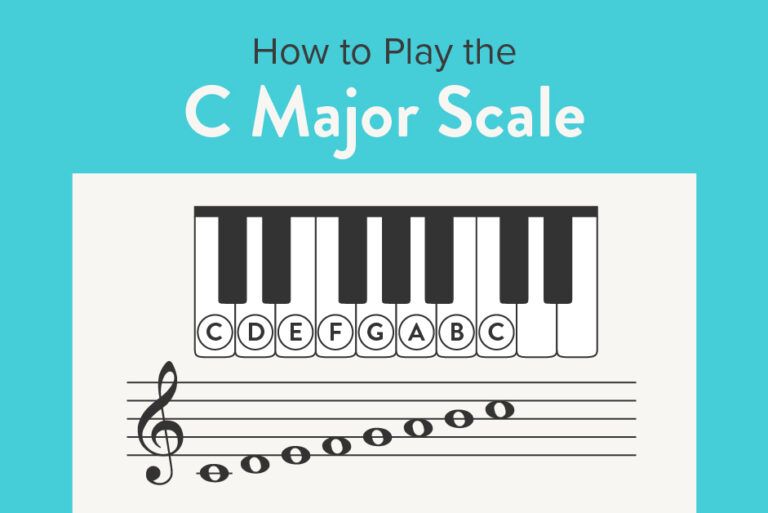
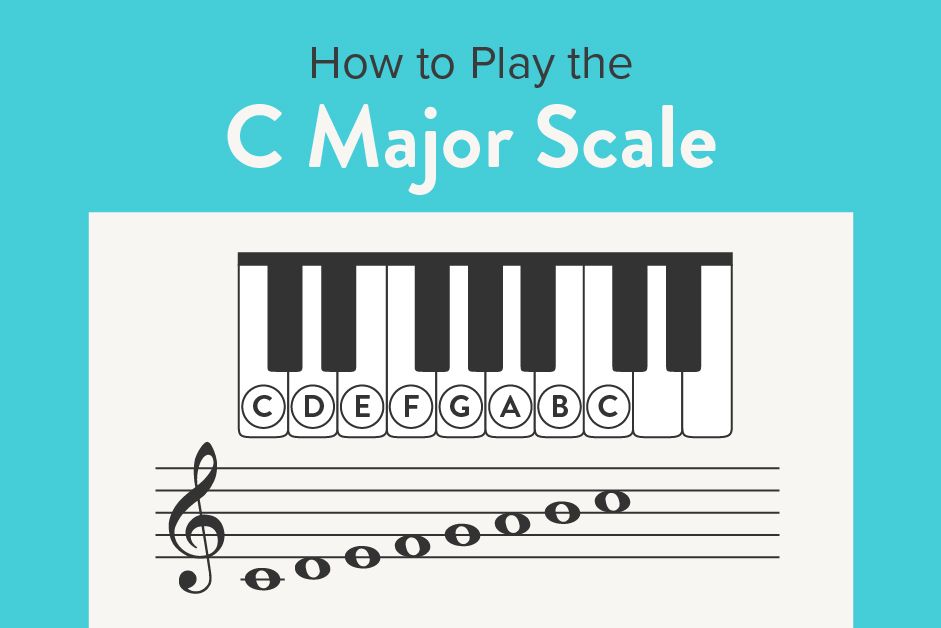
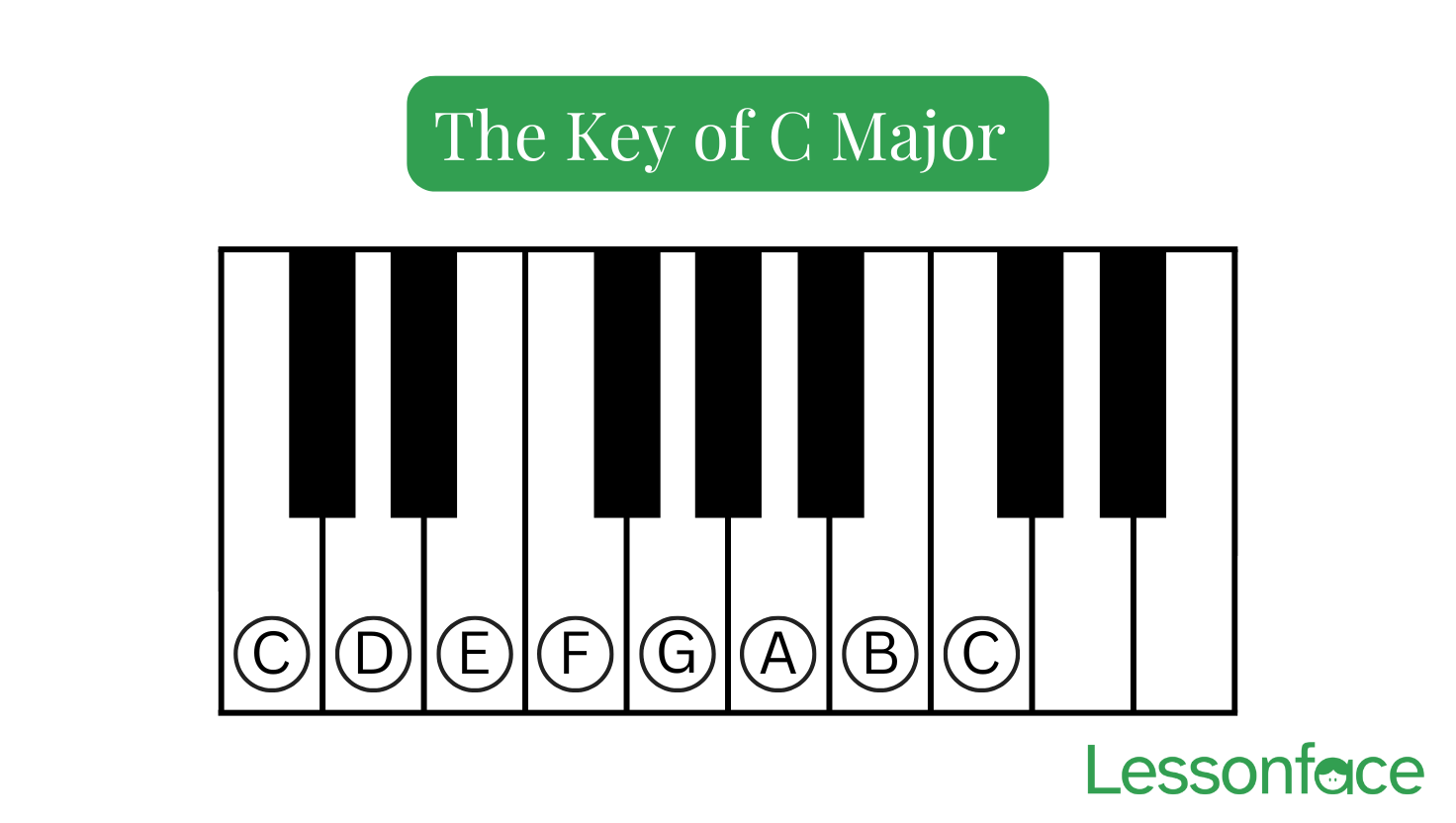
The C major scale is a useful first exercise because it uses only white keys:
C, D, E, F, G, A, B, C
For the right hand, many teachers use the fingers 1, 2, 3, 1, 2, 3, 4, 5. Finger numbers begin with the thumb as 1 and end with the little finger as 5.
Start slowly. Play each note with an even sound. Do not rush simply because the notes are familiar. A steady rhythm builds better control than speed.

Common Mistakes When Looking for C
Many new players know that C is near two black keys but still choose the wrong white key. The most common error is selecting the white key between the two black keys.
Remember this rule: C is to the left of the pair, not inside it.
Other mistakes include:
• Looking only at the far-left end of the keyboard
• Assuming the center key must be middle C
• Confusing C with F
• Counting black keys instead of using their groups
• Forgetting that small keyboards may start on a different note
• Treating C4 and C3 as different physical keys
When I explain this to beginners, I use a simple hand test. Place one finger on the white key just left of a pair of black keys. Say “C” aloud. Then play the next white keys and name them D, E, F, G, A, and B.
Speaking the note names while playing creates a strong link between sight, touch, and sound. It also helps prevent the habit of guessing.
If you use colored stickers, place them only on a few reference keys. Too many labels can slow learning because your eyes begin to depend on them.
A Simple Practice Exercise
This exercise takes less than five minutes and helps you remember where is the C on a piano.
- Find three groups of two black keys.
- Play the white key to the left of each group.
- Say “C” each time you play it.
- Move right from one C and name the next seven white keys.
- Return to C and repeat in another octave.
- Find middle C without counting from the edge.
Next, play every C on the keyboard from low to high. Listen to how the same note repeats at higher pitches. These repeated notes are called octaves.
An octave is the distance from one C to the next C. The note name stays the same, but the pitch rises or falls. This idea appears in scales, chords, melodies, and piano exercises.
After you can find C quickly, try finding E, G, and F. These notes are easy to locate from the same pattern. For example, E is the white key just after a pair of two black keys, while F is just before a group of three black keys.

Why Finding C Matters in Music Theory
C is not the only important note on a piano, but it is a useful reference point. Many beginner lessons start with C because the C major scale uses only white keys.
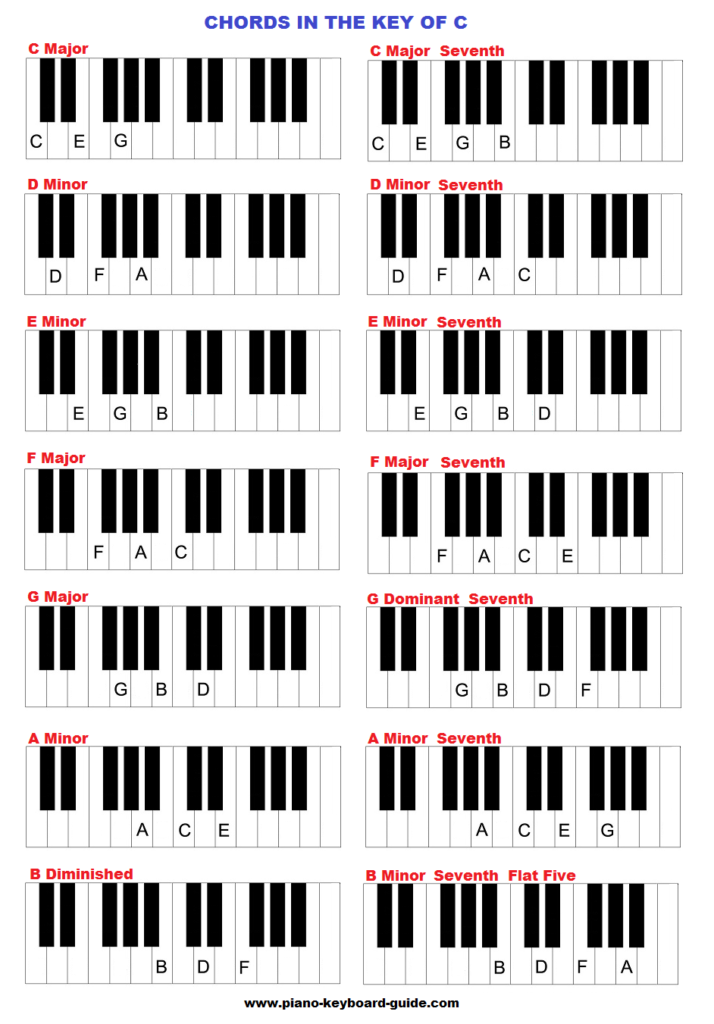
C also appears in common beginner chords:
• C major: C, E, G
• F major: F, A, C
• G major: G, B, D
• A minor: A, C, E
These chords help beginners play songs with simple left-hand patterns and right-hand melodies.
Finding C also makes sheet music easier to understand. Middle C is a central reference note. From there, notes move upward or downward by steps on the staff.
On the keyboard, moving one white key to the right raises the note by a natural step. Moving one white key to the left lowers it by a natural step. The exact pitch distance can vary between whole steps and half steps, but the note names follow the same order.
This is why learning where is the C on a piano is more than a small memory trick. It gives you a foundation for reading, playing, and understanding music.
Frequently Asked Questions About Where Is the C on a Piano
Where is the C on a piano?
The C is the white key immediately to the left of every group of two black keys. This pattern repeats across the entire keyboard.
Where is middle C on a piano?
Middle C is the C closest to the center of a full-size piano. It is usually the fourth C from the left and is often labeled C4.
Is C always next to two black keys?
Yes. Every C is directly to the left of a pair of two black keys. This is true on acoustic pianos, digital pianos, and electronic keyboards.
What is the difference between C and middle C?
C is a note name that appears in several octaves. Middle C is one specific C near the center of the keyboard.
Is middle C called C3 or C4?
Both labels can be used, depending on the numbering system. Scientific pitch notation commonly calls middle C C4, while some software and instruments use C3.
Can I find C on a small keyboard?
Yes. Look for any pair of two black keys and play the white key directly to its left. The keyboard does not need to have 88 keys.
What notes come after C on a piano?
Moving right from C, the white keys are D, E, F, G, A, and B. The pattern then repeats with another C.
Conclusion
The answer to where is the C on a piano is simple: find a pair of two black keys, then play the white key directly to its left. This rule works on every standard piano and keyboard, no matter the instrument’s size.
Middle C is the C near the center and is a key reference for reading music. Once you can find it, practice naming the white keys, play the C major scale, and explore basic chords.
Spend a few minutes at the keyboard today and find every C you can. Then try a beginner lesson or simple song, and keep building your piano skills one note at a time.

Senior Music Reviewer
Alex Carter is a seasoned music reviewer with over a decade of experience in the world of sound and instruments. Passionate about helping musicians and enthusiasts make informed choices, he brings sharp insights and in-depth knowledge to every review. From classical instruments to modern gear, Alex combines technical expertise with a love for music to deliver content that resonates with readers.
As a Senior Music Reviewer and expert author on Tuneluma.com, Alex is dedicated to sharing honest evaluations, practical advice, and thoughtful commentary to guide readers in their musical journey.