Do Re Mi Piano Notes: Easy Guide For Beginners
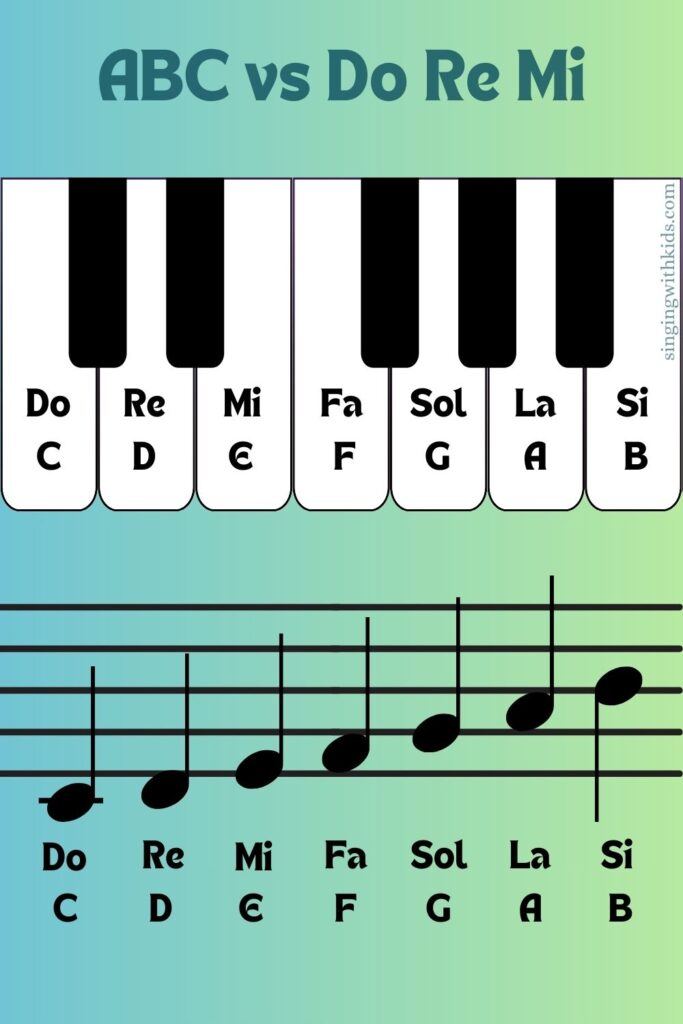
Do re mi piano notes are C, D, E, F, G, A, B, then C in the next octave.
Learning the do re mi piano notes is one of the easiest ways to connect singing, sight-reading, and playing. Once you know how solfège matches the piano keys, you can play simple songs, understand major scales, and move melodies into new keys with much more confidence.
What Are the Do Re Mi Piano Notes?
The do re mi system is called solfège, or solfeggio. It gives each note of a major scale a simple singing name:
| Solfège name | Letter name in C major | Piano key |
|---|---|---|
| Do | C | White key |
| Re | D | White key |
| Mi | E | White key |
| Fa | F | White key |
| Sol | G | White key |
| La | A | White key |
| Ti | B | White key |
| Do | C | White key |
So, the basic do re mi piano notes in the key of C are:
C – D – E – F – G – A – B – C
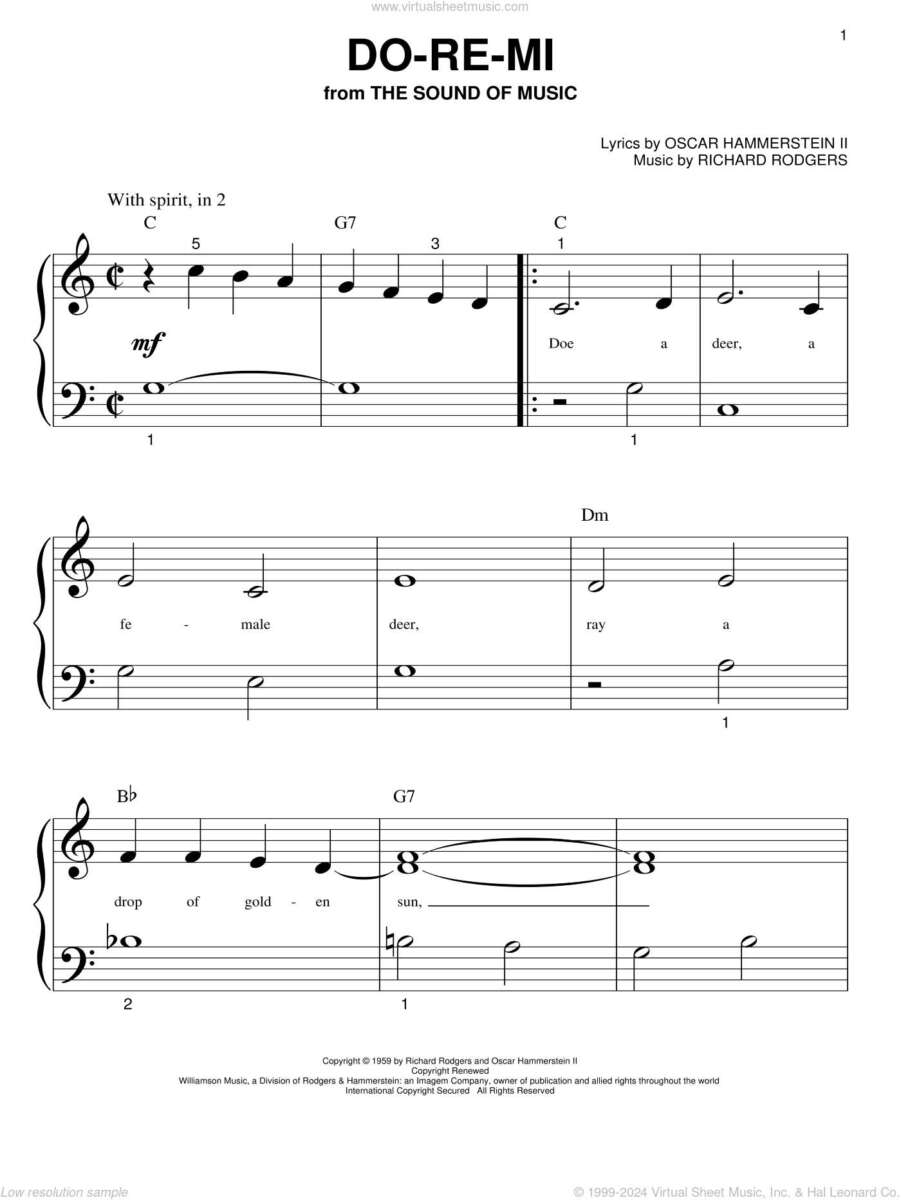
On a piano, these notes are all the white keys. Start at any C and move to the right, playing each white key in order. You will hear the familiar major scale sound used in songs such as “Do-Re-Mi” from The Sound of Music.
The final do is the same note name as the first do, but it is one octave higher. An octave is the distance between one note and the next note with the same name.
Do Re Mi Piano Notes Chart
A clear note chart can help beginners find each sound without guessing. The chart below shows the solfège names, letter names, and common scale numbers.
| Solfège | Letter name | Scale degree | Sound in C major |
|---|---|---|---|
| Do | C | 1 | Home note |
| Re | D | 2 | Step above do |
| Mi | E | 3 | Bright major third |
| Fa | F | 4 | Fourth note |
| Sol | G | 5 | Strong, open sound |
| La | A | 6 | Sixth note |
| Ti | B | 7 | Leads back to do |
| Do | C | 8 | Resting point |
The scale numbers are useful because they work in every major key. For example, in G major, do is G, re is A, and mi is B. The letter names change, but the role of each solfège syllable stays the same.
Some musicians say “si” instead of “ti.” Both names refer to the seventh scale degree. In most American music education, “ti” is common, while “si” appears in some countries and older solfège systems.
A simple memory aid is:
• Do starts the scale.
• Re follows do.
• Mi is the third note.
• Fa sits in the middle.
• Sol is the fifth note.
• La comes after sol.
• Ti pulls strongly toward do.
How to Find Do on a Piano
Finding do is easier when you learn the pattern of black keys. Piano keys repeat in groups of two and three black keys. The white key immediately to the left of every group of two black keys is C, or do in the key of C.
Follow these steps:
- Find a group of two black keys.
- Look at the white key directly to its left.
- That white key is C.
- Play the white keys to the right in order.
- Say “do, re, mi, fa, sol, la, ti, do” as you play.
On a full-size piano, there are several Cs. Middle C is a useful starting point because it sits near the center of the keyboard. It is also commonly used when learning basic melodies and reading treble and bass clefs.
A common beginner mistake is to start from any white key and call it do. That only works if you are using movable do and have first identified the key. If you are learning the basic C major scale, do must begin on C.
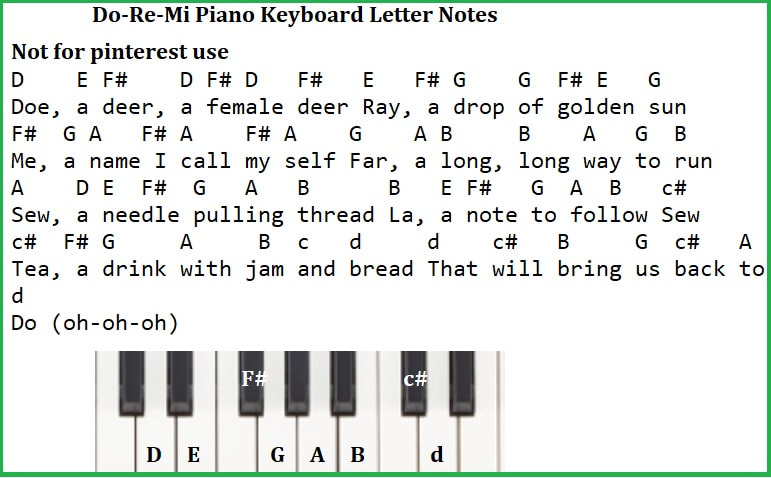
Playing Do Re Mi on the Piano
You can play the do re mi piano notes with one finger at first. This helps you focus on the order and sound of the notes rather than hand position.
Try this simple exercise with your right hand:
- Place your thumb on middle C.
- Play C with finger 1.
- Play D with finger 2.
- Play E with finger 3.
- Play F with finger 1 after passing the thumb under.
- Continue with G, A, B, and C using fingers 2, 3, 4, and 5.
The right-hand fingering for a one-octave C major scale is:
1 – 2 – 3 – 1 – 2 – 3 – 4 – 5
The left-hand fingering is:
5 – 4 – 3 – 2 – 1 – 3 – 2 – 1
Do not rush the thumb crossing. It should feel smooth, like a small bridge connecting two parts of the scale. Keep your wrist relaxed and avoid lifting each finger too high.
In early practice, slow and even playing is more useful than speed. Play the notes while saying the solfège names aloud. Then play them again while singing the pitch. This links your eyes, ears, voice, and fingers.
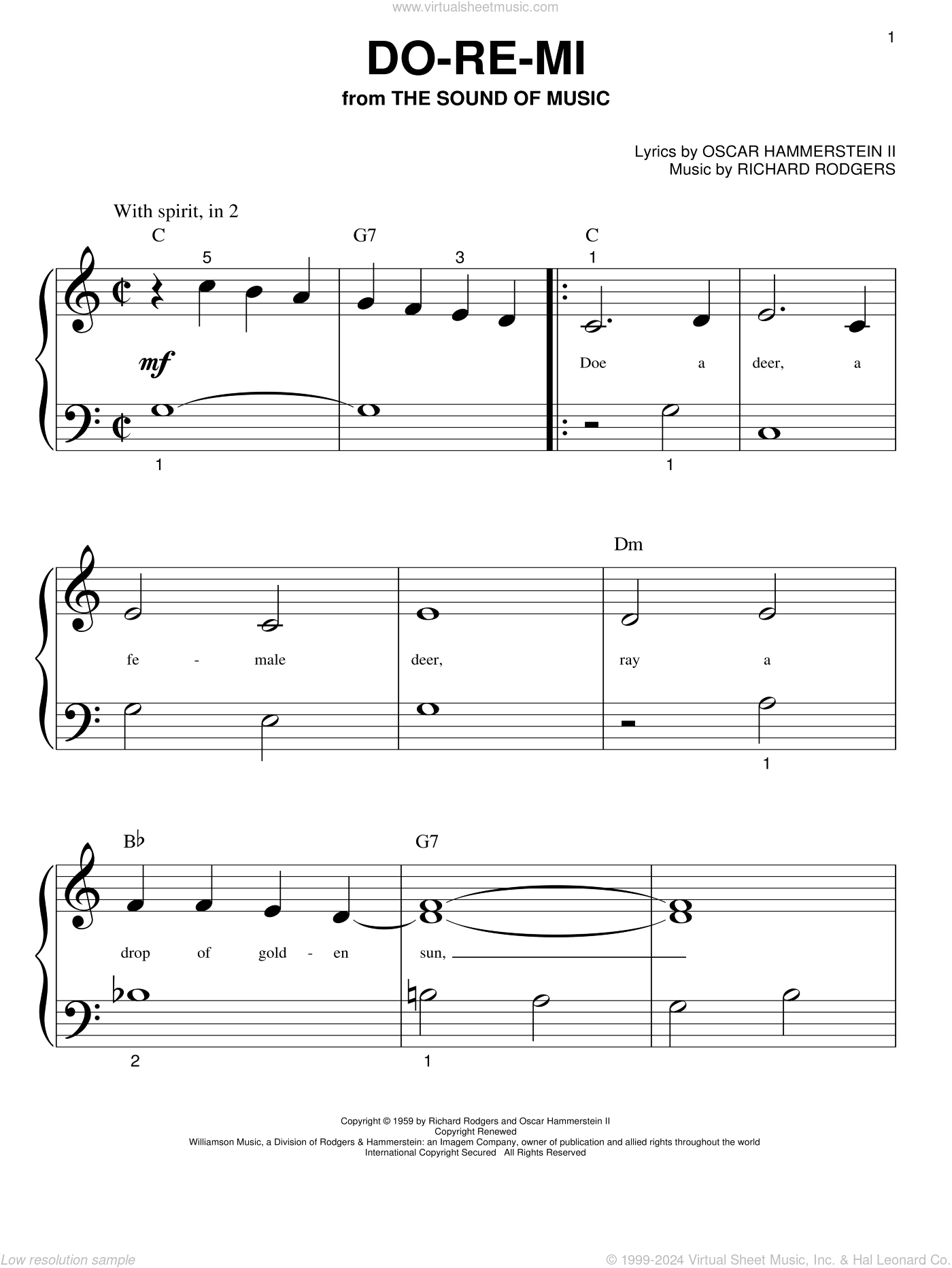
Do Re Mi Piano Notes in Different Keys
The do re mi piano notes change when you change the key. This is one of the most important ideas in solfège.
In movable-do solfège, do is the first note of the major key. For example:
| Key | Do | Re | Mi | Fa | Sol | La | Ti |
|---|---|---|---|---|---|---|---|
| C major | C | D | E | F | G | A | B |
| G major | G | A | B | C | D | E | F♯ |
| F major | F | G | A | B♭ | C | D | E |
| D major | D | E | F♯ | G | A | B | C♯ |
| A major | A | B | C♯ | D | E | F♯ | G♯ |
The distance between the notes follows the major scale pattern:
Whole step, whole step, half step, whole step, whole step, whole step, half step
On the piano, a half step means moving to the next key, whether it is black or white. A whole step means moving past one key to the next.
For example, the C major scale has no sharps or flats. The G major scale needs F♯ to keep the correct pattern. The F major scale needs B♭ for the same reason.
This is why memorizing only the white keys is not enough for long-term progress. The white-key version is a useful starting point, but movable do helps you understand melodies in every key.
Fixed Do and Movable Do
There are two main ways to understand solfège.
Movable do
In movable do, do is the tonic, or home note, of the current key. If a song is in C major, C is do. If the song moves to G major, G becomes do.
This method is helpful for:
• Learning scale patterns
• Understanding intervals
• Singing melodies in any key
• Transposing songs
• Developing relative pitch
Movable do focuses on how notes relate to one another. The syllable “mi,” for example, always represents the third degree of a major scale.
Fixed do
In fixed do, do always means C, re always means D, and mi always means E. The syllables act as permanent names for the letter notes.
This approach is common in some European music education systems. It can be useful for connecting solfège directly to written notes, but it may feel less flexible when you change keys.
Neither system is wrong. The best choice depends on your teacher, music program, or personal goal. If you want to play by ear and understand how melodies move, movable do is often easier. If you use a fixed-do method, keep the letter names clear as well.
Simple Songs Using Do Re Mi Piano Notes
Many beginner melodies use the first five notes of the major scale: do, re, mi, fa, and sol. This five-note group is called a pentascale. It is comfortable for small hands and appears in folk songs, children’s songs, hymns, and pop melodies.
Here are simple solfège patterns to play in C major:
Step pattern
Do – Re – Mi – Re – Do
Letter notes:
C – D – E – D – C
This pattern teaches you to move up and down by steps.
Five-note climb
Do – Re – Mi – Fa – Sol
Letter notes:
C – D – E – F – G
Play the notes slowly, then play them backward:
Sol – Fa – Mi – Re – Do
Simple echo pattern
Do – Do – Sol – Sol – La – La – Sol
Letter notes:
C – C – G – G – A – A – G
This type of pattern helps you hear repeated notes and larger jumps.

When learning a song, first sing the melody using do re mi. Next, find the starting note on the piano. Then work out whether the melody moves by steps, repeats, or skips.
A useful lesson from beginner practice is that many people search for each note separately. That can make playing feel slow. It is better to recognize small shapes, such as do-re-mi or sol-mi-do. These shapes become musical building blocks.
How to Read Do Re Mi in Sheet Music
Solfège and sheet music support each other. Solfège tells you the function and sound of a note, while standard notation shows its exact pitch and rhythm.
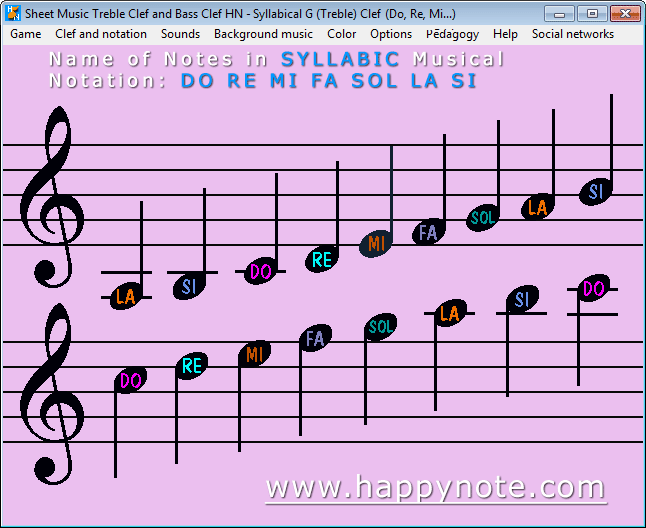
In the treble clef, middle C is written on a small ledger line below the staff. The notes above it move upward through the lines and spaces:
C – D – E – F – G – A – B – C
When reading a melody, look for these details:
• Direction: Does the melody move up or down?
• Distance: Does it move by a step or skip a note?
• Repetition: Does the same note appear again?
• Rhythm: How long does each note last?
• Key signature: Which notes are sharp or flat?
If the key signature shows one sharp, the song is often in G major or E minor. In G major, F becomes F♯. The solfège pattern still works as do, re, mi, fa, sol, la, ti, do, but the piano key for ti is F♯.
Try to read the rhythm separately from the pitch. Clap the rhythm first. Then say the solfège names. Finally, play the notes. This three-step method reduces mistakes and builds steady timing.
Do Re Mi Piano Notes and Ear Training
The do re mi piano notes are also powerful for ear training. Ear training means learning to recognize pitch, distance, and musical patterns by listening.
Start with do and sing it until it feels stable. Then sing re, mi, and back to do. You are practicing the sound of a major second and a major third without needing to name technical intervals at first.
Try these exercises:
- Play do and sing it.
- Play do again, then sing re without playing it.
- Check your voice against the piano.
- Repeat with mi, fa, and sol.
- Randomly play one of the notes and identify its solfège name.
The goal is not perfect singing on the first day. Your voice may slide or land slightly above or below the pitch. That is normal. Listen, adjust, and try again.
One effective habit is to pause before checking the piano. Make your best guess first. Then use the key to test your answer. This turns mistakes into useful feedback rather than something to fear.
Common Mistakes When Learning Do Re Mi
Beginners often make the same small errors. Fixing them early makes piano practice much easier.
Starting on the wrong note
Some players begin on D or E and call it do. In C major, do is C. Always identify the key before naming the solfège notes.
Forgetting the black keys
Do re mi piano notes are not always white keys. In G major, F♯ is part of the scale. In F major, B♭ is required.
Playing with stiff fingers
Tense fingers make the sound uneven and can cause discomfort. Keep your fingers curved, your shoulders loose, and your wrist level.
Practicing too fast
Speed can hide weak timing and wrong notes. Use a slow tempo and increase it only when you can play the pattern evenly several times.
Ignoring rhythm
Knowing the pitch names does not mean you know the song. Count the beat and learn the note lengths along with the do re mi piano notes.
Confusing solfège with chord names
Do, re, and mi describe scale positions in this context. Chords are groups of notes played together, such as a C major chord made from C, E, and G.
A 10-Minute Practice Plan
A short plan can produce better results than an unfocused hour. Use this routine five days a week.
- Spend two minutes finding every C on the keyboard.
- Spend two minutes playing do through do in C major.
- Spend two minutes saying the solfège names while playing.
- Spend two minutes singing the notes before playing them.
- Spend two minutes using the pattern in a simple melody.
Keep the tempo slow enough that you can think clearly. If you make a mistake, stop and identify the cause. Was the finger wrong, was the key unclear, or did the rhythm slip?
After a week, try the same exercise in G major. Begin on G and use F♯. Then try F major with B♭. This shows how movable do works and helps you move beyond the easiest white-key pattern.
A metronome can help with even timing, but it should not replace careful listening. The piano should sound calm and balanced, not mechanical or forced.
Benefits and Limits of Using Solfège
Solfège gives learners a strong framework for understanding music. It is especially useful when you want to sing, play by ear, or recognize patterns.
Key benefits include:
• Better pitch awareness
• Stronger memory for melodies
• Easier transposition
• Clearer understanding of major scales
• More confident sight-singing
• A shared language for music lessons
Still, solfège does not teach everything. You must also learn rhythm, harmony, key signatures, fingering, dynamics, and musical expression. Saying the correct syllables will not automatically produce a polished performance.
There is also a difference between knowing a scale and understanding a song. A song may use notes outside the major scale, change keys, or use a minor scale. In those cases, altered syllables such as di, ri, fi, si, and li may appear in chromatic solfège systems.
Use solfège as a map, not the whole journey. It shows how notes relate, but your ears and musical judgment still guide the trip.
Frequently Asked Questions About Do Re Mi Piano Notes
What are the do re mi piano notes in C major?
The do re mi piano notes in C major are C, D, E, F, G, A, B, and the higher C. They use the white keys only.
What key is do on the piano?
In the key of C major, do is C. In movable-do solfège, do changes to match the first note of the current major key.
Are do re mi the same as C D E?
They can match, but only in C major. In another key, do may be a different letter, such as G in G major.
Do I need to play black keys for do re mi?
You do not need black keys for the C major scale. Other major keys use black keys, such as F♯ in G major and B♭ in F major.
What is the easiest way to memorize do re mi piano notes?
Start with C and play the white keys while saying, “do, re, mi, fa, sol, la, ti, do.” Then practice singing the pattern and finding it from other starting notes.
Should I use fixed do or movable do?
Either system can work. Movable do is often helpful for understanding scale relationships, while fixed do connects each syllable to one permanent letter note.
What fingers should I use for the C major scale?
The right hand commonly uses 1, 2, 3, 1, 2, 3, 4, 5. The left hand commonly uses 5, 4, 3, 2, 1, 3, 2, 1.
Conclusion
The do re mi piano notes create a simple bridge between sound, singing, reading, and playing. In C major, they match C through C, but movable do helps you use the same pattern in every major key.
Start slowly with the C major scale. Say each syllable, listen to each pitch, and practice short patterns before learning full songs. Once the notes feel familiar, try G major and F major to build real musical understanding.
Keep your practice short, steady, and musical. Explore more beginner piano lessons, share your favorite solfège exercise, or leave a comment about the song you are learning.

Senior Music Reviewer
Alex Carter is a seasoned music reviewer with over a decade of experience in the world of sound and instruments. Passionate about helping musicians and enthusiasts make informed choices, he brings sharp insights and in-depth knowledge to every review. From classical instruments to modern gear, Alex combines technical expertise with a love for music to deliver content that resonates with readers.
As a Senior Music Reviewer and expert author on Tuneluma.com, Alex is dedicated to sharing honest evaluations, practical advice, and thoughtful commentary to guide readers in their musical journey.