Where Is Middle C On Piano: Locate It Instantly
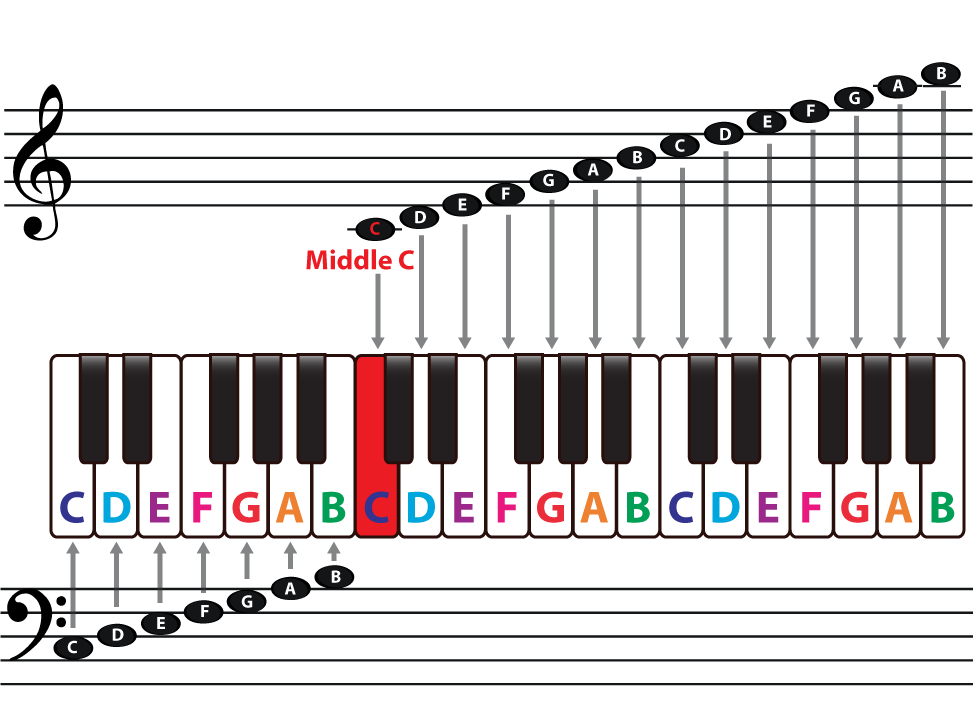
Middle C is the white key immediately to the left of the central group of two black keys near the piano’s center.
As a pianist and teacher with years of experience at the keyboard, I’ll walk you through exactly where is middle c on piano and why it matters. You’ll learn how to find middle C on any keyboard, how it appears in sheet music, common mix-ups to avoid, and practical exercises to lock it into your hands and ears. This guide blends clear steps, real teaching tips, and simple explanations so you can find middle C quickly and use it confidently in practice and reading music.
What is Middle C?
Middle C is the C note that sits near the middle of a standard piano keyboard. It is the C in the fourth octave, often labeled C4 in scientific pitch notation. Middle C vibrates at about 261.63 Hz when tuned to standard concert pitch (A4 = 440 Hz). Knowing where is middle c on piano gives you a reference point for hand position, reading both treble and bass clefs, and starting many beginner exercises.
:max_bytes(150000):strip_icc()/middle-C_88-key-56a72cfa5f9b58b7d0e796a6.png)
Where is Middle C on Piano?
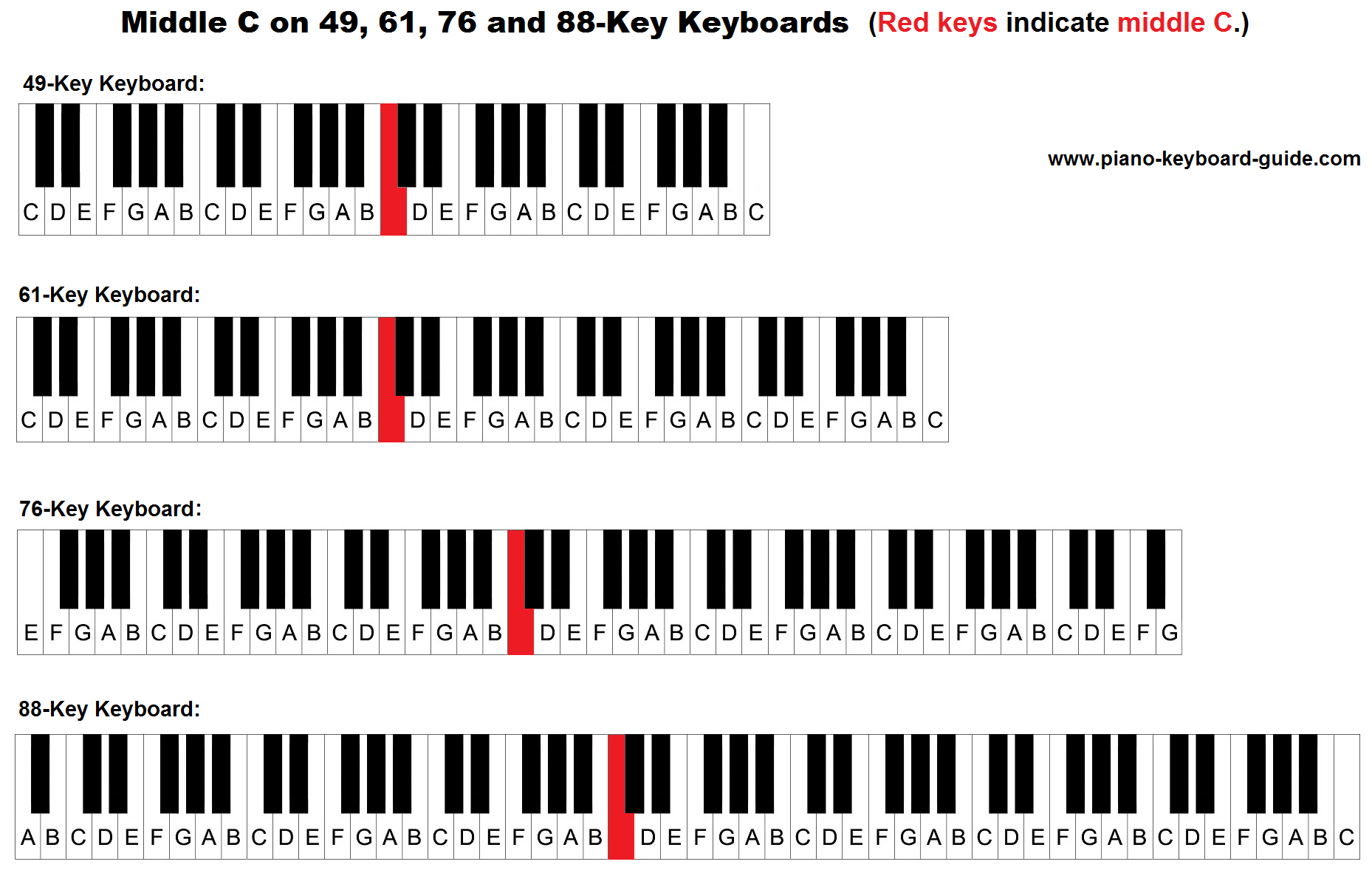
Finding where is middle c on piano is simple once you know what to look for. On an 88-key piano, middle C sits close to the physical center but slightly left of the exact midpoint. Look for the pattern of black keys: groups of two and three. Middle C is the white key directly to the left of a group of two black keys near the keyboard’s center.
Step-by-step:
- Position yourself facing the keyboard so the piano’s name is centered.
- Find the widest groups of black keys around the middle.
- The white key just left of the middle two-black-key group is middle C.
- On smaller keyboards, count octaves from a known C or use the labelled keys to confirm.
Where is middle c on piano can also be expressed as a key number: on a full 88-key piano it is commonly key number 40. On keyboards with fewer keys the central C may be labelled differently, so always confirm the octave marking if present.

How Middle C Appears in Sheet Music
Middle C bridges the treble and bass clefs. In the treble clef, it sits on a small ledger line below the staff. In the bass clef, it sits on a small ledger line above the staff. When music uses both staves (grand staff), middle C is the connecting pitch between right- and left-hand parts.
Why this matters:
- It helps you place hands on the keyboard quickly.
- It is often the singing pitch for beginners.
- It appears in beginner method books as a learning anchor.
If you can find middle C on the keyboard, you can immediately identify where notes lie on both clefs and start playing simple tunes from the grand staff.

Why Knowing Middle C Matters
Knowing where is middle c on piano saves time and boosts musical confidence. It serves as:
- A visual and auditory reference for tuning your ear.
- A starting point for scales, simple songs, and hand position.
- A common reference used by teachers and method books to explain pitch and clefs.
From sight-reading to memory songs, middle C is the “home base” that gets you oriented faster than guessing by feel alone.

How to Identify Middle C on Different Keyboards
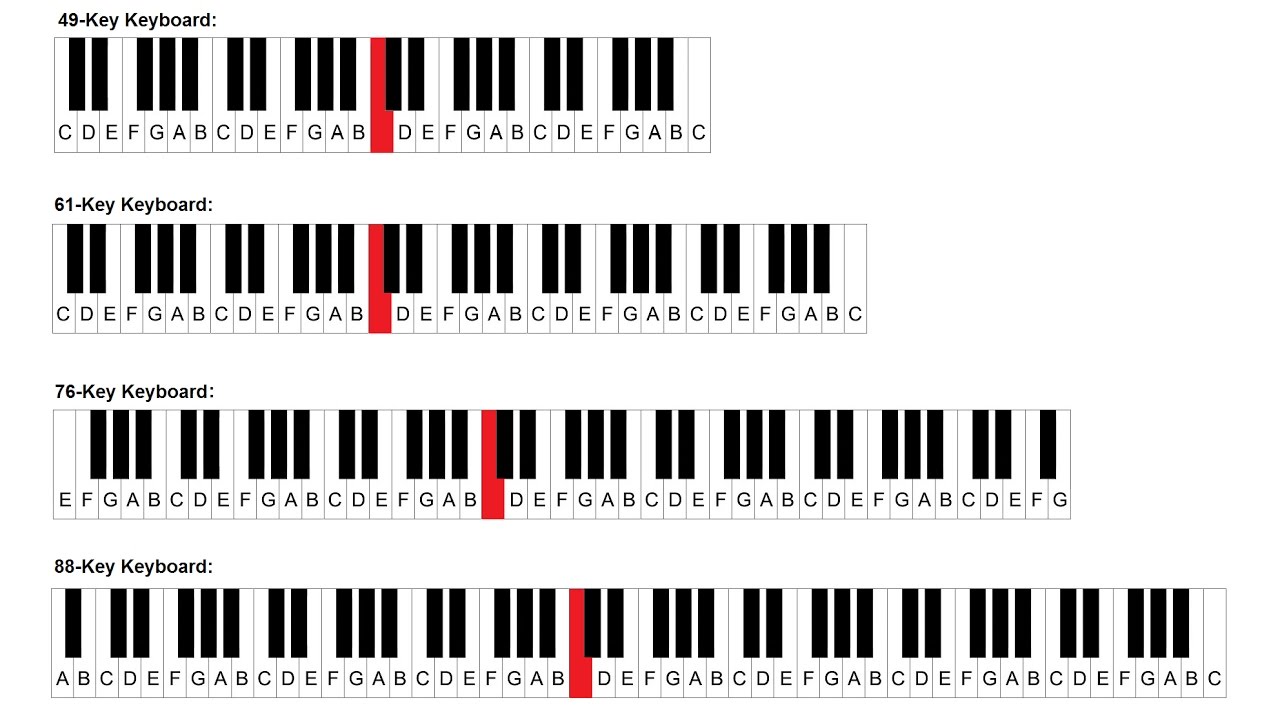
Keyboards vary in size. The method to find middle C stays the same, but labels and positions may shift slightly.
On an 88-key piano:
- Middle C is near the center and often key number 40.
On 76-, 61-, or 49-key keyboards:
- The keyboard center may not align with middle C.
- Look for labelled keys or count octaves from an identified C.
On digital keyboards and synths:
- Some manufacturers map “middle C” to C3 or C5 in the MIDI standard.
- Check the manual or the display if you want the exact MIDI note number.
On electric pianos and apps:
- Use the visual key display or note readout to confirm middle C.
Remember that where is middle c on piano technically means the pitch C4 on most acoustic instruments, but digital gear can label octaves differently.

Practical Exercises to Find and Use Middle C
Practice builds muscle memory and ear recognition. Try these quick exercises to make middle C second nature.
Exercise 1: Visual Locate
- Sit at the piano and find the central two-black-key group.
- Press the white key immediately left of that group. Name it aloud: middle C.
Exercise 2: Hand Placement
- Place your right thumb on middle C and left pinky on the C an octave below.
- Play simple C major scales ascending and descending.
Exercise 3: Ear Matching
- Play middle C and hum the pitch. Then play C4 in a digital tuner and compare.
- Sing “do” on middle C to anchor solfege.
Exercise 4: Staff Identification
- Draw a treble and bass staff. Mark middle C on each with a ledger line.
- Play the written note to connect staff to keyboard.
Personal tip from teaching: I ask students to start every practice with three middle C taps and a hum. That tiny ritual locks orientation and calms the hands.

Common Mistakes and Misconceptions
Beginners often confuse keyboard center with middle C. Here are common traps and how to avoid them.
Wrong assumption: Middle C is the exact center key.
- Reality: It is near the center, but not always the mathematically central key.
Wrong assumption: All keyboards label middle C the same octave.
- Reality: Some keyboards map middle C to C3 or C5 in MIDI. Always confirm.
Wrong assumption: Middle C is always the starting note in songs.
- Reality: Many songs start on other notes; middle C is only a convenient reference.
Tip: If you’re unsure where is middle c on piano, use the black-key groups and ledger-line notation to cross-check.

Quick Tips and Teaching Notes from Experience
Years of lessons taught me what sticks with students. Use these practical tips.
- Anchor technique: Start new sessions with a middle C check to align hands and ears.
- Visual aid: Stick a small removable dot under middle C for very early learners.
- Check tuning: Use middle C to tune by ear against a tuner if needed.
- MIDI caution: When recording, verify which C the software labels as middle C to avoid octave errors.
Real-life note: I once coached a student who played everything an octave too high. The fix was simple — show where is middle c on piano and have them match the written middle C. Problem solved in minutes.
Related Concepts to Explore
Understanding middle C opens up further musical skills.
- Octave numbering and scientific pitch notation
- Grand staff reading and ledger lines
- Ear training exercises using reference pitches
- Transposition using middle C as a pivot
Explore these topics to deepen your control over where is middle c on piano and how it affects music-making.
Frequently Asked Questions of where is middle c on piano
Where exactly is middle C on an 88-key piano?
Middle C on an 88-key piano is the white key just left of the central group of two black keys. It is usually labeled C4 and is close to the physical center of the keyboard.
Is middle C the center key on the keyboard?
Not always. Middle C is near the center, but the physical center of the keyboard and middle C are slightly different on many pianos. Use the two-black-key group to identify middle C accurately.
What frequency is middle C?
Middle C vibrates at approximately 261.63 Hz when using standard concert pitch (A4 = 440 Hz). Tuning systems and historical pitch standards can change this slightly.
How do I find middle C on a small keyboard?
Find any group of two black keys and use the white key immediately left of that pair as middle C if it sits near the center. If unsure, check the keyboard’s labels or display for octave numbering.
Is middle C always called C4?
Middle C is commonly called C4 in scientific pitch notation, but some digital instruments label it differently in their MIDI mapping. Verify the device’s octave naming if exact MIDI note numbers matter.
Can learning where is middle c on piano improve sight-reading?
Yes. Knowing middle C improves sight-reading because it links the grand staff to a physical reference on the keyboard. It shortens the time needed to place hands and read ledger-line notes.
Conclusion
Knowing where is middle c on piano gives you a reliable musical home base. It speeds up reading, improves hand placement, and helps train your ear. Start each practice by finding middle C, use the simple exercises above, and check octave labels on digital gear to avoid errors. Try the three-tap middle C ritual for a week and notice how much faster your orientation and sight-reading become. If you found this helpful, leave a comment, subscribe for more piano tips, or try the practical exercises today.

Senior Music Reviewer
Alex Carter is a seasoned music reviewer with over a decade of experience in the world of sound and instruments. Passionate about helping musicians and enthusiasts make informed choices, he brings sharp insights and in-depth knowledge to every review. From classical instruments to modern gear, Alex combines technical expertise with a love for music to deliver content that resonates with readers.
As a Senior Music Reviewer and expert author on Tuneluma.com, Alex is dedicated to sharing honest evaluations, practical advice, and thoughtful commentary to guide readers in their musical journey.