How Long Are Drum Sticks: Ideal Length Guide
Most drum sticks are about 15 to 17 inches long, with common sizes near 16 inches.
If you are wondering how long are drum sticks, the answer depends on the model, playing style, and amount of reach you need. Most adult drumsticks fall between 15 and 17 inches, but jazz, marching, rock, and electronic drumming each favor slightly different designs. This guide explains standard drumstick lengths, sizing codes, balance, weight, and how to choose a pair that feels right in your hands.

How Long Are Drum Sticks?
Most standard drum sticks measure between 15 and 17 inches long. A common 5A drumstick is usually about 16 inches, while a 5B may be slightly longer or close to the same length.
The exact measurement can vary by brand. Some sticks are shorter for quick control, while others are longer to provide more reach and leverage. A difference of even half an inch can change how a stick feels around the kit.
Drumstick length is measured from the butt end to the tip. The measurement includes the full wooden shaft and the tip, whether that tip is made from wood or nylon.
Common lengths include:
• 15 to 15.5 inches: Short and quick, often used for jazz or younger players
• 16 inches: A common all-purpose length for 5A sticks
• 16.5 to 17 inches: More reach and power for rock, pop, and concert playing
• 17 inches or more: Often used for marching, heavy playing, or players who want extra leverage
So, how long are drum sticks in everyday use? For most drummers, the practical answer is close to 16 inches.
Standard Drumstick Lengths by Type
Drumsticks do not all have the same purpose. A short jazz stick and a long marching stick can both be excellent, but they serve different musical needs.
Jazz drumsticks
Jazz sticks are often shorter and lighter. Many measure around 15 to 16 inches and use a smaller diameter.
The shorter length helps with fast movement and close control. It also makes delicate cymbal work feel more precise. Jazz players often need to move quickly between the ride cymbal, snare, and toms, so a compact stick can feel like a well-fitted pen.
Rock and pop drumsticks
Rock and pop players often use sticks from 16 to 17 inches. Models such as 5A, 5B, and similar sizes are common.
The extra length provides more reach across large drum kits. It can also add leverage, which helps produce a strong sound without forcing the player to grip too tightly.
Marching drumsticks
Marching sticks are often longer and thicker than standard drum set sticks. Many are around 16.5 to 17.5 inches, though some models may be outside that range.
They are built for projection and control on large marching drums. Their larger size can create a powerful sound, but it may feel tiring on a small drum set.
Concert and orchestral sticks
Concert sticks vary widely. Some are light and delicate, while others are heavy enough for large bass drums and timpani.
The correct length depends on the instrument. A player may use several stick types during one performance because snare drums, cymbals, timpani, and mallet instruments each respond in different ways.

Common Drumstick Sizes and What the Numbers Mean
When people ask how long are drum sticks, they often see numbers such as 5A, 5B, or 2B. These numbers do not tell you the exact length. They describe a general size family.
The letter also gives a rough clue:
• A usually refers to a thinner stick designed for lighter playing
• B often refers to a thicker stick with more volume and durability
• S traditionally refers to a larger stick used for street or marching performance
The number works in the opposite way many people expect. A smaller number usually means a thicker stick. For example, a 2B is thicker than a 5B, and a 5B is thicker than a 5A.
Typical measurements may look like this:
| Drumstick size | Approximate length | Typical use |
|---|---|---|
| 7A | 15.5 to 16 inches | Jazz, light pop, low-volume playing |
| 5A | 16 inches | General drum set use |
| 5B | 16 to 16.5 inches | Rock, worship, pop, and practice |
| 2B | 16 to 16.5 inches | Heavy rock and powerful playing |
| Marching | 16.5 to 17.5 inches | Marching snare and outdoor performance |
These figures are approximate, not fixed rules. Manufacturers use their own designs, so always check the product specifications before buying.

Why Drumstick Length Matters
Length changes the way a drumstick feels, sounds, and responds. It affects reach, leverage, balance, and control.
A longer stick gives you more reach. This can help when your floor tom or cymbals sit farther away. It also creates more leverage, much like using a longer wrench.
A shorter stick often feels quicker and easier to control. It can be useful for tight setups, soft playing, and fast movements. However, it may require more arm movement if your drums are spread out.
Length also affects balance. Two sticks can both be 16 inches long but feel very different if one has a front-heavy design and the other has a rear-balanced design.
Important effects include:
• Reach: Longer sticks make distant drums and cymbals easier to access
• Leverage: Longer sticks can produce power with less visible effort
• Control: Shorter sticks may feel faster and more precise
• Fatigue: Very heavy or long sticks can tire the hands and arms
• Sound: Larger sticks often produce more volume and a fuller attack
The best choice is not the longest stick or the heaviest stick. It is the stick that gives you the sound and control you need without creating tension.
How Diameter and Weight Work With Length
Length is only one part of a drumstick’s design. Diameter, weight, taper, tip shape, and wood type also matter.
A thick stick may feel powerful, but it can be tiring during long sessions. A thin stick may feel fast and comfortable, but it may break sooner during loud playing.
A longer stick does not always weigh more. A manufacturer can use a narrow shaft, a long taper, or a lighter wood to reduce weight. This is why two sticks with the same length can feel completely different.
Look at these features together:
• Diameter: Controls grip feel, strength, and potential volume
• Taper: Changes rebound and balance near the tip
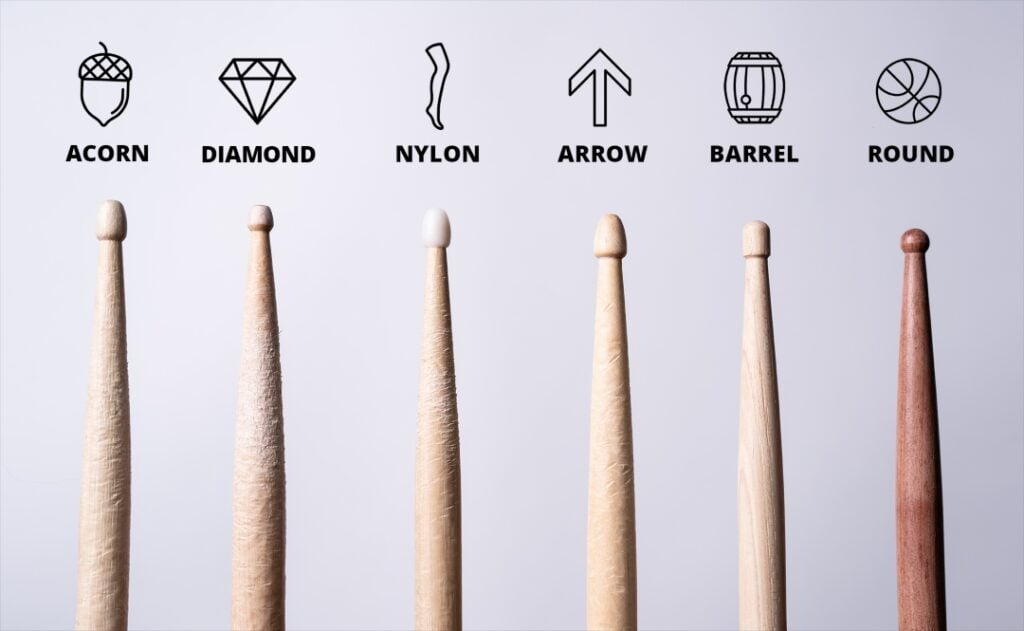
• Tip shape: Influences cymbal tone and drum attack
• Wood type: Affects weight, flex, feel, and durability
• Weight matching: Helps both hands feel more even
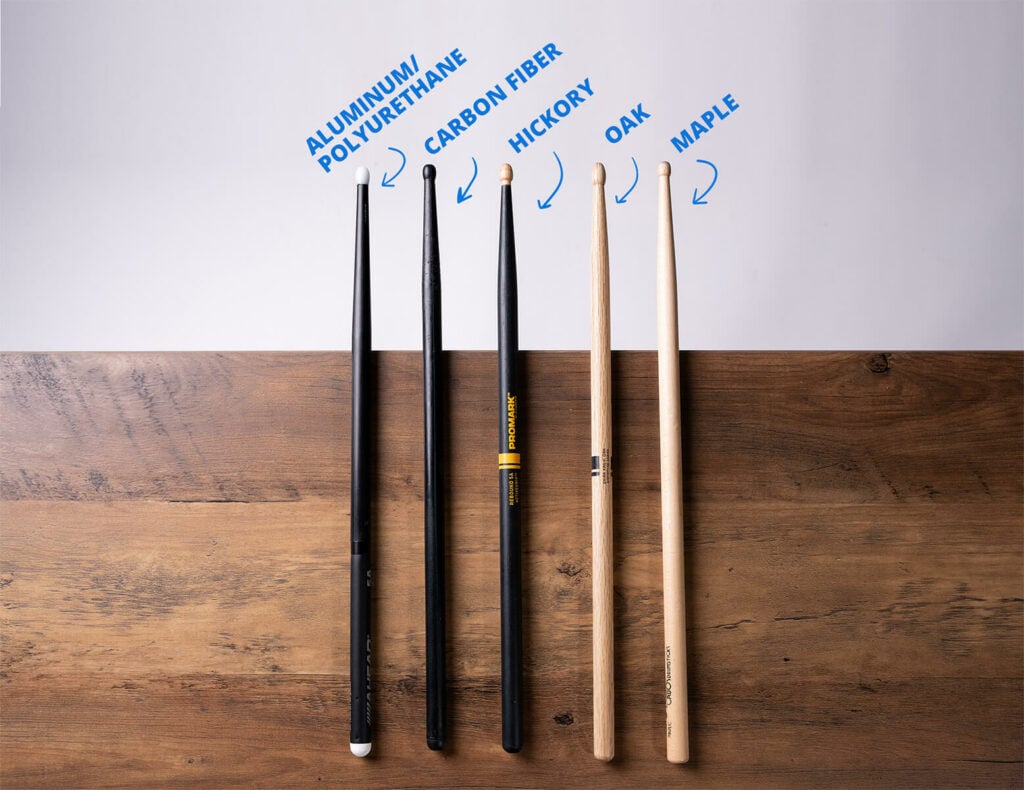
Hickory is a popular choice because it offers a useful mix of strength, shock absorption, and moderate weight. Maple is lighter and can feel quick, but it may not tolerate hard rimshots as well. Oak is dense and durable, though it can feel heavier in the hand.
In my experience, many new drummers focus only on the printed size. A better approach is to hold several pairs and notice where the balance point sits. The right stick should feel like an extension of your hand, not a tool you must fight.
How to Choose the Right Drumstick Length
Choosing the right length starts with your kit, your music, and your comfort. You do not need to match a famous drummer’s exact stick size.
Use this simple process:
-
Start with a 5A stick around 16 inches long.
-
Play your normal patterns on the snare, toms, and cymbals.