How To Adjust Spring Tension On Double Bass Drum Pedals:Pro
Turn the spring adjuster until the pedal feels balanced — tighter for fast rebound, looser for a softer feel.
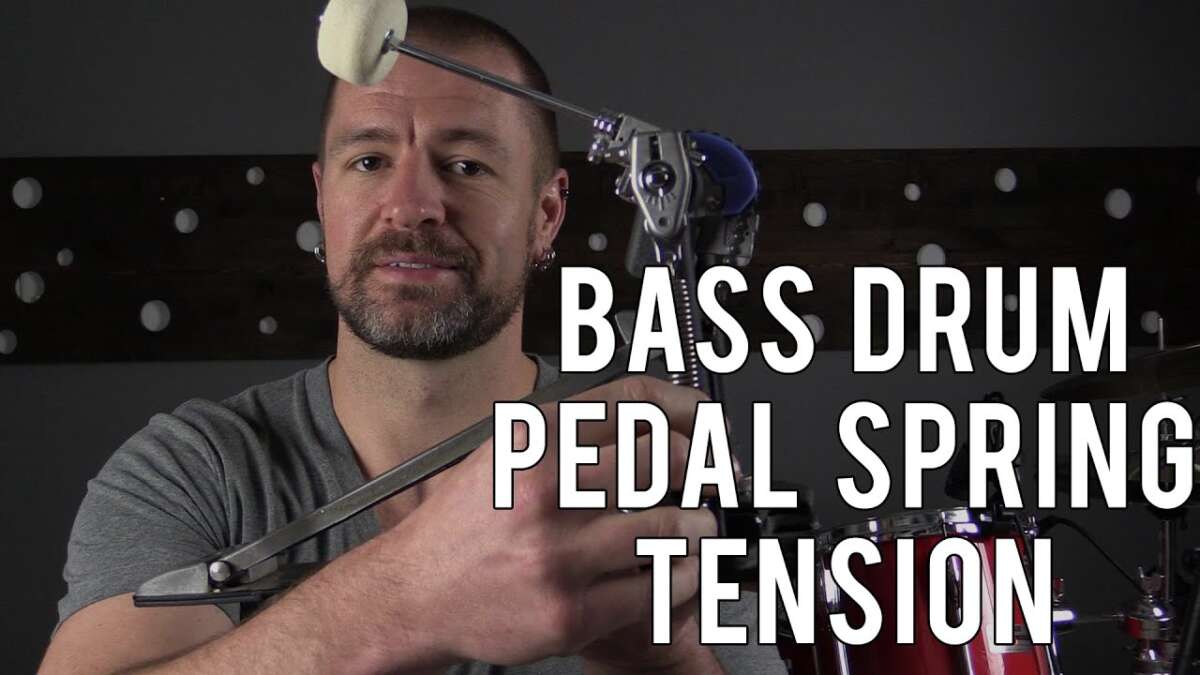
I’ve spent years dialing pedals for studio sessions and live shows, so I know how critical spring tension is for power, speed, and feel. This guide on how to adjust spring tension on double bass drum pedals walks you through safe steps, pro tips, troubleshooting, and matching both pedals so you play with confidence and control. Read on for clear, tested advice you can use right away.

Why spring tension matters for double bass drum pedals
Spring tension controls rebound, resistance, and tempo response. Proper spring tension helps you play faster, control ghost notes, and keep strokes even between both pedals. Too loose and you lose control. Too tight and you waste energy and strain your foot.
Understanding how to adjust spring tension on double bass drum pedals means learning how feel affects timing and comfort. Small changes change playability a lot. Tune to your music style and body.

Tools and parts you'll need before adjusting spring tension on double bass drum pedals
- Ratchet or wrench for the spring nut.
- Replacement springs or clips for upgrades.
- Small screwdriver for beater angle and cam screws.
- A metronome to test timing and consistency.
- A towel or pad to protect the drumhead while testing.
Check your pedal manual to find the spring type and thread size. Some pedals use coil springs, others use cable or strap systems. Know which one you have before you tighten anything.
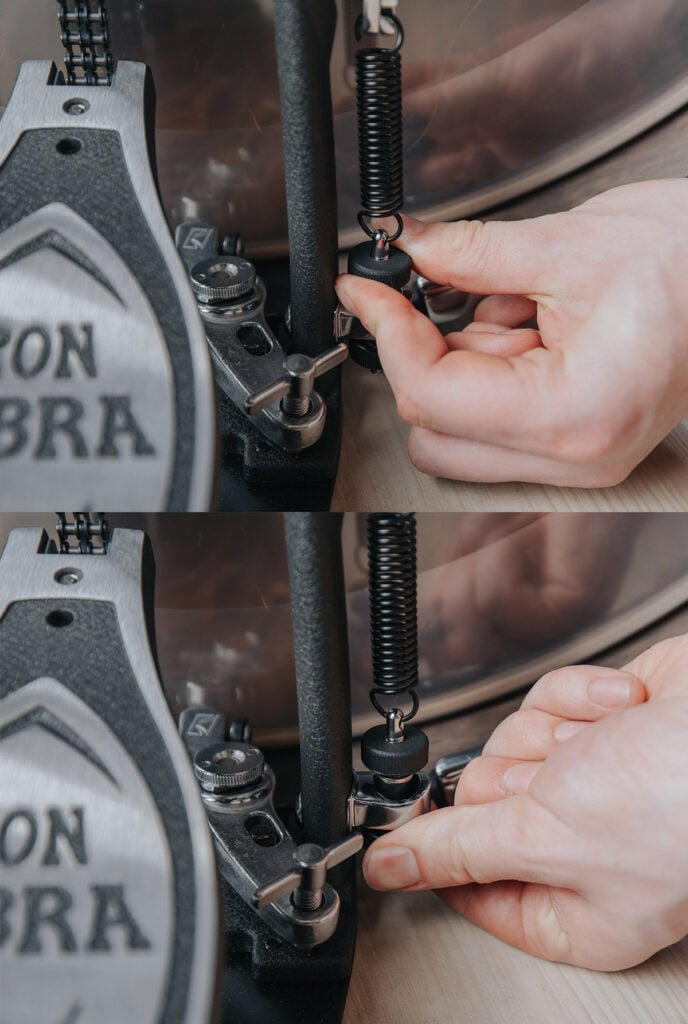
Step-by-step: how to adjust spring tension on double bass drum pedals
- Loosen the pedal clamp and set the pedal on the hoop. Make sure the pedal sits solid and won’t move.
- Find the spring adjuster. This is often a nut, hook, or knob near the pedal hinge.
- Start at a medium setting. If your pedal has numbers or marks, set to the middle.
- Tighten in small steps. Turn a quarter to a half turn, then test. Play 8–16 notes and judge feel.
- Loosen if it feels stiff. Back off in small turns until the touch feels natural.
- Match both pedals. Play single strokes alternating feet. If one feels heavier, adjust that spring to match.
- Check beater angle and height after tension changes. A changed spring tension can alter beater travel.
- Lock any locking nuts. Some pedals have a jam nut to keep settings stable for gigs.
When you adjust spring tension on double bass drum pedals, aim for repeatable steps. Mark your settings with tape or a pen. That saves time the next session.

Common problems and fixes when you adjust spring tension on double bass drum pedals
-
Pedal feels dead or slow
- Fix: Loosen the spring a bit. Test until rebound feels snappy but not harsh.
-
Pedal is too bouncy or hard to control
- Fix: Tighten the spring slightly and lower beater angle for shorter travel.
-
Two pedals don’t match
- Fix: Use a metronome and alternate strokes. Small turns to the weaker pedal usually solve it.
-
Noise or clunk at the hinge
- Fix: Clean, lubricate pivot bearings and tighten loose screws. Spring noise often stops after a light lube.
-
Spring wears or stretches
- Fix: Replace springs in pairs. Old springs lose tension and make matching impossible.
Troubleshooting while you adjust spring tension on double bass drum pedals is mostly about small changes and testing. Make one change at a time and play it for a minute before the next tweak.

Tuning tips for speed, control, and consistency when adjusting spring tension on double bass drum pedals
- For metal and fast styles, tighten a bit for fast rebound and short travel.
- For jazz and light touch, loosen for smoother strokes and longer travel.
- Use a metronome to test tempos. Increase tension if you can’t keep up cleanly.
- Match spring length and preload on both pedals first. Then fine-tune while playing.
- Mark settings with tape so you can return quickly.
People also ask:
Will tighter spring tension make me play faster?
Tightening raises rebound, which can help speed. But too tight causes fatigue and poor control.
How do I match two pedals exactly?
Set both to the same spring mark, match beater angle and footboard height, then fine-tune while alternating strokes.

Personal experience: lessons learned adjusting spring tension on double bass drum pedals
I once tightened springs to chase speed and ended up with sore calves after a three-hour session. The lesson: speed without comfort kills endurance. Now I tighten in tiny steps and test songs I’ll play live.
Another time I swapped one new spring and left the old one on the other pedal. The pair never matched until I replaced both. Match springs in pairs to avoid uneven feel.
My reliable rule: adjust, play for a minute, and listen. Small moves win. When you adjust spring tension on double bass drum pedals, patience beats brute force.
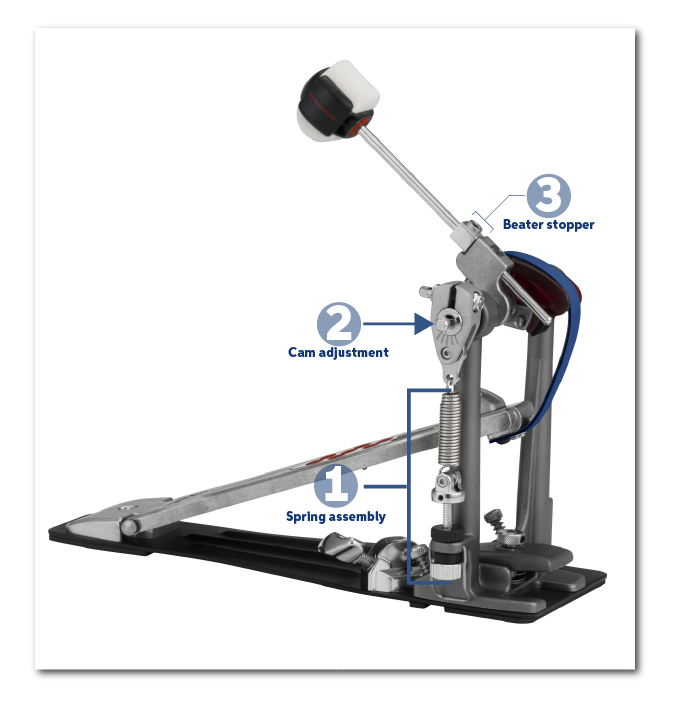
Maintenance and upgrades related to spring tension on double bass drum pedals
- Replace springs every 12–24 months if you gig often.
- Upgrade to higher-grade springs for consistent tension and less stretch.
- Keep pivot points clean and lightly lubricated to preserve feel.
- Check screws and cam bolts before every show to prevent sudden shifts.
Regular care prevents tuning drift and keeps your spring settings true. If you upgrade parts, re-learn settings from scratch for the new feel.

How to set spring tension for different music styles
-
Rock and pop
- Medium tension. Aim for a balance of power and ease.
-
Metal and blast beats
- Higher tension. Short travel and quick rebound help speed.
-
Jazz and funk
- Lower tension. Longer travel helps finesse and dynamics.
-
Session work and variety gigs
- Start medium. Adjust per song if needed to keep comfort across styles.
Each style benefits from small tweaks. When you adjust spring tension on double bass drum pedals, think about the songs you play and the endurance you need.

Frequently Asked Questions of how to adjust spring tension on double bass drum pedals
How tight should spring tension be for fast playing?
Tight enough for a quick rebound but not so tight that your foot gets tired quickly. Start medium and tighten until you can play clean 16th notes at tempo.
Can I adjust spring tension without tools?
Some pedals have thumbscrews or knobs that let you adjust by hand. If yours needs a wrench, keep one in your kit.
Will changing spring tension affect beater angle?
Yes. Tension changes can alter travel and beater impact. Re-check beater angle after each major adjustment.
How often should I replace pedal springs?
Replace springs every 12–24 months with regular gigging. Replace sooner if you notice stretch or inconsistent feel.
Should both pedals use the same spring brand and model?
Ideally yes. Matching springs make it much easier to get both pedals to feel the same and behave predictably.
Conclusion
Adjusting spring tension on double bass drum pedals is a small skill that makes a big difference. Start at a medium setting, make small changes, test with a metronome, and match both pedals. Keep a log of settings and maintain springs for consistent feel.
Try one adjustment today. Play a few minutes and trust your ear and body. If this guide helped, leave a comment, subscribe for more tips, or share your pedal setup and what worked for you.

Senior Music Reviewer
Alex Carter is a seasoned music reviewer with over a decade of experience in the world of sound and instruments. Passionate about helping musicians and enthusiasts make informed choices, he brings sharp insights and in-depth knowledge to every review. From classical instruments to modern gear, Alex combines technical expertise with a love for music to deliver content that resonates with readers.
As a Senior Music Reviewer and expert author on Tuneluma.com, Alex is dedicated to sharing honest evaluations, practical advice, and thoughtful commentary to guide readers in their musical journey.