What Is A Tom Drum: Complete Guide To Sound And Setup
A tom drum is a tunable, shell-shaped drum that produces deep, resonant tones without a snare.
If you have heard a drum fill roll across a rock, jazz, or worship song, you have heard tom drums at work. This guide explains what a tom drum is, how it is built, how it sounds, and how drummers tune and use it in real music.
What Is a Tom Drum?
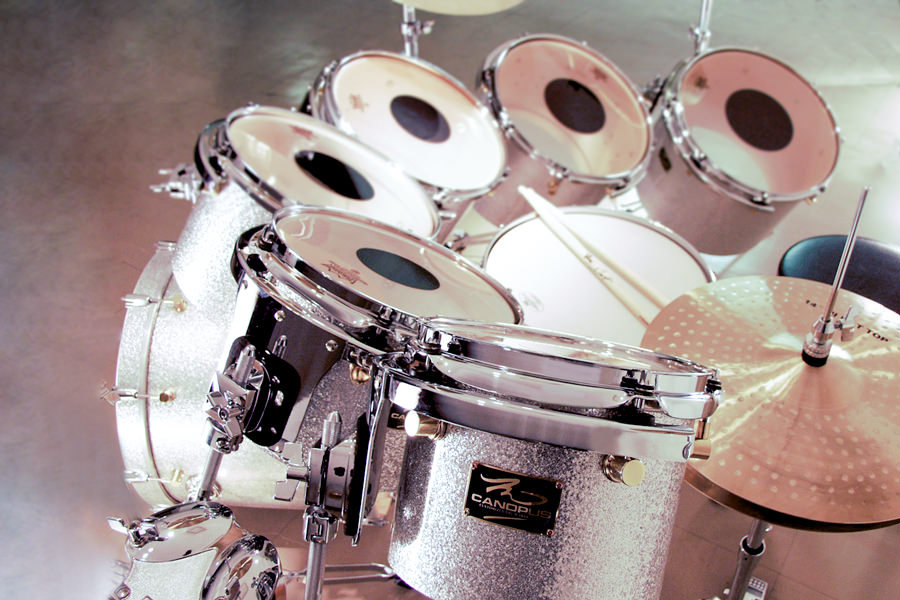
A tom drum, often called a tom-tom, is a cylindrical drum with a drumhead on one or both sides. Unlike a snare drum, it usually has no snare wires under the bottom head. This gives the tom drum a smooth, open sound with a clear pitch.
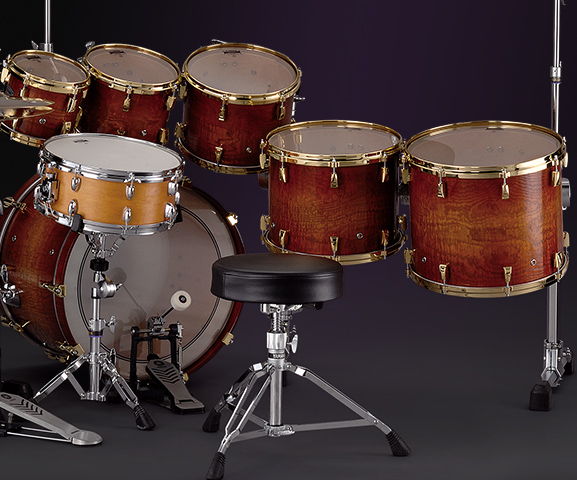
Drummers play tom drums with sticks, mallets, or their hands. The shell and heads vibrate when struck, creating tones that range from high and bright to low and powerful. Most modern drum kits use several tom drums in different sizes.
A tom drum is mainly used for fills, transitions, accents, and rhythmic patterns. It can also support a song’s main groove, especially in Latin music, jazz, funk, and cinematic percussion.
Why Is It Called a Tom-Tom?
The name tom-tom has a long and mixed history. In modern Western drumming, the term became common for drums that were added to drum sets in the early 20th century. These drums helped players create flowing patterns around the kit.
The name is sometimes linked to the sound of traditional Asian and Native American drums. However, the history is complex, and the term has been used in different ways across cultures. It is best to treat “tom-tom” as a common modern drum-set term rather than a precise description of one traditional instrument.
In everyday drum language, “tom” and “tom-tom” usually mean the same type of drum. Some players use “tom” because it is shorter and more common in current music education.
What Does a Tom Drum Sound Like?
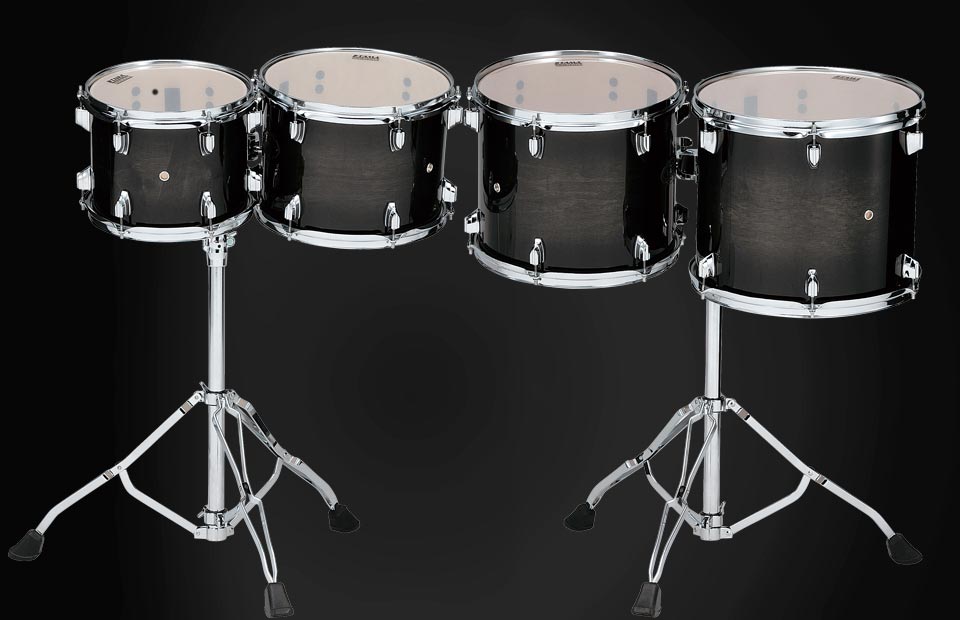
A tom drum produces a round, full tone with more body than a snare drum. Its pitch depends on the shell size, drumhead type, tuning, and striking area.
Small toms sound higher and sharper. Large toms sound lower, deeper, and more powerful. When several toms are tuned in order, a drummer can create a musical pattern that moves from high to low.
The sound of a tom drum may be:
• Open and resonant when both heads vibrate freely
• Short and focused when the drum is damped
• Bright when fitted with a clear or coated head
• Warm when made from a softer wood or tuned lower
• Punchy when used with controlled, two-ply heads
A tom drum does not have one fixed sound. Its voice changes with the room, microphone choice, playing style, and tuning. This is why the same drum can sound tight in a small studio and huge on a concert stage.

Main Types of Tom Drums
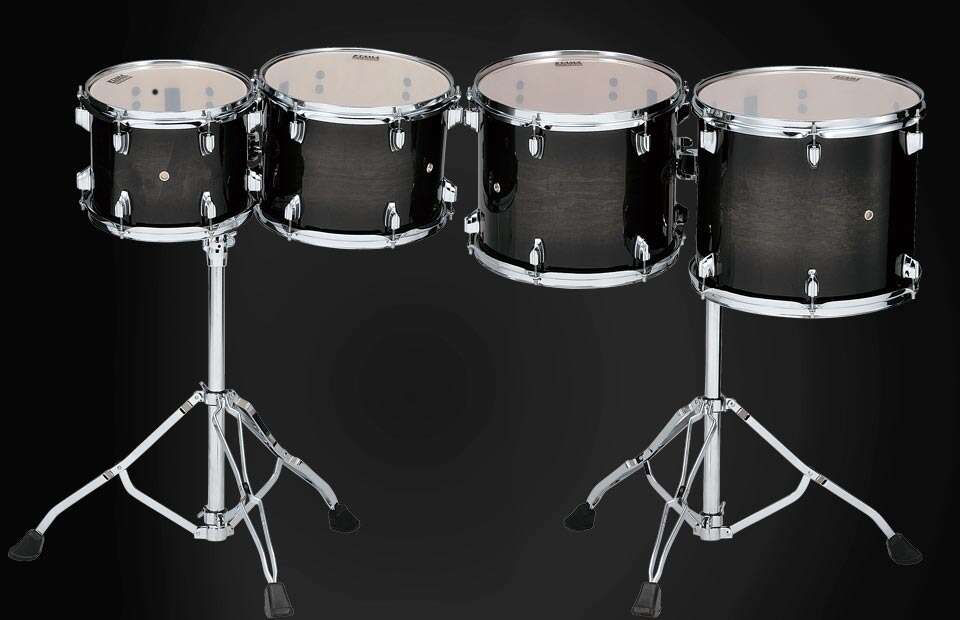
Drum kits include several types of tom drums. Each type has a different position, size, and role.
Rack Toms
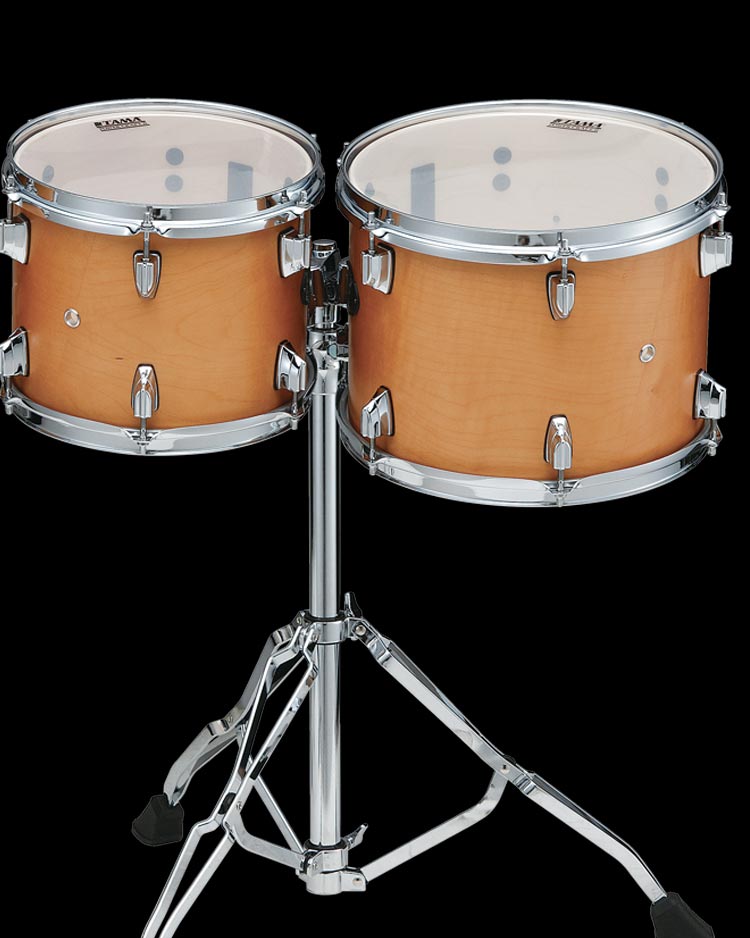
Rack toms are mounted above the bass drum or placed on a stand. They are usually smaller than floor toms and produce medium or high tones.
Common rack tom sizes include:
• 8 inches
• 10 inches
• 12 inches
• 13 inches
A two-tom setup may use a 10-inch and 12-inch tom. Larger kits may include three or more rack toms for wider pitch choices.
Floor Toms
A floor tom is a larger tom drum that stands on three legs. It creates a low, deep tone and often acts like a bridge between the rack toms and the bass drum.
Common floor tom sizes include:
• 14 inches
• 16 inches
• 18 inches
Floor toms are useful for heavy rock, metal, pop, worship, and cinematic music. Their low voice can make a drum fill feel much larger.
Concert Toms
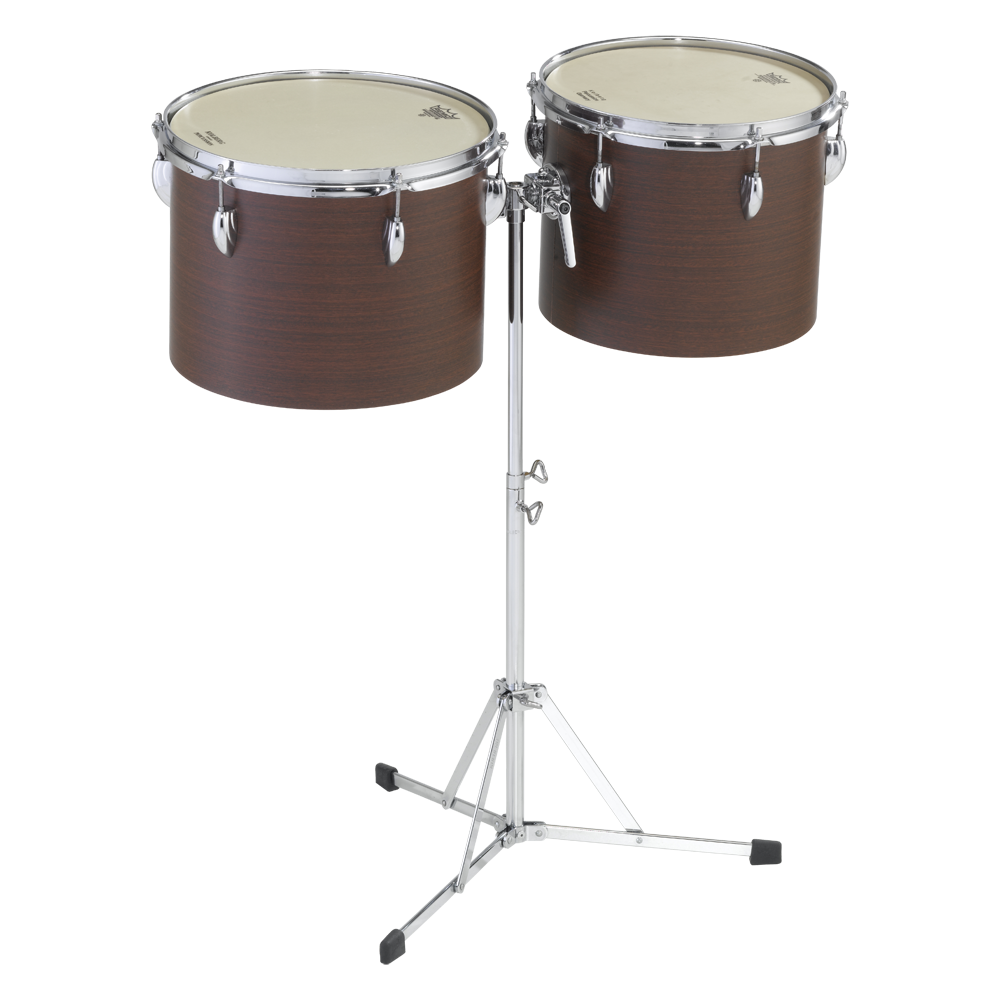
Concert toms usually have one drumhead on top and no bottom head. They respond quickly and have a short, direct sound.
These tom drums were common in school bands, marching settings, recording sessions, and some older rock productions. They are less common in standard modern drum kits, but they still offer a distinct attack.
Rototoms
Rototoms use a special frame that allows the drummer to change pitch by rotating the drum. They often have a bright, sharp sound and can be tuned quickly during a performance.
Rototoms are not the same as standard shell tom drums. They are specialty instruments used in orchestral music, progressive rock, educational settings, and experimental performances.
Parts of a Tom Drum
Understanding the parts of a tom drum makes tuning and maintenance much easier.
Shell
The shell is the main body of the drum. It may be made from maple, birch, oak, mahogany, poplar, acrylic, metal, or other materials.
Shell material affects tone, but it is not the only factor. Shell thickness, bearing edges, depth, head choice, tuning, and room acoustics can matter just as much.
Drumheads
Most standard tom drums have a batter head on top and a resonant head on the bottom.
The batter head receives the stick impact. The resonant head vibrates with it and helps shape sustain, pitch, and tone. Replacing only the top head can change the sound, but replacing both heads often gives a clearer improvement.
Hoops
Hoops hold the drumheads in place. Die-cast hoops offer a firm, focused feel, while triple-flange hoops often provide more openness and sustain.
Tension Rods and Lugs
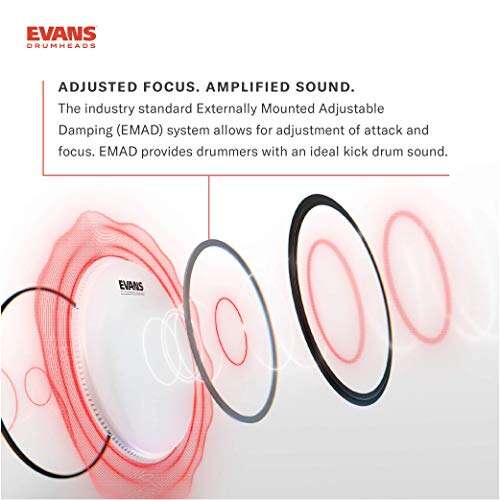
Tension rods pass through the hoop and screw into lugs attached to the shell. Turning the rods changes the tension of the drumhead.
Small adjustments matter. A quarter turn can noticeably change the pitch or response of a tom drum.
Bearing Edges
The bearing edge is the part of the shell that touches the drumhead. A smooth, even bearing edge helps the head seat properly and tune evenly.
If a tom drum refuses to tune, the problem may not be the player. A damaged head, uneven bearing edge, bent hoop, or faulty tension rod can also cause poor results.

How to Tune a Tom Drum
Tuning a tom drum does not require perfect pitch. It requires balance, control, and a sound that fits the music.
Follow these steps:
- Remove wrinkles from the drumhead by pressing gently near the center.
- Tighten each tension rod with your fingers.
- Use a drum key and turn each rod in small, opposite-pair movements.
- Tap near each tension rod and listen for uneven pitches.
- Adjust the rods until the head sounds consistent around the drum.
- Tune the resonant head to support the desired sustain.
- Test the drum at playing volume, not only with light taps.
A useful starting point is to tune the resonant head slightly higher than the batter head. This often creates a clear attack and healthy sustain. For a shorter sound, tune both heads closer together or add light damping.
Avoid tightening one rod much more than the others. This can create uneven tension and may damage the head or hoop. One of the most common beginner mistakes is tuning by tension-rod position instead of listening to the head.
How Drumhead Choice Changes the Sound
Drumheads have a major effect on how a tom drum responds.
Single-ply heads are often open, sensitive, and resonant. They work well for jazz, light pop, and players who want a natural tone.
Two-ply heads are thicker and more controlled. They are popular in rock and metal because they can handle strong hits and reduce unwanted overtones.
Coated heads usually provide a warmer attack. Clear heads often sound brighter and more immediate. Some heads include a center dot, ring, or built-in control layer to reduce excessive sustain.
Choose a head based on the sound you want:
• For open jazz tones, try thin single-ply heads.
• For rock power, try durable two-ply heads.
• For short studio sounds, use controlled heads or light dampening.
• For vintage warmth, consider coated heads.
• For strong attack, consider clear heads with added control.
There is no universal best drumhead. The right choice depends on the style, room, microphone setup, and how hard you play.
How Drummers Use Tom Drums in Music
The most recognizable use of a tom drum is the drum fill. A fill connects sections of a song, such as a verse and chorus. The player may move across the toms from high to low, creating a sense of motion.
A simple fill might use one hit on each tom. A more advanced fill may combine single strokes, double strokes, flams, accents, and bass drum notes.
Tom drums also serve other purposes:
• Building tension before a chorus
• Supporting tribal or marching-style patterns
• Adding low accents to a groove
• Creating dramatic endings
• Copying melodic shapes
• Supporting hand percussion patterns
• Adding movement to instrumental music
In jazz, a drummer may use tom drums for soft comping and color. In metal, fast tom patterns can create intensity. In pop music, carefully edited tom hits often make a chorus feel wider and more energetic.
A good practical rule is to make each tom hit support the song. A fill may sound impressive alone but still feel wrong if it interrupts the vocal or groove.