How To Play Cajon Drum: Beginner Tips And Grooves
Learn cajon quickly: sit right, use palms and fingers to make deep bass and sharp slaps.
I’ve taught and played percussion for years, and I’ll walk you through how to play cajon drum with clear steps, practice plans, and real-world tips. This guide covers setup, hand technique, rhythms, recording tips, common mistakes, and a practice routine so you can play confidently and expressively.
 display: block; margin: 0 auto;”
loading=”lazy”
/>
Why learn the cajon and what it can do
The cajon is simple, small, and powerful. It fits folk, pop, flamenco, and acoustic sets. Learning how to play cajon drum gives you rhythm skills that translate to other drums and instruments.
I learned on a cheap cajon before moving to higher-end models. That early work taught me tone control and dynamics. You don’t need a fancy instrument to sound good. Focus on technique and timing.

Parts of the cajon and proper setup
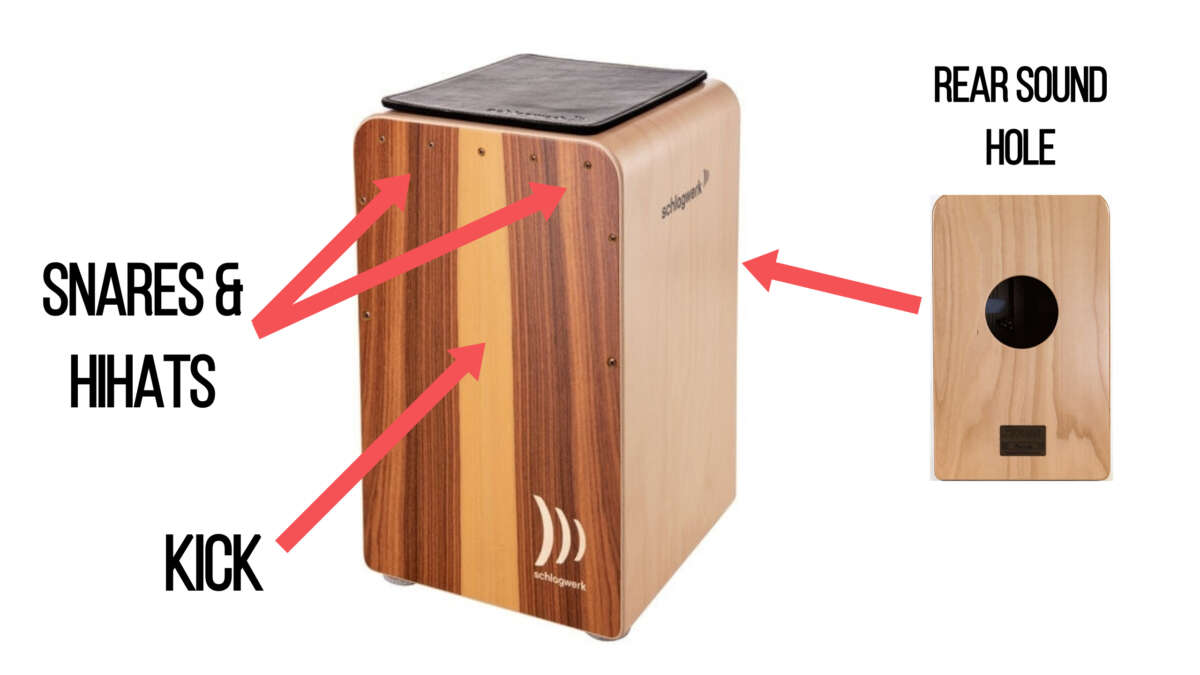
Know your instrument before you play. A cajon has a front plate called the tapa, a body, and internal snares on many models.
Sitting and setup:
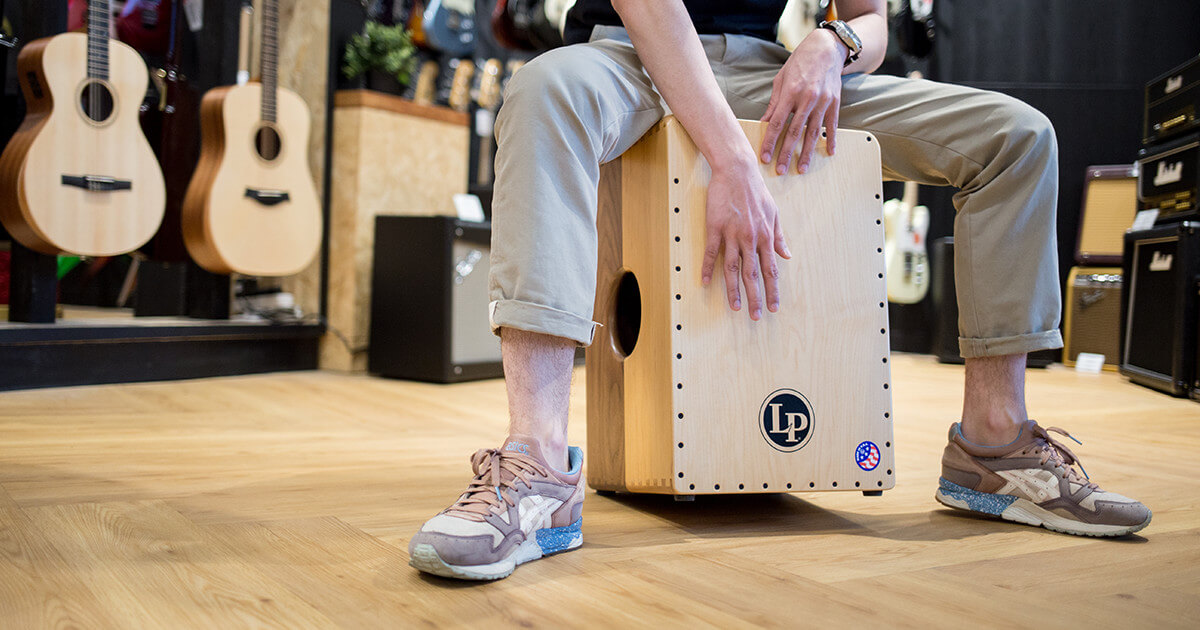
- Sit on the cajon near the top edge for comfort and reach.
- Keep your back straight and shoulders relaxed.
- Angle the cajon slightly forward so the tapa faces your hands.
Sound control: - Strike near the center for bass tones.
- Hit the upper corners for slaps and high tones.
- Adjust snare tension if your cajon allows it to change the crispness.

Basic hand techniques for the cajon
How to play cajon drum begins with three core strokes. Practice them slowly and with intent.
Bass tone:
- Use the flat of your palm.
- Strike the center of the tapa.
- Keep the wrist loose to get a warm, low sound.
Tone (mid):
- Use your fingertips or finger pads.
- Hit just above the center.
- Keep fingers slightly curved for a clear tone.
Slap (high):
- Use the fingers or the heel of the hand near the upper corner.
- Let fingers snap back after hitting.
- Keep the strike quick for a bright slap.
Practice tips:
- Start each stroke slowly, then speed up.
- Record yourself to hear differences in tone.
I used timed drills to build control: 2 minutes bass, 2 minutes tone, 2 minutes slap. Repeat daily.

Basic rhythms and grooves to practice
Learning how to play cajon drum is about rhythm as much as sound. Start with simple grooves and build pocket and feel.
4/4 basic groove:
- Count: 1 and 2 and 3 and 4 and.
- Pattern: Bass on 1, tone on the and, slap on 2, tone on the and, repeat.
Practice with a metronome at slow tempo first.
Rumba box / flamenco pulse:
- Emphasize the 2 and 4 with slaps to mimic snare accents.
- Use bass on the strong beats to create a pulsing feel.
Bossa nova/contemporary groove:
- Keep a soft bass on beat 1 and subtle slaps on the off-beats.
- Focus on even spacing and smooth transitions.
PAA-style question: How long to learn a basic groove?
- With focused daily practice, you can play a clean basic groove in a few weeks. Consistent slow practice speeds learning.

Practice routine and progressive exercises
A good routine speeds progress when learning how to play cajon drum. Short, focused sessions beat long, unfocused ones.
Daily plan (30–45 minutes):
- Warm-up 5 minutes: loose wrists, hand stretches.
- Technique 10 minutes: bass/tone/slap drills.
- Grooves 10–15 minutes: play with metronome and loops.
- Musical play 10 minutes: play songs or jam with tracks.
Progression tips:
- Increase tempo in 5 bpm steps.
- Add accents and ghost notes once you can play the groove cleanly.
- Practice dynamics: play soft, then loud, then switch quickly.
A mistake I made early was ignoring dynamics. I learned that soft control gives more musicality than speed alone.
Playing with others, mic’ing, and recording
How to play cajon drum in a band is different from solo practice. You must fit sonically and dynamically.
On stage:
- Sit slightly to the side so your sound blends.
- Watch the singer or leader for tempo and cues.
Microphone tips:
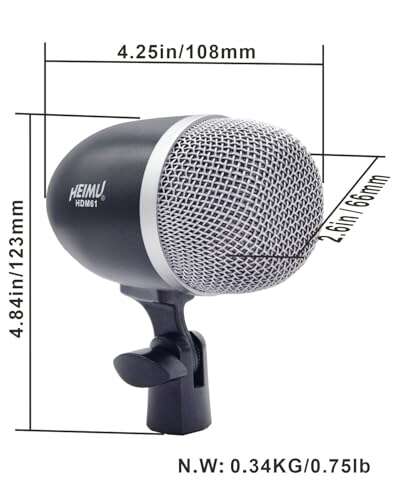
- Place a dynamic mic near the tapa for attack.
- Use a second condenser near the rear or the sound hole for more bass.
- Check phase and balance when recording.
Recording tips:
- Record dry and add EQ/reverb later.
- Cut low rumble below 60 Hz if needed.
- Slight compression helps consistent peaks without killing dynamics.

Common mistakes and how to fix them
New players often make a few predictable errors when learning how to play cajon drum. Fix these early.
Too much arm:
- Problem: using the whole arm kills speed and control.
- Fix: use the wrist and fingers for quick strokes.
Hitting too hard:
- Problem: no dynamic control and a harsh sound.
- Fix: practice soft strokes and focus on tone.
Poor sitting position:
- Problem: discomfort and weak reach.
- Fix: sit nearer top edge and keep a straight back.
Relying only on slaps:
- Problem: thin, fatiguing sound.
- Fix: mix bass, tone, and slap for variety.
Maintenance, tuning, and choosing a cajon
A well-kept cajon plays and sounds better. Knowing how to play cajon drum also means knowing how to care for it.
Maintenance:
- Wipe the tapa after playing to remove oils.
- Keep the cajon in stable, dry conditions.
Tuning and adjustments: - Some cajons have tension bolts to tighten snares.
- Loosen for more bass, tighten for sharper snare.
Choosing a cajon: - Try different tapa woods: birch gives bright slaps; mahogany gives warm bass.
- Test for snare clarity and comfort.
Advanced techniques and creative tips
Once you know the basics of how to play cajon drum, explore these moves to add color.
Foot taps and pedals:
- Use a pedal to trigger bass or add a hi-hat feel.
Brushes and mallets: - Use brushes for soft texture on acoustic sets.
Brushes give a gentle, swishy sound that suits quiet ballads.
Polyrhythms and syncopation:
- Practice odd groupings over steady beats.
- Start slowly and count out loud.
My favorite trick is using a small hand drum alongside a cajon to layer tones. It adds depth without many extra parts.
Frequently Asked Questions of how to play cajon drum
How long does it take to get good at cajon?
With regular, focused practice, you can play basic grooves well in a few weeks and develop strong control in 6–12 months.
Do I need drum lessons to learn cajon?
No. You can learn basics from quality tutorials, but a teacher speeds progress and corrects technique errors early.
What’s the difference between slap and bass on the cajon?
Bass is a palm strike in the center for low sound. Slap is a quick finger or corner strike for a high, snappy tone.
Can I play cajon with a band or just solo?
You can do both. Cajons are common in acoustic sets, bands, and street performances because they blend well and are portable.
How do I stop my hands from hurting?
Warm up, use relaxed hands, and build time gradually. Use shorter practice sessions if you feel pain.
Is a snare cajon better for beginners?
A snare cajon offers more range and snap, which helps learning dynamics. But a simple cajon works fine for beginners.
Conclusion
You now have a clear roadmap for how to play cajon drum: set up well, master bass/tone/slap, learn tidy grooves, and practice with purpose. Start small, practice daily, and focus on sound and feel rather than speed. Try the routines, record yourself, and play with others to grow faster. Share your progress, ask questions, or subscribe for more tips and lessons.

Senior Music Reviewer
Alex Carter is a seasoned music reviewer with over a decade of experience in the world of sound and instruments. Passionate about helping musicians and enthusiasts make informed choices, he brings sharp insights and in-depth knowledge to every review. From classical instruments to modern gear, Alex combines technical expertise with a love for music to deliver content that resonates with readers.
As a Senior Music Reviewer and expert author on Tuneluma.com, Alex is dedicated to sharing honest evaluations, practical advice, and thoughtful commentary to guide readers in their musical journey.