Where Are Bongo Drums From: Origins And History
Bongo drums are from eastern Cuba, where Afro-Cuban musicians shaped them in the late 19th century.
The question “where are bongo drums from” has a clear answer, but the full story is richer than a single place name. Bongo drums grew from Cuba’s African and Spanish musical traditions, became central to son cubano, and later traveled around the world through recordings, dance bands, and popular music. This guide explains their roots, design, cultural role, and lasting influence.

Where are bongo drums from?
Bongo drums are from Cuba, especially the eastern region around Santiago de Cuba and Guantánamo. Most historians connect their early development to the late 1800s, when Afro-Cuban musicians played new forms of dance music in homes, streets, cafés, and working-class neighborhoods.
The drums became closely linked with son cubano. Son combined Spanish string instruments, African rhythms, call-and-response singing, and syncopated dance patterns. Bongo drums helped give son its bright, quick pulse.
The exact birthplace of the bongo is not known. Historical records from the period are limited, and instruments changed as musicians experimented. Still, eastern Cuba is widely accepted as the main home of the modern bongo drum.
When people ask where are bongo drums from, they sometimes expect an answer such as West Africa or Spain. Those regions influenced the instrument, but the bongo itself developed in Cuba. It is best understood as a Cuban instrument with deep African and Spanish roots.

How did bongo drums develop in Cuba?
Bongo drums developed during a time of major musical change in Cuba. African rhythms met Spanish song forms, guitar-based instruments, and local dance traditions. Musicians did not simply copy one older drum. They adapted many ideas into a small, portable pair of hand drums.
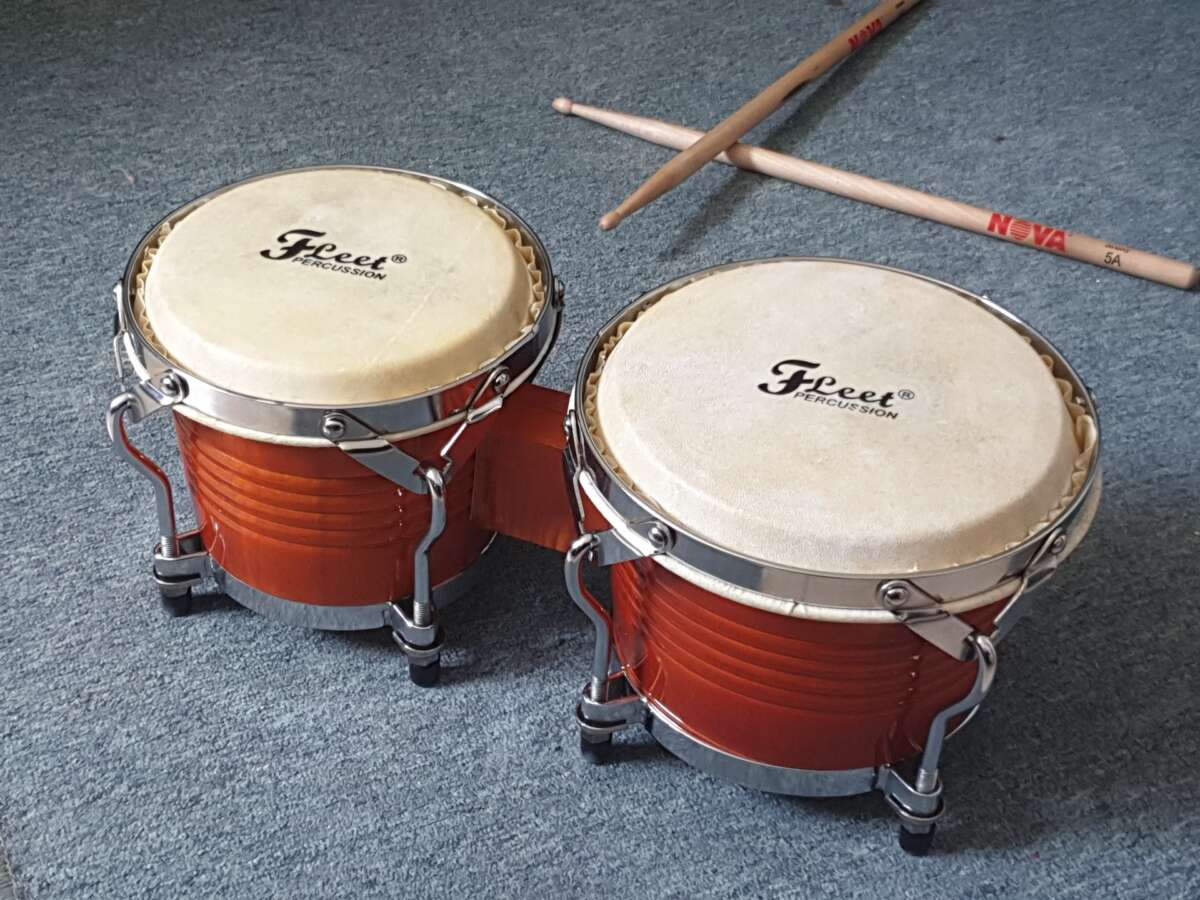
Early bongos were often made by local craftspeople. Their shells could vary in shape, size, and depth. Over time, builders created a more standard design with two connected drums:
• The smaller drum is called the macho, or male drum.
• The larger drum is called the hembra, or female drum.
• The two drums are joined by a bridge or central block.
• The heads are placed on top and tuned to different pitches.
The names macho and hembra describe the smaller and larger drums. They do not mean that the drums are played by men or women. The terms come from Spanish and refer to the relationship between the drum sizes.
Early players often tuned the heads by hand. Modern bongos may use metal lugs and tuning nuts, which make it easier to raise or lower the pitch. This design change helped the instrument enter professional recording studios and international touring groups.
The answer to where are bongo drums from also includes the social setting in which they grew. They were not created only in formal concert halls. Their sound came from community music, dance, street performance, and informal group playing.

The African and Spanish roots of the bongo
To understand where are bongo drums from, it helps to separate direct origin from musical influence. The modern bongo is Cuban, but its sound reflects several cultures that shaped Cuban music.
African influence is especially important. Enslaved Africans and their descendants brought rhythmic ideas, drum traditions, layered patterns, and call-and-response practices to Cuba. These traditions survived despite severe oppression and helped shape many forms of Cuban music.
Spanish influence also mattered. Spanish settlers brought string instruments, song structures, language, and dance styles. The tres, a small Cuban guitar with doubled strings, became a major part of son music. The bongos filled the rhythmic space beneath the tres and the singer.
Cuba’s port cities then acted as musical meeting points. People, instruments, and styles moved between rural areas, cities, ports, and nearby islands. This constant exchange made Cuban music highly creative.
It is inaccurate to say that bongo drums came directly from one African drum. It is also too simple to call them Spanish. The bongo emerged through cultural blending in Cuba. That blend is part of what makes the instrument historically important.

The role of bongos in son cubano
Son cubano is the musical style most closely tied to the early bongo. In a traditional son group, the bongocero, or bongo player, supports the rhythm while responding to the singer and other instruments.
A bongo player may use two main approaches:
• The martillo pattern provides a steady, repeating rhythm.
• Open tones, muted strokes, slaps, and accents add color.
• Short rhythmic phrases can answer the singer or percussion section.
• A bongo solo, known as a repique, may appear during an instrumental break.
The bongos do more than keep time. They interact with the music. A skilled player listens closely and changes touch, volume, and accents to fit the group.
In son, the bongo often plays with instruments such as:
• Tres guitar
• Guitar
• Marímbula or bass
• Claves
• Maracas
• Cowbell
• Vocals
This group sound helped carry bongos beyond eastern Cuba. As son became popular in Havana and later abroad, the bongo became one of the most recognizable sounds of Cuban music.

Did bongo drums come from Africa?
Bongo drums did not originate as a finished instrument in Africa. The modern bongo developed in Cuba, but African musical traditions strongly influenced its rhythm, playing style, and cultural setting.
Many African drum traditions use hand percussion, interlocking patterns, changing accents, and conversation between instruments. These ideas can be heard in Cuban music, including the way a bongo player responds to a singer or works around the clave rhythm.
The word “African” covers many different cultures and regions. West Africa, Central Africa, and other areas each have their own instruments and musical systems. It is not accurate to treat Africa as one single musical source.
A careful answer to where are bongo drums from is therefore:
• Geographic origin: Cuba
• Main early region: Eastern Cuba
• Major cultural influences: African and Spanish traditions
• Early musical home: Son cubano and related Cuban styles
This distinction respects both Cuban history and the African heritage that helped shape it.

What did early bongos look like?
Early bongos were smaller and less standardized than many modern models. Their shells were often made from wood, although construction methods differed by maker and region. Some older drums had natural skin heads attached in ways that are less common today.
Modern bongos usually have:
• Two wooden shells
• Natural hide or synthetic heads
• A metal bridge
• Tuning lugs and nuts
• Reinforced rims
The smaller drum normally has a higher pitch. The larger drum has a lower, fuller tone. The pitch gap between them depends on the player’s style and the music.
Traditional players often prefer natural skin because it can produce a warm, complex sound. Synthetic heads can offer more stable tuning in changing weather. Neither choice is automatically better. The best option depends on the player, climate, budget, and musical goal.