The best electronic drum set for most players is the Roland TD-27KV2, thanks to its realistic feel, strong sounds, and room to grow.
Choosing the best electronic drum set depends on your playing level, budget, space, and goals. After comparing pad feel, sound quality, triggering, connectivity, durability, and long-term value, I’ll explain which kits stand out and which one fits your needs.
What Is the Best Electronic Drum Set?
For most serious beginners, home players, and gigging drummers, the Roland TD-27KV2 is the best electronic drum set overall. It has responsive mesh heads, digital snare and ride cymbals, detailed drum sounds, Bluetooth audio, USB recording, and wide options for sound editing.
That does not mean it is the right choice for everyone. A new drummer may prefer the lower price of the Alesis Nitro Max, while a player who wants an acoustic-style experience may favor the Roland VAD series or the EFNOTE 5X.
The best electronic drum set should feel natural under your hands. It should also trigger notes accurately, stay quiet enough for your home, and provide sounds that inspire you to practice.
Here are the leading choices:
| Best for | Recommended electronic drum set | Main strength |
|---|---|---|
| Overall performance | Roland TD-27KV2 | Realistic playability and powerful module |
| Intermediate players | Roland TD-17KVX2 | Excellent balance of price and features |
| Acoustic-style feel | Roland VAD series | Full-size shells and natural appearance |
| Best value | Yamaha DTX6K3-X | Strong sounds and dependable triggering |
| Beginners on a budget | Alesis Nitro Max | Affordable mesh-pad starter kit |
| Premium studio use | EFNOTE 5X or Roland TD-50X series | Detailed sounds and refined response |
A useful lesson from hands-on drum testing is that specifications can be misleading. A kit may offer hundreds of sounds, yet still feel poor if the pads are cramped or the hi-hat responds slowly. Playability matters more than a long feature list.

Best Electronic Drum Sets by Player Type
The best electronic drum set changes with the person using it. A child learning basic rhythm has different needs from a studio drummer recording layered tracks.
Best overall: Roland TD-27KV2
The Roland TD-27KV2 is the strongest all-around choice for players who want realistic performance without moving into the company’s highest price range. Its digital snare, ride, and hi-hat provide detailed positional sensing and nuanced response.
The module also supports Bluetooth audio, USB audio and MIDI, user samples, and deep sound editing. You can play along with music from a phone, record into a computer, or create custom kits for different styles.
Its main limitation is cost. It is a serious investment, and beginners may not use all its advanced features right away.
Best midrange option: Roland TD-17KVX2
The TD-17KVX2 is often the best electronic drum set for an intermediate player. It offers a large snare, good-size toms, mesh heads, Bluetooth, coaching tools, and a user-friendly module.
The kit feels more substantial than entry-level models but costs less than the TD-27KV2. It is a smart choice for rock, pop, worship, jazz practice, and home recording.
The included hi-hat setup is good, but it may not feel as open and natural as the more advanced digital hi-hat systems found on premium Roland kits.
Best acoustic-style kit: Roland VAD series
Roland’s V-Drums Acoustic Design series uses full-size shells that look and feel closer to an acoustic drum kit. This matters to players who want familiar spacing, a traditional stage appearance, or a smoother transition between electronic and acoustic drums.
The larger shells take up more room and may cost more than compact rack-based kits. However, they can make practice feel more like playing a real acoustic setup.
Best value: Yamaha DTX6K3-X
The Yamaha DTX6K3-X is a strong choice for players who value clear sounds, reliable triggering, and a solid module. Yamaha’s drum sounds often have a clean, focused character that works well for practice and recording.
Its module includes useful editing tools, training features, and USB connectivity. The kit may not offer the same level of positional sensing as a premium Roland system, but it delivers excellent value.
Best budget kit: Alesis Nitro Max
The Alesis Nitro Max is a practical entry-level kit for new drummers. It includes mesh heads, a compact rack, built-in sounds, USB MIDI, and Bluetooth audio on many configurations.
It is suitable for basic practice, music lessons, and learning drum notation. The pads and rack may feel less refined than those on Roland or Yamaha kits, but the low price makes it accessible.
A budget kit can be a good first step. Just remember that a lower price may mean more limited cymbal response, simpler sound editing, and less room for expansion.

How to Choose the Best Electronic Drum Set
The best electronic drum set should match your playing habits, room, and future plans. Use the following points before you buy.
Consider your playing level
Beginners usually need simple controls, dependable sounds, and a comfortable layout. Advanced players often need deeper editing, better positional sensing, more outputs, and stronger expansion options.
Ask yourself:
• Are you learning basic timing and coordination?
• Do you need realistic snare and hi-hat response?
• Will you record into a computer?
• Do you plan to perform live?
• Will you want extra cymbals or toms later?
Buying far beyond your needs can waste money. Buying too little can lead to frustration when your skills improve.
Check the pad sizes
Pad size affects comfort and spacing. Small pads save space, but they may feel crowded for an adult player.
A larger snare is especially helpful. The snare is the center of most drum patterns, so it deserves more room than a small practice pad. A 12-inch or larger snare can feel more natural than a compact 8-inch model.
Compare mesh and rubber pads
Mesh heads are popular because they feel softer and usually create less mechanical noise than rubber pads. They also allow tension adjustment on some models.
Rubber pads can be durable and compact. They are often found on lower-cost kits, though they may feel harder and less natural.
Neither option is perfect. Mesh heads can still create loud impact noise through the floor, especially in an apartment. A thick isolation mat can reduce vibration.
Study the hi-hat system
The hi-hat is one of the most important parts of an electronic drum set. A basic system may place the hi-hat trigger on the rack beside the snare. More advanced systems use a moving pedal and separate cymbal, closer to an acoustic setup.
A better hi-hat can detect closed, half-open, and open positions with more detail. This helps with funk, jazz, soft rock, and expressive practice.
If you can spend more on one upgrade, prioritize the snare and hi-hat. They usually affect realism more than having extra built-in sounds.
Check the drum module
The module is the brain of the kit. It controls sounds, triggering, effects, recording, and connections.
Look for:
• USB MIDI for computer recording
• USB audio if you want to record the module’s sound directly
• Bluetooth audio for play-along practice
• Multiple trigger inputs for future expansion
• User sample support
• Easy kit editing
• Built-in coaching or metronome tools
A module with fewer sounds can still be excellent if those sounds are well recorded and easy to control.
Think about noise
Electronic drums are quieter than acoustic drums, but they are not silent. The main noises come from stick impact, pedal movement, and vibrations through the floor.
For apartment use, consider:
• A thick drum isolation mat
• Low-noise kick pedals or beaterless kick systems
• Mesh heads with moderate tension
• Closed-back headphones
• A setup away from shared walls
Speak with people below you before practicing late at night. A kit that sounds quiet in headphones can still send strong thumps through a wooden floor.

Electronic Drum Set Features That Matter Most
Manufacturers often highlight sound counts and special effects. Those features can be useful, but they should not dominate your decision.
Trigger accuracy
Trigger accuracy means the module responds correctly to each hit. A strong system should detect soft taps, hard accents, rimshots, rolls, and fast patterns without missed notes.
Poor triggering can make you question your timing. You may play a clean stroke but hear a weak or delayed sound. That problem becomes tiring during long practice sessions.
Dynamic range
Dynamic range describes the difference between quiet and loud hits. A kit with good dynamic range lets you play with expression instead of producing the same volume for every stroke.
This is vital for ghost notes, crescendos, ballads, and jazz. It also helps you develop better control.
Positional sensing
Some advanced pads detect where you strike. A hit near the center may sound different from one near the edge.
Positional sensing is most useful on the snare and ride. It adds detail, but it is not essential for every drummer. A beginner may benefit more from a good lesson plan and reliable timing tools.
Expandability
Expansion ports allow you to add cymbals, toms, or extra triggers later. This can extend the life of your kit.
Before buying, check how many inputs remain unused. Some affordable kits look expandable but have limited connection space.
Recording and software support
Most modern electronic drum sets can connect to a computer through USB MIDI. This lets you use drum software with large sample libraries.
USB MIDI sends performance information, not the actual drum sound. The computer then creates the sound through software. USB audio, when supported, can send the module’s sound directly into a recording program.
For home recording, confirm that your computer, software, and module use compatible connections.

Electronic Drums vs. Acoustic Drums
Electronic drums are not a full replacement for acoustic drums, but they solve problems that acoustic kits cannot.
Benefits of electronic drums
• They support quiet practice with headphones.
• They take up less space.
• They offer many drum sounds in one kit.
• They can connect to lessons, apps, and recording software.
• They make volume control easier.
• They are convenient for home use.
Limitations of electronic drums
• They need power or batteries.
• Mesh and rubber pads do not feel exactly like acoustic shells.
• Speaker systems may cost extra.
• Cheap modules can sound artificial.
• Kick and cymbal response may vary between models.
• Floor vibration can still disturb neighbors.
Acoustic drums remain the better choice for players who need maximum air movement, traditional stage response, and natural cymbal behavior. Electronic drums are often better for home practice, modern music production, and flexible sound control.

Common Buying Mistakes to Avoid
Many shoppers focus on the wrong details. These mistakes can make an expensive purchase feel disappointing.
Choosing by sound count alone
A module with 700 sounds is not automatically better than one with 100 sounds. Quality, editing control, and response matter more than the number printed on the box.
Ignoring the kick pedal
Some kits include a kick tower, while others use a small trigger pad. A proper kick tower usually feels more natural for players who use a standard pedal.
Make sure the kit works with your preferred pedal. Some setups may need a separate pedal, and double pedals may not fit every kick pad comfortably.
Buying without measuring the room
Measure your available space before ordering. Include room for the throne, pedal movement, cable routing, and your arm swing.
A compact rack may fit a bedroom, while an acoustic-style kit may need a dedicated corner.
Forgetting the throne and headphones
A drum kit does not include every item needed for comfortable practice. Budget for a stable throne, headphones, a mat, and possibly a kick pedal.
An unstable throne can affect posture and timing. Good headphones can also make a basic module sound much more enjoyable.
Expecting perfect silence
Electronic drums reduce sound, but stick and pedal noise remain. Test your setup at the time you plan to practice, then ask someone in another room what they hear.
This simple test can prevent complaints and help you choose better isolation.

How Much Should You Spend?
The best electronic drum set for your budget depends on how long you expect to use it.
Under $600
This range includes beginner kits such as the Alesis Nitro Max and similar entry-level models. Expect basic modules, compact pads, and limited editing.
These kits work well for learning rhythm, practicing rudiments, and deciding whether drums are right for you.
$600 to $1,500
This is the most useful range for many serious beginners and intermediate players. You can find better mesh pads, stronger modules, improved cymbals, and more expansion options.
The Yamaha DTX6K3-X and Roland TD-17 series are important options in this category.
$1,500 to $3,000
This range includes advanced kits with better triggering, larger pads, stronger modules, and improved connectivity. The Roland TD-27KV2 is a leading option here, depending on the package and current pricing.
These kits make sense for dedicated players, teachers, home studios, and musicians who expect years of use.
Above $3,000
Premium kits offer refined response, acoustic-style shells, detailed modules, and professional recording features. They are best for experienced players who know exactly what they want.
Price does not remove every limitation. Even a premium electronic kit still has a different physical response from an acoustic drum set.
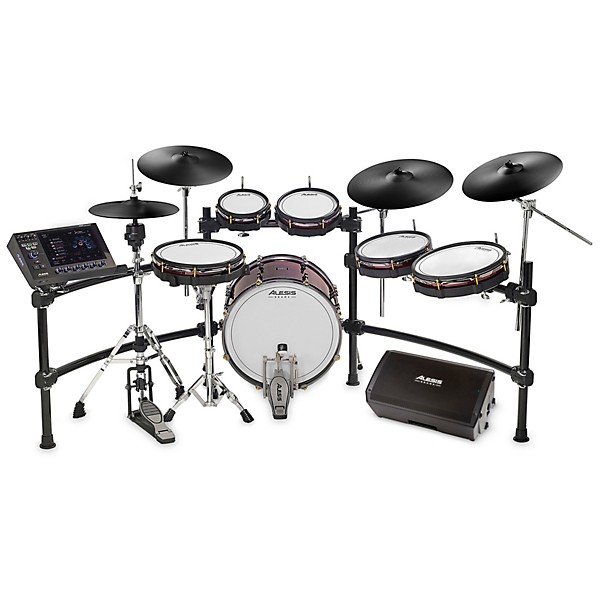
Setup Tips for Better Performance
Once you choose the best electronic drum set, setup has a major effect on comfort and accuracy.
Follow these steps:
-
Place the snare between your knees and keep it near natural playing height.
-
Set the toms so your arms stay relaxed rather than raised.
-
Position cymbals slightly above the toms and angle them toward you.
-
Keep the kick pedal centered with your body.
-
Adjust the throne so your hips sit slightly higher than your knees.
-
Use a stable mat under the kit and pedals.
-
Test soft hits before raising trigger sensitivity.
-
Save a backup of your custom kits and module settings.
One common mistake is setting trigger sensitivity too high. The kit may feel exciting at first, but it can create false hits and reduce control. Start with moderate settings and adjust them only when needed.
Use headphones while practicing, but take regular breaks. The World Health Organization recommends managing both volume and listening time to reduce hearing risk. If your ears ring after practice, lower the volume and stop for the day.

Who Should Buy an Electronic Drum Set?
An electronic kit is a strong fit if you:
• Live in an apartment or shared home
• Need late-night practice
• Want to learn with headphones
• Record drums into a computer
• Need several drum sounds
• Have limited space
• Want coaching apps or built-in exercises
It may not be ideal if you mainly want the natural sound and physical response of acoustic drums. It may also be a poor fit if you dislike menus, cables, electronics, or software.
For many people, the best electronic drum set is the one they will actually play every week. A modest kit in a comfortable room is more useful than a premium kit that remains boxed because it is too large or complex.

Frequently Asked Questions About the Best Electronic Drum Set
What is the best electronic drum set for beginners?
The Alesis Nitro Max is a good budget choice because it offers mesh pads, basic sounds, and useful connectivity. Beginners with a larger budget may prefer the Roland TD-07 or TD-17 series for better long-term playability.
Is Roland better than Yamaha for electronic drums?
Neither brand is best for every player. Roland often stands out for mesh-pad feel and advanced triggering, while Yamaha is known for clear sounds, dependable hardware, and strong training features.
Are electronic drums quiet enough for an apartment?
They are much quieter than acoustic drums, especially through headphones, but they still create stick and pedal noise. A thick isolation mat, careful playing hours, and a low-noise kick setup can reduce disturbance.
Can electronic drums sound like real drums?
Good electronic drums can sound highly realistic, especially through quality headphones, speakers, or drum software. The physical response still differs from acoustic drums, particularly on cymbals and the kick.
Do electronic drums help you learn acoustic drums?
Yes, they can build timing, coordination, rudiment control, and basic technique. However, students should eventually practice on acoustic drums if they plan to perform regularly on an acoustic kit.
Do I need a computer to use an electronic drum set?
No. An electronic drum set can work on its own with headphones or an amplifier. A computer becomes useful for recording, software instruments, lessons, and backing tracks.
Can I use a double kick pedal with an electronic drum set?
Some kits support double pedals, but the kick pad must be large enough and designed for that use. Check the manufacturer’s recommendations before buying a double pedal.
How long does an electronic drum set last?
A well-maintained kit can last for many years. Pads, cables, pedals, and rubber components may eventually need replacement, while careful storage and moderate trigger settings can extend service life.
Conclusion
The best electronic drum set for most serious players is the Roland TD-27KV2 because it combines realistic response, strong sounds, modern connectivity, and useful expansion options. The Roland TD-17KVX2 offers excellent midrange value, Yamaha provides dependable alternatives, and the Alesis Nitro Max makes a sensible entry point for beginners.
Focus on pad feel, hi-hat response, kick-pedal compatibility, noise control, module features, and room size before you buy. Choose the kit that fits your real practice habits, then spend time adjusting its layout and settings.
Compare your top choices, test them when possible, and start building a practice routine that keeps you playing.

Senior Music Reviewer
Alex Carter is a seasoned music reviewer with over a decade of experience in the world of sound and instruments. Passionate about helping musicians and enthusiasts make informed choices, he brings sharp insights and in-depth knowledge to every review. From classical instruments to modern gear, Alex combines technical expertise with a love for music to deliver content that resonates with readers.
As a Senior Music Reviewer and expert author on Tuneluma.com, Alex is dedicated to sharing honest evaluations, practical advice, and thoughtful commentary to guide readers in their musical journey.