Best Bass Guitar Strings For Slap: Top Picks For Punchy Tone
The best bass guitar strings for slap combine bright attack, fast response, strong tension, and comfortable playability.
You know the sound: a thumb hits the low E, the string snaps against the fret, and the octave pops with a clear, sharp voice. Yet dull or soft strings can make slap bass feel flat, noisy, or hard to control. I looked at gauge, winding type, core design, tone life, comfort, and value to find strings that suit real practice, studio work, and live sets. The choices below cover classic nickel tone, bright stainless steel bite, five-string needs, and budget-friendly sets.
Ernie Ball Regular Slinky Bass Strings

Ernie Ball Regular Slinky strings use a nickel-wound design with a 50-105 gauge. That medium setup gives the low strings enough body for hard thumb strikes and fast popping. I find this gauge a strong fit for players who want slap tone without an overly loose feel.
The nickel wrap sounds bright when fresh, yet it stays more rounded than many stainless steel sets. The 50-105 tension also helps control fret buzz when your attack gets firm. For many four-string players, this set is a safe starting point when choosing the best bass guitar strings for slap.
Pros:
- Full low end supports strong thumb technique
- Bright nickel tone works well for pop and funk
- Medium gauge feels stable during aggressive playing
- Common size fits many standard four-string basses
- Usually offers strong value for regular string changes
Cons:
- May feel stiff to players who prefer light strings
- Fresh brightness fades faster than some coated sets
- May need a setup if your bass uses a lighter gauge
My Recommendation
I recommend the Regular Slinky set to four-string players who want a classic slap sound with solid low-end weight. It suits beginners who need predictable tension and experienced players who like a firm platform under the thumb. The strings also work well for rock, funk, gospel, and cover-band work.
| Best for | Why |
|---|---|
| Firm slap attack | The 50-105 gauge adds control and body. |
| Funk and pop | Nickel winding gives clear but balanced highs. |
| Value seekers | The set is widely available and easy to replace. |
If you want dependable all-round strings, this set offers excellent value. It remains one of the easiest recommendations for the best bass guitar strings for slap.
Ernie Ball Super Slinky Bass Strings

Ernie Ball Super Slinky strings use a lighter 45-100 gauge. They feel quick under the fingers and make hammer-ons, pull-offs, and octave pops easy. I especially like this set for players who use a relaxed touch or play long rehearsals.
The nickel wrap offers a familiar bright sound with enough warmth for fingerstyle parts. The lighter tension can also help newer slap players build speed without fighting the instrument. However, a heavy hand may create more fret rattle or a less focused low E.
Pros:
- Light tension makes fretting and popping easier
- Fast feel supports quick slap patterns
- Bright tone cuts through small and large mixes
- Comfortable choice for players with hand fatigue
- Works well for standard four-string basses
Cons:
- Low E may feel too soft for hard attack
- Can produce more buzz on a low-action bass
- May lack the weight some funk players want
My Recommendation
I suggest Super Slinky strings for beginners, small-handed players, and bassists who want a soft, fast feel. They suit clean slap styles, modern pop, and players who switch between fingerstyle and slap. If you strike very hard, you may prefer the Regular Slinky gauge.
| Best for | Why |
|---|---|
| New slap players | Light tension reduces the work needed for pops. |
| Fast playing | The flexible feel supports quick movement. |
| Hand comfort | Lower tension can reduce strain during long sessions. |
These are not the most forceful strings here, but they remain a smart choice when comfort ranks first. They can be the best bass guitar strings for slap for a light-touch player.
DR BLACK BEAUTIES Bass Strings

DR BLACK BEAUTIES strings use a black-colored outer coating over a medium 45-105 set. The visual finish gives a bass a bold look on stage, but the coating also changes the hand feel. I notice a smoother surface that can reduce some finger noise during slides and position changes.
The medium gauge offers a useful balance for slap, while the coated surface can help protect the strings from sweat and grime. Their sound starts with a focused top end and a controlled low end. Players who want extreme clank may find them less raw than uncoated stainless steel.
Pros:
- Distinct black look suits stage and video work
- Coating helps resist dirt from sweaty hands
- 45-105 gauge balances comfort and punch
- Smooth feel supports slides and fast shifts
- Good choice for players who want a different visual style
Cons:
- Coated feel may not suit every player
- Top-end bite is softer than bare stainless steel
- Finish can show wear with heavy picking or fret contact
My Recommendation
BLACK BEAUTIES are best for gigging bassists who care about both tone and appearance. They suit players who deal with sweaty hands or want to extend the useful life of a set. I would choose them for pop, rock, funk, and stage work where a bold look matters.
| Best for | Why |
|---|---|
| Stage appearance | The black finish gives the bass a clear visual identity. |
| Sweaty hands | The coating adds a barrier against grime and moisture. |
| Balanced slap | Medium tension gives punch without feeling extreme. |
They offer a good mix of style, comfort, and protection. For players who dislike frequent changes, these may be the best bass guitar strings for slap in a coated design.
DR PURE BLUES Bass Strings

DR PURE BLUES strings are made for players who enjoy a softer, vintage-style response. This PB5-40 set uses a lighter gauge suited to five-string bass, with a feel that bends easily. The design favors warmth and touch over a sharp modern edge.
For slap, these strings can add a round note under the thumb and a smooth pop on the higher strings. They may not deliver the hardest metallic click, but they reward players with a controlled hand. I see them as a strong choice for blues, soul, roots music, and warm funk.
Pros:
- Warm tone adds character to five-string bass
- Flexible feel makes bends and vibrato simple
- Works well for vintage and roots-inspired music
- Light design supports relaxed playing
- Offers a different voice from bright modern strings
Cons:
- May sound too warm for sharp slap tones
- Lighter tension can feel loose to hard hitters
- Not the first choice for aggressive low-B attack
My Recommendation
I recommend PURE BLUES strings to five-string players who want warmth, touch, and a more organic voice. They are a good fit for blues, soul, R&B, and vintage funk. Choose another set if your main goal is maximum snap and bright high-end cut.
| Best for | Why |
|---|---|
| Warm five-string tone | The design gives the bass a rounder voice. |
| Blues and soul | Soft response fits expressive styles. |
| Light touch | The flexible gauge feels easy under the fingers. |
These strings prove that slap does not always need a glassy top end. They may be the best bass guitar strings for slap when warmth matters more than clank.
Ernie Ball Five-String Regular Slinky
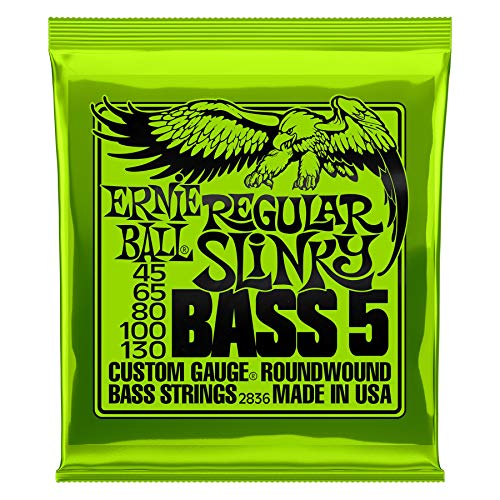
Ernie Ball Five-String Regular Slinky strings use a 45-130 gauge set. The .130 low-B string gives the lowest note more support than a light five-string set. That support matters when you slap the B and want the note to speak rather than wobble.
The nickel-wound construction creates a bright, familiar sound that fits many modern bass rigs. The set feels firm but not extreme, which helps keep tuning steady during energetic playing. I would check your bridge and nut before fitting them because the heavier B may need proper clearance.
Pros:
- Heavy low-B gauge gives strong fundamental tone
- Bright nickel sound works for modern slap
- Firm feel improves control during hard strikes
- Useful range for funk, gospel, rock, and pop
- Reliable option for standard five-string basses
Cons:
- Low B can feel large for new five-string players
- May require a setup on some instruments
- Not suitable for four-string basses
My Recommendation
This is one of my top picks for five-string slap bass. It suits players who need a clear low B for riffs, drops, and extended chord work. I especially like it for live players who want firm tension and a strong note center.
| Best for | Why |
|---|---|
| Five-string slap | The set includes a supportive .130 low B. |
| Low-B riffs | Heavier tension keeps the lowest note focused. |
| Modern funk | Nickel winding adds useful brightness and attack. |
If you play a five-string and want a safe all-round set, this is a leading candidate for the best bass guitar strings for slap.
Ernie Ball Earthwood Acoustic Bass Strings
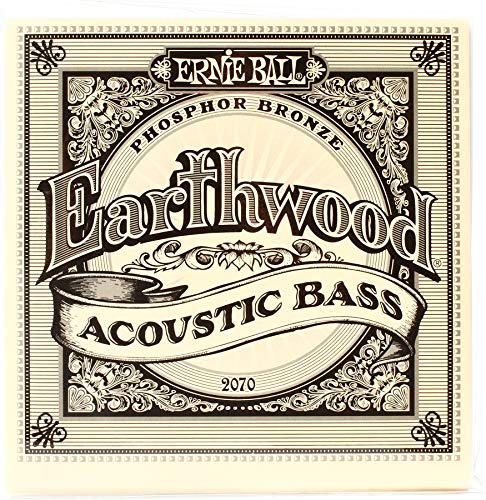
Ernie Ball Earthwood strings are designed for acoustic bass and use a 45-95 phosphor bronze gauge. The bronze wrap creates a lively, open tone with extra upper harmonics. That sound can help an acoustic bass carry slap notes without heavy amplification.
The lighter set feels comfortable for taps, pops, and chord work. It also gives acoustic players more presence than a dark flat string. I would not use this set as a direct replacement for electric bass strings because acoustic bass bridges and pickups need the correct string type.
Pros:
- Phosphor bronze adds acoustic projection
- Bright harmonics help slap notes stand out
- Light gauge feels quick and easy to play
- Good fit for unplugged practice and acoustic shows
- Useful for chordal bass and percussive parts
Cons:
- Made for acoustic bass, not normal electric bass
- Bronze tone may sound too bright in some mixes
- May wear quickly with a very hard slap attack
My Recommendation
Choose Earthwood strings if you own an acoustic bass and want a lively slap voice. They work best for solo practice, folk, worship, and unplugged sessions. Electric bass owners should select a purpose-built electric set instead.
| Best for | Why |
|---|---|
| Acoustic bass | The bronze wrap supports acoustic projection. |
| Unplugged slap | Extra harmonics help percussive notes speak. |
| Light playability | The 45-95 gauge feels quick and flexible. |
For the right instrument, these strings add a bright, woody voice. They are a specialized option among the best bass guitar strings for slap.
DR FAT-BEAM Bass Strings

DR FAT-BEAM strings are built for a broad, powerful sound. The FB5-45 set is aimed at five-string bass and uses a larger feel that can add weight to each note. I like this approach for players who want slap notes to feel thick rather than thin.
The silver finish gives the set a clean appearance, while the larger design can provide strong sustain. The low strings offer useful depth, and the higher strings still respond to pops. These strings may feel less quick than a light set, but they reward a confident attack with a big voice.
Pros:
- Large feel creates a full, muscular tone
- Strong sustain supports solo bass parts
- Good low-B presence for five-string playing
- Handles forceful thumb technique well
- Useful for rock, metal, gospel, and funk
Cons:
- May feel too large for players used to light strings
- Can require careful setup and nut inspection
- Less nimble for fast, delicate slap work
My Recommendation
FAT-BEAM strings suit five-string bassists who want power and sustain. I would choose them for large stages, loud bands, and players whose slap style has a strong physical attack. They are less ideal for a soft touch or a very fast, light technique.
| Best for | Why |
|---|---|
| Big low end | The larger design adds weight to the bottom. |
| Hard attack | Firm strings stay controlled under force. |
| Stage volume | Strong sustain helps notes remain clear in a band. |
These strings feel like a larger engine under the hood. For power-focused players, they can be the best bass guitar strings for slap in a five-string setup.
DR Lo-Rider Stainless Steel Bass Strings

DR Lo-Rider strings use stainless steel and a hex core in a 45-105 medium set. Stainless steel usually brings more edge, snap, and high-end detail than nickel. The hex core also gives the strings a firm, direct response that many slap players enjoy.
These strings can make ghost notes and pops stand out in a busy mix. They also provide a focused low end without the soft bloom of some lighter sets. The trade-off is a rougher feel and more finger noise, especially when the strings are new.
Pros:
- Strong stainless steel attack cuts through a band
- Firm response supports precise thumb control
- Clear harmonics make pops easy to hear
- Medium gauge suits many four-string basses
- Good choice for funk, rock, and aggressive styles
Cons:
- Stainless steel may feel rough under the fingers
- Bright tone can sound harsh with too much treble
- May increase finger and fret noise
My Recommendation
I recommend Lo-Rider strings to players who want maximum bite and a firm feel. They work especially well with active basses, compression, and clean amplifiers. If your sound needs a sharp pop that survives a loud drummer, this set deserves serious attention.
| Best for | Why |
|---|---|
| Bright slap tone | Stainless steel adds snap and top-end detail. |
| Hard playing | The hex core gives a firm, steady response. |
| Busy band mixes | Strong harmonics help the bass cut through. |
Lo-Rider is one of my strongest choices for modern slap tone. It belongs on any shortlist of the best bass guitar strings for slap.
D’Addario XL Nickel Bass Strings

D’Addario XL Nickel Bass strings use a popular 45-100 gauge for four-string bass. The nickel-plated steel wrap delivers a balanced mix of brightness, warmth, and comfort. This familiar voice makes the set easy to use in many amps, pedals, and recording setups.
The lighter tension helps quick slap movement, while the low E still retains a useful punch. I like these strings for players who need one set to cover fingerstyle, pick, and slap. They may not sound as sharp as stainless steel, but their smoother balance often sits better in a full mix.
Pros:
- Balanced tone works across many music styles
- 45-100 gauge feels quick and comfortable
- Nickel wrap offers a smooth playing surface
- Good choice for recording and live performance
- Easy to pair with active or passive basses
Cons:
- Less aggressive than a stainless steel set
- Light low E may feel soft for heavy hitters
- Fresh tone changes as the strings collect dirt
My Recommendation
XL Nickel strings are best for players who need a flexible all-purpose set. They suit students, session players, and gigging bassists who change between several techniques. I would pick them when I want slap clarity but do not want the bright edge to dominate the mix.
| Best for | Why |
|---|---|
| Mixed techniques | The tone works for slap, fingerstyle, and pick. |
| Comfort | The 45-100 gauge feels light and manageable. |
| Balanced recordings | Nickel tone sits well without excess harshness. |
For many players, balance beats extreme brightness. That makes XL Nickel a practical contender for the best bass guitar strings for slap.
How I Choose Strings for Slap Bass
String choice changes how a bass reacts before any pedal or amplifier setting. I start with gauge because it controls tension, feel, and the weight of the note. A heavier set often gives more punch and stability, while a lighter set feels faster and easier to pop.
I also look at the wrap metal. Nickel-plated steel gives a balanced sound with a smooth feel. Stainless steel adds more bite and upper harmonics. Bronze strings serve acoustic bass best, and coated strings can help players who deal with sweat or frequent performances.
Core design matters too. A hex core often feels firm and focused, while a round core can feel more open and soft. Neither design wins for every player. Your technique, bass, tuning, pickup type, and amp all shape the final result.
What Makes a String Good for Slap?
Good slap strings respond quickly when your thumb hits the string. They should produce a clear fundamental note, a clean pop, and enough sustain for the groove to stay alive. The string must also return to pitch after repeated strikes.
Fresh strings usually provide the most snap. As oil and dirt build up, the top end fades. I recommend wiping strings after each practice and washing your hands before playing. This simple habit can extend tone life without changing your string type.
Setup matters just as much as the string. A very low action can buzz under hard slap technique. A slightly higher action may give the string room to move and create a stronger note. If you change gauge, ask a qualified tech to check neck relief, bridge height, intonation, and nut fit.
Nickel vs. Stainless Steel for Slap
Nickel strings offer a smooth middle path. They sound bright when new but still retain warmth. This balance helps them work in a full band where an overly sharp bass can fight cymbals and guitars.
Stainless steel strings have more edge. Their upper harmonics make pops and ghost notes jump out. I favor stainless steel when a player uses a clean rig and needs a cutting, modern sound. I avoid them when the bass, amp, or room already sounds bright.
Neither metal is automatically better. The best bass guitar strings for slap are the ones that match your hands and your mix. A player with a hard attack may get enough brightness from nickel, while a light player may need stainless steel to add energy.
Choosing the Right Gauge
Light gauges, such as 40-95 or 45-100, feel easy and fast. They suit beginners, players with a light touch, and bassists who use many bends. They can also work well for standard tuning and lower-action setups.
Medium gauges, such as 45-105 or 50-105, offer more tension and body. They are a strong choice for classic slap, rock, gospel, and players who strike with force. Medium strings often give the best blend of control and comfort.
Heavy low strings help extended-range basses stay clear. A five-string low B can sound weak if the gauge is too light for the instrument. The Ernie Ball 45-130 set offers a useful starting point, but every bass has a different scale length and setup.