Best Bass Drum Beater For Electronic Drums: Top Picks
The DW Two-Way Beater is my top pick for most electronic drum kits, thanks to its control, feel, and strong build.
You sit down to practice, press the kick pedal, and hear a dull thud instead of a clean trigger. Or the beater feels too soft, too loud, or harsh against a mesh head. I know that frustration. The right beater can make an electronic kit feel faster, quieter, and more natural. In this guide, I compare popular beaters, pedals, kick pads, and practice options for home players, studio drummers, and gigging musicians. I also explain which head shape and material work best with your trigger pad.
KAT Silent Strike Bass Drum Beater

The KAT Percussion KT-TBB Silent Strike is made for players who want less mechanical noise from an electronic kick pad. Its soft striking surface helps reduce the sharp click that can come from a hard plastic beater. That matters in apartments, bedrooms, and shared practice rooms. It also gives the kick pedal a gentler feel under the foot.
I like this beater for quiet practice because it puts the focus on the module sound rather than the physical hit. It is a sensible match for many electronic drum pads, but you should still check your pad maker’s instructions before use. A soft beater is not a magic shield against every type of mesh damage. Correct pedal tension, moderate force, and proper pad placement still matter.
Pros:
- Designed to reduce kick-pedal impact noise
- Gentler contact for many electronic kick pads
- Useful for late-night and apartment practice
- Helps create a softer, less harsh pedal feel
- Simple replacement for a standard pedal beater
- Good choice for players who dislike hard plastic contact
Cons:
- May feel too soft for players who want a sharp attack
- Electronic pad compatibility can vary by manufacturer
- It may not suit very loud acoustic-style playing
My Recommendation
The KAT Silent Strike is best for home drummers, apartment players, and anyone who wants a quieter electronic drum setup. I would choose it when reducing physical noise matters more than producing an aggressive, bright attack. It is also a strong pick for beginners who are learning foot control and do not need a hard beater face. For many buyers searching for the best bass drum beater for electronic drums, this model is a practical quiet-play solution. Check current stock and fit before ordering because availability can change.
Cheerock Two-Sided Felt Beaters
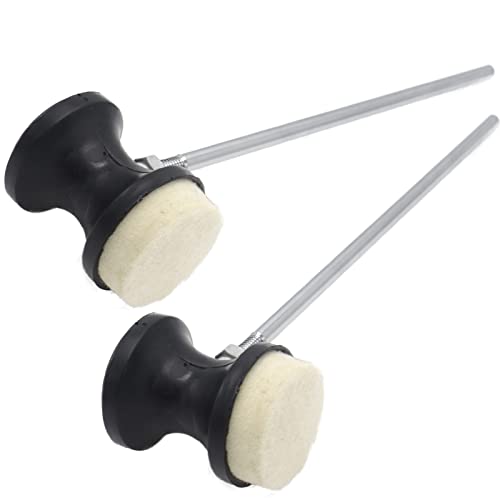
The Cheerock set includes two double-sided bass drum pedal beaters with felt heads. A two-sided design gives you a little more control over feel and attack than a single-purpose beater. Felt usually sounds and feels softer than a bare plastic or metal surface. That makes this set appealing to electronic drummers who want a familiar kick-pedal response.
This package also makes sense as a spare set. A missing or worn beater can stop practice, so keeping an extra pair nearby is useful. I would inspect the shaft diameter and locking hardware against your pedal before buying. Felt can be friendly to many pads, but you should avoid assuming that every felt beater is safe for every mesh head.
Pros:
- Two beaters provide useful backup value
- Double-sided design offers more feel options
- Felt heads produce a smooth, rounded contact
- Helpful for players who want a softer kick response
- Good low-cost option for a spare pedal setup
- Works well for basic practice and rehearsal use
Cons:
- Felt can wear with frequent hard playing
- Fit must be checked against the pedal shaft
- May not deliver the strong attack of a hard beater
My Recommendation
I recommend the Cheerock set for beginners, budget buyers, and drummers who want backup beaters. The pair is especially useful if you own more than one pedal or share a kit with another player. It may not be the most refined option for a touring drummer, but it offers useful flexibility at a modest cost. If you want the best bass drum beater for electronic drums as an inexpensive two-piece set, this one deserves a close look. Confirm the fit and pad maker’s beater advice first.
DW Two-Way Bass Drum Beater

The Drum Workshop DWSM101 Two-Way Bass Drum Beater is my favorite all-around option in this group. Its two-way design lets you change the striking surface by turning the beater around. That gives you a useful contrast between a softer and a more direct attack. It is a strong choice for drummers who move between electronic practice and acoustic-style pedal work.
DW has a long history of making reliable drum hardware, and this beater feels like a serious upgrade from a basic stock part. I value the control it gives under the foot, especially during quick singles and repeated kick patterns. Still, electronic players must use care with the striking surface they place against the pad. For a mesh head, follow the manufacturer’s instructions and consider a softer face when required.
Pros:
- Two-way design supports different attack styles
- Strong hardware feel for regular practice
- Good balance between control and response
- Suitable for many standard bass drum pedals
- Useful for players who use acoustic and electronic kits
- Recognized drum hardware brand with broad appeal
Cons:
- One side may be too firm for some mesh pads
- Costs more than basic replacement beaters
- Players must adjust the angle and height with care
My Recommendation
The DW Two-Way Beater is best for serious students, versatile drummers, and players who want one beater for several kits. I would pick it for its flexible response and dependable construction. It gives you room to grow as your technique improves, which is why I rate it as the best bass drum beater for electronic drums for many general users. Use the softer side when your electronic pad maker recommends it, and save the harder side for compatible applications. Its value remains strong when you need one reliable beater rather than several cheap replacements.
Vater Vintage Bomber Bass Drum Beater

The Vater Vintage Bomber uses a larger, soft beater profile that creates a distinct foot feel. Instead of a narrow, sharp contact point, it spreads the hit over a broader area. That can make the pedal feel warm, smooth, and controlled. It is a good match for players who dislike the hard click of a small plastic beater.
The larger head may also help new drummers feel more confident while they build basic timing. It does not make missed notes disappear, but it can give the foot a more forgiving response. Before using it on an electronic kick tower, check the pad maker’s guidance about soft beaters and head wear. Its vintage design is appealing, though players seeking a bright, highly defined attack may prefer a smaller head.
Pros:
- Large soft profile creates a smooth foot feel
- Helps reduce the sharp sound of hard beaters
- Comfortable choice for relaxed home practice
- Distinct vintage-style response
- Good for players who prefer a broad contact area
- Can make slow grooves feel warm and even
Cons:
- Large head may feel slow for fast double-kick work
- Attack is less sharp than a hard plastic beater
- May require pedal height adjustments
My Recommendation
The Vater Vintage Bomber is best for relaxed players, blues and rock drummers, and anyone who wants a soft, rounded pedal response. I like it for home sessions where feel and quiet contact matter more than maximum attack. It is not my first choice for metal-style speed work or very tight trigger response. However, it can be the best bass drum beater for electronic drums for a player who wants a plush and forgiving feel. Review the size and pad instructions before purchase.
Heavy-Duty Single Kick Drum Pedal

This product is a complete single kick pedal rather than only a replacement beater. It uses a heavy-duty footboard and chain-drive layout, which can appeal to players building a basic electronic kit. A complete pedal is useful when your current pedal feels loose, noisy, or difficult to control. It may also help a new player avoid the cost of buying separate hardware parts.
Still, pedal quality and beater quality are not the same thing. The included beater may work for general use, but you should inspect its material before striking a mesh kick pad. I would also spend time setting the spring tension, footboard angle, and beater depth. A well-adjusted basic pedal often feels better than an expensive pedal that sits too far from the trigger pad.
Pros:
- Complete pedal solution for a new setup
- Heavy-duty footboard supports regular practice
- Chain drive offers a familiar pedal motion
- Useful replacement for a worn or missing pedal
- Adjustable setup can suit different foot styles
- Good starting point for a simple electronic kit
Cons:
- It is not a standalone replacement beater
- Included beater material may need checking
- May not offer the smoothness of premium pedals
- Single-pedal design does not support double-kick patterns
My Recommendation
I recommend this pedal for beginners who need the complete kick-pedal foundation, not just a new beater. It is also useful for a practice kit, backup rig, or low-cost electronic drum project. If your main goal is to find the best bass drum beater for electronic drums, this product is less targeted than the dedicated beaters in this review. Its value comes from the full pedal package. Check the included beater, pad clearance, and mounting system before you commit.
HXW Kick Pad With Felt Beater

The HXW Bass Drum Trigger includes a realistic kick drum pad and a felt beater hammer. This makes it different from the replacement beaters above because it gives you the trigger surface as well. It can suit players who need a compact kick solution for an electronic kit. The felt beater also points toward a softer contact style for practice.
A trigger pad must do more than survive the hit. It must sense the hit at the right level and send a clean signal to the drum module. I would place this pad on a stable surface and adjust the beater travel before judging its response. Make sure your module accepts the pad’s trigger connection and that the pedal mounts securely.
Pros:
- Includes both a kick trigger pad and felt beater
- Useful for building or repairing an electronic kit
- Soft beater supports a gentler contact style
- Compact format can save space
- Helpful for practice, learning, and basic recording
- Offers more than a simple beater replacement
Cons:
- Compatibility with every drum module is not guaranteed
- Trigger setup may need sensitivity adjustments
- Pad stability affects play feel and accuracy
- Not the right choice if you only need a beater
My Recommendation
The HXW kit is best for DIY builders, beginners, and drummers replacing a full kick trigger. I would not buy it only to upgrade an existing pedal, since it includes more hardware than you may need. Its main benefit is convenience: you receive a working pad-and-beater starting point in one package. For someone searching for the best bass drum beater for electronic drums and a matching trigger pad, it can offer solid value. Verify module connections and mounting details before ordering.
Janerock Bass Drum Practice Pad

The Janerock Bass Drum Practice Pad is built for foot practice rather than electronic triggering. It includes a bass drum pad and beater, while the pedal is not included. That distinction is important because you need a compatible pedal to use it. The pad can provide a simple way to work on timing, foot endurance, and kick technique without setting up a full drum kit.
I see this as a useful practice tool for a quiet room or a small rehearsal space. It will not send a MIDI trigger or create a module sound on its own. You can use your existing pedal and focus on even strokes, heel-up control, and double-stroke exercises. Its greatest strength is simple training, not advanced electronic drum integration.
Pros:
- Useful for focused bass drum technique practice
- Includes a beater for a ready practice setup
- Compact alternative to a full kick drum
- Helps build timing and foot endurance
- Good for warm-ups before a rehearsal or gig
- Can reduce the need for a large acoustic kit
Cons:
- Pedal is not included
- It is not a trigger pad for electronic modules
- Practice feel may differ from your main kick tower
- Limited choice for players seeking electronic sounds
My Recommendation
The Janerock pad is best for technique work, quiet warm-ups, and players who already own a kick pedal. It is not the best bass drum beater for electronic drums in the strict sense because it is a practice pad rather than a complete electronic trigger system. Still, it can be a smart companion for an electronic kit. I like it for players who want to practice foot control without turning on a module. Remember to budget for a pedal if you do not already have one.
DW Control Bass Drum Beater

The DW Control Bass Drum Beater is aimed at players who want to shape their pedal response with precision. Its design places attention on balance, contact, and the way the beater moves through the stroke. That can help an experienced drummer fine-tune speed and rebound. It feels more like a performance upgrade than a basic emergency replacement.
Control starts with the full pedal setup, not only the beater. I would match its height and angle to your normal stroke, then test it at low volume before using hard force. Electronic kick pads respond best when the beater reaches the trigger cleanly and returns without excess movement. As with every beater, check whether the contact surface suits your pad type.
Pros:
- Designed with pedal control in mind
- Good option for experienced players
- Can support fast and even kick patterns
- Helps refine rebound and foot response
- Strong choice for players upgrading stock hardware
- Works well with careful pedal adjustment
Cons:
- May feel excessive for a casual beginner
- Contact material should be checked for mesh pads
- Premium hardware can cost more than simple beaters
My Recommendation
The DW Control Beater is best for advanced students, working drummers, and players who notice small changes in pedal balance. I would choose it when your current beater limits your speed or feels inconsistent. It is a strong candidate for the best bass drum beater for electronic drums when control is your main goal. It may not provide the quietest contact, so pair it with a suitable kick pad and follow the manufacturer’s care advice. Its value is highest for a player who will actually use its added control.
MCCKLE Double Bass Drum Pedal

The MCCKLE Double Bass Drum Pedal is a heavy-duty double-chain kick pedal for players who want two-foot kick patterns. It is a pedal system, not one replacement beater. That makes it relevant to electronic drummers who play metal, hard rock, or exercises based on rapid alternating strokes. A double pedal can also help you explore patterns that a single pedal cannot perform.
Electronic kick pads need enough width and stability to accept both beaters without sliding. I would place the pad on a firm mat and check that both beaters strike the active zone. You may need to adjust the beater height so the two hits feel even. Remember that a double pedal can add physical noise and setup time, especially in a small room.
Pros:
- Supports double-kick technique and fast patterns
- Heavy-duty chain drive offers a familiar feel
- Useful for metal and hard-rock practice
- Can expand a single-kick electronic setup
- Two footboards provide more playing options
- Suitable for players who want a low-cost double pedal
Cons:
- It is a full pedal, not a replacement beater
- Needs a stable kick pad and careful alignment
- May require more setup space than a single pedal
- Double-pedal mechanics can need regular adjustment
My Recommendation
The MCCKLE pedal is best for players who need double-kick capability on an electronic kit. I would recommend it to developing metal drummers and anyone practicing alternating foot control. It is not my choice for a buyer who only needs the best bass drum beater for electronic drums, but it can solve a larger pedal problem. Check your kick pad width, frame clearance, and module setup before buying. Its value depends on whether you truly need two beaters.
Lovermusic Felt Bass Drum Beater

The Lovermusic replacement beater uses a stainless-steel shaft and a white felt head. It is a straightforward option for replacing a missing, damaged, or worn beater. The felt face gives a softer contact than a bare metal or hard plastic head. Its simple shape may appeal to players who want a basic part without a complex adjustment system.
Before ordering, measure your existing beater and compare the shaft size with your pedal hardware. A small mismatch can lead to slipping, poor alignment, or difficult installation. I would also inspect the felt from time to time because frequent hard hits can compress or wear it. For electronic drums, use moderate force and follow the kick-pad maker’s recommendation for felt beaters.
Pros:
- Soft felt face offers a gentler contact
- Stainless-steel shaft supports regular use
- Simple replacement for many standard pedals
- Useful for budget repairs and backup gear
- White felt makes wear easy to see
- Lightweight design can feel quick under the foot
Cons:
- Exact shaft fit must be verified before purchase
- Felt may compress with heavy use
- May not suit players who want a hard attack
- Not a complete pedal assembly
My Recommendation
The Lovermusic beater is best for budget repairs, beginners, and players who need a basic felt replacement. It can also serve as an inexpensive spare in a practice bag. I would not call it the best bass drum beater for electronic drums for every kit, since fit and pad compatibility vary. Yet it offers useful value when your pedal accepts its shaft and your pad maker allows felt contact. Measure first, then compare the current Amazon price with other replacement options.
How I Choose a Beater for Electronic Drums
Choosing a kick beater is not only about brand name. I look at contact material, head shape, balance, shaft fit, noise, and the type of kick pad involved. An electronic drum pad does not react exactly like an acoustic bass drum head. The pad sensor must detect the impact, while the playing surface must survive repeated strokes.
I also consider the drummer’s goal. A quiet home player needs a different beater from a metal drummer who practices fast doubles. A beginner may value comfort and easy control, while an experienced drummer may prefer a firm rebound and a more direct attack.
Beater Material
The head material changes both sound and feel. Felt gives a soft, rounded response. Foam or soft synthetic materials can reduce impact noise. Plastic creates a firmer and often brighter attack. Wood and hard materials can feel fast, but they may be too aggressive for some electronic pads.
This is where caution matters. Roland and Yamaha both provide care and setup guidance for electronic kick pads, and their recommendations can differ by model. Some pads tolerate a range of beaters. Others warn against hard beaters or recommend a particular surface. Always read the manual for your exact pad.
A soft beater does not remove all risk. Dirt, high spring tension, excessive force, and a badly adjusted pedal can still damage a head or pad. I treat the beater as one part of the system, not the whole answer.
Head Shape and Size
A small head gives a focused contact point. It may feel quick and precise. A larger head spreads the force over a wider area and can feel more forgiving. The trade-off is that a large head may feel slower during rapid strokes.
For most electronic kits, I prefer a medium-size head with a soft or moderate surface. It gives a good balance of response and safety. Players who use a small tower may need to pay extra attention to the active trigger zone. A large beater can strike outside the best area if the pedal sits too high or too far away.
Pedal Compatibility
The beater must lock firmly into the pedal. Check shaft diameter, shaft length, clamp depth, and the available adjustment range. Also check whether the pedal has enough clearance for the beater head.
Do not force a shaft into a clamp that seems too tight. A poor fit can cause the beater to twist during play. That changes the strike angle and may lead to uneven triggering. A secure fit feels like a solid handshake: firm, but not strained.
Noise in a Home Room
Electronic drums reduce the sound heard through speakers, but they do not remove physical noise. The pedal still moves. The beater still hits the pad. The footboard can transmit thumps through the floor.
A soft beater can reduce the sound at the pad. A rubber mat or isolation platform can reduce vibration through the floor. I also recommend tightening loose pedal parts and keeping the kick tower stable. These small steps often make a larger difference than changing beaters alone.
Trigger Response
A kick pad needs a clean and repeatable strike. If the beater bounces too much, the module may read extra hits. If the hit is too soft, the note may sound weak or fail to trigger. If the beater strikes off-center, the response may vary.
Start with the module’s default sensitivity. Play soft, medium, and hard hits. Then test fast doubles and slow patterns. Adjust the module only after the pedal and beater sit correctly. Otherwise, you may use electronic settings to hide a mechanical problem.
Felt, Foam, Plastic, or Rubber?
Felt is a common choice because it feels smooth and sounds less sharp than plastic. It works well for many acoustic setups and some electronic pads. However, felt can wear down, become packed, or collect dirt. On certain mesh heads, repeated felt use may cause extra wear, so the pad maker’s advice comes first.
Foam and soft synthetic heads are often popular for electronic practice. They can reduce the physical click and feel gentle under the pedal. Their life span depends on the material and how hard you play. Inspect the head often, especially if you practice every day.
Plastic gives a clear, firm response. Some electronic kick pads are designed to handle it, while others are not. Plastic may also create more room noise. I use it only when the pad maker permits it and when I want a bright, direct feel.
Rubber sits between soft and hard options. It may provide a stable attack with less harshness than plastic. Again, the exact rubber compound matters. The word “rubber” alone does not tell you how a beater will behave.
How to Set Up the Best Bass Drum Beater for Electronic Drums
First, place the kick pad on a level mat. Keep the pad from sliding forward. If it moves, your foot will chase the pedal and your timing will suffer.
Next, insert the beater into the pedal clamp. Set the head so it strikes the center or recommended zone of the pad. Do not start with the beater too high. A long swing adds force and can make the pedal harder to control.
Set the spring tension at a middle point. Play slow quarter notes. Listen for a clean trigger and watch for bounce. Then try eighth notes, sixteenth notes, and soft ghost strokes.
If the pad misses soft hits, first inspect the physical setup. Check the cable, clamp, pad position, and beater height. Only then adjust sensitivity or threshold in the module. This order saves time and gives you a more honest result.
Common Buying Mistakes
The first mistake is buying a complete pedal when you need only a beater. Several products in this guide include full pedals or kick pads. They can be useful, but they solve a different problem.
The second mistake is assuming that every felt beater is safe for every mesh head. Manufacturers use different mesh materials and sensor designs. Follow the instructions for your exact model.
The third mistake is focusing only on price. A cheap beater can be fine for light practice, but a loose shaft or weak head can become annoying over time. A slightly better beater may save money if it lasts longer and feels more stable.
The fourth mistake is ignoring technique. A heavy stomp does not always create a better kick note. Good control comes from a relaxed ankle, a steady seat position, and a pedal that matches your foot.
Best Options at a Glance
| Best for | Why |
|---|---|
| Quiet home practice | KAT Silent Strike reduces harsh contact noise and gives a softer feel. |
| Most versatile upgrade | DW Two-Way offers two attack choices and strong all-around control. |
| Double-kick playing | MCCKLE provides a full double-pedal setup for fast alternating patterns. |
Care and Maintenance Tips
Wipe the beater head and shaft with a dry cloth. Dust can build up around the clamp and affect the fit. Do not use harsh cleaners on felt or soft foam.
Check the clamp before each long session. The beater should not rotate when you play. If it moves, stop and tighten the hardware. A crooked head can strike the pad unevenly.
Inspect the pad surface as well. Look for dents, torn mesh, worn rubber, or a deep mark in the striking zone. Early wear is easier to fix than a sudden trigger failure.
Lubricate the pedal only as directed by the pedal maker. Too much oil can attract dirt. Keep the pedal base clean and use a mat when the floor is smooth.
FAQs Of best bass drum beater for electronic drums
What is the best bass drum beater for electronic drums?
For most players, I recommend the DW Two-Way Bass Drum Beater because it offers flexible attack and strong control. The KAT Silent Strike is better if quiet practice is your top concern. The right choice still depends on your kick pad’s care instructions.
Can I use a felt beater on a mesh kick pad?
Sometimes, but not always. Check the manual for your exact kick pad before using felt. Some manufacturers recommend a specific soft beater, while others warn that certain materials may cause wear.
Is a plastic beater bad for electronic drums?
Not automatically. Some electronic kick towers can handle plastic beaters, but others may suffer surface damage or produce excess noise. Use plastic only when the pad maker clearly allows it.
Does a heavier beater improve trigger response?
A heavier beater may create a stronger hit, but it can also increase wear, bounce, and noise. Good setup matters more than weight alone. Start with moderate height and force, then adjust the module after the pedal works correctly.
Should I buy a new pedal or only a replacement beater?
Buy only a replacement beater if your pedal moves smoothly and holds the shaft securely. Choose a new pedal if the footboard, chain, spring, or clamp feels loose. A complete kick pad may make sense if your electronic kit lacks a stable trigger surface.
Final Verdict: Which Should You Buy?
The DW Two-Way Bass Drum Beater is my top all-around pick. It offers control, flexible attack, and dependable build quality. The KAT Silent Strike is the better choice for quiet rooms and apartment practice.
For the best bass drum beater for electronic drums, match the material to your kick pad and playing style. Check fit, set the pedal with care, and follow the maker’s safety advice before you play hard.

Senior Music Reviewer
Alex Carter is a seasoned music reviewer with over a decade of experience in the world of sound and instruments. Passionate about helping musicians and enthusiasts make informed choices, he brings sharp insights and in-depth knowledge to every review. From classical instruments to modern gear, Alex combines technical expertise with a love for music to deliver content that resonates with readers.
As a Senior Music Reviewer and expert author on Tuneluma.com, Alex is dedicated to sharing honest evaluations, practical advice, and thoughtful commentary to guide readers in their musical journey.