
What Is A Slack Key Guitar: Hawaiian Style Explained
A slack key guitar uses loose strings and open tunings for warm Hawaiian sounds.
What is a slack key guitar in practice? It is usually a standard acoustic guitar played in a special Hawaiian style called kī hō‘alu, which means “loosen the key.” The player lowers one or more strings, creating an open chord and a rich mix of bass, melody, and harmony.
This guide explains what is a slack key guitar, how the tuning works, where the style came from, and how you can begin playing it. You will also learn which guitar, strings, tunings, and techniques work best, along with common mistakes that can slow your progress.
What Is a Slack Key Guitar?
A slack key guitar is not a special type of guitar with a unique body or brand. It is a guitar played with slack key technique, often using an open tuning in which one or more strings are lowered from standard pitch.
In standard tuning, the strings are tuned to E, A, D, G, B, and E. In slack key guitar, the player changes this setup. The open strings then form a chord, such as G major or C major.
This lets the player create:
• A steady bass line with the thumb
• A singing melody with the fingers
• Open-string harmony behind the melody
• Smooth slides and gentle rhythmic patterns
• A full sound from one guitar
Think of the open strings as a built-in chord. The player can pick a melody while the open strings ring around it. That ringing sound is one of the main reasons slack key guitar feels so calm and spacious.
The most important point is simple: what is a slack key guitar depends more on the tuning and playing style than on the instrument itself. A steel-string acoustic guitar is common, but many guitars can work.

The History of Slack Key Guitar in Hawaii
Slack key guitar developed in Hawaii during the 19th century. Its roots are often linked to the arrival of Spanish and Mexican vaqueros, known as paniolo, who brought cattle-ranching skills and stringed instruments to the islands.
Hawaiian musicians learned from these instruments and created their own tunings and playing methods. Over time, families developed personal tunings that they often kept private. This helped produce a wide range of slack key sounds.
The music became part of everyday Hawaiian life. People played it at family gatherings, community events, celebrations, and quiet evenings at home. Rather than following one fixed method, each player could shape the style through personal taste and family tradition.
The Hawaiian term kī hō‘alu translates as “loosen the key.” This describes the act of loosening the strings to create a new tuning. The term also reflects the relaxed, flowing character of the music.
Several respected Hawaiian musicians helped bring slack key to wider audiences during the 20th century. Their recordings showed that this tradition could remain deeply connected to Hawaiian culture while reaching listeners around the world.
Historical details vary because much of the tradition passed through families by ear. Written music was not always used. For that reason, two players may use different tunings for songs that sound related.

How Slack Key Tuning Works
Slack key tuning starts with the idea of an open chord. In standard tuning, playing all six open strings does not produce one simple major chord. In an open slack key tuning, the open strings may create a full G major, C major, or another chord.
One of the best-known tunings is open G, often called Taro Patch tuning. The strings are commonly tuned as follows:
• Low to high: D, G, D, G, B, D
• Chord: G major
• Standard tuning changes: The sixth, fifth, and first strings are lowered
Another common choice is open D:
• Low to high: D, A, D, F-sharp, A, D
• Chord: D major
• Sound: Bright, ringing, and strong for slide playing
Open C is also used:
• Low to high: C, G, C, G, C, E
• Chord: C major
• Sound: Deep, broad, and useful for slower songs
Exact tunings may vary from player to player. Some musicians use a capo to raise the key while keeping the same finger patterns. Others create their own versions by changing only one or two strings.
Always tune slowly. Lowering strings is usually gentle on the guitar, but raising a string too far can increase tension. Use an electronic tuner, and check the tuning again after the strings settle.
Why Open Tunings Sound Different
Open tunings allow notes to ring together. This creates overtones that are harder to produce in standard tuning. The result can sound like several instruments are playing at once.
The lower string tension also changes the feel of the guitar. Bends may feel easier, while loose strings can become unstable if you strike them too hard. A light touch often produces a clearer and more musical sound.

The Main Techniques Used in Slack Key Guitar
Slack key guitar combines several techniques. You do not need to master them all at once. Start with a steady thumb, then add simple melody notes.
Alternating Bass
The thumb often plays a repeating bass pattern. It may move between the lowest strings while the fingers play melody above it.
For example, in an open G tuning, the thumb might alternate between the sixth and fourth strings. This creates a gentle pulse that supports the song.
Fingerstyle Picking
The fingers usually pluck the higher strings. The index and middle fingers may play a melody, while the thumb keeps the bass moving.
A useful beginner pattern is:
- Play the bass note with your thumb.
- Pluck a high string with your index finger.
- Play the next bass note with your thumb.
- Answer with another high note.
Keep the pattern slow. Clean timing matters more than speed.
Hammer-ons and Pull-offs
Hammer-ons and pull-offs add movement without requiring a new pick stroke. They can make a melody sound vocal and smooth.
In slack key guitar, these techniques work well with open strings. A fretted note can move into an open note, or an open note can ring under a short melodic phrase.
Slides
A slide can imitate the smooth movement of a human voice. Some players use a metal or glass slide, while others slide with a fingertip.
Use light pressure. Pressing too hard can pull the note sharp. Listen for a clean pitch rather than a loud sound.
Harmonics
Natural harmonics can add a bell-like tone. They are often played at the 12th fret, where the string divides into two equal parts.
Harmonics are not required for beginners, but they can add beauty to a slow arrangement. Use them as decoration, not as a replacement for a strong melody.
Muting
Slack key music needs space. The thumb can gently mute a bass note after it sounds, while the fingers allow selected treble notes to ring.
This balance keeps the music clear. Without muting, every note may continue ringing and blur the melody.
What Kind of Guitar Works Best?
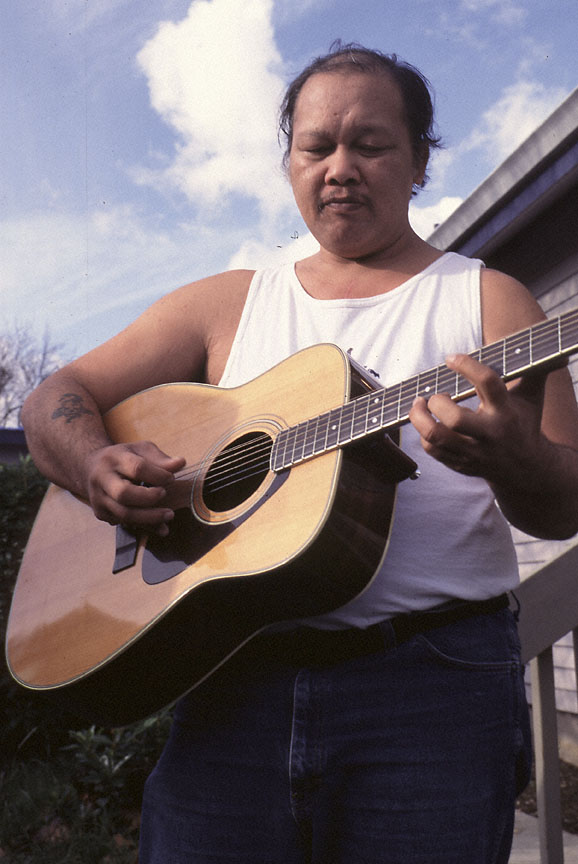
A good slack key guitar does not need to be expensive. The best choice is an acoustic guitar that stays in tune, has comfortable action, and produces a balanced tone.
Steel-string acoustic guitars are common because they offer strong bass and clear treble. A dreadnought can provide a large sound, while a smaller concert or auditorium body may feel easier to hold.
A nylon-string guitar can also work. It gives a softer tone and lower tension, but its neck width and string response may feel different from a steel-string instrument.
Look for these features:
• Stable tuning machines
• Comfortable neck shape
• Frets that do not buzz
• Moderate string height
• A clear bass response
• Good intonation up the neck
A guitar with very high action can make fretting tiring. A guitar with extremely low action may buzz when the strings are loosened. A repair technician can adjust the instrument if needed.
When considering what is a slack key guitar, remember that the player creates the style. The instrument supports the music, but it does not define it.

Strings, Tension, and Guitar Care
Slack key guitar often uses tunings that lower string tension. This can make the strings feel soft and comfortable, but it can also change the guitar’s response.
Many players use medium or light-gauge steel strings. The best gauge depends on the guitar, the tuning, and the player’s touch. Very light strings may feel easy to bend but can sound thin or lose tuning stability.
Do not assume that every guitar should remain permanently in a very low tuning. Excessively loose strings may rattle, reduce projection, or make the guitar feel unresponsive.
Follow these care tips:
• Tune down slowly and check each string twice.
• Avoid raising strings above their normal pitch without expert advice.
• Store the guitar away from extreme heat and dry air.
• Check the neck and bridge if the guitar develops new buzzing.
• Replace old strings when tuning becomes unstable.
• Ask a guitar technician about the safest string gauge.
Humidity matters because acoustic guitars are made from wood. Very dry conditions can cause cracks, sharp fret ends, or a lifted bridge. A basic guitar humidifier can help in dry homes.
How to Play Slack Key Guitar as a Beginner
You can begin with one open tuning and a simple bass pattern. Open G is a common starting point because the chord is easy to hear and the tuning supports many basic patterns.