What Is A Guitar Lick

What Is A Guitar Lick: Meaning, Examples & Tips

A guitar lick is a short, memorable phrase that adds character, emotion, and style to a guitar performance.

If you have ever heard a guitarist play a catchy bend, blues phrase, or fast rock run, you have heard a guitar lick. Learning what is a guitar lick helps you understand how guitarists build solos, connect musical ideas, and develop a personal sound. This guide explains the meaning, purpose, history, examples, and best ways to practice guitar licks.
What Is a Guitar Lick?
Source: schoolofrock.com

What Is a Guitar Lick?

A guitar lick is a short series of notes played as a musical phrase. It may last only a few seconds, but it can make a song sound expressive and memorable. Guitar licks appear in blues, rock, country, jazz, metal, funk, pop, and many other styles.

The simplest answer to what is a guitar lick is this: it is a small musical idea that a guitarist can play, repeat, change, or use inside a larger performance. A lick may fit between vocal lines, begin a solo, end a phrase, or lead into a new chord.

A lick is much like a phrase in spoken language. A single word has meaning, but a short sentence communicates more. In the same way, one guitar note may sound plain, while a well-shaped lick can express tension, joy, sadness, confidence, or surprise.

A guitar lick can include several musical elements:

• Notes played on one string or across several strings

• Bends, slides, hammer-ons, pull-offs, and vibrato

• A rhythm that gives the phrase its personality

• Repeated notes or patterns

• A particular scale, mode, or chord relationship

• Tone choices such as distortion, delay, reverb, or a clean sound

A lick does not need to be difficult. A slow three-note blues phrase can be more powerful than a complex shred run if it uses strong timing and expressive technique.
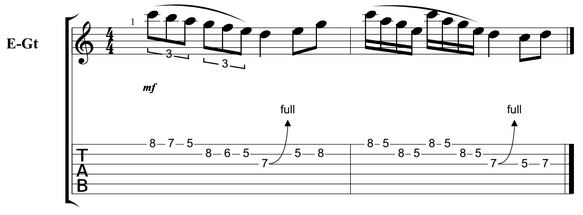
Guitar Lick vs. Guitar Riff
Source: learnguitarmalta.com

Guitar Lick vs. Guitar Riff

Many players use the words lick and riff as if they mean the same thing. They are related, but they usually describe different musical roles.

A guitar lick is often a short phrase used as part of a solo or melody. It may appear once, or the guitarist may repeat it with small changes. A riff is usually a repeated musical pattern that helps define the main groove or identity of a song.

For example, a repeated electric guitar pattern under a verse is often called a riff. A short phrase played between vocal lines or during a solo is more likely to be called a lick.

The difference is not always strict. Musicians and listeners may label the same phrase in different ways. A memorable lick can become a riff if a band repeats it throughout a song.

Here is a simple comparison:

Feature Guitar lick Guitar riff
Main role Adds a phrase or solo idea Builds the song’s groove
Repetition May be played once or varied Usually repeats
Length Often short Can be short or extended
Placement Solos, fills, intros, endings Verses, choruses, and main sections
Example A blues bend phrase A repeated rock guitar pattern

Knowing the difference makes it easier to search for lessons and understand guitar language, but the musical value matters more than the label.

Where Did the Term Guitar Lick Come From?
Source: theguitarhead.com

Where Did the Term Guitar Lick Come From?

The word lick has been used in American music for many decades. It describes a short musical phrase that a performer can use as part of a larger musical statement. The term became especially common in blues, jazz, country, rock, and early rhythm and blues.

In these styles, musicians often learned by listening and copying. A player might hear a phrase from a favorite recording, practice it, and then adapt it to a new song. Over time, certain phrases became part of the shared language of the style.

Blues guitar helped make the guitar lick especially important. Players such as B.B. King, Albert King, and Stevie Ray Vaughan showed how a small number of notes could carry deep emotion through bends, vibrato, timing, and tone.

Rock guitar expanded the idea through players such as Jimi Hendrix, Eric Clapton, Jimmy Page, and Eddie Van Halen. Their phrases often combined blues language with new sounds, higher speed, unusual effects, and creative technique.

Today, guitarists learn licks from recordings, lesson books, online videos, tablature, and software that can slow down music. The method has changed, but the basic process remains familiar: listen, learn, understand, and make the phrase your own.
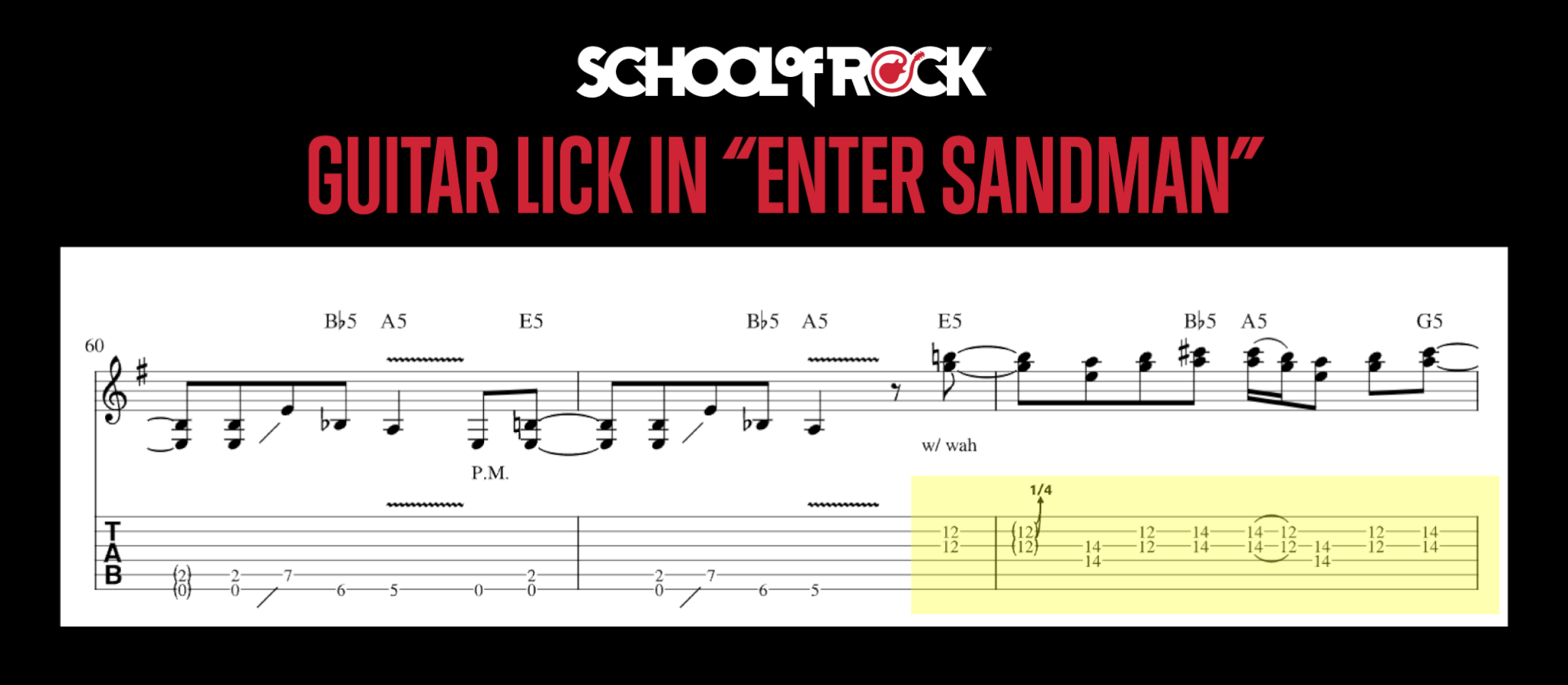
What Does a Guitar Lick Sound Like?
Source: schoolofrock.com

What Does a Guitar Lick Sound Like?

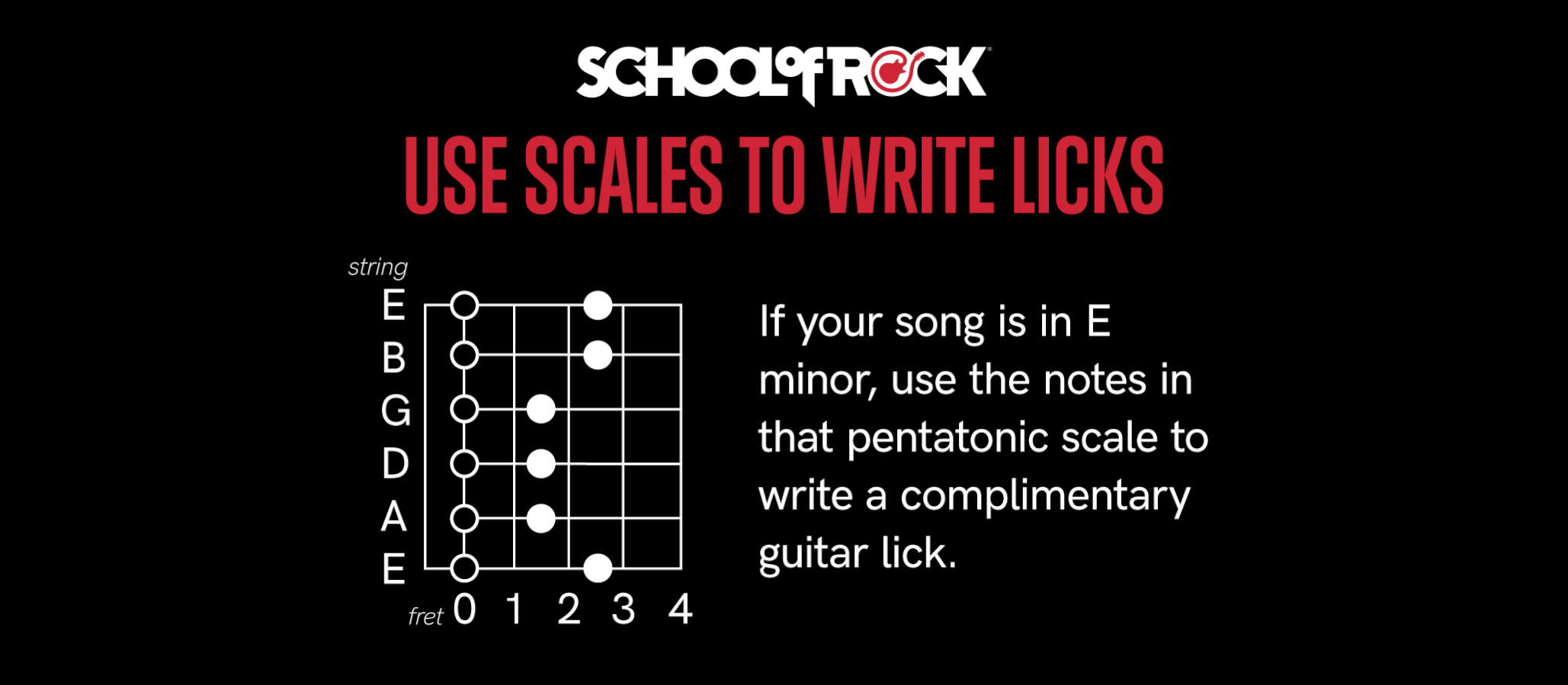
A guitar lick can sound very different depending on the genre, tempo, key, and playing style. A blues lick may use the minor pentatonic scale with a slow bend. A country lick may use hybrid picking and open strings. A metal lick may use fast alternate picking, palm muting, or tapping.

Here are a few common examples:

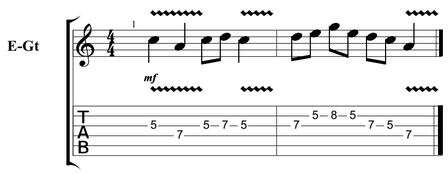
A blues guitar lick

A basic blues lick in A might use notes from the A minor pentatonic scale:

• A at the fifth fret on the first string

• C at the eighth fret on the first string

• D at the tenth fret on the first string

• A bend from the seventh fret on the third string

The exact notes matter, but the feel matters just as much. A slow bend that reaches the right pitch can sound more convincing than a fast phrase with weak control.

A rock guitar lick

A rock lick may use the A minor pentatonic scale with repeated eighth notes, slides, and strong accents. It might begin with a short rest, move up the scale, and finish on a long note.

This type of phrase often works well over an A5 or A minor chord. The player can repeat it, move it to another key, or change the final note to create a new ending.

A country guitar lick

Country licks often combine scale notes with open strings. Hybrid picking allows the guitarist to pluck a bass note with a pick and a higher note with a finger at nearly the same time.

These phrases can sound bright, clean, and quick. They often use major pentatonic notes, chromatic passing tones, bends, and double stops.

A jazz guitar lick

Jazz licks may use arpeggios, chromatic notes, altered tones, and complex rhythms. A phrase could outline the notes of a dominant seventh chord while leading smoothly into the next chord.

Jazz players often change a familiar lick to fit the harmony. This teaches an important lesson: a guitar lick is not only a group of notes. It is also a relationship between melody, rhythm, and chords.
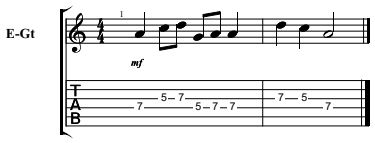
What Is the Purpose of a Guitar Lick?
Source: learnguitarmalta.com

What Is the Purpose of a Guitar Lick?

A guitar lick gives a player a ready-made musical idea. Instead of starting every solo with random notes, you can begin with a phrase that already has shape and direction.

Guitar licks can serve several purposes:

• Fill space between vocal lines

• Start or end a solo

• Connect two musical sections

• Highlight a chord change

• Build excitement before a chorus

• Create a recognizable hook

• Develop a player’s personal style

• Improve technique through focused practice

A lick also helps a guitarist learn how music works. When you study a phrase, you can examine its scale, rhythm, chord relationship, and technique. That process is more useful than memorizing finger movements alone.

In my own practice, I have found that a lick becomes far more useful after I play it in several settings. I might play it slowly over a backing track, move it to another key, change the rhythm, and end it on a different note. This turns a memorized shape into a flexible musical tool.
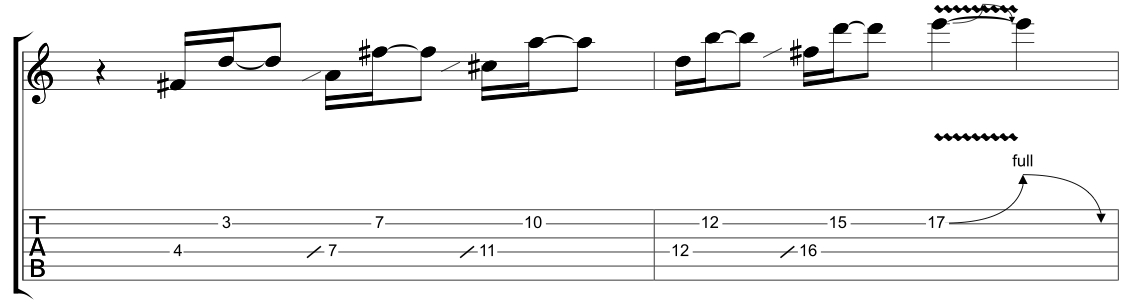
How to Learn a Guitar Lick
Source: fundamental-changes.com

How to Learn a Guitar Lick

Learning what is a guitar lick is helpful, but learning one well requires more than copying tablature. The goal is to understand the phrase and play it with control.

Follow these steps:

  1. Listen before you play

Hear the phrase several times. Notice its rhythm, accents, bends, slides, and pauses. Try to sing or hum it before picking up your guitar.

  1. Break it into small parts

Learn two or three notes at a time. Small sections are easier to remember and help you spot mistakes early.

  1. Practice slowly

Use a metronome or slow playback. Speed should come after accuracy. If the phrase sounds uneven at a slow tempo, playing it faster will usually hide the problem rather than solve it.

  1. Focus on technique

Check each bend for pitch. Make slides smooth. Keep hammer-ons and pull-offs clear. Use relaxed hands and avoid squeezing the neck too hard.

  1. Practice with a steady beat

A guitar lick must fit the groove. Tap your foot or use a drum loop while you practice. Strong rhythm often makes a simple phrase sound professional.

  1. Play it in different keys

Move the lick to another starting note. This helps you learn the fretboard and prevents you from depending on one fixed position.

  1. Change the ending

Keep the first part of the phrase, but finish on a different note. This is an easy way to create a new musical idea.

  1. Use it in a song

Try the lick over a backing track or a real song. Listen to how it fits the chords. A phrase that sounds great alone may need changes when the harmony moves.

One mistake I often see among developing players is practicing a lick until the fingers can play it, but never checking whether the phrase sounds musical. Record yourself. Listen for timing, unwanted string noise, weak bends, and notes that do not fit the chord.

How to Create Your Own Guitar Licks
Source: jenslarsen.nl

How to Create Your Own Guitar Licks

You do not need advanced theory to write a guitar lick. Start with a small group of notes and give them a clear rhythm.

Try this simple method:

• Choose a key, such as A minor

• Select three to five notes from the A minor pentatonic scale

• Create a short rhythm with one or two pauses

• Add one expressive technique, such as a bend or slide

• End on a note that sounds stable

• Repeat the phrase and change one detail

For example, play three notes, pause, then bend into a higher note. On the second attempt, keep the same rhythm but change the final pitch. This creates contrast while preserving the main idea.

Rhythm is one of the fastest ways to make a guitar lick sound original. Many beginners focus only on scale patterns. Yet two players can use the same notes and sound completely different because their timing, accents, note length, and touch are different.

Try limiting yourself to just two notes. Create a phrase with rests, different note lengths, and changing accents. This exercise can teach more about musical expression than running up and down a scale.

Common Guitar Lick Techniques
Source: learnguitarmalta.com

Common Guitar Lick Techniques

A guitar lick often sounds interesting because of how the notes are played. These techniques give a phrase movement and emotion.

Bending

Bending raises a note by pushing or pulling the string. Good bending requires accurate pitch. Practice bending toward a target note, then compare it with the fretted version of that note.

Vibrato

Vibrato creates a small, controlled change in pitch. It can make a held note sound alive. Keep the movement steady and avoid shaking the string too widely.

Slides

A slide connects two notes smoothly. It can make a phrase sound vocal and expressive. Use enough pressure to keep the note clear, but stay relaxed.

Hammer-ons and pull-offs

These techniques let you play notes with the fretting hand after the first note is picked. They can make a lick sound fast and smooth.

String bends with unison notes

A player may bend one string while holding the same pitch on another string. This produces a strong, singing sound often heard in blues and rock.

Double stops

Double stops use two notes at once. They work well in blues, country, rock, and pop. They can add thickness without requiring a full chord.

Slides and position shifts

Moving between fretboard positions can connect separate ideas. Practice the shift slowly so the phrase remains clean.

How Many Guitar Licks Should You Learn?

There is no ideal number of guitar licks to memorize. Ten useful phrases that you understand are more valuable than one hundred phrases you cannot use.

A balanced practice plan might include:

• Three blues licks

• Three rock licks

• Three major or country licks

• Three chord-based licks

• A few phrases from your favorite artists

Study each guitar lick in several ways. Play it as written, change its rhythm, move it to another key, and connect it to a second phrase. This approach helps you build a vocabulary rather than a collection of disconnected patterns.

Keep a notebook or digital folder with the phrase, key, scale, technique, and backing track. Add a short note about where the lick sounds useful. This small habit can make practice more focused.

Benefits and Limits of Learning Guitar Licks

Learning guitar licks has clear benefits. It gives beginners a practical way to sound musical while they develop technique, rhythm, and fretboard knowledge.

Benefits include:

• Better control of bends, slides, and articulation

• More confidence during improvisation

• A stronger sense of phrasing

• Greater awareness of scales and chord tones

• Faster access to musical ideas

• A clearer connection to favorite guitar styles

There are also limits. If you only memorize licks, your solos may sound like a list of borrowed phrases. You may also struggle when the chords change or when a phrase does not fit the song.

The solution is not to avoid licks. It is to study them deeply and transform them. Change the rhythm, use different notes, leave space, and connect the phrase to your own musical ideas.

Copyright also matters. Learning a short phrase for study is common, but copying a distinctive part of a song into your own commercial recording can create legal and artistic problems. Use familiar licks as learning tools, then develop original material for released work.

How to Use Guitar Licks Without Sounding Repetitive

Repetition can make a solo memorable, but repeating the same guitar lick without change may sound mechanical. Small variations can keep the phrase fresh.

Try these approaches:

• Play the lick in a new key

• Start it on a different beat

• Change the final note

• Reverse the direction of the phrase

• Use fewer notes

• Add a pause

• Change the bend into a slide

• Play the phrase softly, then loudly

• Move it to a higher or lower fretboard position

• Answer the lick with a contrasting phrase

This idea is similar to having a conversation. One phrase makes a statement, and the next phrase responds. Good improvisation is not constant speaking. It includes pauses, replies, and changes in mood.

When I practice over a backing track, I try not to play a lick every time there is an empty space. Leaving room often makes the next phrase feel more important. Silence is part of guitar phrasing, too.

Frequently Asked Questions About What Is a Guitar Lick

Is a guitar lick the same as a guitar solo?

No. A guitar lick is a short musical phrase, while a guitar solo is a longer section built from many phrases, melodies, and techniques. A solo may contain several guitar licks connected by improvisation.

Can beginners learn guitar licks?

Yes. Beginners can learn simple licks with a few notes and basic techniques. Start slowly, use a metronome, and choose phrases that match your current skill level.

Are guitar licks copied from other players?

Many guitarists learn licks by copying recordings or lessons. This is a useful part of learning, but players should change and develop those ideas rather than present another musician’s distinctive phrase as completely original.

What scales are used for guitar licks?

The minor pentatonic scale is common in blues and rock. Major pentatonic, blues, major, minor, modal, and arpeggio-based scales are also used across different styles.

How long is a guitar lick?

A guitar lick can be as short as two or three notes or long enough to fill several beats. Most licks are short phrases that can fit naturally into a solo, melody, or musical transition.

Do guitar licks improve improvisation?

Yes, if you study them actively. Analyze the notes and rhythm, play the lick in different keys, and combine it with your own ideas to build useful improvisation skills.

Can a guitar lick be played on acoustic guitar?

Yes. A guitar lick can be played on acoustic or electric guitar. The instrument changes the tone, but the phrase, rhythm, and technique remain the main musical elements.

Conclusion

A guitar lick is a short musical phrase that adds style, emotion, and direction to guitar playing. It may appear in a solo, fill, intro, ending, or melody, and it can be simple or highly technical.

The best way to learn what is a guitar lick is to listen closely, practice slowly, understand the rhythm and notes, and use each phrase in a musical setting. Learn from great players, but reshape their ideas until your own voice becomes clear.

Choose one simple lick today. Play it in three keys, change its rhythm, and use it over a backing track. Then explore more guitar lessons and share your favorite lick in the comments.

Similar Posts

Leave a Reply

Your email address will not be published. Required fields are marked *